Xiaomi 15T
Xiaomi 15T Pro 512GB

Xiaomi 15T Xiaomi 15T Pro 512GB

Overview

Welcome to our in-depth spec comparison between the Xiaomi 15T and the Xiaomi 15T Pro 512GB. Both phones share a strong foundation — identical 6.83″ OLED displays, 5500 mAh batteries, and the same triple-camera layout — but the two models diverge in some meaningful ways. From chipset performance and display refresh rate to camera capabilities and charging flexibility, this comparison explores exactly where the differences lie and what they mean for real-world use.

Common Features

  • Both phones are waterproof with an IP68 rating and a waterproof depth of 3 m.
  • Neither phone has a rugged build.
  • Neither phone can be folded.
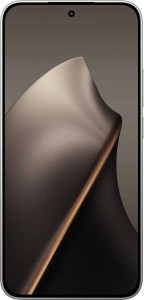
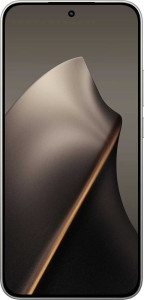
  • Both phones feature a 6.83″ OLED/AMOLED display.
  • Both phones support a 480Hz touch sampling rate.
  • Both phones are protected by Gorilla Glass 7i.
  • HDR10 support is available on both phones.
  • HDR10+ support is available on both phones.
  • Always-On Display is available on both phones.
  • Both phones come with 512GB of internal storage and 12GB of RAM.
  • Both phones use 8-thread CPUs with big.LITTLE technology and HMP support.
  • Both phones have a GPU clock speed of 1300 MHz.
  • Both phones have a triple-lens main camera with 50 & 50 & 12 MP and a 32 MP front camera.
  • Optical image stabilization is built into both phones.
  • Both phones run Android 16.
  • Both phones have a 5500 mAh battery with fast charging and come with a charger included.
  • The battery is not removable on either phone.
  • Neither phone has a 3.5 mm audio jack, but both feature stereo speakers.
  • Both phones support 5G, dual SIM, NFC, Bluetooth 6, USB Type-C (USB 2.0), and have a fingerprint scanner.
  • Neither phone has an external memory slot.

Main Differences

  • Weight is 194 g on Xiaomi 15T and 210 g on Xiaomi 15T Pro 512GB.
  • Thickness is 7.5 mm on Xiaomi 15T and 8 mm on Xiaomi 15T Pro 512GB.
  • Volume is 95.472 cm³ on Xiaomi 15T and 101.39464 cm³ on Xiaomi 15T Pro 512GB.
  • Pixel density is 435 ppi on Xiaomi 15T and 447 ppi on Xiaomi 15T Pro 512GB.
  • Screen resolution is 1220 x 2712 px on Xiaomi 15T and 1280 x 2772 px on Xiaomi 15T Pro 512GB.
  • Refresh rate is 120Hz on Xiaomi 15T and 144Hz on Xiaomi 15T Pro 512GB.
  • The chipset is MediaTek Dimensity 8400 on Xiaomi 15T and MediaTek Dimensity 9400 Plus on Xiaomi 15T Pro 512GB.
  • The GPU is Mali G720 MC7 on Xiaomi 15T and Immortalis G925 on Xiaomi 15T Pro 512GB.
  • AnTuTu benchmark score is 1,821,100 on Xiaomi 15T and 2,718,159 on Xiaomi 15T Pro 512GB.
  • Geekbench 6 multi-core score is 6033 on Xiaomi 15T and 8969 on Xiaomi 15T Pro 512GB.
  • Geekbench 6 single-core score is 1571 on Xiaomi 15T and 2874 on Xiaomi 15T Pro 512GB.
  • RAM speed is 4267 MHz on Xiaomi 15T and 10667 MHz on Xiaomi 15T Pro 512GB.
  • Semiconductor size is 4 nm on Xiaomi 15T and 3 nm on Xiaomi 15T Pro 512GB.
  • Maximum memory bandwidth is 68.2 GB/s on Xiaomi 15T and 85.3 GB/s on Xiaomi 15T Pro 512GB.
  • L3 cache is 6 MB on Xiaomi 15T and 12 MB on Xiaomi 15T Pro 512GB.
  • Optical zoom is 2x on Xiaomi 15T and 5x on Xiaomi 15T Pro 512GB.
  • Maximum video recording resolution is 2160 x 60 fps on Xiaomi 15T and 4320 x 30 fps on Xiaomi 15T Pro 512GB.
  • RAW photo shooting is not available on Xiaomi 15T but is supported on Xiaomi 15T Pro 512GB.
  • Timelapse function is not available on Xiaomi 15T but is present on Xiaomi 15T Pro 512GB.
  • Wireless charging is not available on Xiaomi 15T but is supported on Xiaomi 15T Pro 512GB.
  • Reverse wireless charging is not available on Xiaomi 15T but is supported on Xiaomi 15T Pro 512GB.
  • Charging speed is 67W on Xiaomi 15T and 90W on Xiaomi 15T Pro 512GB.
  • aptX support is absent on Xiaomi 15T but present on Xiaomi 15T Pro 512GB.
  • LDAC support is absent on Xiaomi 15T but present on Xiaomi 15T Pro 512GB.
  • Wi-Fi 7 (802.11be) support is not available on Xiaomi 15T but is present on Xiaomi 15T Pro 512GB.
  • Maximum download speed is 5170 MBits/s on Xiaomi 15T and 7300 MBits/s on Xiaomi 15T Pro 512GB.
Specs Comparison
Xiaomi 15T

Xiaomi 15T

Xiaomi 15T Pro 512GB

Xiaomi 15T Pro 512GB

Design:
water resistance Waterproof Waterproof
weight 194 g 210 g
thickness 7.5 mm 8 mm
width 78 mm 77.9 mm
height 163.2 mm 162.7 mm
volume 95.472 cm³ 101.39464 cm³
Ingress Protection (IP) rating IP68 IP68
waterproof depth rating 3 m 3 m
has a rugged build
can be folded

Both the Xiaomi 15T and the 15T Pro share an IP68 rating with a 3 m waterproof depth, meaning neither has an edge in water and dust protection — both can handle submersion in everyday scenarios like rain, splashes, or accidental drops in shallow water. Neither device offers a rugged build or a foldable form factor, so they occupy the same conventional smartphone category.

Where the two diverge is in physical mass and profile. The standard 15T comes in at 194 g and 7.5 mm thick, while the 15T Pro is noticeably heavier at 210 g and slightly thicker at 8 mm. That 16 g difference is perceptible during extended one-handed use — the 15T will feel meaningfully less fatiguing over long sessions. The footprint, however, is virtually identical: the two phones are within 0.5 mm of each other in both width and height, so they fit the same cases and pockets equally well.

In terms of design, the Xiaomi 15T holds a clear ergonomic edge — it is the lighter, slimmer option without sacrificing any protection rating. The added bulk of the Pro is almost certainly a trade-off for hardware accommodated inside (such as a larger battery or enhanced cooling), but purely from a design and comfort standpoint, the standard 15T is the more carry-friendly device.

Display:
Display type OLED/AMOLED OLED/AMOLED
screen size 6.83" 6.83"
pixel density 435 ppi 447 ppi
resolution 1220 x 2712 px 1280 x 2772 px
refresh rate 120Hz 144Hz
touch sampling rate 480Hz 480Hz
has branded damage-resistant glass
Gorilla Glass version Gorilla Glass 7i Gorilla Glass 7i
supports HDR10
supports HDR10+
Always-On Display
supports Dolby Vision
contrast ratio 5000000:1 5000000:1
Has a secondary screen
has a touch screen

On paper, these two screens look nearly identical — same 6.83″ OLED/AMOLED panel, same Gorilla Glass 7i protection, same contrast ratio, and full support for HDR10+ and Dolby Vision. For most users, the shared foundation means both displays will deliver vivid colors, deep blacks, and excellent HDR content across streaming platforms.

The meaningful differences lie in resolution and refresh rate. The 15T Pro edges ahead with a 1280 x 2772 px resolution and 447 ppi versus the 15T's 1220 x 2712 px at 435 ppi — a 12 ppi gap that is unlikely to be visible to the naked eye at typical viewing distances, but does indicate a slightly denser, more refined pixel structure. More impactful in day-to-day use is the Pro's 144Hz refresh rate compared to the standard model's 120Hz. That extra headroom makes scrolling, animations, and gaming feel incrementally smoother, and is a distinction that users coming from high-refresh-rate devices will appreciate.

The 15T Pro holds a modest but real display edge, primarily thanks to its higher refresh rate. The resolution advantage is technically present but practically negligible. For users who prioritize buttery-smooth motion — especially in gaming or fast-scrolling content — the Pro's panel is the stronger choice. For everyone else, the 15T's display is no slouch and offers essentially the same visual experience.

Performance:
internal storage 512GB 512GB
RAM 12GB 12GB
AnTuTu benchmark score 1821100 2718159
Chipset (SoC) name MediaTek Dimensity 8400 MediaTek Dimensity 9400 Plus
GPU name Mali G720 MC7 Immortalis G925
CPU speed 1 x 3.25 & 3 x 3 & 4 x 2.15 GHz 1 x 3.73 & 4 x 3.3 & 3 x 2.4 GHz
Geekbench 6 result (multi) 6033 8969
Geekbench 6 result (single) 1571 2874
GPU clock speed 1300 MHz 1300 MHz
RAM speed 4267 MHz 10667 MHz
semiconductor size 4 nm 3 nm
Supports 64-bit
Has integrated graphics
Uses big.LITTLE technology
CPU threads 8 threads 8 threads
Uses HMP
maximum memory bandwidth 68.2 GB/s 85.3 GB/s
maximum memory amount 24GB 24GB
DDR memory version 5 5
L3 cache 6 MB 12 MB

This is where the two devices diverge most dramatically. The 15T runs on the MediaTek Dimensity 8400, a capable mid-to-upper-range chip, while the 15T Pro is powered by the MediaTek Dimensity 9400 Plus, a flagship-tier processor built on a newer 3 nm process versus the 15T's 4 nm. That one-generation node difference translates directly into better power efficiency and more headroom for sustained performance. The gap in benchmark scores makes this concrete: the Pro's AnTuTu score of 2,718,159 is nearly 50% higher than the 15T's 1,821,100, and in Geekbench 6, the Pro posts both single-core (2874 vs 1571) and multi-core (8969 vs 6033) scores that are roughly double — a substantial real-world lead in CPU-intensive tasks like video editing, AI processing, and heavy multitasking.

The memory subsystem tells a similar story. Both phones share 12 GB of RAM and 512 GB of storage, but the Pro's RAM runs at 10,667 MHz compared to the 15T's 4,267 MHz — more than twice the speed — and its memory bandwidth reaches 85.3 GB/s versus 68.2 GB/s. Coupled with a doubled L3 cache (12 MB vs 6 MB), the Pro's chip can feed data to the CPU far faster, which matters for latency-sensitive workloads and gaming. The Pro also carries the more advanced Immortalis G925 GPU, which sits above the 15T's Mali G720 MC7 in the GPU hierarchy.

The 15T Pro has an unambiguous and commanding performance advantage. The 15T is no slouch for everyday use, but users who run demanding games, process media on-device, or simply want a phone that stays relevant for longer under heavier workloads should consider the Pro's chipset a decisive factor rather than a marginal upgrade.
Cameras:
megapixels (main camera) 50 & 50 & 12 MP 50 & 50 & 12 MP
wide aperture (main camera) 1.7 & 1.9 & 2.2f 1.6 & 3 & 2.2f
Has a dual-lens (or multi-lens) main camera
megapixels (front camera) 32MP 32MP
has built-in optical image stabilization
video recording (main camera) 2160 x 60 fps 4320 x 30 fps
Has a dual-tone LED flash
number of flash LEDs 1 1
has a BSI sensor
has a CMOS sensor
has continuous autofocus when recording movies
Has phase-detection autofocus for photos
supports slow-motion video recording
has a built-in HDR mode
has manual exposure
has a flash
optical zoom 2x 5x
has manual ISO
has a serial shot mode
has manual focus
has a front camera
Has laser autofocus
Shoots 360° panorama
has manual white balance
shoots raw
has touch autofocus
has manual shutter speed
can create panoramas in-camera
wide aperture (front camera) 2.2f 2.2f
Has timelapse function
minimum focal length 15 mm 15 mm
maximum focal length 46 mm 46 mm
Has a front-facing LED flash
has a dual-lens (or multi-lens) front camera
supports HDR10 recording
supports Dolby Vision recording
has a front-facing camera under the display
Has a RGB LED flash
has 3D photo/video recording capabilities

At first glance the two camera systems look identical — both sport a triple-lens 50 & 50 & 12 MP rear array, a 32 MP front camera, OIS, phase-detection autofocus, and HDR10 video recording. But digging into the specs reveals a set of differences that matter considerably for photography and videography enthusiasts. The most impactful is optical zoom: the 15T tops out at 2x, while the 15T Pro reaches 5x. In practice, that means the Pro can isolate distant subjects — portraits, architecture, wildlife — with far less cropping and quality loss, a gap that no amount of digital zoom on the 15T can cleanly bridge.

Video capability is another area where the Pro pulls ahead. The 15T maxes out at 4K @ 60 fps, which is solid by any standard, but the Pro goes further with 8K @ 30 fps recording — a meaningful step up for anyone who wants to future-proof footage or reframe shots in post without sacrificing resolution. Add to that the Pro's support for RAW capture and a timelapse mode — both absent on the 15T — and it becomes clear the Pro is tuned for users who want more control and flexibility in their imaging workflow. RAW in particular is significant: it gives photographers access to unprocessed sensor data, enabling far more latitude in editing exposure, white balance, and detail recovery.

The 15T Pro holds a clear and well-rounded camera advantage. The 15T is a competent shooter for everyday use, but the Pro's combination of longer optical zoom, higher-resolution video ceiling, RAW output, and timelapse support makes it the stronger tool for anyone who takes mobile photography or videography seriously.

Operating system:
Android version Android 16 Android 16
has clipboard warnings
has location privacy options
has camera/microphone privacy options
has Mail Privacy Protection
has theme customization
can block app tracking
blocks cross-site tracking
has on-device machine learning
has notification permissions
has media picker
Can play games while they download
has dark mode
has Wi-Fi password sharing
has battery health check
has an extra dim mode
has focus modes
has dynamic theming
can offload apps
Has customizable notifications
has Live Text
has full-page screenshots
supports split screen
gets direct OS updates
has PiP
Can be used as a PC
Has sharing intents
has a child lock
Supports widgets
Is free and open source
Has offline voice recognition
has voice commands
Tracks the current position of a mobile device
is a multi-user system
has Quick Start

When it comes to software, there is nothing to separate these two devices — every single spec in this group is identical. Both ship with Android 16 and share the full same feature set: dynamic theming, split-screen multitasking, Picture-in-Picture, on-device machine learning, offline voice recognition, and a robust suite of privacy controls including app tracking blocks and granular camera and microphone permissions.

This is a complete tie. A buyer choosing between the Xiaomi 15T and the 15T Pro will have exactly the same software experience, the same update pathway, and the same set of capabilities and limitations on both devices. The operating system is simply not a differentiating factor here.

Battery:
battery power 5500 mAh 5500 mAh
has wireless charging
Supports fast charging
charging speed 67W 90W
has reverse wireless charging
comes with a charger
has a removable battery
Has an ultra power-saving mode
has a battery level indicator
has a rechargeable battery

Both phones pack an identical 5500 mAh battery, so neither has an inherent advantage in raw capacity — users can expect comparable endurance from day to day. The divergence comes in how quickly and flexibly each device can be recharged. The 15T supports wired fast charging at 67W, which is respectable, but the 15T Pro steps up to 90W — a meaningful difference that translates to noticeably shorter time tethered to a cable, particularly useful during quick top-ups before heading out.

More significant still is the Pro's support for wireless charging and reverse wireless charging, both of which the standard 15T entirely lacks. Wireless charging adds genuine daily convenience — drop the phone on a pad overnight without fumbling for a cable. Reverse wireless charging takes that further, allowing the Pro to act as a charging pad for accessories like wireless earbuds, a feature that adds practical utility for users embedded in a wireless ecosystem.

The 15T Pro is the clear winner in this category. The capacity is a tie, but the Pro's faster wired charging, wireless charging support, and reverse wireless charging capability collectively represent a significant quality-of-life advantage that the standard 15T simply cannot match.

Audio:
has a socket for a 3.5 mm audio jack
has stereo speakers
has aptX
has LDAC
has aptX HD
has aptX Adaptive
has aptX Lossless
Has a radio

Neither phone includes a 3.5 mm headphone jack or an FM radio, and both feature stereo speakers for built-in playback — so for casual listening straight from the device, the experience is equivalent. The distinction emerges entirely in wireless audio codec support, which matters to anyone using Bluetooth headphones or earbuds.

The 15T offers no advanced Bluetooth audio codecs beyond the baseline, while the 15T Pro adds support for both aptX and LDAC. These are not trivial additions. LDAC in particular is Sony's high-resolution Bluetooth codec capable of transmitting significantly more audio data per connection than standard SBC, resulting in noticeably improved sound quality with compatible headphones. aptX provides a lower-latency, higher-quality alternative for a wide range of non-Sony Bluetooth audio devices. For users with premium wireless headphones that support either codec, the Pro unlocks a meaningfully richer listening experience that the 15T cannot replicate.

The 15T Pro has a clear audio edge for wireless listening. If you use high-quality Bluetooth headphones, the Pro's LDAC and aptX support is a genuine differentiator. For users who rely primarily on the built-in speakers or stream via basic Bluetooth, both phones are evenly matched.

Connectivity & Features:
release date September 2025 September 2025
has 5G support
Wi-Fi version Wi-Fi 4 (802.11n), Wi-Fi 6E (802.11ax), Wi-Fi 6 (802.11ax), Wi-Fi 5 (802.11ac) Wi-Fi 4 (802.11n), Wi-Fi 6E (802.11ax), Wi-Fi 6 (802.11ax), Wi-Fi 5 (802.11ac), Wi-Fi 7 (802.11be)
SIM cards 2 SIM 2 SIM
Bluetooth version 6 6
has an external memory slot
Has USB Type-C
USB version 2 2
has NFC
download speed 5170 MBits/s 7300 MBits/s
Has a fingerprint scanner
has emergency SOS via satellite
has crash detection
is DLNA-certified
has a gyroscope
supports ANT+
Has a heart rate monitor
has GPS
has a compass
supports Wi-Fi
Has an infrared sensor
has an accelerometer
has a cellular module
Has a barometer
has an HDMI output
Uses 3D facial recognition
Has an iris scanner
Stylus included
supports Galileo
Has motion tracking
Has optical tracking
Has a built-in projector

Across most connectivity fundamentals — 5G, Bluetooth 6, NFC, USB Type-C, dual SIM, GPS with Galileo, and an infrared sensor — these two phones are perfectly matched. For the vast majority of users, day-to-day connectivity will feel identical. The shared sensor suite, including gyroscope, accelerometer, and compass, also means no difference in app compatibility or navigation capability.

Two specs break the tie. The 15T Pro adds Wi-Fi 7 (802.11be) to its wireless stack, a standard the 15T does not support. Wi-Fi 7 delivers substantially higher throughput, lower latency, and better performance in congested multi-device environments compared to Wi-Fi 6E — relevant today for heavy local file transfers and future-relevant as Wi-Fi 7 routers become more widespread. Reflecting this, the Pro's peak download speed reaches 7,300 Mbit/s versus the 15T's 5,170 Mbit/s — a 41% higher ceiling that matters most when the network and router can keep pace.

The 15T Pro has a forward-looking connectivity edge, primarily through its Wi-Fi 7 support and the higher download speeds that come with it. For users already running or planning to upgrade to a Wi-Fi 7 router, this is a tangible advantage. In all other connectivity and feature respects, the two devices are equivalent.

Miscellaneous:
has a video light
Has sapphire glass display
Has a curved display
Has an e-paper display

The miscellaneous feature set for both devices is entirely identical — both include a video light, and neither offers a sapphire glass display, a curved screen, or an e-paper display. There is simply no differentiating data point in this group to analyze.

This is a complete tie. Buyers will find no distinction whatsoever between the Xiaomi 15T and the 15T Pro on any of these miscellaneous specifications.

Comparison Summary & Verdict

After reviewing all the specifications, the choice between these two Xiaomi phones comes down to priorities. The Xiaomi 15T is the lighter, slimmer option at 194 g and 7.5 mm, making it a comfortable daily device for those who value a more pocketable form factor. It covers the essentials well with a solid 120Hz OLED display, fast charging at 67W, and capable cameras. The Xiaomi 15T Pro 512GB, however, is the clear step up for power users: its MediaTek Dimensity 9400 Plus chipset delivers dramatically higher benchmark scores, its 144Hz display is sharper and smoother, and it adds 5x optical zoom, 8K video recording, wireless and reverse wireless charging, RAW photo capture, Wi-Fi 7, and superior audio codec support. If performance headroom and camera versatility matter to you, the Pro justifies its premium. If you want a lighter, more affordable everyday smartphone without major trade-offs in core features, the standard 15T is a very capable choice.

Xiaomi 15T
Buy Xiaomi 15T if...

Buy the Xiaomi 15T if you prefer a lighter and slimmer phone for everyday use and do not need advanced features like wireless charging, 5x optical zoom, or top-tier chipset performance.

Xiaomi 15T Pro 512GB
Buy Xiaomi 15T Pro 512GB if...

Buy the Xiaomi 15T Pro 512GB if you want the best possible performance, a smoother 144Hz display, 5x optical zoom, 8K video, wireless charging, Wi-Fi 7, and superior audio codec support.