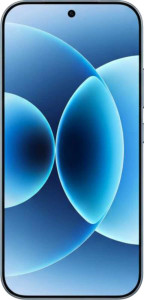
Xiaomi 17
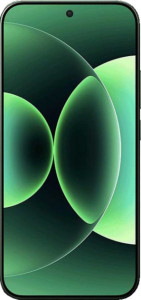
Xiaomi 17 Pro Max

Xiaomi 17 Xiaomi 17 Pro Max

Overview

Welcome to our in-depth comparison of the Xiaomi 17 and the Xiaomi 17 Pro Max. Both smartphones share a strong foundation — the same flagship Snapdragon 8 Elite Gen 5 chipset, identical RAM, and nearly identical camera configurations — yet they diverge in meaningful ways across display size, waterproofing depth, optical zoom capability, and overall physical footprint. Whether you value a compact, nimble handset or a larger powerhouse with premium extras, this comparison will help you find your match.

Common Features

  • Both phones are waterproof with an IP68 ingress protection rating.
  • Both devices share the same thickness of 8 mm.
  • Neither phone features a rugged build.
  • Neither phone can be folded.
  • Both use an OLED/AMOLED display type.
  • Both screens support a 120Hz refresh rate.
  • Branded damage-resistant glass is present on both phones.
  • HDR10 support is available on both products.
  • HDR10+ support is available on both products.
  • Always-On Display is available on both products.
  • Dolby Vision support is available on both products.
  • Both phones have a touchscreen.
  • Both devices are powered by the Qualcomm Snapdragon 8 Elite Gen 5 chipset with an Adreno 830 GPU.
  • Both phones come with 16GB of RAM.
  • CPU speed is 2 x 4.6 & 6 x 3.62 GHz on both devices.
  • Both phones achieve the same Geekbench 6 multi-core score of 10059 and single-core score of 3234.
  • Both devices feature a triple 50 & 50 & 50 MP multi-lens main camera with optical image stabilization and a BSI sensor.
  • Both phones have a 50MP front camera.
  • Both support 4K (4320 x 30 fps) video recording on the main camera.
  • Both run Android 16 with the same privacy features including clipboard warnings, location privacy options, and camera/microphone privacy options.
  • Neither phone supports Mail Privacy Protection or cross-site tracking blocking.
  • Both support theme customization and can block app tracking.
  • Both phones have a 100W wired fast charging speed and 50W wireless charging.
  • Reverse wireless charging at 22.5W is available on both devices.
  • Neither phone has a removable battery, and both come with a charger included.
  • Neither phone has a 3.5mm audio jack.
  • Stereo speakers are present on both phones.
  • Both support aptX, aptX HD, and aptX Adaptive audio codecs.
  • Neither phone supports LDAC or aptX Lossless.
  • Neither phone has a built-in radio.
  • Both phones support 5G, dual SIM, NFC, USB Type-C 3.2, and Bluetooth 5.4.
  • Neither phone has an external memory slot.
  • Both devices support download speeds of 10000 Mbit/s.
  • Both phones have a video light.
  • Neither phone has a sapphire glass display, curved display, or e-paper display.

Main Differences

  • Weight is 191 g on Xiaomi 17 and 219 g on Xiaomi 17 Pro Max.
  • Width is 71.8 mm on Xiaomi 17 and 77.6 mm on Xiaomi 17 Pro Max.
  • Height is 151.1 mm on Xiaomi 17 and 162.9 mm on Xiaomi 17 Pro Max.
  • Volume is 86.79184 cm³ on Xiaomi 17 and 101.12832 cm³ on Xiaomi 17 Pro Max.
  • Waterproof depth rating is 1.5 m on Xiaomi 17 and 6 m on Xiaomi 17 Pro Max.
  • Screen size is 6.3″ on Xiaomi 17 and 6.9″ on Xiaomi 17 Pro Max.
  • Pixel density is 464 ppi on Xiaomi 17 and 416 ppi on Xiaomi 17 Pro Max.
  • Resolution is 1220 x 2656 px on Xiaomi 17 and 1200 x 2608 px on Xiaomi 17 Pro Max.
  • A secondary screen is present on Xiaomi 17 Pro Max but not available on Xiaomi 17.
  • Internal storage is 512GB on Xiaomi 17 and 1024GB on Xiaomi 17 Pro Max.
  • Main camera wide aperture is 1.7 & 2 & 2.4f on Xiaomi 17 and 1.7 & 2.4 & 2.6f on Xiaomi 17 Pro Max.
  • Optical zoom is 2.6x on Xiaomi 17 and 5x on Xiaomi 17 Pro Max.
  • Battery capacity is 7000 mAh on Xiaomi 17 and 7500 mAh on Xiaomi 17 Pro Max.
  • Wi-Fi support includes Wi-Fi 4, 5, 6, and 7 on Xiaomi 17, while Xiaomi 17 Pro Max additionally supports Wi-Fi 6E.
Specs Comparison
Xiaomi 17

Xiaomi 17

Xiaomi 17 Pro Max

Xiaomi 17 Pro Max

Design:
water resistance Waterproof Waterproof
weight 191 g 219 g
thickness 8 mm 8 mm
width 71.8 mm 77.6 mm
height 151.1 mm 162.9 mm
volume 86.79184 cm³ 101.12832 cm³
Ingress Protection (IP) rating IP68 IP68
waterproof depth rating 1.5 m 6 m
has a rugged build
can be folded

Both phones share the same IP68 rating and 8 mm thickness, but their physical footprints diverge noticeably. The Xiaomi 17 is the more compact device at 151.1 × 71.8 mm and 191 g, while the 17 Pro Max stretches to 162.9 × 77.6 mm and weighs 219 g — a 28 g difference that becomes tangible during one-handed use over extended periods. For users who prioritize pocketability and ergonomic comfort, the standard 17 has a meaningful edge.

Where the Pro Max genuinely pulls ahead is water resistance depth. Despite both carrying an IP68 certification, the fine print matters: the 17 is rated to 1.5 m submersion, whereas the Pro Max is rated to 6 m. This is a fourfold improvement in depth tolerance — relevant not just for accidental drops in water, but for activities like snorkeling or use in heavy rain at depth. IP68 is a minimum threshold, and manufacturers can certify beyond it; the Pro Max clearly does.

In summary, the design matchup is a trade-off between form factor and water resilience. The Xiaomi 17 wins on compactness and lighter handling, making it the better daily carry for most users. The 17 Pro Max claims a clear advantage with its superior 6 m waterproof depth, which is a standout spec for anyone who frequently exposes their device to aquatic environments.

Display:
Display type OLED/AMOLED OLED/AMOLED
screen size 6.3" 6.9"
pixel density 464 ppi 416 ppi
resolution 1220 x 2656 px 1200 x 2608 px
refresh rate 120Hz 120Hz
has branded damage-resistant glass
supports HDR10
supports HDR10+
Always-On Display
supports Dolby Vision
Has a secondary screen
has a touch screen

The display story between these two phones is largely one of size versus sharpness. The Xiaomi 17 sports a 6.3″ panel at 464 ppi, while the Pro Max expands to 6.9″ but lands at 416 ppi. That 48 ppi gap is perceptible under close inspection — fine text and intricate UI elements render with slightly more crispness on the standard 17 — though both exceed the threshold where pixel structure becomes invisible to most eyes at normal viewing distances. The trade-off is real but not dramatic for everyday use.

On the content and feature side, the two phones are essentially identical: both deliver OLED/AMOLED panels with a 120Hz refresh rate, full HDR10+ and Dolby Vision support, and Always-On Display functionality. This means neither has a meaningful edge for media consumption quality or fluidity of motion — a streaming video in Dolby Vision will look equally well-calibrated on both screens.

The decisive differentiator is the Pro Max's secondary screen, a feature absent on the standard 17. Depending on implementation, a secondary display can surface notifications, media controls, or app shortcuts without waking the main panel — a genuine usability addition. Combined with its larger canvas, the Pro Max is the stronger pick for display-centric users. The Xiaomi 17 counters with its higher pixel density and more compact form, making it the sharper, more pocketable option for those who do not need the extra screen real estate.

Performance:
internal storage 512GB 1024GB
RAM 16GB 16GB
Chipset (SoC) name Qualcomm Snapdragon 8 Elite Gen 5 Qualcomm Snapdragon 8 Elite Gen 5
GPU name Adreno 830 Adreno 830
CPU speed 2 x 4.6 & 6 x 3.62 GHz 2 x 4.6 & 6 x 3.62 GHz
Geekbench 6 result (multi) 10059 10059
Geekbench 6 result (single) 3234 3234
GPU clock speed 1200 MHz 1200 MHz
Has integrated LTE
RAM speed 5300 MHz 5300 MHz
semiconductor size 3 nm 3 nm
Supports 64-bit
DirectX version DirectX 12 DirectX 12
Has integrated graphics
OpenGL version 3.2 3.2
OpenGL ES version 3.2 3.2
Uses big.LITTLE technology
CPU threads 8 threads 8 threads
Uses HMP
Has TrustZone
maximum memory bandwidth 85.1 GB/s 85.1 GB/s
OpenCL version 3 3
memory channels 2 2
L2 cache 12 MB 12 MB
Supports ECC memory
L1 cache 192 KB 192 KB
maximum memory amount 24GB 24GB
uses multithreading
Thermal Design Power (TDP) 8.2W 8.2W
DDR memory version 5 5
shading units 1536 1536
supported displays 2 2
L3 cache 8 MB 8 MB

Under the hood, these two phones are effectively twins. Both run on the Qualcomm Snapdragon 8 Elite Gen 5 built on a 3 nm process, pair it with the Adreno 830 GPU, and ship with 16 GB of DDR5 RAM running at 5300 MHz. The benchmark scores confirm there is zero daylight between them — identical Geekbench 6 single-core and multi-core results of 3234 and 10059 respectively. Any real-world performance task, from gaming to AI inference to video rendering, will play out the same way on both devices.

The sole differentiator in this group is internal storage: the Xiaomi 17 comes with 512 GB, while the Pro Max doubles that to 1024 GB. For most users, 512 GB is ample headroom, but power users who shoot 4K or 8K video, maintain large offline media libraries, or avoid cloud storage will find the Pro Max's extra capacity genuinely useful rather than merely a spec-sheet trophy.

On pure performance, this is an unambiguous tie — the silicon, memory architecture, and compute capabilities are identical. The Pro Max's storage advantage is the only deciding factor in this group, and its significance depends entirely on usage habits. Users who regularly push past 300–400 GB of local storage are the clear beneficiaries; everyone else has no performance-based reason to prefer one over the other.

Cameras:
megapixels (main camera) 50 & 50 & 50 MP 50 & 50 & 50 MP
wide aperture (main camera) 1.7 & 2 & 2.4f 1.7 & 2.4 & 2.6f
Has a dual-lens (or multi-lens) main camera
megapixels (front camera) 50MP 50MP
has built-in optical image stabilization
video recording (main camera) 4320 x 30 fps 4320 x 30 fps
Has a dual-tone LED flash
number of flash LEDs 2 2
has a BSI sensor
has a CMOS sensor
has continuous autofocus when recording movies
Has phase-detection autofocus for photos
supports slow-motion video recording
has a built-in HDR mode
has manual exposure
has a flash
optical zoom 2.6x 5x
has manual ISO
has a serial shot mode
has manual focus
has a front camera
Has laser autofocus
Shoots 360° panorama
has manual white balance
has touch autofocus
has manual shutter speed
can create panoramas in-camera
wide aperture (front camera) 2.2f 2.2f
Has timelapse function
minimum focal length 17 mm 17 mm
maximum focal length 115 mm 115 mm
Has a front-facing LED flash
has a dual-lens (or multi-lens) front camera
supports HDR10 recording
supports Dolby Vision recording
has a front-facing camera under the display
Has a RGB LED flash
has 3D photo/video recording capabilities

At first glance, the camera systems look nearly identical: both phones field a triple 50 MP rear setup with OIS, a 50 MP front camera, and identical video capabilities topping out at 4K@30fps (8K equivalent 4320p) with HDR10 and Dolby Vision recording. The shared foundation — phase-detection and laser autofocus, BSI CMOS sensors, full manual controls — means the shooting experience and image pipeline are cut from the same cloth.

The meaningful divergence lies in the telephoto lens. The Xiaomi 17 achieves 2.6x optical zoom, while the Pro Max reaches 5x — nearly double the optical reach. In practical terms, this is the difference between a short telephoto useful for mild compression and portraits, versus a true medium telephoto capable of isolating distant subjects, shooting candid street photography, or pulling in architectural detail without cropping. The aperture on the Pro Max's telephoto is slightly narrower at f/2.6 versus the 17's f/2.4, which is a minor trade-off in low-light reach but expected at longer focal lengths.

For camera versatility, the Pro Max holds a clear advantage. A 5x optical zoom meaningfully expands the range of scenarios a photographer can handle natively — without relying on digital zoom, which degrades image quality. Users who rarely shoot at distance will find the two systems functionally equivalent, but anyone who values telephoto reach as part of their shooting repertoire has a compelling reason to choose the Pro Max.

Operating system:
Android version Android 16 Android 16
has clipboard warnings
has location privacy options
has camera/microphone privacy options
has Mail Privacy Protection
has theme customization
can block app tracking
blocks cross-site tracking
has on-device machine learning
has notification permissions
has media picker
Can play games while they download
has dark mode
has Wi-Fi password sharing
has battery health check
has an extra dim mode
has focus modes
has dynamic theming
can offload apps
Has customizable notifications
has Live Text
has full-page screenshots
supports split screen
gets direct OS updates
has PiP
Can be used as a PC
Has sharing intents
has a child lock
Supports widgets
Is free and open source
Has offline voice recognition
has voice commands
Tracks the current position of a mobile device
is a multi-user system
has Quick Start

When it comes to software, there is simply no story to tell between these two devices — every single spec in this group is identical. Both ship with Android 16, carry the same privacy toolkit including location controls, camera and microphone permissions, and app tracking blockers, and offer the same productivity features such as split-screen multitasking, Picture-in-Picture, widgets, and on-device machine learning.

Notable shared omissions are worth flagging for certain users: neither phone receives direct OS updates (meaning updates are routed through Xiaomi's own release pipeline rather than pushed straight from Google), and neither supports cross-site tracking blocking or Wi-Fi password sharing — features that have become standard on competing platforms. These are consistent limitations of the lineup rather than differentiators between models.

This is a definitive tie. Choosing between the Xiaomi 17 and the Pro Max on software grounds is not possible — the operating system experience, feature set, and privacy capabilities are mirror images of each other. Any decision should rest entirely on the hardware differences covered in other spec groups.

Battery:
battery power 7000 mAh 7500 mAh
has wireless charging
Supports fast charging
charging speed 100W 100W
wireless charging speed 50W 50W
has reverse wireless charging
reverse wireless charging speed 22.5W 22.5W
comes with a charger
has a removable battery
has a battery level indicator
has a rechargeable battery

Charging infrastructure is a clean sweep for neither side — both phones are equipped with 100W wired fast charging, 50W wireless charging, and 22.5W reverse wireless charging, all backed by an in-box charger. These are generous numbers across the board, and the parity means neither device has a replenishment advantage over the other.

The only differentiator is raw battery capacity: the Xiaomi 17 packs 7000 mAh against the Pro Max's 7500 mAh. A 500 mAh gap is modest in isolation, but both figures are exceptionally large by smartphone standards — well above the 5000 mAh mainstream benchmark. In practice, both devices should comfortably clear a full day of heavy use. The Pro Max's larger cell offers a incremental buffer, though its bigger, brighter display will draw proportionally more power, meaning real-world endurance gains may be smaller than the raw capacity difference suggests.

The Pro Max holds a technical edge with its larger battery, but the advantage is narrow given the identical charging speeds and the display-driven power draw offset. For users who prioritize endurance above all else, the Pro Max is the safer bet; for everyone else, the Xiaomi 17's 7000 mAh cell is already more than sufficient, and the two phones are functionally matched in day-to-day battery experience.

Audio:
has a socket for a 3.5 mm audio jack
has stereo speakers
has aptX
has LDAC
has aptX HD
has aptX Adaptive
has aptX Lossless
Has a radio

Audio is another category where the two phones are indistinguishable on paper. Both drop the 3.5 mm headphone jack in favor of a fully wireless-oriented setup, offer stereo speakers for spatial sound during media playback, and support the same Bluetooth audio codec stack: aptX, aptX HD, and aptX Adaptive. Neither supports LDAC or aptX Lossless.

The codec lineup is worth contextualizing. aptX Adaptive is the most capable of the three, dynamically scaling bitrate up to 1 Mbps and supporting low-latency modes — making it well-suited for both high-fidelity listening and lag-sensitive applications like gaming. The absence of LDAC is notable for Sony headphone users specifically, as that codec is the standard path to hi-res wireless audio on Sony hardware, but aptX Adaptive covers comparable ground for compatible devices.

There is no basis for differentiation here — this is a complete tie. Both phones deliver an identical audio feature set, and any real-world difference in speaker quality or wireless audio performance would come down to hardware tuning rather than the specs provided. Wireless audio enthusiasts on either device will have the same codec options available to them.

Connectivity & Features:
release date September 2025 September 2025
has 5G support
Wi-Fi version Wi-Fi 4 (802.11n), Wi-Fi 6 (802.11ax), Wi-Fi 5 (802.11ac), Wi-Fi 7 (802.11be) Wi-Fi 4 (802.11n), Wi-Fi 6E (802.11ax), Wi-Fi 6 (802.11ax), Wi-Fi 5 (802.11ac), Wi-Fi 7 (802.11be)
SIM cards 2 SIM 2 SIM
Bluetooth version 5.4 5.4
has an external memory slot
Has USB Type-C
USB version 3.2 3.2
has NFC
download speed 10000 MBits/s 10000 MBits/s
upload speed 3500 MBits/s 3500 MBits/s
Has a fingerprint scanner
has emergency SOS via satellite
has crash detection
is DLNA-certified
has a gyroscope
supports ANT+
Has a heart rate monitor
has GPS
has a compass
supports Wi-Fi
Has an infrared sensor
has an accelerometer
has a cellular module
Has a barometer
has an HDMI output
Uses 3D facial recognition
Has an iris scanner
Stylus included
supports Galileo
Has motion tracking
Has optical tracking
Has a built-in projector

Across the broad sweep of connectivity features — 5G, Bluetooth 5.4, USB 3.2 Type-C, NFC, dual SIM, and a full sensor suite including gyroscope, barometer, compass, and infrared — these two phones are identical. The shared Wi-Fi 7 support is worth highlighting as a strength of the lineup overall, delivering the latest standard's multi-link operation and substantially higher theoretical throughput compared to Wi-Fi 6, future-proofing both devices for next-generation routers.

The sole differentiator in this group is the Pro Max's addition of Wi-Fi 6E support. While both phones top out at Wi-Fi 7, Wi-Fi 6E adds access to the 6 GHz radio band — a spectrum range that, where available, offers significantly less congestion than the crowded 2.4 GHz and 5 GHz bands. In dense urban environments or apartment buildings with many competing networks, 6 GHz access can translate into more consistent speeds and lower latency. The Xiaomi 17 omits this band entirely.

The Pro Max earns a narrow but real connectivity edge through Wi-Fi 6E. For most users in typical home environments, this distinction will rarely surface in practice — Wi-Fi 7 on both devices already represents top-tier wireless capability. However, users in high-density settings who have or plan to upgrade to a 6 GHz-capable router will get more out of the Pro Max's expanded spectrum support.

Miscellaneous:
has a video light
Has sapphire glass display
Has a curved display
Has an e-paper display

The miscellaneous spec group offers very little to analyze — all four data points are identical across both devices. Neither the Xiaomi 17 nor the Pro Max features a sapphire glass display, a curved screen, or an e-paper panel, and both include a video light. The absence of differentiating features here makes this the thinnest comparison category in the entire lineup.

This is an unambiguous tie with no actionable distinction between the two models. Buyers weighing the Xiaomi 17 against the Pro Max should look entirely to other spec groups — design, cameras, display, and connectivity — to inform their decision, as this category contributes nothing to the differentiation story.

Comparison Summary & Verdict

After a thorough look at every specification, the Xiaomi 17 and Xiaomi 17 Pro Max emerge as two distinct options built around the same powerful core. The Xiaomi 17 stands out for users who prefer a lighter, more pocketable device: at just 191 g with a 6.3″ screen and a higher pixel density of 464 ppi, it delivers a sharper and easier-to-handle experience. The Xiaomi 17 Pro Max, on the other hand, caters to power users who want the absolute best — its 6 m waterproof depth rating, 5x optical zoom, secondary screen, larger 7500 mAh battery, 1TB storage, and added Wi-Fi 6E support make it a more capable and future-proof device. Both share the same chipset, audio features, charging speeds, and Android 16 software. Your choice ultimately comes down to portability versus maximum capability.

Xiaomi 17
Buy Xiaomi 17 if...

Buy the Xiaomi 17 if you want a lighter, more compact phone with a sharper 464 ppi display and a form factor that is easier to use one-handed.

Xiaomi 17 Pro Max
Buy Xiaomi 17 Pro Max if...

Buy the Xiaomi 17 Pro Max if you need superior waterproofing at 6 m, a 5x optical zoom camera, a larger battery, 1TB of storage, and a secondary screen for a more versatile flagship experience.