Xiaomi Electric Scooter 5 Max
Xiaomi Electric Scooter 5 Plus

Xiaomi Electric Scooter 5 Max Xiaomi Electric Scooter 5 Plus

Overview

Welcome to our in-depth comparison of the Xiaomi Electric Scooter 5 Max and the Xiaomi Electric Scooter 5 Plus. Both scooters share a solid foundation — identical battery capacity, top speed, and range — yet they diverge in meaningful ways when it comes to motor power, weight, wheel size, and hill-climbing ability. Whether portability or a more commanding ride is your priority, this comparison will help you choose the right model for your daily commute.

Common Features

  • Both scooters have suspension.
  • Both scooters are compatible with a dedicated smartphone app.
  • Both scooters are equipped with pneumatic tires.
  • Neither scooter comes with a seat.
  • Both scooters can be folded for storage or transport.
  • Neither scooter is designed for kids.
  • Both scooters have front light(s).
  • Both scooters have rear light(s).
  • Both scooters have a top speed of 25 km/h.
  • Neither scooter uses dual motors.
  • Both scooters are equipped with a rear brake.
  • Both scooters are equipped with a front brake.
  • Both scooters support a maximum weight capacity of 120 kg.
  • Both scooters have a charge time of 9 hours.
  • Both scooters offer a maximum distance of 60 km per charge.
  • Both scooters include a battery level indicator.
  • Regenerative braking is available on both scooters.
  • Neither scooter has a removable battery.
  • Both scooters share the same battery size of 477 Wh.

Main Differences

  • Weight is 22300 g on Xiaomi Electric Scooter 5 Max and 26600 g on Xiaomi Electric Scooter 5 Plus.
  • Wheel diameter is 10″ on Xiaomi Electric Scooter 5 Max and 12″ on Xiaomi Electric Scooter 5 Plus.
  • Height is 1271 mm on Xiaomi Electric Scooter 5 Max and 1306 mm on Xiaomi Electric Scooter 5 Plus.
  • Width is 1192 mm on Xiaomi Electric Scooter 5 Max and 1275.8 mm on Xiaomi Electric Scooter 5 Plus.
  • Motor power is 1000W on Xiaomi Electric Scooter 5 Max and 900W on Xiaomi Electric Scooter 5 Plus.
  • Climbing angle is 22° on Xiaomi Electric Scooter 5 Max and 20° on Xiaomi Electric Scooter 5 Plus.
Specs Comparison
Xiaomi Electric Scooter 5 Max

Xiaomi Electric Scooter 5 Max

Xiaomi Electric Scooter 5 Plus

Xiaomi Electric Scooter 5 Plus

Design:
weight 22300 g 26600 g
has suspension
Has a dedicated smartphone app
has pneumatic tires
wheel diameter 10" 12"
has a seat
can be folded
is designed for kids
height 1271 mm 1306 mm
width 1192 mm 1275.8 mm
has front light(s)
has rear light(s)
Ingress Protection (IP) rating IPX5 IPX5
release date January 2025 July 2025

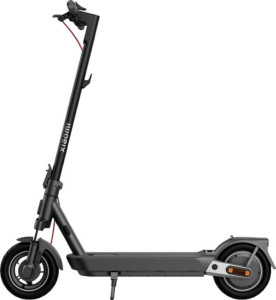
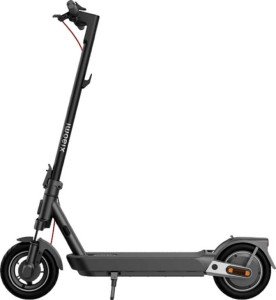
Both the Xiaomi Electric Scooter 5 Max and the Xiaomi Electric Scooter 5 Plus share a strong design foundation: they fold for storage and transport, feature suspension for ride comfort, use pneumatic tires for better shock absorption than solid alternatives, and carry an IPX5 water resistance rating, meaning both can handle rain and splashes without issue. Front and rear lighting is present on each, and neither is designed for children nor comes with a seat, placing both firmly in the adult commuter category.

The clearest design differentiator is physical size and weight. The 5 Plus is notably larger, with 12″ wheels versus the Max's 10″, a height of 1306 mm compared to 1271 mm, and a width of 1275.8 mm versus 1192 mm. Most significantly, it weighs 26,600 g against the Max's 22,300 g — a difference of over 4 kg. Larger wheels generally improve stability and the ability to roll over uneven surfaces or curb edges more smoothly, but the added bulk makes the 5 Plus noticeably harder to carry up stairs or onto public transit.

For urban commuters who regularly need to carry their scooter, the 5 Max holds a clear portability edge thanks to its lower weight and more compact footprint. Riders who prioritize a planted, stable feel on longer or rougher routes may prefer the 5 Plus's larger wheel diameter, but they will pay for it in handling weight. Both scooters are otherwise design equals across safety, connectivity, and build features.
Performance:
motor power 1000W 900W
top speed 25 km/h 25 km/h
has dual motors
climbing angle 22° 20°
has a rear brake
has a front brake
maximum weight capacity 120kg 120kg

On paper, the performance gap between these two scooters is narrow but meaningful. The 5 Max packs a 1000W motor while the 5 Plus runs a 900W unit — a 10% power advantage that both share the same 25 km/h top speed cap, likely a regulatory limit rather than a hardware ceiling. Where that extra wattage does make a tangible difference is in real-world grunt: acceleration responsiveness and sustained power delivery on inclines.

The climbing angle tells that story directly. The 5 Max handles slopes up to 22°, versus 20° for the 5 Plus. Two degrees may sound trivial, but in practical terms a 22° incline is noticeably steep — think aggressive urban hills or parking ramp gradients — and having the motor headroom to tackle those confidently without bogging down matters for riders in hilly cities. Both scooters share an identical 120 kg maximum load capacity and dual front-and-rear braking, so stopping performance and rider weight support are evenly matched.

For performance, the 5 Max holds a clear edge: its higher motor output and superior climbing angle make it the stronger choice for riders who encounter hills regularly or want a more responsive throttle feel. For flat urban environments, the gap largely disappears since both scooters reach the same top speed and carry the same load — but the 5 Max offers more headroom when the terrain gets demanding.

Battery:
charge time 9 hours 9 hours
maximum distance per charge 60 km 60 km
has a battery level indicator
Has regenerative braking
has a removable battery
battery size 477 Wh 477 Wh

Battery is the one category where this comparison requires no deliberation: the Xiaomi Electric Scooter 5 Max and 5 Plus are identical in every measurable way. Both carry a 477 Wh pack, deliver a maximum range of 60 km per charge, and refill in 9 hours — a full overnight charge cycle that suits most daily commuting patterns.

The shared 477 Wh capacity is substantial for this class of scooter, and the 60 km range figure gives meaningful buffer for real-world riding, where actual range typically falls short of rated maximums due to rider weight, terrain, and speed. Both scooters also feature regenerative braking, which recovers a modest amount of energy during deceleration and can marginally extend range in stop-and-go urban environments. Neither has a removable battery, so charging must be done with the scooter stationary and connected directly.

This group is a complete tie. A buyer hoping to use battery specs as a tiebreaker between these two models will find no grounds to do so — every figure is shared exactly. The battery decision effectively comes down to which scooter's performance or design traits better suit the rider's needs, since energy capacity and range will be identical whichever model they choose.

Comparison Summary & Verdict

After examining all specifications, both scooters prove to be well-matched in core areas: they share the same 477 Wh battery, a 60 km range, a 25 km/h top speed, and a 120 kg weight capacity. However, their differences speak clearly to different rider profiles. The Xiaomi Electric Scooter 5 Max stands out with its 1000W motor, steeper 22° climbing angle, and lighter 22.3 kg frame, making it the stronger choice for riders tackling hilly terrain who also value easier portability. The Xiaomi Electric Scooter 5 Plus, with its larger 12″ wheels and wider stance, is better suited to riders who prioritize stability and a smoother ride on varied urban surfaces, and who are less concerned about the extra weight.

Xiaomi Electric Scooter 5 Max
Buy Xiaomi Electric Scooter 5 Max if...

Buy the Xiaomi Electric Scooter 5 Max if you want a lighter scooter with a more powerful 1000W motor and a steeper 22° climbing angle for hilly routes.

Xiaomi Electric Scooter 5 Plus
Buy Xiaomi Electric Scooter 5 Plus if...

Buy the Xiaomi Electric Scooter 5 Plus if you prefer larger 12″ wheels for added stability and a more planted feel on varied urban surfaces.