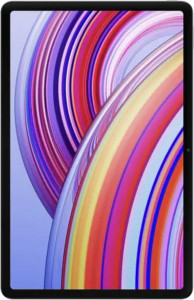
Xiaomi Pad 7S Pro 12.5
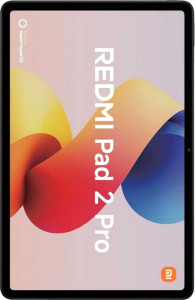
Xiaomi Redmi Pad 2 Pro

Xiaomi Pad 7S Pro 12.5 Xiaomi Redmi Pad 2 Pro

Overview

Welcome to our in-depth comparison of the Xiaomi Pad 7S Pro 12.5 and the Xiaomi Redmi Pad 2 Pro, two Android tablets sharing the same ecosystem but targeting very different users. In this head-to-head, we examine the key battlegrounds: display quality and refresh rate, raw processing power, camera capabilities, and everyday usability features to help you decide which slate truly fits your needs.

Common Features

  • Neither product includes a stylus.
  • Neither product has a detachable keyboard.
  • Neither product has a backlit keyboard.
  • Neither product offers water resistance.
  • Neither product has tilt sensitivity.
  • Both products use an LCD IPS display type.
  • Both products have branded damage-resistant glass.
  • Both products have a touch screen.
  • Neither product has a sapphire glass display.
  • Neither product supports HDR10+.
  • Both products support Dolby Vision.
  • Neither product has an e-paper display.
  • Both products support 64-bit processing.
  • Both products have integrated LTE.
  • Both products use big.LITTLE technology.
  • Both products support DirectX 12.
  • Both products have integrated graphics.
  • Both products have TrustZone support.
  • Both products support a maximum memory amount of 16GB.
  • Both products run Android 15.
  • Both products have a flash.
  • Both products have a front camera.
  • Both products have a built-in HDR mode.
  • Both products support slow-motion video recording.
  • Both products have touch autofocus.
  • Neither product has a BSI sensor.
  • Both products support manual white balance.
  • Both products have a CMOS sensor.
  • Both products support LDAC.
  • Both products have stereo speakers.
  • Neither product has a radio.
  • Both products support fast charging.
  • Neither product has wireless charging.
  • Both products have a battery level indicator.
  • Both products have a rechargeable battery.
  • Neither product has a removable battery.
  • Neither product has Mail Privacy Protection.
  • Both products have on-device machine learning.
  • Both products have clipboard warnings.
  • Both products have location privacy options.
  • Both products have camera and microphone privacy options.
  • Both products can block app tracking.
  • Neither product blocks cross-site tracking.
  • Both products support split screen.
  • Both products use DDR5 memory.
  • Both products use multithreading.

Main Differences

  • Weight is 585 g on Xiaomi Pad 7S Pro 12.5 and 610 g on Xiaomi Redmi Pad 2 Pro.
  • Thickness is 5.8 mm on Xiaomi Pad 7S Pro 12.5 and 7.5 mm on Xiaomi Redmi Pad 2 Pro.
  • Width is 279.1 mm on Xiaomi Pad 7S Pro 12.5 and 279.8 mm on Xiaomi Redmi Pad 2 Pro.
  • Height is 192 mm on Xiaomi Pad 7S Pro 12.5 and 181.7 mm on Xiaomi Redmi Pad 2 Pro.
  • Volume is 310.81 cm³ on Xiaomi Pad 7S Pro 12.5 and 381.30 cm³ on Xiaomi Redmi Pad 2 Pro.
  • Screen size is 12.5″ on Xiaomi Pad 7S Pro 12.5 and 12.1″ on Xiaomi Redmi Pad 2 Pro.
  • Resolution is 3200 x 2136 px on Xiaomi Pad 7S Pro 12.5 and 2560 x 1600 px on Xiaomi Redmi Pad 2 Pro.
  • Pixel density is 308 ppi on Xiaomi Pad 7S Pro 12.5 and 249 ppi on Xiaomi Redmi Pad 2 Pro.
  • Refresh rate is 144Hz on Xiaomi Pad 7S Pro 12.5 and 120Hz on Xiaomi Redmi Pad 2 Pro.
  • HDR10 support is present on Xiaomi Pad 7S Pro 12.5 but not available on Xiaomi Redmi Pad 2 Pro.
  • Typical brightness is 1000 nits on Xiaomi Pad 7S Pro 12.5 and 600 nits on Xiaomi Redmi Pad 2 Pro.
  • Internal storage is 1024GB on Xiaomi Pad 7S Pro 12.5 and 256GB on Xiaomi Redmi Pad 2 Pro.
  • RAM is 16GB on Xiaomi Pad 7S Pro 12.5 and 8GB on Xiaomi Redmi Pad 2 Pro.
  • The chipset is Xring O1 on Xiaomi Pad 7S Pro 12.5 and Qualcomm Snapdragon 7s Gen 4 on Xiaomi Redmi Pad 2 Pro.
  • The GPU is ARM Immortalis-G925 on Xiaomi Pad 7S Pro 12.5 and Adreno 710 on Xiaomi Redmi Pad 2 Pro.
  • CPU speed is 4 x 3.4 & 2 x 1.89 & 2 x 1.8 & 2 x 3.9 GHz on Xiaomi Pad 7S Pro 12.5 and 1 x 2.7 & 3 x 2.4 & 4 x 1.8 GHz on Xiaomi Redmi Pad 2 Pro.
  • An external memory slot is available on Xiaomi Redmi Pad 2 Pro but not on Xiaomi Pad 7S Pro 12.5.
  • Semiconductor size is 3 nm on Xiaomi Pad 7S Pro 12.5 and 4 nm on Xiaomi Redmi Pad 2 Pro.
  • GPU clock speed is 1612 MHz on Xiaomi Pad 7S Pro 12.5 and 1050 MHz on Xiaomi Redmi Pad 2 Pro.
  • CPU threads are 10 on Xiaomi Pad 7S Pro 12.5 and 8 on Xiaomi Redmi Pad 2 Pro.
  • RAM speed is 4800 MHz on Xiaomi Pad 7S Pro 12.5 and 3200 MHz on Xiaomi Redmi Pad 2 Pro.
  • Maximum memory bandwidth is 76.8 GB/s on Xiaomi Pad 7S Pro 12.5 and 25.6 GB/s on Xiaomi Redmi Pad 2 Pro.
  • OpenCL version is 3 on Xiaomi Pad 7S Pro 12.5 and 2 on Xiaomi Redmi Pad 2 Pro.
  • Main camera resolution is 50 MP on Xiaomi Pad 7S Pro 12.5 and 8 MP on Xiaomi Redmi Pad 2 Pro.
  • Front camera resolution is 32 MP on Xiaomi Pad 7S Pro 12.5 and 8 MP on Xiaomi Redmi Pad 2 Pro.
  • Main camera video recording goes up to 2160p at 60 fps on Xiaomi Pad 7S Pro 12.5 and 1080p at 30 fps on Xiaomi Redmi Pad 2 Pro.
  • In-camera panorama creation is available on Xiaomi Pad 7S Pro 12.5 but not on Xiaomi Redmi Pad 2 Pro.
  • A serial shot mode is available on Xiaomi Pad 7S Pro 12.5 but not on Xiaomi Redmi Pad 2 Pro.
  • A dual-tone LED flash is present on Xiaomi Pad 7S Pro 12.5 but not on Xiaomi Redmi Pad 2 Pro.
  • A 3.5 mm audio jack is available on Xiaomi Redmi Pad 2 Pro but not on Xiaomi Pad 7S Pro 12.5.
  • Battery capacity is 10610 mAh on Xiaomi Pad 7S Pro 12.5 and 12000 mAh on Xiaomi Redmi Pad 2 Pro.
  • Wi-Fi 6E and Wi-Fi 7 support is present on Xiaomi Pad 7S Pro 12.5 but not available on Xiaomi Redmi Pad 2 Pro.
  • A fingerprint scanner is present on Xiaomi Pad 7S Pro 12.5 but not available on Xiaomi Redmi Pad 2 Pro.
  • A compass is present on Xiaomi Pad 7S Pro 12.5 but not available on Xiaomi Redmi Pad 2 Pro.
  • An infrared sensor is present on Xiaomi Pad 7S Pro 12.5 but not available on Xiaomi Redmi Pad 2 Pro.
Specs Comparison
Xiaomi Pad 7S Pro 12.5

Xiaomi Pad 7S Pro 12.5

Xiaomi Redmi Pad 2 Pro

Xiaomi Redmi Pad 2 Pro

Design:
weight 585 g 610 g
thickness 5.8 mm 7.5 mm
width 279.1 mm 279.8 mm
height 192 mm 181.7 mm
volume 310.80576 cm³ 381.29745 cm³
Stylus included
Has a detachable keyboard
Has a backlit keyboard
water resistance None None
Has tilt sensitivity

The most striking physical difference between these two tablets is thickness. The Xiaomi Pad 7S Pro 12.5 measures just 5.8 mm thick, compared to 7.5 mm for the Redmi Pad 2 Pro — a 1.7 mm gap that translates into a noticeably more premium, svelte feel in hand and in a bag. This difference is reinforced by their total volumes: the Pad 7S Pro displaces roughly 310.8 cm³ versus the Redmi Pad 2 Pro's 381.3 cm³, meaning the former occupies about 18% less space overall despite having a taller footprint (192 mm vs 181.7 mm). The widths are virtually identical at around 279 mm, so the visual and tactile gap comes down to that thinness advantage.

Weight follows a similar pattern: the Pad 7S Pro comes in at 585 g against the Redmi Pad 2 Pro's 610 g. That 25 g difference may seem marginal on paper, but when holding a tablet for extended reading, video watching, or note-taking sessions, lighter and thinner consistently translate to less fatigue. Neither tablet ships with a stylus, detachable keyboard, or backlit keyboard, and neither carries any water resistance rating — so those categories offer no differentiation between the two.

On design, the Pad 7S Pro 12.5 holds a clear edge: it is meaningfully thinner, lighter, and more compact in total volume. For users who prioritize portability and a premium physical form factor, this is a genuine advantage. The Redmi Pad 2 Pro's slightly shorter height is the only dimensional area where it differs in the other direction, but that alone does not offset the overall bulk disadvantage.

Display:
screen size 12.5" 12.1"
resolution 3200 x 2136 px 2560 x 1600 px
pixel density 308 ppi 249 ppi
Display type LCD, IPS LCD, IPS
refresh rate 144Hz 120Hz
has branded damage-resistant glass
supports HDR10
brightness (typical) 1000 nits 600 nits
has a touch screen
Has sapphire glass display
supports HDR10+
supports Dolby Vision
Has an e-paper display

Screen quality is where the gap between these two tablets becomes especially pronounced. The Pad 7S Pro 12.5 packs a 3200 x 2136 resolution into its larger 12.5″ panel, yielding a pixel density of 308 ppi — versus 2560 x 1600 at 249 ppi on the Redmi Pad 2 Pro's 12.1″ screen. That 59 ppi difference is perceptible: text will appear crisper and fine detail in images or video will be more defined on the Pad 7S Pro, which matters for reading, photo editing, or any close-up tablet use.

Brightness is an equally significant differentiator. At 1000 nits typical, the Pad 7S Pro is nearly 67% brighter than the Redmi Pad 2 Pro's 600 nits. In practical terms, this means much more comfortable outdoor or brightly lit indoor use on the Pad 7S Pro, where glare and washout become serious issues at lower brightness levels. The Pad 7S Pro also supports HDR10 in addition to Dolby Vision — a combination the Redmi Pad 2 Pro cannot match, as it lacks HDR10 support entirely. For streaming HDR content from compatible platforms, this gives the Pad 7S Pro a richer, more dynamic image on supported content. The refresh rate advantage is more modest: 144Hz versus 120Hz — both feel smooth for scrolling and media, though 144Hz provides a slightly more fluid experience in fast-motion scenarios.

Both panels are IPS LCD with branded damage-resistant glass and touch support, so neither holds an inherent panel-type advantage. Overall, the Pad 7S Pro 12.5 has a decisive display edge across every meaningful metric — sharper resolution, higher brightness, and broader HDR compatibility — making it the stronger choice for users who prioritize screen quality.

Performance:
internal storage 1024GB 256GB
RAM 16GB 8GB
Chipset (SoC) name Xring O1 Qualcomm Snapdragon 7s Gen 4
GPU name ARM Immortalis-G925 Adreno 710
CPU speed 4 x 3.4 & 2 x 1.89 & 2 x 1.8 & 2 x 3.9 GHz 1 x 2.7 & 3 x 2.4 & 4 x 1.8 GHz
has an external memory slot
semiconductor size 3 nm 4 nm
Supports 64-bit
Has integrated LTE
Uses big.LITTLE technology
DirectX version DirectX 12 DirectX 12
Has integrated graphics
GPU clock speed 1612 MHz 1050 MHz
CPU threads 10 threads 8 threads
RAM speed 4800 MHz 3200 MHz
Has TrustZone
maximum memory amount 16GB 16GB
Android version Android 15 Android 15
Uses HMP
maximum memory bandwidth 76.8 GB/s 25.6 GB/s
OpenCL version 3 2

The silicon gap between these two tablets is substantial. The Pad 7S Pro 12.5 runs on the Xring O1, a 3 nm chip with a 10-thread CPU configuration peaking at 3.9 GHz, while the Redmi Pad 2 Pro uses the Snapdragon 7s Gen 4, built on a 4 nm process with 8 threads topping out at 2.7 GHz. The smaller node on the Pad 7S Pro is not just a marketing figure — it directly translates to better power efficiency and thermal headroom, meaning the chip can sustain higher performance under load without throttling as aggressively. The Pad 7S Pro's memory subsystem reinforces this advantage: 16 GB of RAM at 4800 MHz versus 8 GB at 3200 MHz on the Redmi Pad 2 Pro, paired with a maximum memory bandwidth of 76.8 GB/s compared to just 25.6 GB/s — a 3x difference that benefits everything from app switching to GPU-accelerated workloads.

Graphics performance follows the same trajectory. The Pad 7S Pro's ARM Immortalis-G925 GPU clocks at 1612 MHz, considerably ahead of the Redmi Pad 2 Pro's Adreno 710 at 1050 MHz. For gaming, video editing, or rendering tasks, this gap will be tangible. Storage also diverges sharply: the Pad 7S Pro ships with up to 1024 GB of internal storage versus 256 GB on the Redmi Pad 2 Pro — though the Redmi model does offer a microSD slot for expansion, partially compensating for its lower base capacity.

Across every core performance dimension, the Pad 7S Pro 12.5 holds a commanding advantage: faster and more efficient silicon, triple the memory bandwidth, double the RAM, and a higher-clocked GPU. The Redmi Pad 2 Pro's expandable storage is a practical convenience, but it does nothing to close the raw compute gap. For users who demand sustained performance in demanding apps or games, the Pad 7S Pro is in a different league here.

Cameras:
megapixels (main camera) 50 MP 8 MP
megapixels (front camera) 32MP 8MP
video recording (main camera) 2160 x 60 fps 1080 x 30 fps
has a flash
has a front camera
has a built-in HDR mode
can create panoramas in-camera
supports slow-motion video recording
has touch autofocus
has a BSI sensor
has manual white balance
has a CMOS sensor
has continuous autofocus when recording movies
Has a front-facing LED flash
number of flash LEDs 1 1
has manual ISO
has a video light
Shoots 360° panorama
has a serial shot mode
has built-in optical image stabilization
Has a dual-tone LED flash
has manual focus
Has a RGB LED flash
has manual exposure

Camera hardware is rarely a tablet's primary selling point, but the difference here is hard to ignore. The Pad 7S Pro 12.5 fields a 50 MP main camera capable of shooting 4K video at 60 fps, while the Redmi Pad 2 Pro offers just 8 MP on its rear shooter with a ceiling of 1080p at 30 fps. The resolution gap is massive — roughly 6x more pixels — which means the Pad 7S Pro can capture significantly more detail in photos and has far greater flexibility for cropping. The video ceiling matters too: 4K/60fps produces smoother, cinema-grade footage compared to the Redmi Pad 2 Pro's 1080p/30fps, which is a noticeable step down for anyone recording presentations, vlogs, or family moments.

The front camera follows the same pattern: 32 MP on the Pad 7S Pro versus 8 MP on the Redmi Pad 2 Pro. For video calls, which are a primary use case on large-screen tablets, this is a meaningful advantage — sharper selfie video and stills on the Pad 7S Pro. Feature-wise, the Pad 7S Pro also adds panorama shooting, serial shot mode, and a dual-tone LED flash; the Redmi Pad 2 Pro lacks all three. Both share a solid common baseline — HDR mode, touch autofocus, continuous autofocus during recording, manual controls for ISO, white balance, focus, and exposure — so the Redmi Pad 2 Pro is not without fundamentals.

Still, the verdict is clear: the Pad 7S Pro 12.5 wins this category decisively. Its camera system is in an entirely different class — higher resolution on both cameras, vastly superior video capability, and a broader feature set. Users who use their tablet for content creation, documentation, or frequent video calls will find the Redmi Pad 2 Pro's camera noticeably limiting by comparison.
Audio:
has LDAC
has stereo speakers
has a socket for a 3.5 mm audio jack
Has a radio

Audio specs are lean for both tablets, but the one differentiator here carries real-world weight. Both the Pad 7S Pro 12.5 and the Redmi Pad 2 Pro offer stereo speakers and LDAC support — the high-resolution Bluetooth audio codec that enables near-lossless wireless audio when paired with compatible headphones. That shared foundation means neither has an inherent edge for wireless listening quality or speaker setup.

Where they diverge is the 3.5 mm headphone jack: the Redmi Pad 2 Pro has one; the Pad 7S Pro does not. For users who rely on wired headphones or earphones — whether for latency-free audio, in-flight use without adapters, or simply preference — this is a genuine convenience advantage for the Redmi Pad 2 Pro. The Pad 7S Pro users would need a USB-C to 3.5 mm adapter to use wired headphones, adding a dependency that some will find inconvenient.

Given the limited data available, the Redmi Pad 2 Pro holds a narrow edge in audio purely by virtue of its headphone jack — a feature that asks nothing extra of the user. For those committed to wireless-only listening, the two tablets are functionally tied in this category.

Battery:
battery power 10610 mAh 12000 mAh
Supports fast charging
has wireless charging
has a battery level indicator
has a rechargeable battery
has a removable battery

Battery capacity is the one spec group where the Redmi Pad 2 Pro pulls ahead on paper. Its 12000 mAh cell is notably larger than the 10610 mAh unit in the Pad 7S Pro 12.5 — a difference of roughly 1390 mAh, or about 13% more stored energy. All else being equal, that translates to meaningfully longer time between charges, which matters for travel, extended work sessions, or simply reducing how often you reach for a cable.

That said, raw capacity does not tell the whole story. The Pad 7S Pro drives a higher-resolution, brighter display and a more powerful chipset — both of which consume more power. So while the Redmi Pad 2 Pro starts with a larger battery, the Pad 7S Pro's more demanding hardware could partially or fully offset that advantage in real-world screen-on time. The provided specs do not include efficiency or discharge rate data, so a definitive runtime conclusion cannot be drawn from capacity alone. Both tablets support fast charging and share an identical non-removable, rechargeable design — neither offers wireless charging.

On the specs available, the Redmi Pad 2 Pro holds the battery edge by virtue of its larger capacity. Whether that advantage survives the Pad 7S Pro's higher power demands in practice is a question the raw numbers here cannot fully answer, but as a starting point, more milliamp-hours is a tangible asset for endurance-focused users.

Connectivity & Features:
release date June 2025 September 2025
Wi-Fi version Wi-Fi 4 (802.11n), Wi-Fi 5 (802.11ac), Wi-Fi 6 (802.11ax), Wi-Fi 6E (802.11ax), Wi-Fi 7 (802.11be) Wi-Fi 4 (802.11n), Wi-Fi 5 (802.11ac), Wi-Fi 6 (802.11ax)
has Mail Privacy Protection
has on-device machine learning
has clipboard warnings
has location privacy options
has camera/microphone privacy options
can block app tracking
blocks cross-site tracking
supports split screen
has Live Text
has notification permissions
has full-page screenshots
has Quick Start
has theme customization
has Wi-Fi password sharing
has PiP
Can play games while they download
has an extra dim mode
can offload apps
has focus modes
has media picker
has dynamic theming
has dark mode
has battery health check
Has USB Type-C
has a cellular module
has 5G support
is a multi-user system
gets direct OS updates
has GPS
has a child lock
has an HDMI output
has NFC
Has a fingerprint scanner
Supports widgets
Bluetooth version 5.4 5.4
has a gyroscope
Is free and open source
Has offline voice recognition
has a compass
supports Wi-Fi
Has sharing intents
Has customizable notifications
Uses 3D facial recognition
has an accelerometer
has voice commands
Has an iris scanner
Has a built-in projector
supports Ethernet
Has an infrared sensor
Tracks the current position of a mobile device

Wireless connectivity is where the first meaningful split appears. The Pad 7S Pro 12.5 supports Wi-Fi 7 (802.11be) and Wi-Fi 6E in addition to the standard Wi-Fi 4/5/6 stack, while the Redmi Pad 2 Pro tops out at Wi-Fi 6 (802.11ax). Wi-Fi 7 brings significantly higher theoretical throughput and lower latency, and Wi-Fi 6E adds access to the less congested 6 GHz band — both relevant for users on modern routers in dense environments or those pushing large file transfers and 4K streaming. Bluetooth is identical at 5.4 on both devices, so wireless audio and peripheral pairing are evenly matched.

Beyond wireless, the Pad 7S Pro adds three hardware features the Redmi Pad 2 Pro lacks entirely: a fingerprint scanner, a compass, and an infrared sensor. The fingerprint scanner is arguably the most impactful of these — it enables fast, convenient biometric unlocking without relying solely on a PIN or pattern. The infrared sensor allows the tablet to function as a universal remote control for compatible appliances, a niche but genuinely useful feature. The compass rounds out a more complete sensor suite, though its absence on the Redmi Pad 2 Pro is unlikely to affect most users day-to-day.

Across the rest of the feature set — split screen, PiP, dark mode, widgets, privacy controls, on-device ML, and more — the two tablets are essentially identical. But taken together, the Wi-Fi 7 support and additional hardware sensors give the Pad 7S Pro 12.5 a clear connectivity and features advantage, particularly for users on cutting-edge network infrastructure or those who value biometric security and smart home control.

Miscellaneous:
DDR memory version 5 5
uses multithreading

The Miscellaneous group offers only two data points, and both tell the same story: the Xiaomi Pad 7S Pro 12.5 and the Xiaomi Redmi Pad 2 Pro are fully matched here. Both use DDR5 memory and both support multithreading — meaning neither has an architectural edge on these particular characteristics.

DDR5 is the current-generation memory standard, bringing higher bandwidth and improved power efficiency compared to DDR4, so both tablets benefit equally from that foundation. Multithreading support, similarly, is a baseline expectation for any modern tablet chipset and adds no differentiation between the two.

This is a straightforward tie: the available specs in this group reveal no meaningful distinction between the two products.

Comparison Summary & Verdict

After reviewing every specification, a clear profile emerges for each tablet. The Xiaomi Pad 7S Pro 12.5 is the obvious choice for power users and multimedia enthusiasts, offering a sharper 3200 x 2136 px display at 144Hz, a cutting-edge Xring O1 chip built on a 3 nm process, a superior 50 MP main camera, Wi-Fi 7 connectivity, and a fingerprint scanner. Its slimmer, lighter build adds to the premium feel. The Xiaomi Redmi Pad 2 Pro, on the other hand, appeals to users who value a larger 12000 mAh battery, a 3.5 mm headphone jack, and expandable storage via a microSD slot, all at a more accessible level of performance. If you want the absolute best display, performance, and camera experience, go with the Pad 7S Pro 12.5. If battery endurance, audio flexibility, and storage expandability matter more to you, the Redmi Pad 2 Pro delivers solid value.

Xiaomi Pad 7S Pro 12.5
Buy Xiaomi Pad 7S Pro 12.5 if...

Buy the Xiaomi Pad 7S Pro 12.5 if you want a sharper, brighter 144Hz display, significantly faster performance with the Xring O1 chip, a high-resolution 50 MP camera, and premium features like Wi-Fi 7 and a fingerprint scanner.

Xiaomi Redmi Pad 2 Pro
Buy Xiaomi Redmi Pad 2 Pro if...

Buy the Xiaomi Redmi Pad 2 Pro if you prioritize a larger 12000 mAh battery for extended use, the convenience of a 3.5 mm headphone jack, and the flexibility of expandable storage via a memory card slot.