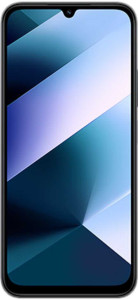
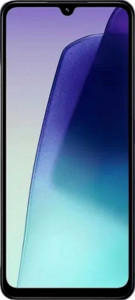
Xiaomi Poco C85 4G
Xiaomi Poco M7

Xiaomi Poco C85 4G Xiaomi Poco M7

Overview

Welcome to our in-depth spec comparison between the Xiaomi Poco C85 4G and the Xiaomi Poco M7. Both phones share a familiar mid-range foundation — 8GB of RAM, a 120Hz LCD display, and a 50MP main camera — yet they diverge sharply when it comes to chipset architecture, battery capacity, and connectivity options. Read on to see which device truly delivers more value for your specific needs.

Common Features

  • Both phones are water resistant.
  • Neither phone has a rugged build.
  • Neither phone can be folded.
  • Both phones feature an LCD IPS display with a 120Hz refresh rate.
  • Neither phone has branded damage-resistant glass.
  • HDR10 support is not available on either product.
  • HDR10+ support is not available on either product.
  • Always-On Display is not available on either product.
  • Dolby Vision support is not available on either product.
  • Neither phone has a secondary screen.
  • Both phones come with 8GB of RAM.
  • Both phones have integrated LTE and support 64-bit processing.
  • Both phones support DirectX 12 and OpenGL ES 3.2.
  • Both phones use big.LITTLE CPU technology with 8 threads.
  • Both phones have an 8MP front camera.
  • Neither phone has built-in optical image stabilization.
  • Both phones record main camera video at 1080p 30fps.
  • Neither phone has a dual-tone LED flash; each has a single LED flash.
  • Both phones have a CMOS sensor but no BSI sensor.
  • Both phones support continuous autofocus when recording movies.
  • Both phones run Android with clipboard warnings, location privacy options, and camera/microphone privacy options.
  • Theme customization is available on both phones.
  • App tracking can be blocked on both phones.
  • On-device machine learning is supported on both phones.
  • Neither phone supports wireless charging, but both support fast charging.
  • Neither phone has a removable battery.
  • Both phones have a battery level indicator and a rechargeable battery.
  • Both phones have a 3.5mm audio jack.
  • Neither phone has stereo speakers.
  • aptX, LDAC, aptX HD, aptX Adaptive, aptX Lossless are not supported on either phone.
  • Both phones support Wi-Fi 4 (802.11n) and Wi-Fi 5 (802.11ac).
  • Both phones have dual SIM support and an external memory slot.
  • Both phones have USB Type-C with USB version 2.
  • NFC is available on both phones.
  • Both phones have a fingerprint scanner.
  • Emergency SOS via satellite is not available on either phone.
  • Both phones have a video light.
  • Neither phone has a sapphire glass display, curved display, or e-paper display.

Main Differences

  • Weight is 205 g on Xiaomi Poco C85 4G and 205.4 g on Xiaomi Poco M7.
  • Thickness is 8 mm on Xiaomi Poco C85 4G and 8.2 mm on Xiaomi Poco M7.
  • Width is 79.5 mm on Xiaomi Poco C85 4G and 77.8 mm on Xiaomi Poco M7.
  • Height is 171.6 mm on Xiaomi Poco C85 4G and 171.9 mm on Xiaomi Poco M7.
  • Screen size is 6.9″ on Xiaomi Poco C85 4G and 6.88″ on Xiaomi Poco M7.
  • Pixel density is 254 ppi on Xiaomi Poco C85 4G and 260 ppi on Xiaomi Poco M7.
  • Resolution is 720 x 1600 px on Xiaomi Poco C85 4G and 720 x 1640 px on Xiaomi Poco M7.
  • Typical brightness is 660 nits on Xiaomi Poco C85 4G and 450 nits on Xiaomi Poco M7.
  • Internal storage is 256GB on Xiaomi Poco C85 4G and 128GB on Xiaomi Poco M7.
  • The chipset is MediaTek Helio G81 Ultra on Xiaomi Poco C85 4G and Qualcomm Snapdragon 4 Gen 2 on Xiaomi Poco M7.
  • The GPU is Mali G52 MP2 on Xiaomi Poco C85 4G and Adreno 613 on Xiaomi Poco M7.
  • CPU speed is 2 x 2 GHz & 6 x 1.8 GHz on Xiaomi Poco C85 4G and 2 x 2.3 GHz & 6 x 2 GHz on Xiaomi Poco M7.
  • RAM speed is 1800 MHz on Xiaomi Poco C85 4G and 3200 MHz on Xiaomi Poco M7.
  • Semiconductor size is 12 nm on Xiaomi Poco C85 4G and 4 nm on Xiaomi Poco M7.
  • Maximum memory amount is 8GB on Xiaomi Poco C85 4G and 16GB on Xiaomi Poco M7.
  • Thermal Design Power (TDP) is 5W on Xiaomi Poco C85 4G and 4W on Xiaomi Poco M7.
  • DDR memory version is DDR4 on Xiaomi Poco C85 4G and DDR5 on Xiaomi Poco M7.
  • The main camera is a single 50MP lens on Xiaomi Poco C85 4G, while Xiaomi Poco M7 has a dual-lens setup with 50MP and 2MP.
  • Wide aperture on the main camera is f/1.8 on Xiaomi Poco C85 4G and f/2.4 & f/1.8 on Xiaomi Poco M7.
  • A dual-lens main camera is present on Xiaomi Poco M7 but not available on Xiaomi Poco C85 4G.
  • Xiaomi Poco C85 4G runs Android 15, while Xiaomi Poco M7 runs Android 14.
  • App offloading is supported on Xiaomi Poco C85 4G but not available on Xiaomi Poco M7.
  • Battery capacity is 6000 mAh on Xiaomi Poco C85 4G and 7000 mAh on Xiaomi Poco M7.
  • Charging speed is 33W on Xiaomi Poco C85 4G and 18W on Xiaomi Poco M7.
  • 5G support is present on Xiaomi Poco M7 but not available on Xiaomi Poco C85 4G.
  • Bluetooth version is 5.4 on Xiaomi Poco C85 4G and 5.0 on Xiaomi Poco M7.
  • Download speed is 300 Mbits/s on Xiaomi Poco C85 4G and 2500 Mbits/s on Xiaomi Poco M7.
  • Upload speed is 100 Mbits/s on Xiaomi Poco C85 4G and 900 Mbits/s on Xiaomi Poco M7.
Specs Comparison
Xiaomi Poco C85 4G

Xiaomi Poco C85 4G

Xiaomi Poco M7

Xiaomi Poco M7

Design:
water resistance Water resistant Water resistant
weight 205 g 205.4 g
thickness 8 mm 8.2 mm
width 79.5 mm 77.8 mm
height 171.6 mm 171.9 mm
volume 109.1376 cm³ 109.665324 cm³
has a rugged build
can be folded

In terms of overall form factor, the Poco C85 4G and Poco M7 are remarkably close siblings. Both weigh almost identically — 205 g vs 205.4 g — a difference so negligible it would be imperceptible in daily use. Their total volumes are similarly matched at roughly 109.1 cm³ and 109.7 cm³, confirming that neither phone has a meaningful size advantage on paper.

Where a subtle but real ergonomic distinction emerges is in the width-versus-thickness trade-off. The C85 is slightly wider at 79.5 mm but slimmer at 8 mm thick, while the M7 trims its width down to 77.8 mm but adds a touch more depth at 8.2 mm. In practice, the M7's narrower frame is likely the more impactful difference — a 1.7 mm reduction in width can meaningfully improve one-handed reachability on a tall device, especially for users with smaller hands. The C85's slight slimness advantage, by contrast, is barely perceptible in a pocket or a grip.

Both phones share water resistance and neither offers a rugged build or a foldable form. Given how closely matched these two are across the board, the M7 holds a modest ergonomic edge purely due to its narrower profile, making it the marginally more comfortable choice for single-handed use — though no one picking up either phone would feel dramatically shortchanged on design.

Display:
Display type LCD, IPS LCD, IPS
screen size 6.9" 6.88"
pixel density 254 ppi 260 ppi
resolution 720 x 1600 px 720 x 1640 px
refresh rate 120Hz 120Hz
brightness (typical) 660 nits 450 nits
has branded damage-resistant glass
supports HDR10
supports HDR10+
Always-On Display
supports Dolby Vision
Has a secondary screen
has a touch screen

Both the Poco C85 4G and Poco M7 use an LCD IPS panel with a 120Hz refresh rate and a 720p resolution — so at the foundational level, users get the same smooth scrolling experience and the same pixel sharpness tier on virtually identical screen sizes. The pixel density gap (254 ppi vs 260 ppi) is too small to perceive with the naked eye, and neither phone offers premium display features like HDR10 or damage-resistant glass.

The decisive differentiator is brightness. The C85's 660 nits typical brightness versus the M7's 450 nits is a gap that genuinely matters in everyday use. A 47% brightness advantage translates directly into far better legibility under direct sunlight or in bright outdoor environments — a scenario where the M7's panel may appear noticeably washed out by comparison. For a device likely to be used on the go, this is not a trivial spec.

The Poco C85 4G holds a clear display edge, and brightness is the sole reason. All else being essentially equal between these two screens, the C85's significantly higher luminance makes it the stronger choice for anyone who frequently uses their phone outdoors or in well-lit spaces.

Performance:
internal storage 256GB 128GB
RAM 8GB 8GB
Chipset (SoC) name MediaTek Helio G81 Ultra Qualcomm Snapdragon 4 Gen 2
GPU name Mali G52 MP2 Adreno 613
CPU speed 2 x 2 & 6 x 1.8 GHz 2 x 2.3 & 6 x 2 GHz
Has integrated LTE
RAM speed 1800 MHz 3200 MHz
semiconductor size 12 nm 4 nm
Supports 64-bit
DirectX version DirectX 12 DirectX 12
Has integrated graphics
OpenGL ES version 3.2 3.2
Uses big.LITTLE technology
CPU threads 8 threads 8 threads
Has TrustZone
OpenCL version 2 2
eMMC version 5.1 5.1
maximum memory amount 8GB 16GB
Thermal Design Power (TDP) 5W 4W
DDR memory version 4 5

The chipset gap between these two phones is substantial. The Poco M7 runs on the Snapdragon 4 Gen 2, built on a modern 4nm process, while the Poco C85 4G relies on the Helio G81 Ultra at 12nm. A smaller process node means the M7's chip can do more while consuming less power — its 4W TDP versus the C85's 5W reflects exactly this efficiency advantage. The M7's CPU cores also clock higher (2.3 + 2.0 GHz vs 2.0 + 1.8 GHz), meaning faster processing across both heavy and light tasks.

The memory story favors the M7 just as decisively. Its DDR5 RAM at 3200 MHz is nearly double the bandwidth of the C85's DDR4 at 1800 MHz, which translates to snappier app switching, faster data throughput, and better sustained performance under load. The M7 also supports up to 16GB maximum memory versus the C85's 8GB cap — a meaningful headroom difference for multitasking-heavy users. The one area where the C85 leads is internal storage: its 256GB base configuration doubles the M7's 128GB, which matters for users who store large amounts of media locally.

The Poco M7 holds a commanding performance advantage — newer architecture, a more efficient process node, faster and more capable RAM, and higher clock speeds all point firmly in its direction. The C85's extra storage is a real-world convenience win, but it does not offset the M7's across-the-board silicon superiority.

Cameras:
megapixels (main camera) 50 MP 50 & 2 MP
wide aperture (main camera) 1.8f 2.4 & 1.8f
Has a dual-lens (or multi-lens) main camera
megapixels (front camera) 8MP 8MP
has built-in optical image stabilization
video recording (main camera) 1080 x 30 fps 1080 x 30 fps
Has a dual-tone LED flash
number of flash LEDs 1 1
has a BSI sensor
has a CMOS sensor
has continuous autofocus when recording movies
Has phase-detection autofocus for photos
supports slow-motion video recording
has a built-in HDR mode
has manual exposure
has a flash
optical zoom 0x 0x
has manual ISO
has a serial shot mode
has manual focus
has a front camera
Has laser autofocus
Shoots 360° panorama
has manual white balance
shoots raw
has touch autofocus
has manual shutter speed
can create panoramas in-camera
Has timelapse function
Has a front-facing LED flash
has a dual-lens (or multi-lens) front camera
supports HDR10 recording
supports Dolby Vision recording
has a front-facing camera under the display
Has a RGB LED flash
has 3D photo/video recording capabilities

Strip away one structural difference and these two camera systems are essentially identical — same 50 MP main sensor, same 8 MP front camera, same 1080p/30fps video ceiling, and a matching feature set covering HDR, phase-detection autofocus, slow-motion, and a full suite of manual controls. Neither phone offers OIS or optical zoom, so low-light stability and telephoto reach are off the table for both.

The sole hardware distinction is the Poco M7's dual rear camera setup, adding a 2 MP secondary lens alongside the main 50 MP shooter. In practice, a 2 MP companion lens at f/2.4 typically serves as a depth sensor to assist portrait mode bokeh — it contributes little to image quality or versatility on its own. It does, however, give the M7 a marginal edge in software-assisted portrait photography compared to the C85's single-lens system.

Realistically, this is near a tie. The M7's second lens offers a limited but genuine advantage in portrait shots, making it the marginal winner in this category — though users prioritizing video quality, zoom capability, or low-light performance will find nothing to separate these two phones on those fronts.

Operating system:
Android version Android 15 Android 14
has clipboard warnings
has location privacy options
has camera/microphone privacy options
has Mail Privacy Protection
has theme customization
can block app tracking
blocks cross-site tracking
has on-device machine learning
has notification permissions
has media picker
Can play games while they download
has dark mode
has Wi-Fi password sharing
has battery health check
has an extra dim mode
has focus modes
has dynamic theming
can offload apps
Has customizable notifications
has Live Text
has full-page screenshots
supports split screen
gets direct OS updates
has PiP
Can be used as a PC
Has sharing intents
has a child lock
Supports widgets
Is free and open source
Has offline voice recognition
has voice commands
Tracks the current position of a mobile device
is a multi-user system
has Quick Start

Across a long list of OS features, these two phones are functionally identical — both ship with the same privacy controls, dark mode, split-screen, widgets, PiP, and on-device machine learning. The feature parity here is striking. The only two points of divergence are the Android version and app offloading capability.

The Poco C85 4G launches on Android 15 while the Poco M7 ships with Android 14. A newer OS version out of the box is a meaningful advantage — it means later security patches, access to the latest platform APIs, and a longer runway before the device falls behind on OS support. Alongside this, the C85 also supports app offloading, a feature absent on the M7. Offloading allows rarely used apps to be temporarily removed while preserving their data, which can help manage storage and keep the system running efficiently over time — particularly relevant given the M7's more limited 128GB base storage.

The Poco C85 4G takes this category. Starting on a newer OS generation and offering app offloading are both forward-looking advantages that compound in value the longer the device is used.

Battery:
battery power 6000 mAh 7000 mAh
has wireless charging
Supports fast charging
charging speed 33W 18W
has a removable battery
has a battery level indicator
has a rechargeable battery

Battery capacity is where the Poco M7 makes its most emphatic statement in this comparison. Its 7000 mAh cell is a full 1000 mAh larger than the C85's already generous 6000 mAh — a 17% increase that, all else being equal, translates directly into more screen-on time before reaching for a charger. For heavy users or those frequently away from a power source, that extra capacity is a tangible day-to-day advantage.

The trade-off is charging speed. The Poco C85 4G supports 33W fast charging versus the M7's 18W — nearly double the replenishment rate. Charging a larger battery at a slower wattage means the M7 will spend considerably more time plugged in to reach full capacity. The C85's faster charging partially offsets its smaller battery by making top-ups quicker and more practical throughout the day.

Neither phone offers wireless charging, so the choice here comes down to user priorities. Those who value maximum battery endurance and can tolerate longer charge times will prefer the M7, while users who prefer faster recharging and are less concerned about absolute capacity will find the C85 more convenient. On raw longevity alone, the M7 has the edge — but the C85's charging speed advantage prevents this from being a one-sided win.

Audio:
has a socket for a 3.5 mm audio jack
has stereo speakers
has aptX
has LDAC
has aptX HD
has aptX Adaptive
has aptX Lossless

Audio is the rare category where there is simply nothing to separate these two phones. The Poco C85 4G and Poco M7 share an identical audio spec sheet: both retain a 3.5mm headphone jack, both are limited to a single speaker with no stereo output, and neither supports any high-resolution Bluetooth codec — no aptX, no LDAC, no aptX HD or any of its variants.

The presence of a headphone jack on both devices is a genuine plus for budget-segment users who rely on wired headphones, avoiding the cost and hassle of Bluetooth accessories. However, the absence of stereo speakers means media consumption — YouTube, music, gaming — delivers a less immersive experience than phones with dual-speaker setups, regardless of which of the two you choose. The lack of high-res wireless codecs similarly caps the ceiling for Bluetooth audio quality on both devices.

This is a clear tie. There is no differentiator in this category whatsoever — users can disregard audio specs entirely when choosing between these two phones, as the experience will be identical on both.

Connectivity & Features:
release date September 2025 March 2025
has 5G support
Wi-Fi version Wi-Fi 4 (802.11n), Wi-Fi 5 (802.11ac) Wi-Fi 4 (802.11n), Wi-Fi 5 (802.11ac)
SIM cards 2 SIM 2 SIM
Bluetooth version 5.4 5
has an external memory slot
Has USB Type-C
USB version 2 2
has NFC
download speed 300 MBits/s 2500 MBits/s
upload speed 100 MBits/s 900 MBits/s
Has a fingerprint scanner
has emergency SOS via satellite
has crash detection
is DLNA-certified
has a gyroscope
supports ANT+
Has a heart rate monitor
has GPS
has a compass
supports Wi-Fi
Has an infrared sensor
has an accelerometer
has a cellular module
Has a barometer
has an HDMI output
Uses 3D facial recognition
Has an iris scanner
Stylus included
supports Galileo
Has motion tracking
Has optical tracking
Has a built-in projector

The headline difference in this category is cellular generation. The Poco M7 supports 5G, while the Poco C85 4G is capped at 4G LTE — and the data speeds reflect this dramatically: the M7's theoretical download ceiling of 2500 Mbits/s dwarfs the C85's 300 Mbits/s, with upload speeds following the same pattern (900 vs 100 Mbits/s). For users in areas with 5G coverage, this translates to faster streaming, quicker downloads, and more responsive cloud-dependent tasks. Equally important, 5G is a future-proofing argument — as 4G networks are gradually deprioritized over the coming years, the M7 will remain relevant for longer on mobile data.

Where the C85 strikes back is Bluetooth. Its Bluetooth 5.4 is a newer version than the M7's 5.0, offering improvements in connection stability and efficiency — a modest but real advantage for users heavily reliant on wireless peripherals. Beyond that, both phones are well-matched: dual SIM, NFC, USB Type-C, expandable storage, fingerprint scanner, GPS with Galileo support, and Wi-Fi 5 are all present on both devices.

The Poco M7 wins this category, and it is not particularly close. 5G connectivity is the kind of spec that compounds in value over the life of a device, and the accompanying leap in peak data speeds is substantial. The C85's newer Bluetooth version is a real but minor counterpoint that does not shift the overall balance.

Miscellaneous:
has a video light
Has sapphire glass display
Has a curved display
Has an e-paper display

The miscellaneous specs for the Poco C85 4G and Poco M7 are a perfect mirror of each other. Both have a video light, and neither features sapphire glass, a curved display, or an e-paper screen — there is not a single point of differentiation across any of the four data points provided.

This is a complete tie. The data in this category offers no basis for preferring one device over the other, and users should look to the other specification groups to inform their decision.

Comparison Summary & Verdict

After a thorough look at both devices, it is clear that each targets a slightly different kind of user. The Xiaomi Poco C85 4G stands out with its brighter 660-nit display, faster 33W charging, larger 256GB base storage, a newer Android 15 OS, and a newer Bluetooth 5.4 radio. If you spend a lot of time outdoors or need to top up quickly, these advantages matter. The Xiaomi Poco M7, on the other hand, pulls ahead with its significantly more efficient 4nm Snapdragon 4 Gen 2 chipset, DDR5 RAM running at 3200MHz, a larger 7000 mAh battery, 5G connectivity, and dramatically faster download speeds of 2500 Mbits/s. It also supports up to 16GB of RAM and adds a secondary camera lens. Buyers who prioritize raw performance, future-proof connectivity, and all-day battery endurance will find the Poco M7 the stronger long-term investment.

Xiaomi Poco C85 4G
Buy Xiaomi Poco C85 4G if...

Buy the Xiaomi Poco C85 4G if you want a brighter display, faster 33W charging, more base storage at 256GB, and a newer Android 15 experience out of the box.

Xiaomi Poco M7
Buy Xiaomi Poco M7 if...

Buy the Xiaomi Poco M7 if you prioritize a future-proof 5G connection, a more powerful and efficient Snapdragon 4 Gen 2 chipset, a larger 7000 mAh battery, and faster overall data speeds.