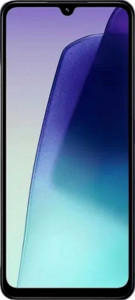
Xiaomi Poco M7
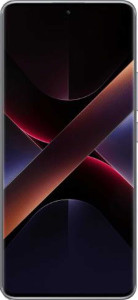
Xiaomi Poco X7

Xiaomi Poco M7 Xiaomi Poco X7

Overview

Welcome to our in-depth spec comparison between the Xiaomi Poco M7 and the Xiaomi Poco X7. These two mid-range smartphones from Xiaomi share a common Android 14 foundation, 5G connectivity, and dual SIM support, yet they take noticeably different paths when it comes to display technology, performance, battery strategy, and audio features. Whether you value raw endurance or refined visuals, this head-to-head breakdown will help you decide which device best suits your needs.

Common Features

  • Neither product has a rugged build.
  • Neither product can be folded.
  • Both products have a 120Hz refresh rate.
  • Both products have a 240Hz touch sampling rate.
  • Neither product has a secondary screen.
  • Both products have a touchscreen.
  • Both products support integrated LTE.
  • Both products use a 4 nm semiconductor size.
  • Both products support 64-bit processing.
  • Both products support DirectX 12.
  • Both products have integrated graphics.
  • Both products use big.LITTLE technology.
  • Both products have 8 CPU threads.
  • Both products support a maximum of 16GB of memory.
  • Both main cameras on both products feature a dual or multi-lens setup.
  • Neither product has built-in optical image stabilization.
  • Neither product has a dual-tone LED flash.
  • Neither product has a BSI sensor.
  • Both products have a CMOS sensor.
  • Both products support continuous autofocus when recording movies.
  • Both products support phase-detection autofocus for photos.
  • Both products support slow-motion video recording.
  • Both products run Android 14.
  • Both products display clipboard warnings.
  • Both products offer location privacy options.
  • Both products offer camera and microphone privacy options.
  • Mail Privacy Protection is not available on either product.
  • Both products support theme customization.
  • Both products can block app tracking.
  • Neither product blocks cross-site tracking.
  • Neither product supports wireless charging.
  • Both products support fast charging.
  • Neither product has a removable battery.
  • Both products have a battery level indicator.
  • Both products have a rechargeable battery.
  • Neither product supports aptX Adaptive.
  • Neither product supports aptX Lossless.
  • Both products support 5G.
  • Both products have dual SIM card slots.
  • Both products have a USB Type-C port.
  • Both products use USB version 2.
  • Both products have NFC.
  • Both products have a fingerprint scanner.
  • Neither product has emergency SOS via satellite.
  • Neither product has crash detection.
  • Both products have a video light.
  • Neither product has a sapphire glass display.
  • Neither product has an e-paper display.

Main Differences

  • Water resistance is rated as water resistant on Xiaomi Poco M7 and waterproof on Xiaomi Poco X7.
  • Weight is 205.4 g on Xiaomi Poco M7 and 185.5 g on Xiaomi Poco X7.
  • Thickness is 8.2 mm on Xiaomi Poco M7 and 8.4 mm on Xiaomi Poco X7.
  • Width is 77.8 mm on Xiaomi Poco M7 and 74.4 mm on Xiaomi Poco X7.
  • Height is 171.9 mm on Xiaomi Poco M7 and 162.3 mm on Xiaomi Poco X7.
  • Volume is 109.665324 cm³ on Xiaomi Poco M7 and 101.431008 cm³ on Xiaomi Poco X7.
  • Display type is LCD IPS on Xiaomi Poco M7 and OLED/AMOLED on Xiaomi Poco X7.
  • Screen size is 6.88″ on Xiaomi Poco M7 and 6.67″ on Xiaomi Poco X7.
  • Pixel density is 260 ppi on Xiaomi Poco M7 and 446 ppi on Xiaomi Poco X7.
  • Resolution is 720 x 1640 px on Xiaomi Poco M7 and 1220 x 2712 px on Xiaomi Poco X7.
  • Typical brightness is 450 nits on Xiaomi Poco M7 and 1200 nits on Xiaomi Poco X7.
  • Damage-resistant glass is present on Xiaomi Poco X7 but not available on Xiaomi Poco M7.
  • HDR10 support is present on Xiaomi Poco X7 but not available on Xiaomi Poco M7.
  • HDR10+ support is present on Xiaomi Poco X7 but not available on Xiaomi Poco M7.
  • Always-On Display is available on Xiaomi Poco X7 but not on Xiaomi Poco M7.
  • Dolby Vision support is present on Xiaomi Poco X7 but not available on Xiaomi Poco M7.
  • Contrast ratio is 1500:1 on Xiaomi Poco M7 and 5000000:1 on Xiaomi Poco X7.
  • Internal storage is 128GB on Xiaomi Poco M7 and 512GB on Xiaomi Poco X7.
  • RAM is 8GB on Xiaomi Poco M7 and 12GB on Xiaomi Poco X7.
  • AnTuTu benchmark score is 456000 on Xiaomi Poco M7 and 728840 on Xiaomi Poco X7.
  • Chipset is Qualcomm Snapdragon 4 Gen 2 on Xiaomi Poco M7 and MediaTek Dimensity 7300 on Xiaomi Poco X7.
  • GPU is Adreno 613 on Xiaomi Poco M7 and Mali G615 MC2 on Xiaomi Poco X7.
  • CPU speed is 2 x 2.3 & 6 x 2 GHz on Xiaomi Poco M7 and 4 x 2.5 & 4 x 2 GHz on Xiaomi Poco X7.
  • GPU clock speed is 955 MHz on Xiaomi Poco M7 and 1047 MHz on Xiaomi Poco X7.
  • RAM speed is 3200 MHz on Xiaomi Poco M7 and 6400 MHz on Xiaomi Poco X7.
  • Supported displays count is 2 on Xiaomi Poco M7 and 1 on Xiaomi Poco X7.
  • Main camera megapixels are 50 & 2 MP on Xiaomi Poco M7 and 50 & 8 & 2 MP on Xiaomi Poco X7.
  • Main camera wide aperture is 2.4 & 1.8f on Xiaomi Poco M7 and 1.5 & 2.2 & 2.4f on Xiaomi Poco X7.
  • Front camera megapixels are 8MP on Xiaomi Poco M7 and 20MP on Xiaomi Poco X7.
  • Main camera video recording is 1080 x 30 fps on Xiaomi Poco M7 and 2160 x 30 fps on Xiaomi Poco X7.
  • Number of flash LEDs is 1 on Xiaomi Poco M7 and 2 on Xiaomi Poco X7.
  • HDR10 video recording support is present on Xiaomi Poco X7 but not available on Xiaomi Poco M7.
  • Battery power is 7000 mAh on Xiaomi Poco M7 and 5110 mAh on Xiaomi Poco X7.
  • Charging speed is 18W on Xiaomi Poco M7 and 90W on Xiaomi Poco X7.
  • A charger is included in the box with Xiaomi Poco X7 but not with Xiaomi Poco M7.
  • A 3.5 mm audio jack is present on Xiaomi Poco M7 but not available on Xiaomi Poco X7.
  • Stereo speakers are available on Xiaomi Poco X7 but not on Xiaomi Poco M7.
  • aptX support is present on Xiaomi Poco X7 but not available on Xiaomi Poco M7.
  • LDAC support is present on Xiaomi Poco X7 but not available on Xiaomi Poco M7.
  • aptX HD support is present on Xiaomi Poco X7 but not available on Xiaomi Poco M7.
  • Wi-Fi version support includes Wi-Fi 4 and Wi-Fi 5 on Xiaomi Poco M7, while Xiaomi Poco X7 also adds Wi-Fi 6 (802.11ax).
  • Bluetooth version is 5 on Xiaomi Poco M7 and 5.4 on Xiaomi Poco X7.
  • An external memory slot is available on Xiaomi Poco M7 but not on Xiaomi Poco X7.
  • Download speed is 2500 MBits/s on Xiaomi Poco M7 and 3270 MBits/s on Xiaomi Poco X7.
  • Upload speed is 900 MBits/s on Xiaomi Poco M7 and 3270 MBits/s on Xiaomi Poco X7.
  • A gyroscope is present on Xiaomi Poco X7 but not available on Xiaomi Poco M7.
  • An infrared sensor is present on Xiaomi Poco X7 but not available on Xiaomi Poco M7.
  • A curved display is featured on Xiaomi Poco X7 but not on Xiaomi Poco M7.
Specs Comparison
Xiaomi Poco M7

Xiaomi Poco M7

Xiaomi Poco X7

Xiaomi Poco X7

Design:
water resistance Water resistant Waterproof
weight 205.4 g 185.5 g
thickness 8.2 mm 8.4 mm
width 77.8 mm 74.4 mm
height 171.9 mm 162.3 mm
volume 109.665324 cm³ 101.431008 cm³
has a rugged build
can be folded

The most significant design differentiator between these two phones is their water protection rating. The Poco M7 is listed as water resistant, which typically implies basic splash or light moisture protection, while the Poco X7 is rated as waterproof — a meaningfully stronger designation that suggests it can withstand more sustained water exposure. For users who frequently use their phone outdoors, near water, or in unpredictable weather, the X7 has a clear and practical advantage here.

In terms of physical form, the two phones differ more than their specs might initially suggest. The Poco M7 is noticeably larger, measuring 171.9 × 77.8 mm and occupying a volume of roughly 109.7 cm³, while the Poco X7 comes in at 162.3 × 74.4 mm with a volume of about 101.4 cm³ — making it meaningfully more compact. Combined with the X7 being approximately 20 grams lighter at 185.5 g versus the M7's 205.4 g, the X7 is the more pocketable and comfortable phone for one-handed use or extended holds. The thickness difference of 8.2 mm vs 8.4 mm is negligible in practice.

Neither phone has a rugged build or a foldable form factor, so neither stands out on those fronts. Overall, the Poco X7 holds a clear design edge: it is lighter, more compact, and offers stronger water protection — a combination that makes it the more refined and practical choice from a physical design standpoint.

Display:
Display type LCD, IPS OLED/AMOLED
screen size 6.88" 6.67"
pixel density 260 ppi 446 ppi
resolution 720 x 1640 px 1220 x 2712 px
refresh rate 120Hz 120Hz
touch sampling rate 240Hz 240Hz
brightness (typical) 450 nits 1200 nits
has branded damage-resistant glass
supports HDR10
supports HDR10+
Always-On Display
supports Dolby Vision
contrast ratio 1500:1 5000000:1
Has a secondary screen
has a touch screen

The panel technology gap between these two phones is substantial. The Poco M7 uses an LCD IPS display, while the Poco X7 uses an OLED/AMOLED panel — and that single difference cascades across nearly every visual metric. OLED screens produce true blacks by switching off individual pixels, which is how the X7 achieves a contrast ratio of 5,000,000:1 compared to the M7's 1,500:1. In practice, this means the X7 renders shadows, dark scenes, and night-mode interfaces with far greater depth and realism, while the M7's LCD will show a visible grey backlight bleed in dark content.

Sharpness and brightness tell a similar story. The X7's 446 ppi pixel density at a 1220 × 2712 resolution is dramatically sharper than the M7's 260 ppi at 720 × 1640 — text and fine detail will appear noticeably crisper on the X7, even though its screen is slightly smaller at 6.67″ versus the M7's 6.88″. The X7 also peaks at 1200 nits of typical brightness against the M7's 450 nits, making it far more legible under direct sunlight. Add to that the X7's support for HDR10, HDR10+, and Dolby Vision, plus branded damage-resistant glass and an Always-On Display — none of which the M7 offers — and the feature gap widens further.

Both screens share a 120Hz refresh rate and 240Hz touch sampling rate, so scrolling smoothness is equivalent. But that parity is a footnote given the scale of the differences elsewhere. The Poco X7 dominates this category decisively across sharpness, contrast, brightness, and content compatibility — the M7's larger screen size is its only display-related advantage, and it is outweighed by virtually every other metric.

Performance:
internal storage 128GB 512GB
RAM 8GB 12GB
AnTuTu benchmark score 456000 728840
Chipset (SoC) name Qualcomm Snapdragon 4 Gen 2 MediaTek Dimensity 7300
GPU name Adreno 613 Mali G615 MC2
CPU speed 2 x 2.3 & 6 x 2 GHz 4 x 2.5 & 4 x 2 GHz
GPU clock speed 955 MHz 1047 MHz
Has integrated LTE
RAM speed 3200 MHz 6400 MHz
semiconductor size 4 nm 4 nm
Supports 64-bit
DirectX version DirectX 12 DirectX 12
Has integrated graphics
Uses big.LITTLE technology
CPU threads 8 threads 8 threads
maximum memory amount 16GB 16GB
DDR memory version 5 5
supported displays 2 1

Raw performance is where the gap between these two phones becomes very tangible. The Poco X7's MediaTek Dimensity 7300 scores approximately 728,840 on AnTuTu, compared to the Poco M7's 456,000 with its Qualcomm Snapdragon 4 Gen 2 — a difference of roughly 60%, which is not marginal. In day-to-day use, this translates to snappier app launches, smoother multitasking under load, and more headroom for demanding games or sustained workloads. Both chips are built on a 4 nm process, so the X7's advantage comes from architectural efficiency and clock speed configuration rather than manufacturing node alone.

Memory and storage compound that performance lead. The X7 ships with 12GB of RAM running at 6400 MHz versus the M7's 8GB at 3200 MHz — both faster in capacity and in bandwidth, meaning the X7 can keep more apps resident in memory and feed the CPU data more quickly. Storage is an even starker contrast: the X7 offers 512GB of internal storage against the M7's 128GB, which is four times as much and a genuinely meaningful difference for users who store media locally or avoid frequent cloud offloading.

Shared specs like the 8-thread CPU layout, big.LITTLE architecture, DDR5 memory standard, DirectX 12 support, and the same maximum memory ceiling of 16GB mean the two phones are philosophically similar in design — but the X7 executes that design at a noticeably higher level. One footnote in the M7's favor: it supports 2 external displays versus the X7's 1, which may matter in niche desktop-mode use cases. Otherwise, the Poco X7 holds a clear and well-rounded performance advantage across compute speed, memory throughput, and storage capacity.

Cameras:
megapixels (main camera) 50 & 2 MP 50 & 8 & 2 MP
wide aperture (main camera) 2.4 & 1.8f 1.5 & 2.2 & 2.4f
Has a dual-lens (or multi-lens) main camera
megapixels (front camera) 8MP 20MP
has built-in optical image stabilization
video recording (main camera) 1080 x 30 fps 2160 x 30 fps
Has a dual-tone LED flash
number of flash LEDs 1 2
has a BSI sensor
has a CMOS sensor
has continuous autofocus when recording movies
Has phase-detection autofocus for photos
supports slow-motion video recording
has a built-in HDR mode
has manual exposure
has a flash
optical zoom 0x 0x
has manual ISO
has a serial shot mode
has manual focus
has a front camera
Has laser autofocus
Shoots 360° panorama
has manual white balance
shoots raw
has touch autofocus
has manual shutter speed
can create panoramas in-camera
Has timelapse function
Has a front-facing LED flash
has a dual-lens (or multi-lens) front camera
supports HDR10 recording
supports Dolby Vision recording
has a front-facing camera under the display
Has a RGB LED flash
has 3D photo/video recording capabilities

The rear camera systems share a 50MP primary sensor as their anchor, but the Poco X7 builds a more capable array around it. Where the M7 pairs its main lens with just a 2MP depth sensor, the X7 adds an 8MP third lens alongside its 2MP sensor — giving it a genuine ultrawide or macro capability depending on configuration, rather than a depth sensor that contributes little to actual image output. The X7's primary aperture of f/1.5 is also meaningfully wider than the M7's f/2.4 main lens, which translates directly to better light intake and stronger low-light performance on the dominant camera both phones will use most.

Video recording is another area where the gap is concrete. The X7 captures up to 4K at 30fps (2160p), while the M7 tops out at 1080p at 30fps — a full resolution tier behind. For users who care about video quality, whether for social content or preserving memories in higher fidelity, this is a meaningful practical difference. The X7 also supports HDR10 video recording, which the M7 lacks, adding richer dynamic range to its footage when played on compatible screens. On the flash side, the X7 uses 2 LED flash units versus the M7's single LED, which helps illuminate subjects more evenly at close range.

Selfie capability follows the same pattern: the X7 offers a 20MP front camera compared to the M7's 8MP, a significant resolution advantage for portrait and video call clarity. The two phones are otherwise well-matched in manual controls and shooting modes — both support manual ISO, exposure, white balance, focus, slow-motion, panorama, and timelapse. But those shared features only emphasize how much further ahead the X7 is on the specs that actually determine image and video quality. The Poco X7 has a clear camera advantage across every meaningful metric: aperture, lens count, video resolution, front camera resolution, and HDR video support.

Operating system:
Android version Android 14 Android 14
has clipboard warnings
has location privacy options
has camera/microphone privacy options
has Mail Privacy Protection
has theme customization
can block app tracking
blocks cross-site tracking
has on-device machine learning
has notification permissions
has media picker
Can play games while they download
has dark mode
has Wi-Fi password sharing
has battery health check
has an extra dim mode
has focus modes
has dynamic theming
can offload apps
Has customizable notifications
has Live Text
has full-page screenshots
supports split screen
gets direct OS updates
has PiP
Can be used as a PC
Has sharing intents
has a child lock
Supports widgets
Is free and open source
Has offline voice recognition
has voice commands
Tracks the current position of a mobile device
is a multi-user system
has Quick Start

For this specification group, the data tells a straightforward story: the Poco M7 and Poco X7 are identical across every listed OS feature. Both run Android 14, both carry the same set of privacy controls — including location, camera, and microphone permissions, clipboard warnings, and app tracking blocks — and both support the same productivity and usability features such as split screen, Picture-in-Picture, widgets, dynamic theming, offline voice recognition, and multi-user mode.

Notable shared absences are also worth acknowledging. Neither phone gets direct OS updates, meaning both rely on Xiaomi's own update rollout schedule rather than receiving Android patches straight from Google. Neither supports cross-site tracking protection, Wi-Fi password sharing, focus modes, or the ability to function as a PC — so users prioritizing any of those features will find no difference between the two models here.

This category is a complete tie. There is not a single OS-level feature where one phone has an advantage over the other based on the provided data. Buyers for whom software features are a deciding factor will need to look at other specification groups to differentiate these two devices.

Battery:
battery power 7000 mAh 5110 mAh
has wireless charging
Supports fast charging
charging speed 18W 90W
comes with a charger
has a removable battery
has a battery level indicator
has a rechargeable battery

Battery capacity and charging speed pull in opposite directions here, making this a genuine trade-off rather than a clean win for either phone. The Poco M7 carries a massive 7000 mAh battery — 37% larger than the Poco X7's 5110 mAh cell. All else being equal, a higher capacity means more hours between charges, which is a real-world advantage for heavy users, travelers, or anyone who cannot reliably top up during the day. The M7's larger physical size accommodates that bigger battery, and for users who prioritize endurance above all, it holds a tangible edge.

The X7 counters with a dramatically faster charging speed of 90W, versus the M7's 18W. That is not an incremental difference — at 90W, the X7 can go from low charge to full in a fraction of the time the M7 requires. For users who charge opportunistically in short windows rather than overnight, fast charging can effectively compensate for a smaller battery by making top-ups quick and convenient. The X7 also includes a charger in the box, while the M7 does not — a practical cost consideration given that a fast charger capable of 18W or above must be sourced separately for the M7.

Neither phone supports wireless charging, so that feature is off the table for both. Ultimately, the right choice here depends on usage pattern: the Poco M7 is the better fit for raw endurance, while the Poco X7 suits users who prefer fast, flexible top-ups and value the included charger. Neither holds an unconditional advantage — this is one of the few categories where personal habits genuinely determine which spec matters more.

Audio:
has a socket for a 3.5 mm audio jack
has stereo speakers
has aptX
has LDAC
has aptX HD
has aptX Adaptive
has aptX Lossless

Audio is another category where the two phones make opposite bets. The Poco M7 retains a 3.5mm headphone jack — a feature increasingly rare in modern smartphones — making it the straightforward choice for users with wired headphones or earphones who want to plug in without an adapter. The Poco X7 drops the jack entirely, which removes that convenience but reflects a design trade-off toward wireless audio quality instead.

On the wireless side, the X7 pulls well ahead. It supports both aptX HD and LDAC — two high-resolution Bluetooth audio codecs that transmit significantly more audio data than standard Bluetooth, resulting in noticeably better sound quality when paired with compatible wireless headphones. The M7 supports neither, meaning Bluetooth audio on the M7 is limited to standard lossy transmission. For users invested in quality wireless earbuds or headphones that support these codecs, the X7 offers a meaningfully richer listening experience. Speaker output also favors the X7, which features stereo speakers compared to the M7's single mono speaker — stereo separation produces wider, more immersive sound for media consumption without headphones.

This category comes down to a clear user-type split: the Poco M7 suits wired audio users who value the headphone jack above all else, while the Poco X7 is the stronger choice for wireless listeners and anyone who regularly uses the phone's built-in speakers. Taken in aggregate, the X7 covers more use cases at a higher quality ceiling, giving it the overall audio edge — unless a physical audio jack is a non-negotiable requirement.

Connectivity & Features:
release date March 2025 January 2025
has 5G support
Wi-Fi version Wi-Fi 4 (802.11n), Wi-Fi 5 (802.11ac) Wi-Fi 4 (802.11n), Wi-Fi 5 (802.11ac), Wi-Fi 6 (802.11ax)
SIM cards 2 SIM 2 SIM
Bluetooth version 5 5.4
has an external memory slot
Has USB Type-C
USB version 2 2
has NFC
download speed 2500 MBits/s 3270 MBits/s
upload speed 900 MBits/s 3270 MBits/s
Has a fingerprint scanner
has emergency SOS via satellite
has crash detection
is DLNA-certified
has a gyroscope
supports ANT+
Has a heart rate monitor
has GPS
has a compass
supports Wi-Fi
Has an infrared sensor
has an accelerometer
has a cellular module
Has a barometer
has an HDMI output
Uses 3D facial recognition
Has an iris scanner
Stylus included
supports Galileo
Has motion tracking
Has optical tracking
Has a built-in projector

Wireless connectivity is an area where the Poco X7 incrementally but consistently pulls ahead. Most notably, it adds Wi-Fi 6 (802.11ax) support on top of the Wi-Fi 4/5 that both phones share. Wi-Fi 6 delivers higher throughput, better performance in congested environments with many connected devices, and improved efficiency — a meaningful upgrade for users on modern routers. The X7 also carries a newer Bluetooth 5.4 versus the M7's Bluetooth 5.0, which brings improvements in connection stability and efficiency relevant to wireless audio and peripheral pairing. Cellular speeds reflect a similar gap: the X7's upload speed reaches 3270 Mbits/s compared to the M7's 900 Mbits/s, a significant difference for users who frequently upload large files or stream from their device.

On sensors and extras, the X7 again adds features the M7 lacks. It includes a gyroscope — important for gaming, augmented reality apps, and accurate screen rotation — and an infrared sensor, which allows the phone to function as a universal remote for TVs and other IR-controlled devices. The M7 has neither. In exchange, the M7 offers something the X7 does not: a microSD card slot for expandable storage. Given that the X7 already ships with 512GB internally, most users will find that trade-off heavily favors the X7, but for those who rely on memory cards for media management or backups, the M7's slot remains a practical advantage.

Shared features — 5G, NFC, USB Type-C, dual SIM, GPS, compass, accelerometer, and fingerprint scanner — form a solid common baseline. But across the differentiating specs, the Poco X7 holds the clearer connectivity advantage, offering faster wireless standards, a more current Bluetooth version, higher upload speeds, and a broader sensor suite. The M7's microSD slot is the lone functional counterpoint in this category.
Miscellaneous:
has a video light
Has sapphire glass display
Has a curved display
Has an e-paper display

This specification group is lean on data points, and most of them are shared. Both the Poco M7 and Poco X7 include a video light, and neither features sapphire glass or an e-paper display — so those four attributes produce no differentiation between the two.

The single distinguishing spec here is that the Poco X7 has a curved display, while the M7 does not. A curved screen edges the display over the sides of the frame, which can lend a more premium, immersive aesthetic and may make swiping in from the edges feel more natural. Whether that is an advantage or a drawback is partly subjective — some users appreciate the look, while others find flat displays easier to use with screen protectors and less prone to accidental edge touches.

Based strictly on the provided data, this category offers only one functional differentiator. The Poco X7 holds a marginal edge by virtue of its curved display, though the practical significance of that feature is limited and largely a matter of personal preference. Neither phone stands out strongly in this group.

Comparison Summary & Verdict

After examining every specification, it is clear that these two phones target distinct types of users. The Xiaomi Poco M7 stands out with its massive 7000 mAh battery, larger 6.88″ screen, expandable storage via microSD, and a 3.5 mm headphone jack, making it a compelling choice for users who prioritize endurance and versatility. The Xiaomi Poco X7, on the other hand, excels in almost every other dimension: its OLED display with 446 ppi and 1200 nits brightness, significantly higher AnTuTu score of 728840, 90W fast charging, triple rear camera with 4K video, stereo speakers with LDAC and aptX support, and a more compact and lighter build make it the stronger all-round performer for users who demand a premium experience at a mid-range price.

Xiaomi Poco M7
Buy Xiaomi Poco M7 if...

Buy the Xiaomi Poco M7 if you need an exceptionally long-lasting battery and want the flexibility of expandable storage and a headphone jack at a lower price point.

Xiaomi Poco X7
Buy Xiaomi Poco X7 if...

Buy the Xiaomi Poco X7 if you want a sharper OLED display, stronger performance, faster 90W charging, and a more complete audio and camera experience in a lighter body.