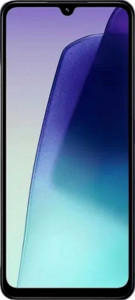
Xiaomi Poco M7
Xiaomi Redmi 15 4G

Xiaomi Poco M7 Xiaomi Redmi 15 4G

Overview

Welcome to our in-depth spec comparison between the Xiaomi Poco M7 and the Xiaomi Redmi 15 4G. Both phones share a 7000 mAh battery, 8GB of RAM, and NFC support, yet they take noticeably different paths when it comes to display quality, connectivity, and raw performance. Read on to discover which device best matches your priorities before making a decision.

Common Features

  • Both phones have water resistance.
  • Neither phone has a rugged build.
  • Neither phone can be folded.
  • Both phones use an LCD IPS display type.
  • HDR10 support is not available on either product.
  • HDR10+ support is not available on either product.
  • Always-On Display is not available on either product.
  • Dolby Vision support is not available on either product.
  • Neither phone has a secondary screen.
  • Both phones have a touch screen.
  • Both phones come with 8GB of RAM.
  • Both phones have integrated LTE.
  • Both phones support 64-bit processing.
  • Both phones support DirectX 12.
  • Both phones use big.LITTLE CPU technology with 8 threads.
  • Both phones have an 8MP front camera.
  • Neither phone has built-in optical image stabilization.
  • Both phones record main camera video at 1080p 30fps.
  • Both phones have a CMOS sensor.
  • Both phones support continuous autofocus when recording movies.
  • Both phones have clipboard warnings.
  • Both phones have location privacy options.
  • Both phones have camera and microphone privacy options.
  • Mail Privacy Protection is not available on either phone.
  • Both phones support theme customization and app tracking blocking.
  • Cross-site tracking blocking is not available on either phone.
  • Both phones have on-device machine learning.
  • Both phones have a 7000 mAh battery.
  • Wireless charging is not supported on either phone.
  • Both phones support fast charging.
  • Neither phone has a removable battery.
  • Both phones have a rechargeable battery with a battery level indicator.
  • Neither phone has stereo speakers.
  • Neither phone supports aptX, LDAC, aptX HD, aptX Adaptive, aptX Lossless.
  • Both phones support Wi-Fi 4 (802.11n) and Wi-Fi 5 (802.11ac).
  • Both phones have dual SIM support.
  • Both phones have Bluetooth 5.
  • Both phones have USB Type-C with USB 2.0.
  • Both phones have NFC.
  • Both phones have a fingerprint scanner.
  • Emergency SOS via satellite is not available on either phone.
  • Both phones have a video light.
  • Neither phone has a sapphire glass display.
  • Neither phone has a curved or e-paper display.

Main Differences

  • Weight is 205.4 g on Xiaomi Poco M7 and 224 g on Xiaomi Redmi 15 4G.
  • Thickness is 8.2 mm on Xiaomi Poco M7 and 8.6 mm on Xiaomi Redmi 15 4G.
  • Width is 77.8 mm on Xiaomi Poco M7 and 82.1 mm on Xiaomi Redmi 15 4G.
  • Height is 171.9 mm on Xiaomi Poco M7 and 171.1 mm on Xiaomi Redmi 15 4G.
  • Volume is 109.67 cm³ on Xiaomi Poco M7 and 120.81 cm³ on Xiaomi Redmi 15 4G.
  • Screen size is 6.88″ on Xiaomi Poco M7 and 6.9″ on Xiaomi Redmi 15 4G.
  • Pixel density is 260 ppi on Xiaomi Poco M7 and 374 ppi on Xiaomi Redmi 15 4G.
  • Resolution is 720 x 1640 px on Xiaomi Poco M7 and 1080 x 2340 px on Xiaomi Redmi 15 4G.
  • Refresh rate is 120Hz on Xiaomi Poco M7 and 144Hz on Xiaomi Redmi 15 4G.
  • Touch sampling rate is 240Hz on Xiaomi Poco M7 and 288Hz on Xiaomi Redmi 15 4G.
  • Damage-resistant glass is present on Xiaomi Redmi 15 4G but not available on Xiaomi Poco M7.
  • Internal storage is 128GB on Xiaomi Poco M7 and 256GB on Xiaomi Redmi 15 4G.
  • AnTuTu benchmark score is 456000 on Xiaomi Poco M7 and 358084 on Xiaomi Redmi 15 4G.
  • The chipset is Qualcomm Snapdragon 4 Gen 2 on Xiaomi Poco M7 and Qualcomm Snapdragon 685 4G on Xiaomi Redmi 15 4G.
  • The GPU is Adreno 613 on Xiaomi Poco M7 and Adreno 610 on Xiaomi Redmi 15 4G.
  • CPU speed is 2 x 2.3 & 6 x 2 GHz on Xiaomi Poco M7 and 4 x 2.8 & 4 x 1.9 GHz on Xiaomi Redmi 15 4G.
  • GPU clock speed is 955 MHz on Xiaomi Poco M7 and 1260 MHz on Xiaomi Redmi 15 4G.
  • RAM speed is 3200 MHz on Xiaomi Poco M7 and 2133 MHz on Xiaomi Redmi 15 4G.
  • Semiconductor size is 4 nm on Xiaomi Poco M7 and 6 nm on Xiaomi Redmi 15 4G.
  • DDR memory version is DDR5 on Xiaomi Poco M7 and DDR4 on Xiaomi Redmi 15 4G.
  • The main camera is dual-lens (50MP + 2MP) on Xiaomi Poco M7, while Xiaomi Redmi 15 4G has a single 50MP main camera.
  • Main camera wide aperture is f/2.4 and f/1.8 on Xiaomi Poco M7 and f/1.8 on Xiaomi Redmi 15 4G.
  • Android version is Android 14 on Xiaomi Poco M7 and Android 15 on Xiaomi Redmi 15 4G.
  • App offloading is supported on Xiaomi Redmi 15 4G but not available on Xiaomi Poco M7.
  • Charging speed is 18W on Xiaomi Poco M7 and 33W on Xiaomi Redmi 15 4G.
  • A charger is included in the box with Xiaomi Redmi 15 4G but not with Xiaomi Poco M7.
  • A 3.5mm audio jack is present on Xiaomi Poco M7 but not available on Xiaomi Redmi 15 4G.
  • 5G support is available on Xiaomi Poco M7 but not on Xiaomi Redmi 15 4G.
  • An external memory slot is present on Xiaomi Poco M7 but not available on Xiaomi Redmi 15 4G.
  • Download speed is 2500 Mbit/s on Xiaomi Poco M7 and 390 Mbit/s on Xiaomi Redmi 15 4G.
  • Upload speed is 900 Mbit/s on Xiaomi Poco M7 and 150 Mbit/s on Xiaomi Redmi 15 4G.
Specs Comparison
Xiaomi Poco M7

Xiaomi Poco M7

Xiaomi Redmi 15 4G

Xiaomi Redmi 15 4G

Design:
water resistance Water resistant Water resistant
weight 205.4 g 224 g
thickness 8.2 mm 8.6 mm
width 77.8 mm 82.1 mm
height 171.9 mm 171.1 mm
volume 109.665324 cm³ 120.806866 cm³
has a rugged build
can be folded

Both the Poco M7 and the Redmi 15 4G share the same basic design category — neither is ruggedized nor foldable, and both carry water resistance, making them comparable at a foundational level. Where they meaningfully diverge is in their physical footprint. The Poco M7 is noticeably more compact, with a volume of ~109.7 cm³ versus the Redmi 15 4G's ~120.8 cm³ — roughly a 10% smaller overall bulk — driven by a slimmer 8.2 mm profile and a narrower 77.8 mm width compared to the Redmi's 8.6 mm thickness and 82.1 mm width.

The weight gap reinforces this distinction: the Poco M7 comes in at 205.4 g, while the Redmi 15 4G weighs 224 g — an ~18.6 g difference that, while not dramatic on paper, translates to a noticeably lighter feel during prolonged one-handed use or all-day carry. The narrower chassis of the Poco M7 also makes single-hand grip more accessible, particularly for users with smaller hands.

Overall, the Poco M7 has a clear edge in design ergonomics: it is lighter, thinner, and narrower, making it the more pocketable and comfortable daily driver. The Redmi 15 4G's larger volume likely accommodates a bigger battery or display, but purely from a design and handling standpoint, the Poco M7 is the more refined form factor.

Display:
Display type LCD, IPS LCD, IPS
screen size 6.88" 6.9"
pixel density 260 ppi 374 ppi
resolution 720 x 1640 px 1080 x 2340 px
refresh rate 120Hz 144Hz
touch sampling rate 240Hz 288Hz
has branded damage-resistant glass
supports HDR10
supports HDR10+
Always-On Display
supports Dolby Vision
Has a secondary screen
has a touch screen

On the surface, these two phones share the same display technology — LCD IPS panels of nearly identical size (~6.88″ vs 6.9″). But the similarity ends there. The Redmi 15 4G packs a 1080 x 2340 px resolution at 374 ppi, versus the Poco M7's 720 x 1640 px at just 260 ppi. That 44% pixel density advantage is immediately visible: text appears sharper, fine UI details render more crisply, and images look significantly more defined on the Redmi — especially on a screen this large, where low pixel density becomes harder to overlook.

The Redmi 15 4G also pulls ahead on responsiveness. Its 144Hz refresh rate and 288Hz touch sampling rate edge out the Poco M7's already-capable 120Hz / 240Hz combination, translating to marginally smoother scrolling and slightly snappier touch response — differences most noticeable in fast-paced gaming or rapid navigation. On top of that, the Redmi ships with branded damage-resistant glass, a protection layer the Poco M7 lacks entirely, making the Redmi's screen more resilient against everyday scratches and minor drops.

The verdict here is clear: the Redmi 15 4G holds a strong display advantage. Higher resolution, higher pixel density, a faster refresh rate, and physical screen protection make it the superior panel across nearly every metric that matters to real-world use. The Poco M7 offers no compensating display advantage in this comparison.

Performance:
internal storage 128GB 256GB
RAM 8GB 8GB
AnTuTu benchmark score 456000 358084
Chipset (SoC) name Qualcomm Snapdragon 4 Gen 2 Qualcomm Snapdragon 685 4G
GPU name Adreno 613 Adreno 610
CPU speed 2 x 2.3 & 6 x 2 GHz 4 x 2.8 & 4 x 1.9 GHz
GPU clock speed 955 MHz 1260 MHz
Has integrated LTE
RAM speed 3200 MHz 2133 MHz
semiconductor size 4 nm 6 nm
Supports 64-bit
DirectX version DirectX 12 DirectX 12
Has integrated graphics
OpenGL ES version 3.2 3.2
Uses big.LITTLE technology
CPU threads 8 threads 8 threads
Has TrustZone
OpenCL version 2 2
eMMC version 5.1 5.1
maximum memory amount 16GB 16GB
DDR memory version 5 4

The chipset gap between these two phones is significant. The Poco M7 runs on the Snapdragon 4 Gen 2, built on a modern 4 nm process, while the Redmi 15 4G uses the older Snapdragon 685 on a 6 nm node. That manufacturing difference matters: a smaller process size means more transistors per area, delivering better performance-per-watt — the Poco M7's chip simply does more while consuming less energy. The AnTuTu scores tell the same story: 456,000 for the Poco M7 versus 358,084 for the Redmi — a roughly 27% performance lead that reflects noticeably faster app launches, smoother multitasking, and better sustained performance under load.

The memory subsystem further reinforces this gap. The Poco M7 pairs its chip with DDR5 RAM at 3200 MHz, compared to the Redmi's DDR4 at 2133 MHz — a faster, more power-efficient memory generation that feeds the CPU data more quickly, reducing bottlenecks in demanding workloads. The Redmi 15 4G does counter with a higher GPU clock speed (1260 MHz vs 955 MHz) and double the base storage (256 GB vs 128 GB), which are meaningful practical advantages — particularly the storage, for users who keep large media libraries without relying on cloud services.

On raw performance, the Poco M7 holds a decisive edge: its newer architecture, smaller node, higher benchmark score, and faster RAM make it the stronger everyday performer. The Redmi 15 4G's storage advantage is real but does not offset the processing gap — users prioritizing speed and efficiency should lean toward the Poco M7.

Cameras:
megapixels (main camera) 50 & 2 MP 50 MP
wide aperture (main camera) 2.4 & 1.8f 1.8f
Has a dual-lens (or multi-lens) main camera
megapixels (front camera) 8MP 8MP
has built-in optical image stabilization
video recording (main camera) 1080 x 30 fps 1080 x 30 fps
Has a dual-tone LED flash
number of flash LEDs 1 1
has a BSI sensor
has a CMOS sensor
has continuous autofocus when recording movies
Has phase-detection autofocus for photos
supports slow-motion video recording
has a built-in HDR mode
has manual exposure
has a flash
optical zoom 0x 0x
has manual ISO
has a serial shot mode
has manual focus
has a front camera
Has laser autofocus
Shoots 360° panorama
has manual white balance
shoots raw
has touch autofocus
has manual shutter speed
can create panoramas in-camera
Has timelapse function
Has a front-facing LED flash
has a dual-lens (or multi-lens) front camera
supports HDR10 recording
supports Dolby Vision recording
has a front-facing camera under the display
Has a RGB LED flash
has 3D photo/video recording capabilities

Strip away the lens count, and these two cameras are remarkably similar: both shoot 50 MP primary sensors, cap video at 1080p 30fps, share an 8 MP front camera, and offer an identical feature set spanning HDR, phase-detection autofocus, slow-motion, and manual controls. Neither includes OIS, optical zoom, or RAW shooting. For most everyday photography scenarios, the shooting experience will feel virtually indistinguishable.

The meaningful structural difference is that the Poco M7 adds a secondary 2 MP lens, making it a dual-camera system. However, the aperture data complicates the picture: the Poco M7's primary lens sits at a narrower f/2.4, while the Redmi 15 4G's single main lens opens to f/1.8. A wider aperture admits more light, which directly improves low-light performance and enables shallower depth-of-field — tangible gains in real shooting conditions. The Poco M7's second lens does carry an f/1.8 aperture, but at only 2 MP it is almost certainly a depth-assist sensor rather than a versatile imaging lens.

Weighing these factors, the Redmi 15 4G holds a narrow edge in practical camera quality: its single f/1.8 50 MP main lens is likely to outperform the Poco M7's f/2.4 primary in low-light and portrait shots. The Poco M7's dual-camera label adds little functional value when the secondary lens contributes primarily to depth mapping rather than independent shooting capability.

Operating system:
Android version Android 14 Android 15
has clipboard warnings
has location privacy options
has camera/microphone privacy options
has Mail Privacy Protection
has theme customization
can block app tracking
blocks cross-site tracking
has on-device machine learning
has notification permissions
has media picker
Can play games while they download
has dark mode
has Wi-Fi password sharing
has battery health check
has an extra dim mode
has focus modes
has dynamic theming
can offload apps
Has customizable notifications
has Live Text
has full-page screenshots
supports split screen
gets direct OS updates
has PiP
Can be used as a PC
Has sharing intents
has a child lock
Supports widgets
Is free and open source
Has offline voice recognition
has voice commands
Tracks the current position of a mobile device
is a multi-user system
has Quick Start

These two phones run nearly identical software configurations, which is unsurprising given they share the same brand and ecosystem. The feature parity across privacy controls, multitasking, customization, and accessibility is essentially complete — both support split-screen, PiP, dynamic theming, on-device ML, and a full suite of notification and permission controls. For the vast majority of daily software interactions, users would notice no difference between them.

The two points of divergence are minor but worth noting. The Redmi 15 4G ships on Android 15 versus the Poco M7's Android 14, giving it access to the latest platform refinements, security patches, and any Android 15-specific features from launch. Additionally, the Redmi 15 4G supports app offloading — a feature that frees up storage by removing an app's binary while retaining its data, useful for users managing limited space. The Poco M7 lacks this capability.

Neither device receives direct OS updates, which limits long-term software longevity for both. That said, the Redmi 15 4G holds a slight edge here: launching on a newer Android version means it starts further along the update timeline and benefits from app offloading as a practical storage management tool. These are modest advantages, but in an otherwise tied software comparison, they tip the balance toward the Redmi.

Battery:
battery power 7000 mAh 7000 mAh
has wireless charging
Supports fast charging
charging speed 18W 33W
comes with a charger
has a removable battery
has a battery level indicator
has a rechargeable battery

At the capacity level, this is a dead heat: both phones carry an identical 7000 mAh battery, placing them well above the mainstream smartphone average. A cell this size comfortably supports multi-day endurance for moderate users, and even heavy users should expect a full day without anxiety. Neither phone offers wireless charging or a removable battery, so those shared limitations apply equally.

Where the Redmi 15 4G pulls ahead is in how quickly it recovers that charge. Its 33W fast charging is nearly double the Poco M7's 18W — a gap that becomes very tangible when you're topping up before heading out. Charging a 7000 mAh cell is already a longer process than average due to the sheer capacity involved, so the speed difference compounds: the Redmi meaningfully cuts down the time spent tethered to a wall. The Redmi 15 4G also ships with a charger included, while the Poco M7 does not — a practical cost consideration for buyers who don't already own a compatible fast charger.

The Redmi 15 4G wins this category. Equal battery life at equal capacity, but significantly faster replenishment and an included charger make it the more complete and convenient battery package. The Poco M7's 18W ceiling is functional but dated by current standards for this segment.

Audio:
has a socket for a 3.5 mm audio jack
has stereo speakers
has aptX
has LDAC
has aptX HD
has aptX Adaptive
has aptX Lossless

Audio is a weak category for both phones. Neither offers stereo speakers, and neither supports any high-resolution wireless audio codec — no aptX, no LDAC, no aptX HD or Adaptive. For wireless listening, both are limited to standard Bluetooth audio quality, which is adequate for casual use but falls short for audiophiles or users with premium wireless headphones that support lossless transmission.

The single differentiator here is the 3.5 mm headphone jack, which the Poco M7 retains and the Redmi 15 4G omits entirely. For users who rely on wired headphones — whether for sound quality, reliability, or simply avoiding the need to charge earbuds — this is a meaningful practical distinction. The Redmi 15 4G's lack of a jack forces a dependency on either Bluetooth or a USB-C adapter, adding friction to a formerly seamless experience.

Given the otherwise flat comparison, the Poco M7 has the edge in audio — not because it excels, but because the headphone jack preserves a connection option the Redmi 15 4G has removed. For users who prioritize wired audio convenience, this is a legitimate reason to favor the Poco M7 in this category.

Connectivity & Features:
release date March 2025 August 2025
has 5G support
Wi-Fi version Wi-Fi 4 (802.11n), Wi-Fi 5 (802.11ac) Wi-Fi 4 (802.11n), Wi-Fi 5 (802.11ac)
SIM cards 2 SIM 2 SIM
Bluetooth version 5 5
has an external memory slot
Has USB Type-C
USB version 2 2
has NFC
download speed 2500 MBits/s 390 MBits/s
upload speed 900 MBits/s 150 MBits/s
Has a fingerprint scanner
has emergency SOS via satellite
has crash detection
is DLNA-certified
has a gyroscope
supports ANT+
Has a heart rate monitor
has GPS
has a compass
supports Wi-Fi
Has an infrared sensor
has an accelerometer
has a cellular module
Has a barometer
has an HDMI output
Uses 3D facial recognition
Has an iris scanner
Stylus included
supports Galileo
Has motion tracking
Has optical tracking
Has a built-in projector

Two connectivity gaps separate these phones, and both favor the Poco M7. Most critically, the Poco M7 supports 5G while the Redmi 15 4G is limited to 4G LTE — a future-proofing distinction that becomes increasingly relevant as 5G networks expand. The practical ceiling on cellular speeds reflects this directly: the Poco M7 reaches up to 2500 Mbps download / 900 Mbps upload, versus the Redmi's 390 Mbps / 150 Mbps — a stark difference for users in 5G-covered areas who rely on mobile data for streaming, remote work, or large file transfers. The Poco M7 also includes a microSD card slot for expandable storage, which the Redmi 15 4G omits entirely — a notable absence given that the Redmi's 256 GB base storage is its primary compensation for that gap.

Where they converge, the spec sheet is well-matched: both run Wi-Fi 5, Bluetooth 5, NFC, USB-C (2.0), dual SIM, GPS with Galileo support, fingerprint scanner, and accelerometer. NFC is a shared highlight — enabling contactless payments and device pairing — and the identical Wi-Fi and Bluetooth generations mean local wireless performance is on equal footing.

The Poco M7 holds a clear and meaningful advantage in this category. 5G connectivity alone is a significant differentiator for longevity and network performance, and the addition of expandable storage further widens the gap. Users who prioritize staying connected on next-generation networks or managing storage flexibility should strongly favor the Poco M7 here.

Miscellaneous:
has a video light
Has sapphire glass display
Has a curved display
Has an e-paper display

The miscellaneous category offers nothing to separate these two phones. Both feature a video light, and neither carries a sapphire glass display, curved screen, or e-paper panel — four data points that land in exactly the same configuration for both devices.

This is a complete tie. There are no differentiators in this group, and no advantage can be assigned to either product based solely on the provided specs.

Comparison Summary & Verdict

After examining every key specification, it is clear that both phones serve distinct types of users. The Xiaomi Poco M7 stands out with its superior 5G connectivity, a more powerful Snapdragon 4 Gen 2 chipset built on a 4 nm process, a higher AnTuTu score, a 3.5mm audio jack, an external memory slot, and a lighter, slimmer body — making it the stronger pick for users who want future-proof connectivity and raw speed. On the other hand, the Xiaomi Redmi 15 4G wins on display sharpness (374 ppi vs 260 ppi, Full HD+ vs HD+), a faster 144Hz refresh rate, quicker 33W charging, double the internal storage at 256GB, Android 15 out of the box, and a bundled charger — making it the better choice for media lovers and users who value a polished everyday experience without worrying about 5G coverage.

Xiaomi Poco M7
Buy Xiaomi Poco M7 if...

Buy the Xiaomi Poco M7 if you need 5G support, prefer a lighter and more compact design, want expandable storage via a memory card slot, or rely on a 3.5mm headphone jack.

Xiaomi Redmi 15 4G
Buy Xiaomi Redmi 15 4G if...

Buy the Xiaomi Redmi 15 4G if you prioritize a sharper Full HD+ display with a 144Hz refresh rate, faster 33W charging, more built-in storage, and a newer Android 15 experience.