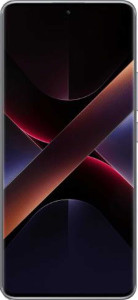
Xiaomi Poco X7
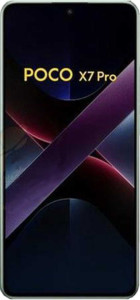
Xiaomi Poco X7 Pro

Xiaomi Poco X7 Xiaomi Poco X7 Pro

Overview

Welcome to our in-depth comparison of the Xiaomi Poco X7 and the Xiaomi Poco X7 Pro. Both phones share a strong foundation — IP68 waterproofing, a vivid 6.67″ OLED display, and 90W fast charging — but diverge sharply when it comes to raw performance, camera capabilities, and battery size. Whether you are chasing everyday value or top-tier processing power, this comparison will help you decide which Poco is the right fit for your needs.

Common Features

  • Both phones are waterproof with an IP68 ingress protection rating.
  • Neither phone has a rugged build.
  • Neither phone can be folded.
  • Both phones feature a 6.67″ OLED/AMOLED display.
  • Both phones have a pixel density of 446 ppi and a resolution of 1220 x 2712 px.
  • Both phones support a 120Hz refresh rate.
  • Damage-resistant branded glass is present on both phones.
  • HDR10 support is available on both phones.
  • HDR10+ support is available on both phones.
  • Both phones come with 512GB of internal storage and 12GB of RAM.
  • Both phones use a 4 nm semiconductor and support 64-bit processing.
  • Both phones feature an 8-thread CPU and use big.LITTLE technology.
  • Both phones have a multi-lens main camera with a 20MP front camera.
  • Continuous autofocus when recording movies is available on both phones.
  • Phase-detection autofocus for photos is available on both phones.
  • Both phones support fast charging at 90W and come with a charger included.
  • Neither phone supports wireless charging or has a removable battery.
  • Both phones lack a 3.5mm audio jack but feature stereo speakers.
  • Both phones support aptX, aptX HD, and LDAC audio codecs.
  • Both phones support 5G, Wi-Fi 6, NFC, USB Type-C, and dual SIM cards.

Main Differences

  • Weight is 185.5 g on Xiaomi Poco X7 and 198 g on Xiaomi Poco X7 Pro.
  • Thickness is 8.4 mm on Xiaomi Poco X7 and 8.3 mm on Xiaomi Poco X7 Pro.
  • Touch sampling rate is 240Hz on Xiaomi Poco X7 and 480Hz on Xiaomi Poco X7 Pro.
  • Typical brightness is 1200 nits on Xiaomi Poco X7 and 1400 nits on Xiaomi Poco X7 Pro.
  • The display is protected by Gorilla Glass Victus 2 on Xiaomi Poco X7 and Gorilla Glass 7i on Xiaomi Poco X7 Pro.
  • The chipset is MediaTek Dimensity 7300 on Xiaomi Poco X7 and MediaTek Dimensity 8400 on Xiaomi Poco X7 Pro.
  • AnTuTu benchmark score is 728,840 on Xiaomi Poco X7 and 1,663,422 on Xiaomi Poco X7 Pro.
  • Geekbench 6 multi-core score is 2932 on Xiaomi Poco X7 and 6137 on Xiaomi Poco X7 Pro.
  • Geekbench 6 single-core score is 1026 on Xiaomi Poco X7 and 1583 on Xiaomi Poco X7 Pro.
  • Maximum memory support is 16GB on Xiaomi Poco X7 and 24GB on Xiaomi Poco X7 Pro.
  • The main camera has three lenses (50 & 8 & 2 MP) on Xiaomi Poco X7 and two lenses (50 & 8 MP) on Xiaomi Poco X7 Pro.
  • Optical image stabilization is not available on Xiaomi Poco X7 but is present on Xiaomi Poco X7 Pro.
  • Video recording tops out at 2160p 30fps on Xiaomi Poco X7 and 2160p 60fps on Xiaomi Poco X7 Pro.
  • Laser autofocus is not available on Xiaomi Poco X7 but is present on Xiaomi Poco X7 Pro.
  • RAW shooting is not supported on Xiaomi Poco X7 but is supported on Xiaomi Poco X7 Pro.
  • The operating system is Android 14 on Xiaomi Poco X7 and Android 15 on Xiaomi Poco X7 Pro.
  • App offloading is not available on Xiaomi Poco X7 but is available on Xiaomi Poco X7 Pro.
  • Battery capacity is 5110 mAh on Xiaomi Poco X7 and 6000 mAh on Xiaomi Poco X7 Pro.
  • Bluetooth version is 5.4 on Xiaomi Poco X7 and 6 on Xiaomi Poco X7 Pro.
  • The display is curved on Xiaomi Poco X7 but flat on Xiaomi Poco X7 Pro.
Specs Comparison
Xiaomi Poco X7

Xiaomi Poco X7

Xiaomi Poco X7 Pro

Xiaomi Poco X7 Pro

Design:
water resistance Waterproof Waterproof
weight 185.5 g 198 g
thickness 8.4 mm 8.3 mm
width 74.4 mm 75.2 mm
height 162.3 mm 160.8 mm
volume 101.431008 cm³ 100.364928 cm³
Ingress Protection (IP) rating IP68 IP68
has a rugged build
can be folded

Both the Poco X7 and Poco X7 Pro share the same IP68 waterproof rating, meaning neither holds an advantage in terms of water and dust resistance — both can handle submersion without issue, a genuinely useful feature at this price tier. Neither device offers a rugged build or a foldable form factor, so they sit in the same conventional-slab category.

Where the two diverge is in their physical proportions. The X7 is taller (162.3 mm vs. 160.8 mm) but narrower (74.4 mm vs. 75.2 mm), while the Pro is slightly shorter yet wider — resulting in an almost identical overall volume. The more meaningful difference is weight: the X7 Pro is noticeably heavier at 198 g compared to the X7's 185.5 g. That 12.5 g gap is perceptible in prolonged one-handed use and may matter to users sensitive to heft. Both are similarly slim, with a negligible 0.1 mm thickness difference.

In terms of design, the standard Poco X7 holds a clear ergonomic edge — it is meaningfully lighter while occupying nearly the same volume, making it the more comfortable device to carry and use over long sessions. If handling comfort is a priority, the X7 wins outright here; the Pro's extra weight suggests internal hardware differences rather than any design benefit.

Display:
Display type OLED/AMOLED OLED/AMOLED
screen size 6.67" 6.67"
pixel density 446 ppi 446 ppi
resolution 1220 x 2712 px 1220 x 2712 px
refresh rate 120Hz 120Hz
touch sampling rate 240Hz 480Hz
brightness (typical) 1200 nits 1400 nits
has branded damage-resistant glass
Gorilla Glass version Gorilla Glass Victus 2 Gorilla Glass 7i
supports HDR10
supports HDR10+
Always-On Display
supports Dolby Vision
contrast ratio 5000000:1 5000000:1
Has a secondary screen
has a touch screen

At their core, these two displays are nearly identical: same 6.67″ OLED panel, same 1220 x 2712 px resolution at 446 ppi, same 120Hz refresh rate, and a matching suite of HDR10+, Dolby Vision, Always-On Display, and a 5,000,000:1 contrast ratio. For everyday media consumption, both screens will look sharp, vibrant, and well-supported by streaming platforms.

The differences, while fewer, are meaningful. The X7 Pro pulls ahead on peak brightness at 1400 nits versus 1200 nits — a 17% increase that translates to noticeably better outdoor legibility in direct sunlight. Its touch sampling rate also doubles to 480Hz compared to the X7's 240Hz, which reduces input latency in fast-paced gaming scenarios. On the flip side, the standard X7 ships with Gorilla Glass Victus 2 — a newer and more scratch- and drop-resistant formulation than the Pro's Gorilla Glass 7i, which is positioned as a mid-range protective glass. This is a notable reversal: the base model actually offers stronger screen protection.

Overall, the Poco X7 Pro wins on display performance — brighter output and a more responsive touch layer give it a practical edge for outdoor use and gaming. However, users who prioritize long-term screen durability should note that the X7's Victus 2 glass is the tougher shield of the two, making neither device a clean sweep in this category.

Performance:
internal storage 512GB 512GB
RAM 12GB 12GB
AnTuTu benchmark score 728840 1663422
Chipset (SoC) name MediaTek Dimensity 7300 MediaTek Dimensity 8400
GPU name Mali G615 MC2 Mali G720 MC7
CPU speed 4 x 2.5 & 4 x 2 GHz 1 x 3.25 & 3 x 3 & 4 x 2.15 GHz
Geekbench 6 result (multi) 2932 6137
Geekbench 6 result (single) 1026 1583
GPU clock speed 1047 MHz 1300 MHz
RAM speed 6400 MHz 4267 MHz
semiconductor size 4 nm 4 nm
Supports 64-bit
DirectX version DirectX 12 DirectX 12
Has integrated graphics
Uses big.LITTLE technology
CPU threads 8 threads 8 threads
Uses HMP
maximum memory amount 16GB 24GB
DDR memory version 5 5

This is where the two devices diverge most dramatically. The Poco X7 runs on the MediaTek Dimensity 7300, a capable mid-range chip, while the X7 Pro steps up to the MediaTek Dimensity 8400 — and the benchmark gap between them is staggering. The Pro's AnTuTu score of 1,663,422 is more than double the X7's 728,840, and its Geekbench 6 multi-core result of 6,137 versus 2,932 tells the same story. These are not marginal gains; in real-world terms, the Pro handles intensive workloads, heavy multitasking, and demanding games at a fundamentally different performance tier.

The GPU gap is equally significant. The X7 Pro's Mali G720 MC7 with a 1300 MHz clock speed has both more cores and higher frequency than the X7's Mali G615 MC2 at 1047 MHz — translating to considerably smoother frame rates in graphically intensive titles. One counter-intuitive detail: the X7's RAM runs at a faster 6400 MHz versus the Pro's 4267 MHz, though in practice this narrow memory bandwidth advantage is far outweighed by the Pro's overall architectural superiority. The Pro also supports up to 24 GB maximum memory versus the X7's 16 GB, offering more headroom for future configurations.

The Poco X7 Pro wins this category comprehensively. The Dimensity 8400 is a generational step above the Dimensity 7300, and every benchmark confirms it. For users who game, run demanding applications, or simply want their device to feel fast years down the line, the Pro is in a different league entirely.

Cameras:
megapixels (main camera) 50 & 8 & 2 MP 50 & 8 MP
wide aperture (main camera) 1.5 & 2.2 & 2.4f 2.2 & 1.5f
Has a dual-lens (or multi-lens) main camera
megapixels (front camera) 20MP 20MP
has built-in optical image stabilization
video recording (main camera) 2160 x 30 fps 2160 x 60 fps
Has a dual-tone LED flash
number of flash LEDs 2 2
has a BSI sensor
has a CMOS sensor
has continuous autofocus when recording movies
Has phase-detection autofocus for photos
supports slow-motion video recording
has a built-in HDR mode
has manual exposure
has a flash
optical zoom 0x 0x
has manual ISO
has a serial shot mode
has manual focus
has a front camera
Has laser autofocus
Shoots 360° panorama
has manual white balance
shoots raw
has touch autofocus
has manual shutter speed
can create panoramas in-camera
wide aperture (front camera) 2.2f 2.5f
Has timelapse function
Has a front-facing LED flash
has a dual-lens (or multi-lens) front camera
supports HDR10 recording
supports Dolby Vision recording
has a front-facing camera under the display
Has a RGB LED flash
has 3D photo/video recording capabilities

On paper, the Poco X7 appears to have more cameras — a triple-lens system at 50 & 8 & 2 MP versus the Pro's dual-lens 50 & 8 MP setup. In practice, that extra 2 MP sensor on the X7 is a depth helper that adds negligible real-world value. What matters far more is how those cameras actually capture images, and here the X7 Pro holds a consistent advantage.

The most impactful differences are optical image stabilization (OIS), RAW shooting, and 4K at 60fps video — all exclusive to the X7 Pro. OIS is a hardware stabilizer that physically compensates for hand shake, producing sharper photos in low light and smoother handheld video regardless of software tricks. RAW support is essential for anyone who edits photos seriously, as it preserves far more image data than processed JPEGs. And jumping from 30fps to 60fps at 4K resolution means noticeably smoother, more cinematic footage. The Pro also adds laser autofocus, which improves focus acquisition speed and accuracy in challenging lighting. The X7's front camera does have a marginally wider aperture (f/2.2 vs. f/2.5), letting in slightly more light for selfies, but this is a minor offset.

The Poco X7 Pro wins the camera category clearly. OIS, RAW capture, and 4K/60fps together represent a meaningful, practical upgrade for both photographers and video shooters — advantages that the X7's third low-resolution lens cannot come close to compensating for.

Operating system:
Android version Android 14 Android 15
has clipboard warnings
has location privacy options
has camera/microphone privacy options
has Mail Privacy Protection
has theme customization
can block app tracking
blocks cross-site tracking
has on-device machine learning
has notification permissions
has media picker
Can play games while they download
has dark mode
has Wi-Fi password sharing
has battery health check
has an extra dim mode
has focus modes
has dynamic theming
can offload apps
Has customizable notifications
has Live Text
has full-page screenshots
supports split screen
gets direct OS updates
has PiP
Can be used as a PC
Has sharing intents
has a child lock
Supports widgets
Is free and open source
Has offline voice recognition
has voice commands
Tracks the current position of a mobile device
is a multi-user system
has Quick Start

The software story between these two devices is largely one of parity, with one meaningful distinction: the Poco X7 ships with Android 14, while the X7 Pro launches on Android 15. In practical terms, the Pro starts its life one generation ahead — with whatever incremental privacy improvements, performance refinements, and feature additions Android 15 brings over its predecessor. While the X7 may eventually receive an update, the Pro offers that experience out of the box.

Beyond the OS version, only one other functional difference exists in the provided data: the X7 Pro supports app offloading, which allows rarely used apps to be temporarily removed from storage while preserving their data and settings. On a 512 GB device this is admittedly a minor convenience rather than a necessity, but it reflects a slightly more flexible storage management toolset. Every other feature — split-screen, Picture-in-Picture, dynamic theming, on-device machine learning, privacy controls, and more — is shared identically between the two.

The Poco X7 Pro holds a slim but real software edge by virtue of its newer Android version at launch. For users who care about having the latest OS features and security improvements from day one, the Pro is the straightforward pick here — though the gap is narrow enough that it should not be a primary deciding factor on its own.

Battery:
battery power 5110 mAh 6000 mAh
has wireless charging
Supports fast charging
charging speed 90W 90W
comes with a charger
has a removable battery
has a battery level indicator
has a rechargeable battery

Charging speed and core features are identical across both devices — both support 90W fast charging, both come with a charger in the box, and neither offers wireless charging. At 90W, even the larger battery in this comparison will go from empty to full in a short window, so the refueling experience is effectively the same for both users.

The single differentiator here is capacity: the X7 Pro packs a 6000 mAh battery against the X7's 5110 mAh — a nearly 900 mAh advantage, representing a roughly 17% larger reserve. That gap is significant in practice. Assuming comparable screen-on efficiency, the Pro is likely to stretch noticeably further between charges, which matters most during long travel days, heavy gaming sessions, or any scenario where access to an outlet is limited.

The Poco X7 Pro wins this category. The charging speed is matched, so there is no trade-off to weigh — the Pro simply offers more capacity to drain before that fast charger is needed. For endurance-focused users, it is a clear and uncomplicated advantage.

Audio:
has a socket for a 3.5 mm audio jack
has stereo speakers
has aptX
has LDAC
has aptX HD
has aptX Adaptive
has aptX Lossless
Has a radio

Audio is the rare category where these two devices are in complete lockstep. Both drop the 3.5mm headphone jack, both feature stereo speakers for spatial sound during media playback, and both support the same wireless audio codec trio: aptX, aptX HD, and LDAC. That last codec is particularly notable — LDAC transmits audio at up to 990 kbps over Bluetooth, making it the go-to choice for high-resolution wireless listening with compatible headphones.

Neither device supports aptX Adaptive or aptX Lossless, and neither includes an FM radio. These absences apply equally to both, so they carry no comparative weight. The shared codec support means wireless audio quality potential is identical whichever model you choose.

This category is an unambiguous tie. Every audio specification is mirrored exactly between the Poco X7 and X7 Pro, so sound quality — whether through speakers or wireless headphones — should not factor into the decision between them at all.

Connectivity & Features:
release date January 2025 January 2025
has 5G support
Wi-Fi version Wi-Fi 4 (802.11n), Wi-Fi 5 (802.11ac), Wi-Fi 6 (802.11ax) Wi-Fi 4 (802.11n), Wi-Fi 5 (802.11ac), Wi-Fi 6 (802.11ax)
SIM cards 2 SIM 2 SIM
Bluetooth version 5.4 6
has an external memory slot
Has USB Type-C
USB version 2 2
has NFC
download speed 3270 MBits/s 5700 MBits/s
Has a fingerprint scanner
has emergency SOS via satellite
has crash detection
is DLNA-certified
has a gyroscope
supports ANT+
Has a heart rate monitor
has GPS
has a compass
supports Wi-Fi
Has an infrared sensor
has an accelerometer
has a cellular module
Has a barometer
has an HDMI output
Uses 3D facial recognition
Has an iris scanner
Stylus included
supports Galileo
Has motion tracking
Has optical tracking
Has a built-in projector

The foundation of connectivity is shared across both devices: dual SIM, 5G, Wi-Fi 6, NFC, USB Type-C, infrared sensor, and a full suite of navigation and motion sensors. For most users, either phone covers every daily connectivity need without compromise. That said, two specifications separate the X7 Pro meaningfully from the standard X7.

The first is Bluetooth 6.0 on the Pro versus 5.4 on the X7. Bluetooth 6 introduces improved channel sounding for more precise device positioning and better connection reliability, though real-world benefits depend on accessory support. More immediately impactful is the cellular download speed gap: the X7 Pro supports up to 5700 Mbits/s versus the X7's 3270 Mbits/s — nearly double the peak throughput. On advanced 5G networks, this translates to faster large file downloads, lower latency in congested areas, and more headroom as network infrastructure matures. Both devices share the same USB 2.0 standard over Type-C, meaning wired data transfer speeds are capped equally on both.

The Poco X7 Pro takes a clear edge in this category. Its newer Bluetooth version and significantly higher cellular download ceiling give it a forward-looking connectivity advantage — particularly relevant as 5G networks continue to expand and deliver higher real-world speeds.

Miscellaneous:
has a video light
Has sapphire glass display
Has a curved display
Has an e-paper display

This is a compact category with a single meaningful differentiator: the Poco X7 features a curved display, while the X7 Pro uses a flat panel. Both share a video light and neither uses sapphire or e-paper display technology.

Curved screens are largely a matter of personal preference and use case. They can enhance the perceived sleekness of a device and make edge swipe gestures feel more natural, but they also introduce trade-off considerations — screen protectors are harder to apply, and accidental edge touches can occasionally register unintentionally. Flat displays, by contrast, offer straightforward protection compatibility and are generally favored by users who prioritize practicality over aesthetics.

There is no outright winner here — the curved display on the Poco X7 will appeal to those who prefer a more premium, contoured look and feel, while the flat screen on the X7 Pro suits users who value ease of screen protection and no-fuss daily handling. It is a genuine stylistic fork rather than a performance distinction, and the choice comes down entirely to individual preference.

Comparison Summary & Verdict

After examining every specification, two distinct profiles emerge. The Xiaomi Poco X7 is the lighter, more compact option with a curved display and a three-lens camera system, making it a solid choice for users who want a well-rounded, comfortable handset. The Xiaomi Poco X7 Pro, however, pulls ahead in almost every performance metric — its MediaTek Dimensity 8400 chipset delivers more than double the AnTuTu score, it supports RAW photography and optical image stabilization, packs a larger 6000 mAh battery, and ships with Android 15 out of the box. If outright power, camera quality, and endurance matter most, the Pro is the clear step up. If a slimmer body, curved screen, and slightly lower price point are your priorities, the standard X7 holds its own respectably.

Xiaomi Poco X7
Buy Xiaomi Poco X7 if...

Buy the Xiaomi Poco X7 if you prefer a lighter, more compact phone with a curved display and still want a capable triple-lens camera at a lower price point.

Xiaomi Poco X7 Pro
Buy Xiaomi Poco X7 Pro if...

Buy the Xiaomi Poco X7 Pro if you need superior performance, a larger battery, optical image stabilization, RAW photo support, and faster 60fps 4K video recording.