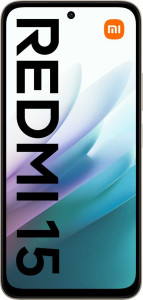
Both phones run Xiaomi's Android-based software, but the Redmi 15 5G ships with Android 15 while the Redmi Note 14 4G (Global) launches on Android 14. A newer base Android version means the Redmi 15 5G starts its life with more recent security patches, the latest platform privacy enhancements, and refinements that Android 14 users may only receive later — if at all, given that neither phone receives direct OS updates according to the provided data. For longevity-conscious buyers, starting one version ahead is a tangible, if modest, advantage.
Beyond the version number, the feature sets are remarkably aligned. Both phones support the same broad roster of privacy controls, productivity tools, and customization options — including dynamic theming, split-screen multitasking, picture-in-picture, widgets, and on-device machine learning. The one functional difference worth noting is that the Redmi 15 5G supports app offloading, a feature absent on the Note 14 4G. Offloading allows rarely used apps to be temporarily removed while preserving their data, freeing up storage without a full uninstall — a useful capability on a device where storage management matters.
This category goes to the Redmi 15 5G, narrowly but clearly. A newer Android version out of the box combined with app offloading support gives it a practical software edge. That said, the gap is not dramatic — users of the Note 14 4G will find an equally full-featured experience in almost every day-to-day scenario.