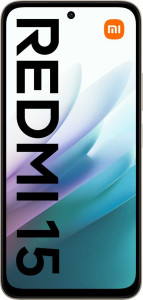
From a software standpoint, these two phones are nearly identical in feature set — but there is one version difference worth noting. The Redmi 15 5G ships with Android 15, while the Redmi Note 14 5G launches on Android 14. A newer Android version means access to the latest platform security patches, privacy improvements, and system-level refinements out of the box. For users who care about longevity, starting one generation ahead on the Android ladder is a modest but real advantage, as it extends the effective window before the device falls behind on OS support.
Beyond the version gap, the two phones are functionally equivalent across virtually every software feature in this group. Both offer a robust and near-identical set of privacy controls, productivity tools, and customization options — including dynamic theming, split-screen multitasking, picture-in-picture, on-device machine learning, and customizable notifications. One minor additional differentiator: the Redmi 15 5G supports app offloading while the Note 14 5G does not. Offloading allows the system to remove unused apps while retaining their data, freeing up storage automatically — a useful feature, though a secondary one.
Neither phone receives direct OS updates from Google, meaning both depend on Xiaomi's own update cadence. Overall, the Redmi 15 5G holds a narrow software edge, purely by virtue of its newer Android version and app offloading support. The functional day-to-day experience will feel essentially identical on both devices, but the Redmi 15 5G starts from a slightly more future-proofed baseline.