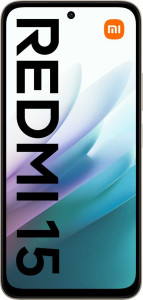
Wireless connectivity is a consistent step ahead on the Redmi Note 14 Pro 5G. It supports Wi-Fi 6 (802.11ax), while the Redmi 15 5G tops out at Wi-Fi 5 (802.11ac). Wi-Fi 6 delivers better throughput, lower latency, and improved performance in congested environments — useful in dense apartment buildings or offices with many connected devices. The gap extends to cellular speeds as well: the Note 14 Pro offers symmetric download and upload speeds of 3270 Mbits/s, versus 2500 Mbits/s down and 1500 Mbits/s up on the Redmi 15 5G — a notable asymmetry that makes the latter less capable for upload-intensive tasks like video calls or cloud backups. Bluetooth follows the same pattern, with the Note 14 Pro on the newer version 5.4 compared to 5.1 on the Redmi 15 5G, bringing improved connection stability and efficiency.
Sensor coverage also favors the Note 14 Pro. It includes a gyroscope and an infrared sensor, neither of which the Redmi 15 5G carries. The gyroscope enables more accurate motion-based features in gaming and augmented reality apps, while the infrared sensor lets the phone function as a universal remote for TVs and appliances — a small but genuinely useful everyday convenience. The Redmi 15 5G's absence of a gyroscope is the more limiting omission, as certain apps and games explicitly require it.
Both phones share a solid common foundation — dual SIM, 5G, NFC, USB Type-C, GPS, fingerprint scanner, and accelerometer are all present on each. But the differences are consistently one-directional. The Redmi Note 14 Pro 5G holds a clear advantage in this group, with faster and more modern wireless standards, higher upload speeds, a newer Bluetooth version, and a more complete sensor suite.