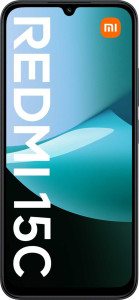
The camera systems tell a clear story of different ambitions. The Redmi Note 14 4G fields a triple rear camera setup led by a 108 MP main sensor with a wide f/1.7 aperture, backed by two auxiliary lenses, while the Redmi 15C 5G relies on a single 50 MP main shooter at f/1.8. More megapixels allow the Note 14 to capture finer detail and enable aggressive pixel-binning for cleaner low-light shots, and its slightly wider aperture admits more light — a compounding advantage in dim conditions. The additional lenses on the Note 14 expand compositional versatility, though the 2 MP auxiliary sensors are modest in isolation.
Two hardware differentiators stand out beyond resolution. The Note 14 4G includes optical image stabilization (OIS), which physically compensates for hand shake during handheld shots and video — a feature entirely absent on the 15C 5G. In practice, OIS meaningfully reduces blur in low-light photos and produces smoother video footage without software compensation. On the selfie side, the Note 14's 20 MP front camera significantly outresolves the 15C's 8 MP shooter, offering more detail for portraits and video calls, though the 15C's front aperture of f/2.0 is slightly wider than the Note 14's f/2.2.
Both phones share the same maximum video resolution of 1080p at 30 fps, and their manual control feature sets are essentially identical — HDR mode, manual ISO, touch autofocus, timelapse, and slow-motion are all present on each. That parity, however, does little to close the gap at the system level. The Redmi Note 14 4G is the clear winner in this category, with its higher-resolution triple camera array, OIS, and stronger front camera making it the substantially more capable imaging device.