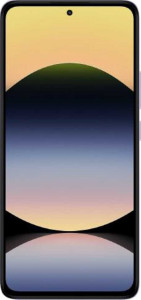
Xiaomi Redmi Note 14 4G (Global)
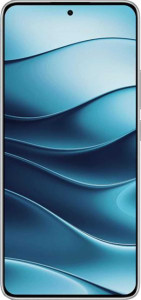
Xiaomi Redmi Note 14 5G (Global)

Xiaomi Redmi Note 14 4G (Global) Xiaomi Redmi Note 14 5G (Global)

Overview

Welcome to our in-depth comparison of the Xiaomi Redmi Note 14 4G (Global) and the Xiaomi Redmi Note 14 5G (Global). While these two siblings share a stunning 6.67″ OLED display, Android 14, and a 108 MP main camera, they diverge in meaningful ways across performance, connectivity, and battery. Whether you care about raw processing power, network capability, or how long your phone lasts between charges, this comparison will help you figure out which model truly fits your needs.

Common Features

  • Both phones are water resistant.
  • Neither phone has a rugged build.
  • Neither phone can be folded.
  • Both phones feature a 6.67″ OLED/AMOLED display.
  • Both phones have a pixel density of 395 ppi.
  • Both phones have a resolution of 1080 x 2400 px.
  • Both phones support a 120Hz refresh rate and 240Hz touch sampling rate.
  • Both phones feature Gorilla Glass 5 for display protection.
  • Both phones have an AnTuTu benchmark score of 470000.
  • Both phones use a 6 nm semiconductor process.
  • Both phones support 64-bit processing and use big.LITTLE technology.
  • Both phones have an OpenCL version of 2.
  • Both phones have a main camera with 108 MP as the primary sensor.
  • Both phones feature optical image stabilization.
  • Both phones record video at 1080 x 30 fps on the main camera.
  • Both phones have a 20 MP front camera.
  • Both phones run Android 14.
  • Both phones support fast charging and come with a charger included.
  • Both phones have a 3.5 mm audio jack, stereo speakers, LDAC support, and a radio.
  • Both phones support Wi-Fi 5, Bluetooth 5.3, NFC, USB Type-C, dual SIM, and have a fingerprint scanner.

Main Differences

  • IP rating is IP54 on Xiaomi Redmi Note 14 4G (Global) and IP64 on Xiaomi Redmi Note 14 5G (Global).
  • Weight is 196.5 g on Xiaomi Redmi Note 14 4G (Global) and 190 g on Xiaomi Redmi Note 14 5G (Global).
  • Thickness is 8.2 mm on Xiaomi Redmi Note 14 4G (Global) and 8 mm on Xiaomi Redmi Note 14 5G (Global).
  • Internal storage is 256GB on Xiaomi Redmi Note 14 4G (Global) and 512GB on Xiaomi Redmi Note 14 5G (Global).
  • RAM is 8GB on Xiaomi Redmi Note 14 4G (Global) and 12GB on Xiaomi Redmi Note 14 5G (Global).
  • The chipset is Mediatek Helio G99 on Xiaomi Redmi Note 14 4G (Global) and MediaTek Dimensity 7025 on Xiaomi Redmi Note 14 5G (Global).
  • CPU speed is 2 x 2.2 & 6 x 2 GHz on Xiaomi Redmi Note 14 4G (Global) and 2 x 2.5 & 6 x 2 GHz on Xiaomi Redmi Note 14 5G (Global).
  • Geekbench 6 multi-core score is 1979 on Xiaomi Redmi Note 14 4G (Global) and 2291 on Xiaomi Redmi Note 14 5G (Global).
  • Geekbench 6 single-core score is 729 on Xiaomi Redmi Note 14 4G (Global) and 884 on Xiaomi Redmi Note 14 5G (Global).
  • Maximum memory bandwidth is 17.1 GB/s on Xiaomi Redmi Note 14 4G (Global) and 51.2 GB/s on Xiaomi Redmi Note 14 5G (Global).
  • Memory channels number 2 on Xiaomi Redmi Note 14 4G (Global) and 4 on Xiaomi Redmi Note 14 5G (Global).
  • The secondary camera sensor is 2 MP on Xiaomi Redmi Note 14 4G (Global) and 8 MP on Xiaomi Redmi Note 14 5G (Global).
  • Battery capacity is 5500 mAh on Xiaomi Redmi Note 14 4G (Global) and 5110 mAh on Xiaomi Redmi Note 14 5G (Global).
  • Charging speed is 33W on Xiaomi Redmi Note 14 4G (Global) and 45W on Xiaomi Redmi Note 14 5G (Global).
  • 5G support is not available on Xiaomi Redmi Note 14 4G (Global) but is present on Xiaomi Redmi Note 14 5G (Global).
  • Download speed is 650 MBits/s on Xiaomi Redmi Note 14 4G (Global) and 2770 MBits/s on Xiaomi Redmi Note 14 5G (Global).
Specs Comparison
Xiaomi Redmi Note 14 4G (Global)

Xiaomi Redmi Note 14 4G (Global)

Xiaomi Redmi Note 14 5G (Global)

Xiaomi Redmi Note 14 5G (Global)

Design:
water resistance Water resistant Water resistant
weight 196.5 g 190 g
thickness 8.2 mm 8 mm
width 76.6 mm 75.7 mm
height 163.3 mm 162.4 mm
volume 102.571996 cm³ 98.34944 cm³
Ingress Protection (IP) rating IP54 IP64
has a rugged build
can be folded

Both the Redmi Note 14 4G and the Redmi Note 14 5G share the same fundamental design language — neither is rugged-built nor foldable, and both carry a general water-resistant rating. However, the differences in their physical dimensions and protection ratings are meaningful. The 4G variant is marginally larger across every dimension (163.3 × 76.6 × 8.2 mm vs 162.4 × 75.7 × 8 mm), resulting in a noticeably higher volume of 102.57 cm³ compared to the 5G's 98.35 cm³. In practice, the 5G model is slightly more compact and, at 190 g versus 196.5 g, a touch lighter — a modest but real difference during prolonged one-handed use.

The more significant distinction is the IP rating. The 4G model carries an IP54 certification, meaning it offers limited dust protection and splash resistance from any direction. The 5G model steps up to IP64, which provides complete dust-tightness (the ″6″ rating means no dust ingress at all) while maintaining the same level of water resistance. For users who frequently use their phone outdoors, in dusty environments, or at the beach, the 5G's full dust protection is a tangible real-world advantage that extends the longevity of the device.

In this group, the Redmi Note 14 5G holds a clear edge: it is lighter, slightly more compact, and offers superior ingress protection with its IP64 rating. The 4G model trails on all three fronts, making the 5G the more refined and durable design choice based strictly on these specs.

Display:
Display type OLED/AMOLED OLED/AMOLED
screen size 6.67" 6.67"
pixel density 395 ppi 395 ppi
resolution 1080 x 2400 px 1080 x 2400 px
refresh rate 120Hz 120Hz
touch sampling rate 240Hz 240Hz
has branded damage-resistant glass
Gorilla Glass version Gorilla Glass 5 Gorilla Glass 5
supports HDR10
supports HDR10+
Always-On Display
supports Dolby Vision
Has a secondary screen
has a touch screen

When it comes to the display, the Redmi Note 14 4G and the Redmi Note 14 5G are, for all practical purposes, identical. Both feature a 6.67″ OLED/AMOLED panel running at 1080 × 2400 px with a pixel density of 395 ppi — sharp enough that individual pixels are imperceptible at normal viewing distances. The 120Hz refresh rate ensures smooth scrolling and responsive animations, while the 240Hz touch sampling rate means the screen registers input with minimal latency, a meaningful perk for gaming and fast-paced interactions.

On the protection and media front, the story remains the same. Both panels are shielded by Gorilla Glass 5, which offers solid resistance against everyday drops and scratches. HDR support extends to both HDR10 and HDR10+, enabling richer contrast and a wider dynamic range when streaming compatible content. The Always-On Display feature is also present on both devices, allowing at-a-glance notifications without fully waking the screen — useful for battery-conscious users.

This group is an unambiguous tie. Every single display specification is shared between the two models, from panel technology and resolution down to glass protection and HDR standards. A buyer's display preference should play no role in choosing between these two devices.

Performance:
internal storage 256GB 512GB
RAM 8GB 12GB
AnTuTu benchmark score 470000 470000
Chipset (SoC) name Mediatek Helio G99 MediaTek Dimensity 7025
GPU name Mali G57 IMG BXM-8-256
CPU speed 2 x 2.2 & 6 x 2 GHz 2 x 2.5 & 6 x 2 GHz
Geekbench 6 result (multi) 1979 2291
Geekbench 6 result (single) 729 884
GPU clock speed 950 MHz 900 MHz
Has integrated LTE
RAM speed 4266 MHz 2750 MHz
semiconductor size 6 nm 6 nm
Supports 64-bit
DirectX version DirectX 11 DirectX 12
Has integrated graphics
Uses big.LITTLE technology
Uses HMP
maximum memory bandwidth 17.1 GB/s 51.2 GB/s
OpenCL version 2 2
memory channels 2 4
maximum memory amount 12GB 16GB
DDR memory version 4 5
shading units 32 18

Despite both phones sharing an identical AnTuTu score of 470,000 and the same 6 nm manufacturing process, the underlying silicon tells a more nuanced story. The 4G model runs on the Mediatek Helio G99, while the 5G model uses the MediaTek Dimensity 7025 — and Geekbench 6 reveals a consistent gap in favor of the 5G: 884 vs 729 in single-core and 2291 vs 1979 in multi-core. This translates to snappier app launches and better sustained performance in CPU-intensive tasks like video editing or heavy multitasking.

The memory subsystem is where the 5G model pulls ahead most dramatically. Its DDR5 RAM across 4 memory channels yields a maximum memory bandwidth of 51.2 GB/s — nearly three times the 4G model's 17.1 GB/s. This is a substantial architectural advantage: higher bandwidth means the CPU and GPU can feed on data far more rapidly, reducing bottlenecks in demanding workloads. The 5G also ships with more RAM (12 GB vs 8 GB) and double the base storage at 512 GB vs 256 GB, giving it meaningfully more headroom for heavy app usage and media libraries. On the GPU side, the 4G's chip has more shading units (32 vs 18) and a slightly higher clock speed (950 MHz vs 900 MHz), but the 5G counters with DirectX 12 support versus DirectX 11, enabling access to more modern graphics APIs.

The Redmi Note 14 5G holds a clear performance edge overall. Its CPU benchmarks, memory bandwidth, RAM capacity, storage, and graphics API support all point in the same direction. The 4G model's marginally faster GPU clock and higher shading unit count are real figures, but they are outweighed by the broader advantages of the 5G's memory architecture and processing headroom.

Cameras:
megapixels (main camera) 108 & 2 & 2 MP 108 & 8 & 2 MP
wide aperture (main camera) 1.7 & 2.2 & 2.4f 1.7 & 2.2 & 2.4f
Has a dual-lens (or multi-lens) main camera
megapixels (front camera) 20MP 20MP
has built-in optical image stabilization
video recording (main camera) 1080 x 30 fps 1080 x 30 fps
Has a dual-tone LED flash
number of flash LEDs 1 1
has a BSI sensor
has a CMOS sensor
has continuous autofocus when recording movies
Has phase-detection autofocus for photos
supports slow-motion video recording
has a built-in HDR mode
has manual exposure
has a flash
optical zoom 0x 0x
has manual ISO
has a serial shot mode
has manual focus
has a front camera
Has laser autofocus
Shoots 360° panorama
has manual white balance
shoots raw
has touch autofocus
has manual shutter speed
can create panoramas in-camera
wide aperture (front camera) 2.2f 2.2f
Has timelapse function
Has a front-facing LED flash
has a dual-lens (or multi-lens) front camera
supports HDR10 recording
supports Dolby Vision recording
has a front-facing camera under the display
Has a RGB LED flash
has 3D photo/video recording capabilities

The camera systems on these two phones are nearly identical — same 108 MP primary shooter, same apertures across all lenses, same 20 MP front camera, and a matching feature set covering OIS, phase-detection autofocus, slow-motion, HDR, and a full suite of manual controls. The one spec that sets them apart is the secondary rear lens: the 4G model pairs its main camera with a 2 MP auxiliary sensor, while the 5G steps that up to 8 MP. In practical terms, a 2 MP secondary lens offers very limited real-world utility — it typically serves as a depth sensor for portrait mode with minimal detail of its own. An 8 MP lens, by contrast, can capture usable images independently, whether as an ultrawide or macro, depending on its configuration.

Everything else in this group is a straight match. Both phones top out at 1080p at 30 fps for video, with no HDR10 or Dolby Vision recording on either model. Neither shoots RAW, neither has a front flash, and optical zoom is absent from both. For selfie shooters, the experience will be identical across the two devices.

The Redmi Note 14 5G has a narrow but genuine edge in this category, driven entirely by its superior 8 MP secondary camera. It is the only differentiator, but it is a meaningful one — offering more versatility from the rear camera array than the 4G model's 2 MP counterpart.

Operating system:
Android version Android 14 Android 14
has clipboard warnings
has location privacy options
has camera/microphone privacy options
has Mail Privacy Protection
has theme customization
can block app tracking
blocks cross-site tracking
has on-device machine learning
has notification permissions
has media picker
Can play games while they download
has dark mode
has Wi-Fi password sharing
has battery health check
has an extra dim mode
has focus modes
has dynamic theming
can offload apps
Has customizable notifications
has Live Text
has full-page screenshots
supports split screen
gets direct OS updates
has PiP
Can be used as a PC
Has sharing intents
has a child lock
Supports widgets
Is free and open source
Has offline voice recognition
has voice commands
Tracks the current position of a mobile device
is a multi-user system
has Quick Start

Running Android 14 on both devices, Xiaomi has equipped the Redmi Note 14 4G and 5G with an identical software experience. Privacy-conscious users will find the same toolkit on either model: granular location controls, camera and microphone access management, clipboard warnings, and app tracking blocks all feature across the board. Notably, neither device receives direct OS updates — meaning software patches are routed through Xiaomi rather than delivered straight from Google, which can introduce delays in receiving security and feature updates.

Day-to-day usability features are also a mirror image. Both support split-screen multitasking, Picture-in-Picture, widgets, dynamic theming, and full-page screenshots. Productivity and accessibility features like offline voice recognition, Live Text, and an extra dim mode round out a well-stocked feature set that serves a wide range of users equally on both models.

This is a complete tie. Not a single software specification differs between the two devices. A buyer's OS and software preferences are entirely irrelevant when choosing between these two phones.

Battery:
battery power 5500 mAh 5110 mAh
has wireless charging
Supports fast charging
charging speed 33W 45W
comes with a charger
has a removable battery
has a battery level indicator
has a rechargeable battery

The battery category presents a genuine trade-off rather than a clear-cut winner. The Redmi Note 14 4G packs a larger 5500 mAh cell compared to the 5G's 5110 mAh — a difference of 390 mAh that, all else being equal, translates to a modest but real advantage in raw endurance. For users who prioritize going longer between charges, the 4G model has the edge on paper.

Flip the lens to charging speed, however, and the 5G pulls ahead. Its 45W fast charging outpaces the 4G model's 33W, meaning the 5G can recover battery percentage meaningfully faster during a short break or commute. For users whose daily routine involves topping up rather than running the phone dry, faster charging can feel just as valuable as a larger capacity. Neither phone supports wireless charging, and both ship with a charger included — so the in-box experience is equally convenient on both.

This group is a genuine toss-up that comes down to usage style. The Redmi Note 14 4G has the endurance advantage with its larger battery, while the Redmi Note 14 5G charges faster. Neither advantage is large enough to be decisive on its own — buyers who rarely find a charger during the day should lean toward the 4G, while those who charge in short bursts will appreciate the 5G's speed.

Audio:
has a socket for a 3.5 mm audio jack
has stereo speakers
has aptX
has LDAC
has aptX HD
has aptX Adaptive
has aptX Lossless
Has a radio

Audio is another category where the Redmi Note 14 4G and 5G are indistinguishable. Both retain the 3.5 mm headphone jack — a feature increasingly absent from mid-range phones — making them straightforwardly compatible with wired headphones without needing an adapter. Paired with stereo speakers, both devices deliver a wider, more immersive soundstage for media consumption compared to single-speaker alternatives.

Wireless audio quality is also matched. Both phones support LDAC, Sony's high-resolution Bluetooth audio codec, which allows compatible wireless headphones to receive audio at up to three times the bitrate of standard Bluetooth — a meaningful perk for audiophiles using high-quality wireless gear. Neither device supports aptX in any of its variants, but LDAC is generally considered the stronger codec for lossless-adjacent wireless listening, so its presence on both is a genuine plus. The inclusion of an FM radio on both models is a small but appreciated bonus for users in markets where broadcast radio remains relevant.

This group is a definitive tie. Every audio specification is shared between the two models, from wired connectivity to wireless codecs. Audio quality and features should have no bearing on the choice between these two phones.

Connectivity & Features:
release date January 2025 January 2025
has 5G support
Wi-Fi version Wi-Fi 4 (802.11n), Wi-Fi 5 (802.11ac) Wi-Fi 4 (802.11n), Wi-Fi 5 (802.11ac)
SIM cards 2 SIM 2 SIM
Bluetooth version 5.3 5.3
has an external memory slot
Has USB Type-C
USB version 2 2
has NFC
download speed 650 MBits/s 2770 MBits/s
Has a fingerprint scanner
has emergency SOS via satellite
has crash detection
is DLNA-certified
has a gyroscope
supports ANT+
Has a heart rate monitor
has GPS
has a compass
supports Wi-Fi
Has an infrared sensor
has an accelerometer
has a cellular module
Has a barometer
has an HDMI output
Uses 3D facial recognition
Has an iris scanner
Stylus included
supports Galileo
Has motion tracking
Has optical tracking
Has a built-in projector

The most consequential difference in this group is right in the product name: the Redmi Note 14 5G supports 5G connectivity, while the 4G model does not. In practical terms, this means the 5G variant can achieve significantly higher cellular download speeds — up to 2770 Mbits/s versus the 4G model's 650 Mbits/s. For users in areas with 5G coverage, that translates to faster streaming, quicker cloud uploads, and lower latency on mobile data. For users in 4G-only regions, this distinction is moot — but it also makes the 5G model a more future-proof investment as networks continue to expand.

Strip away the cellular generation difference, and the two phones are remarkably alike. Both share Wi-Fi 5, Bluetooth 5.3, NFC, USB Type-C (USB 2.0), a microSD slot, and an infrared sensor — a feature set that covers the vast majority of everyday connectivity needs. The sensor array is also identical, with gyroscope, accelerometer, GPS, and compass present on both, making them equally capable for navigation and motion-sensitive applications.

The Redmi Note 14 5G holds a clear advantage in this group, driven entirely by its 5G support and the dramatically higher download speeds that come with it. All other connectivity and feature specifications are evenly matched, so this single differentiator is the deciding factor for buyers who prioritize cellular performance or long-term network compatibility.

Miscellaneous:
has a video light
Has sapphire glass display
Has a curved display
Has an e-paper display

Both the Xiaomi Redmi Note 14 4G (Global) and the Xiaomi Redmi Note 14 5G (Global) share identical features in this category. Both models are equipped with a video light, which can be useful for enhancing video recording in low-light environments. Neither model has a sapphire glass display, a curved display, or an e-paper display, meaning both phones feature traditional flat displays with standard glass.

The specifications for both devices in this group are exactly the same, so users can expect an equivalent experience in terms of display and video-related features on both models.

Comparison Summary & Verdict

Both phones offer a strong foundation with an identical display, camera system, and software experience, making either a solid choice for everyday use. However, the differences matter depending on your priorities. The Xiaomi Redmi Note 14 5G (Global) pulls ahead with a faster MediaTek Dimensity 7025 chipset, 12 GB of RAM, 512 GB of storage, a superior 51.2 GB/s memory bandwidth, 45W fast charging, and of course 5G connectivity with download speeds up to 2770 MBits/s — making it the better pick for performance-focused and future-proof users. On the other hand, the Xiaomi Redmi Note 14 4G (Global) offers a larger 5500 mAh battery and a slightly better IP64-versus-IP54 trade-off in reverse, making it appealing for those who prioritize battery endurance over raw speed and connectivity.

Xiaomi Redmi Note 14 4G (Global)
Buy Xiaomi Redmi Note 14 4G (Global) if...

Buy the Xiaomi Redmi Note 14 4G (Global) if you prioritize a larger 5500 mAh battery for extended usage and do not need 5G connectivity in your daily life.

Xiaomi Redmi Note 14 5G (Global)
Buy Xiaomi Redmi Note 14 5G (Global) if...

Buy the Xiaomi Redmi Note 14 5G (Global) if you want faster performance with a stronger chipset and more RAM, 5G support, and quicker 45W charging.