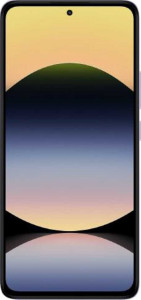
Xiaomi Redmi Note 14 4G (Global)
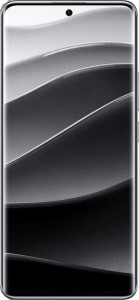
Xiaomi Redmi Note 14 Pro 4G (Global) (256GB / 8GB RAM)

Xiaomi Redmi Note 14 4G (Global) Xiaomi Redmi Note 14 Pro 4G (Global) (256GB / 8GB RAM)

Overview

Welcome to our in-depth comparison of the Xiaomi Redmi Note 14 4G (Global) and the Xiaomi Redmi Note 14 Pro 4G (Global) (256GB / 8GB RAM). Both phones share the same OLED display, 5500 mAh battery, and Android 14 foundation, yet they diverge in meaningful ways across camera capabilities, display protection, build design, and connectivity. Read on to discover which of these two mid-range contenders best matches your needs.

Common Features

  • Both phones are water resistant.
  • Both phones have a thickness of 8.2 mm.
  • Neither phone has a rugged build.
  • Neither phone can be folded.
  • Both phones feature an OLED/AMOLED display.
  • Both phones have a 6.67″ screen size.
  • Both phones have a pixel density of 395 ppi.
  • Both phones have a resolution of 1080 x 2400 px.
  • Both phones support a 120Hz refresh rate.
  • Both phones have a typical brightness of 1800 nits.
  • Both phones feature branded damage-resistant glass.
  • HDR10 support is available on both phones.
  • Both phones have 256GB of internal storage and 8GB of RAM.
  • Both phones use a Mali G57 GPU.
  • Both phones have a CPU speed of 2 x 2.2 & 6 x 2 GHz.
  • Both phones have integrated LTE.
  • Both phones have a RAM speed of 4266 MHz.
  • Both phones are built on a 6 nm semiconductor process.
  • Both phones support 64-bit processing.
  • Both phones feature a multi-lens main camera.
  • Neither phone has a dual-tone LED flash, and each has 1 flash LED.
  • Both phones have a CMOS sensor.
  • Both phones support continuous autofocus when recording movies.
  • Both phones support phase-detection autofocus for photos.
  • Both phones run Android 14.
  • Both phones have clipboard warnings.
  • Both phones offer location privacy options.
  • Both phones offer camera and microphone privacy options.
  • Mail Privacy Protection is not available on either phone.
  • Both phones support theme customization.
  • Both phones can block app tracking.
  • Cross-site tracking blocking is not available on either phone.
  • Both phones have a 5500 mAh battery.
  • Neither phone supports wireless charging.
  • Both phones support fast charging.
  • Both phones come with a charger in the box.
  • Neither phone has a removable battery.
  • Both phones have an ultra power-saving mode.
  • Both phones have a battery level indicator.
  • Both phones have a rechargeable battery.
  • Both phones have a 3.5 mm audio jack.
  • Both phones have stereo speakers.
  • LDAC support is available on both phones.
  • aptX HD support is not available on either phone.
  • aptX Adaptive support is not available on either phone.
  • aptX Lossless support is not available on either phone.
  • Both phones have 2 microphones.
  • 5G support is not available on either phone.
  • Both phones support dual SIM cards.
  • Both phones have Bluetooth version 5.3.
  • Both phones have a USB Type-C port with USB version 2.
  • NFC is available on both phones.
  • Both phones have a download speed of 650 MBits/s and upload speed of 150 MBits/s.
  • Both phones have a video light.
  • Neither phone has a sapphire glass display.
  • Neither phone has an e-paper display.

Main Differences

  • Weight is 196.5 g on Xiaomi Redmi Note 14 4G (Global) and 180 g on Xiaomi Redmi Note 14 Pro 4G (Global) (256GB / 8GB RAM).
  • Width is 76.6 mm on Xiaomi Redmi Note 14 4G (Global) and 74.9 mm on Xiaomi Redmi Note 14 Pro 4G (Global) (256GB / 8GB RAM).
  • Height is 163.3 mm on Xiaomi Redmi Note 14 4G (Global) and 162.2 mm on Xiaomi Redmi Note 14 Pro 4G (Global) (256GB / 8GB RAM).
  • Volume is 102.57 cm³ on Xiaomi Redmi Note 14 4G (Global) and 99.62 cm³ on Xiaomi Redmi Note 14 Pro 4G (Global) (256GB / 8GB RAM).
  • The IP rating is IP54 on Xiaomi Redmi Note 14 4G (Global) and IP64 on Xiaomi Redmi Note 14 Pro 4G (Global) (256GB / 8GB RAM).
  • The display is protected by Gorilla Glass 5 on Xiaomi Redmi Note 14 4G (Global) and Gorilla Glass Victus 2 on Xiaomi Redmi Note 14 Pro 4G (Global) (256GB / 8GB RAM).
  • Dolby Vision support is present on Xiaomi Redmi Note 14 Pro 4G (Global) (256GB / 8GB RAM) but not available on Xiaomi Redmi Note 14 4G (Global).
  • The AnTuTu benchmark score is 470000 on Xiaomi Redmi Note 14 4G (Global) and 420000 on Xiaomi Redmi Note 14 Pro 4G (Global) (256GB / 8GB RAM).
  • The chipset is Mediatek Helio G99 on Xiaomi Redmi Note 14 4G (Global) and MediaTek Helio G100 on Xiaomi Redmi Note 14 Pro 4G (Global) (256GB / 8GB RAM).
  • GPU clock speed is 950 MHz on Xiaomi Redmi Note 14 4G (Global) and 1000 MHz on Xiaomi Redmi Note 14 Pro 4G (Global) (256GB / 8GB RAM).
  • Main camera resolution is 108 & 2 & 2 MP on Xiaomi Redmi Note 14 4G (Global) and 200 & 8 & 2 MP on Xiaomi Redmi Note 14 Pro 4G (Global) (256GB / 8GB RAM).
  • Front camera resolution is 20MP on Xiaomi Redmi Note 14 4G (Global) and 32MP on Xiaomi Redmi Note 14 Pro 4G (Global) (256GB / 8GB RAM).
  • Optical image stabilization is present on Xiaomi Redmi Note 14 4G (Global) but not available on Xiaomi Redmi Note 14 Pro 4G (Global) (256GB / 8GB RAM).
  • Main camera video recording is 1080 x 30 fps on Xiaomi Redmi Note 14 4G (Global) and 2160 x 30 fps on Xiaomi Redmi Note 14 Pro 4G (Global) (256GB / 8GB RAM).
  • Charging speed is 33W on Xiaomi Redmi Note 14 4G (Global) and 45W on Xiaomi Redmi Note 14 Pro 4G (Global) (256GB / 8GB RAM).
  • aptX support is present on Xiaomi Redmi Note 14 Pro 4G (Global) (256GB / 8GB RAM) but not available on Xiaomi Redmi Note 14 4G (Global).
  • A built-in radio is present on Xiaomi Redmi Note 14 4G (Global) but not available on Xiaomi Redmi Note 14 Pro 4G (Global) (256GB / 8GB RAM).
  • Wi-Fi support includes Wi-Fi 4 and Wi-Fi 5 on Xiaomi Redmi Note 14 4G (Global), while Xiaomi Redmi Note 14 Pro 4G (Global) (256GB / 8GB RAM) also adds Wi-Fi 6 (802.11ax).
  • An external memory slot is present on Xiaomi Redmi Note 14 4G (Global) but not available on Xiaomi Redmi Note 14 Pro 4G (Global) (256GB / 8GB RAM).
  • A curved display is present on Xiaomi Redmi Note 14 Pro 4G (Global) (256GB / 8GB RAM) but not on Xiaomi Redmi Note 14 4G (Global).
Specs Comparison
Xiaomi Redmi Note 14 4G (Global)

Xiaomi Redmi Note 14 4G (Global)

Xiaomi Redmi Note 14 Pro 4G (Global) (256GB / 8GB RAM)

Xiaomi Redmi Note 14 Pro 4G (Global) (256GB / 8GB RAM)

Design:
water resistance Water resistant Water resistant
weight 196.5 g 180 g
thickness 8.2 mm 8.2 mm
width 76.6 mm 74.9 mm
height 163.3 mm 162.2 mm
volume 102.571996 cm³ 99.619996 cm³
Ingress Protection (IP) rating IP54 IP64
has a rugged build
can be folded

Both phones share the same 8.2 mm thickness and neither offers a rugged build or a foldable form factor, so at a glance they feel like close siblings. The real differentiators in this group come down to weight, footprint, and dust protection. The Redmi Note 14 Pro 4G is notably lighter at 180 g versus 196.5 g for the standard Note 14 — a 16.5 g gap that is tangible during extended one-handed use or long browsing sessions, where cumulative fatigue adds up.

The Pro is also slightly more compact across height and width (162.2 × 74.9 mm vs 163.3 × 76.6 mm), which translates to a marginally smaller overall volume. This makes it easier to pocket and reach across the screen, a meaningful ergonomic win even if the difference is not dramatic on paper. On ingress protection, the Pro steps up to IP64 while the standard model sits at IP54. The key distinction is the first digit: a ″6″ rating means full protection against dust ingress, whereas ″5″ only guarantees dust resistance. Both are equally water-resistant under the second digit, but the Pro will handle dusty or sandy environments — a beach bag, a construction site, a dry hiking trail — with greater confidence.

In the Design category, the Redmi Note 14 Pro 4G holds a clear edge. It is lighter, slightly more pocketable, and offers superior dust protection via its IP64 rating. For users who prioritize comfort in daily carry and want more robust environmental protection, the Pro is the stronger choice here.

Display:
Display type OLED/AMOLED OLED/AMOLED
screen size 6.67" 6.67"
pixel density 395 ppi 395 ppi
resolution 1080 x 2400 px 1080 x 2400 px
refresh rate 120Hz 120Hz
brightness (typical) 1800 nits 1800 nits
has branded damage-resistant glass
Gorilla Glass version Gorilla Glass 5 Gorilla Glass Victus 2
supports HDR10
supports HDR10+
Always-On Display
supports Dolby Vision
Has a secondary screen
has a touch screen

The display hardware is nearly a carbon copy between these two phones: identical 6.67″ OLED panels, matching 1080 × 2400 px resolution at 395 ppi, the same 120 Hz refresh rate, and a shared 1800 nits typical brightness figure. For everyday use — scrolling, reading, watching video — both screens will look and feel essentially the same. The OLED technology ensures deep blacks and vivid colors on both, and the 120 Hz cadence keeps animations smooth regardless of which model you pick.

The two points where the Pro separates itself are glass protection and HDR format support. On durability, the standard Note 14 uses Gorilla Glass 5, which is a solid but older generation, while the Pro upgrades to Gorilla Glass Victus 2 — Corning′s most advanced protection at the time of these phones′ release. Victus 2 is engineered to better withstand drops on rough surfaces, meaning the Pro′s screen has a meaningfully higher chance of surviving an accidental pavement fall unscathed. On the content side, the Pro adds Dolby Vision support on top of the HDR10 and HDR10+ that both phones share. Dolby Vision uses dynamic metadata for scene-by-scene optimization, delivering more precise contrast and color accuracy on compatible streaming content from platforms like Netflix or Apple TV+.

The standard Note 14 and the Pro deliver an identical viewing experience for most users day-to-day, but the Redmi Note 14 Pro 4G earns a clear edge here through its superior drop protection and broader premium HDR compatibility — two upgrades that genuinely matter over the lifespan of the device.

Performance:
internal storage 256GB 256GB
RAM 8GB 8GB
AnTuTu benchmark score 470000 420000
Chipset (SoC) name Mediatek Helio G99 MediaTek Helio G100
GPU name Mali G57 Mali G57
CPU speed 2 x 2.2 & 6 x 2 GHz 2 x 2.2 & 6 x 2 GHz
GPU clock speed 950 MHz 1000 MHz
Has integrated LTE
RAM speed 4266 MHz 4266 MHz
semiconductor size 6 nm 6 nm
Supports 64-bit
DirectX version DirectX 11 DirectX 11
Has integrated graphics
OpenGL ES version 3.2 3.2
Uses big.LITTLE technology
CPU threads 8 threads 8 threads
Uses HMP
Has TrustZone
maximum memory bandwidth 17.1 GB/s 17.1 GB/s
OpenCL version 2 2
maximum memory amount 12GB 12GB
Thermal Design Power (TDP) 5W 5W
DDR memory version 4 4

At first glance, the naming suggests the Helio G100 in the Pro must outperform the standard Note 14′s Helio G99 — but the AnTuTu benchmark scores tell a more nuanced story. The Note 14 4G scores approximately 470,000 points, while the Pro trails at around 420,000. That is a roughly 12% gap in favor of the supposedly lower-tier chip, which matters for sustained CPU-heavy workloads like gaming sessions, video processing, or running multiple apps simultaneously. Both chips share the same CPU configuration, RAM speed, memory bandwidth, and 6 nm fabrication node, so the real-world feel during routine tasks will be virtually indistinguishable.

The one area where the G100 does pull ahead is GPU clock speed: 1000 MHz versus 950 MHz on the G99, both driving the same Mali G57 GPU. That 5% clock advantage could translate to marginally smoother frame rates in graphically demanding games, though the gap is narrow enough that most users would not notice it without direct side-by-side testing under load. Storage, RAM capacity, TDP, and every other silicon-level spec are identical across both devices.

The performance picture here is genuinely split: the standard Note 14 4G holds the edge in overall benchmark throughput, making it the stronger pick for CPU-intensive use cases, while the Pro′s slightly faster GPU gives it a thin advantage in graphics-heavy scenarios. Neither product dominates this category outright, but for the broadest definition of ″performance,″ the higher AnTuTu score gives the Note 14 4G a marginal overall edge.
Cameras:
megapixels (main camera) 108 & 2 & 2 MP 200 & 8 & 2 MP
wide aperture (main camera) 1.7 & 2.2 & 2.4f 1.7 & 2.2 & 2.4f
Has a dual-lens (or multi-lens) main camera
megapixels (front camera) 20MP 32MP
has built-in optical image stabilization
video recording (main camera) 1080 x 30 fps 2160 x 30 fps
Has a dual-tone LED flash
number of flash LEDs 1 1
has a BSI sensor
has a CMOS sensor
has continuous autofocus when recording movies
Has phase-detection autofocus for photos
supports slow-motion video recording
has a built-in HDR mode
has manual exposure
has a flash
optical zoom 0x 0x
has manual ISO
has a serial shot mode
has manual focus
has a front camera
Has laser autofocus
Shoots 360° panorama
has manual white balance
shoots raw
has touch autofocus
has manual shutter speed
can create panoramas in-camera
wide aperture (front camera) 2.2f 2.2f
Has timelapse function
Has a front-facing LED flash
has a dual-lens (or multi-lens) front camera
supports HDR10 recording
supports Dolby Vision recording
has a front-facing camera under the display
Has a RGB LED flash
has 3D photo/video recording capabilities

The camera gap between these two phones is among the most significant across any spec group. The Pro′s main sensor jumps to 200 MP compared to the standard Note 14′s 108 MP, and its secondary lens steps up to 8 MP versus a 2 MP depth sensor — meaning the Pro offers a genuinely more versatile triple-camera setup with a functional wide or telephoto lens, whereas the Note 14′s extra sensors contribute little to actual image quality. On the front, the Pro also pulls ahead with a 32 MP selfie camera against 20 MP. Higher megapixel counts enable more detail retention when cropping shots and better downsampled images in good light, making the Pro the stronger option for photography enthusiasts who pixel-peep or frequently crop their shots.

Video recording is where the gap becomes especially stark. The Pro captures footage up to 4K at 30 fps, while the standard Note 14 tops out at 1080p at 30 fps — a full resolution tier lower. For anyone who records family events, travel clips, or content for social media at high quality, that difference is immediately visible. However, there is a notable trade-off: the standard Note 14 includes optical image stabilization (OIS), which the Pro lacks entirely. OIS physically compensates for hand shake and is especially valuable in low light or while moving, making the Note 14′s video potentially steadier in practice despite the lower resolution ceiling.

Weighing the full picture, the Redmi Note 14 Pro 4G holds a clear overall camera advantage — the leap to 200 MP, a more useful secondary lens, a higher-resolution selfie camera, and 4K video recording represent meaningful real-world upgrades. The Note 14′s OIS is a genuine asset that partially offsets this, particularly for handheld video, but it is not enough to close the gap. Users who prioritize photographic versatility and video resolution should lean toward the Pro.

Operating system:
Android version Android 14 Android 14
has clipboard warnings
has location privacy options
has camera/microphone privacy options
has Mail Privacy Protection
has theme customization
can block app tracking
blocks cross-site tracking
has on-device machine learning
has notification permissions
has media picker
Can play games while they download
has dark mode
has Wi-Fi password sharing
has battery health check
has an extra dim mode
has focus modes
has dynamic theming
can offload apps
Has customizable notifications
has Live Text
has full-page screenshots
supports split screen
gets direct OS updates
has PiP
Can be used as a PC
Has sharing intents
has a child lock
Supports widgets
Is free and open source
Has offline voice recognition
has voice commands
Tracks the current position of a mobile device
is a multi-user system
has Quick Start

This is the rare spec group where the comparison resolves immediately: every single data point is identical across both phones. Both run Android 14, ship with Xiaomi′s MIUI/HyperOS skin on top, and carry the exact same feature set — from privacy controls like location and camera/microphone permissions, to usability features like split-screen multitasking, Picture-in-Picture, dynamic theming, and offline voice recognition. Neither device gets direct OS updates from Google, and neither supports Wi-Fi password sharing or focus modes.

The shared software experience means that choosing between these two phones has absolutely no bearing on the day-to-day Android experience a user will get. App compatibility, privacy tooling, customization depth, and productivity features are all equivalent. This is a decisive tie, with no advantage to either product in the Operating System category.

Battery:
battery power 5500 mAh 5500 mAh
has wireless charging
Supports fast charging
charging speed 33W 45W
comes with a charger
has a removable battery
Has an ultra power-saving mode
has a battery level indicator
has a rechargeable battery

Capacity is a non-issue here: both phones pack an identical 5500 mAh battery, so expected screen-on time and longevity between charges will be effectively the same under equivalent usage patterns. Neither supports wireless charging, both ship with a charger in the box, and both include an ultra power-saving mode for stretching the last reserves of charge when needed.

The single differentiator is charging speed. The standard Note 14 4G supports 33W fast charging, while the Pro steps up to 45W. In practical terms, that gap translates to a meaningfully shorter time plugged in — a 45W charger can be expected to recover a significant portion of a 5500 mAh cell in roughly the time the 33W solution would only partially complete the same task. For users who frequently top up in short windows — between meetings, during a commute, or before heading out — that extra charging headroom is a tangible daily convenience.

Since runtime is equal, the Redmi Note 14 Pro 4G takes a narrow but clear edge in this category purely on the strength of its faster 45W charging. It is not a dramatic advantage, but for anyone who values quick top-ups, the Pro is the more practical choice.

Audio:
has a socket for a 3.5 mm audio jack
has stereo speakers
has aptX
has LDAC
has aptX HD
has aptX Adaptive
has aptX Lossless
Has a radio
number of microphones 2 2

Wired and speaker audio are on equal footing: both phones retain the increasingly rare 3.5 mm headphone jack, offer stereo speakers, carry dual microphones, and support LDAC — Sony′s high-resolution Bluetooth codec that transmits up to 990 kbps, making it the gold standard for wireless listening quality on Android. For the majority of users, this shared foundation means the listening experience will be essentially identical day to day.

Two features split the two models apart. The Pro adds aptX support, Qualcomm′s widely compatible Bluetooth audio codec that offers lower latency and better wireless quality on devices that don′t support LDAC — useful for older headphones or speakers in the aptX ecosystem. The trade-off is that the Pro drops the built-in FM radio that the standard Note 14 retains. FM radio remains a practical tool in areas with limited mobile data or during emergencies, and its omission on the Pro is a genuine functional loss for users who rely on it.

This category is a balanced trade-off rather than a clean win for either side. The Redmi Note 14 Pro 4G has a slight edge for wireless audio versatility thanks to aptX, but the standard Note 14 4G counters with FM radio — a feature with a niche but loyal audience. Which phone ″wins″ here depends entirely on whether you value broader Bluetooth codec compatibility or offline broadcast radio access.

Connectivity & Features:
release date January 2025 January 2025
has 5G support
Wi-Fi version Wi-Fi 4 (802.11n), Wi-Fi 5 (802.11ac) Wi-Fi 4 (802.11n), Wi-Fi 6 (802.11ax), Wi-Fi 5 (802.11ac)
SIM cards 2 SIM 2 SIM
Bluetooth version 5.3 5.3
has an external memory slot
Has USB Type-C
USB version 2 2
has NFC
download speed 650 MBits/s 650 MBits/s
upload speed 150 MBits/s 150 MBits/s
Has a fingerprint scanner
has emergency SOS via satellite
has crash detection
is DLNA-certified
has a gyroscope
supports ANT+
Has a heart rate monitor
has GPS
has a compass
supports Wi-Fi
Has an infrared sensor
has an accelerometer
has a cellular module
Has a barometer
has an HDMI output
Uses 3D facial recognition
Has an iris scanner
Stylus included
supports Galileo
Has motion tracking
Has optical tracking
Has a built-in projector

Across most of this category the two phones are identical: both are 4G-only with the same LTE speeds, share Bluetooth 5.3, NFC, USB Type-C, an infrared sensor, a full sensor suite including gyroscope and compass, and dual SIM support. The shared baseline is strong and covers everything most users need for daily connectivity.

The meaningful divergence comes down to two features pulling in opposite directions. The Pro gains Wi-Fi 6 (802.11ax) support alongside the Wi-Fi 4/5 compatibility both phones share. Wi-Fi 6 delivers higher throughput, lower latency under congestion, and better efficiency in crowded environments like offices or apartments with many connected devices — a forward-looking addition that will pay dividends as Wi-Fi 6 routers become more prevalent. However, the Pro surrenders the microSD card slot that the standard Note 14 retains. Expandable storage is a significant practical consideration: without it, Pro users are locked into the 256 GB of internal storage with no affordable upgrade path, while Note 14 owners can cheaply add tens or hundreds of gigabytes via a memory card.

This is a deliberate trade-off rather than a straightforward win. The Redmi Note 14 Pro 4G is more future-proof on wireless networking, but the standard Note 14 4G offers greater long-term storage flexibility. Users who stream content and have a modern router will prefer the Pro′s Wi-Fi 6; those who store large media libraries locally or travel without reliable cloud access will find the Note 14′s expandable storage the more valuable asset.

Miscellaneous:
has a video light
Has sapphire glass display
Has a curved display
Has an e-paper display

This is a compact spec group with only one differentiating data point. Both phones share a video light and neither uses sapphire glass or an e-paper display. The sole distinction is that the Redmi Note 14 Pro 4G features a curved display, while the standard Note 14 4G has a flat panel.

A curved screen is primarily an aesthetic and ergonomic choice. The gently bent edges create a more premium, seamless look and can make swiping in from the sides feel more natural. The trade-off, which is worth noting from a design perspective, is that curved displays are generally more susceptible to edge cracks on impact and can make fitting a screen protector more challenging. Users who prioritize a sleek, modern aesthetic will appreciate the curve; those who favour practicality and easier screen protection may actually prefer the flat alternative.

Based strictly on this group, the Redmi Note 14 Pro 4G has a distinguishing feature the standard model lacks, though whether a curved display is an advantage or a drawback is largely a matter of personal preference. It adds visual flair but comes with practical compromises that make this a subjective rather than an objective win.

Comparison Summary & Verdict

After a thorough look at both devices, the choice comes down to your priorities. The Xiaomi Redmi Note 14 4G (Global) stands out with its optical image stabilization, higher AnTuTu benchmark score, built-in FM radio, and expandable storage via a microSD slot — making it a well-rounded daily driver for users who value versatility and multimedia flexibility. The Xiaomi Redmi Note 14 Pro 4G (Global) (256GB / 8GB RAM), on the other hand, pulls ahead with a 200 MP main camera, 4K video recording, Gorilla Glass Victus 2 protection, Dolby Vision, a higher IP64 dust resistance rating, faster 45W charging, Wi-Fi 6 support, and a curved display — making it the stronger choice for camera enthusiasts and users who demand a more premium, future-ready experience.

Xiaomi Redmi Note 14 4G (Global)
Buy Xiaomi Redmi Note 14 4G (Global) if...

Buy the Xiaomi Redmi Note 14 4G (Global) if you want optical image stabilization, expandable storage, a built-in FM radio, and a higher benchmark score at a more accessible price point.

Xiaomi Redmi Note 14 Pro 4G (Global) (256GB / 8GB RAM)
Buy Xiaomi Redmi Note 14 Pro 4G (Global) (256GB / 8GB RAM) if...

Buy the Xiaomi Redmi Note 14 Pro 4G (Global) (256GB / 8GB RAM) if you prioritize a superior 200 MP camera with 4K video, faster 45W charging, Wi-Fi 6, Dolby Vision, and stronger Gorilla Glass Victus 2 protection.