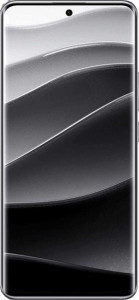
Xiaomi Redmi Note 14 5G (Global) (256GB / 8GB RAM)
Xiaomi Redmi Note 14 Pro 4G (Global)

Xiaomi Redmi Note 14 5G (Global) (256GB / 8GB RAM) Xiaomi Redmi Note 14 Pro 4G (Global)

Overview

Welcome to our in-depth spec comparison between the Xiaomi Redmi Note 14 5G (Global) (256GB / 8GB RAM) and the Xiaomi Redmi Note 14 Pro 4G (Global). Both phones share a strong foundation — identical 6.67″ OLED displays, 120Hz refresh rates, and 45W fast charging — yet they diverge sharply in areas like camera resolution, chipset architecture, and connectivity options. Which one truly fits your needs? Read on to find out.

Common Features

  • Both phones have an IP64 ingress protection rating and are water resistant.
  • Neither phone has a rugged build or can be folded.
  • Both phones feature a 6.67″ OLED/AMOLED display.
  • Both phones have a pixel density of 395 ppi and a resolution of 1080 x 2400 px.
  • Both phones support a 120Hz refresh rate.
  • Both phones feature branded damage-resistant glass.
  • HDR10 and HDR10+ support is available on both phones.
  • Both phones are built on a 6 nm semiconductor process.
  • Both phones support 64-bit processing and use big.LITTLE technology with HMP.
  • Both phones run Android 14.
  • Both phones have a 3.5 mm audio jack and stereo speakers.
  • LDAC support is available on both phones.
  • Both phones support fast charging at 45W and come with a charger included.
  • Neither phone supports wireless charging or has a removable battery.
  • Both phones use a dual SIM configuration with Bluetooth 5.3.
  • Both phones feature USB Type-C with USB 2.0 and have NFC.
  • Both phones have a fingerprint scanner.
  • Neither phone supports emergency SOS via satellite or has crash detection.
  • Both phones have a multi-lens main camera with phase-detection autofocus and continuous autofocus during video recording.
  • Both phones have a 3.5 mm audio jack and a video light.

Main Differences

  • Weight is 190 g on Xiaomi Redmi Note 14 5G (Global) (256GB / 8GB RAM) and 180 g on Xiaomi Redmi Note 14 Pro 4G (Global).
  • Thickness is 8 mm on Xiaomi Redmi Note 14 5G (Global) (256GB / 8GB RAM) and 8.2 mm on Xiaomi Redmi Note 14 Pro 4G (Global).
  • The display is protected by Gorilla Glass 5 on Xiaomi Redmi Note 14 5G (Global) (256GB / 8GB RAM) and Gorilla Glass Victus 2 on Xiaomi Redmi Note 14 Pro 4G (Global).
  • Dolby Vision support is available on Xiaomi Redmi Note 14 Pro 4G (Global) but not on Xiaomi Redmi Note 14 5G (Global) (256GB / 8GB RAM).
  • The display is curved on Xiaomi Redmi Note 14 Pro 4G (Global) but flat on Xiaomi Redmi Note 14 5G (Global) (256GB / 8GB RAM).
  • Internal storage is 256GB on Xiaomi Redmi Note 14 5G (Global) (256GB / 8GB RAM) and 512GB on Xiaomi Redmi Note 14 Pro 4G (Global).
  • RAM is 8GB on Xiaomi Redmi Note 14 5G (Global) (256GB / 8GB RAM) and 12GB on Xiaomi Redmi Note 14 Pro 4G (Global).
  • The chipset is MediaTek Dimensity 7025 on Xiaomi Redmi Note 14 5G (Global) (256GB / 8GB RAM) and MediaTek Helio G100 on Xiaomi Redmi Note 14 Pro 4G (Global).
  • AnTuTu benchmark score is 470000 on Xiaomi Redmi Note 14 5G (Global) (256GB / 8GB RAM) and 420000 on Xiaomi Redmi Note 14 Pro 4G (Global).
  • Maximum memory bandwidth is 51.2 GB/s on Xiaomi Redmi Note 14 5G (Global) (256GB / 8GB RAM) and 17.1 GB/s on Xiaomi Redmi Note 14 Pro 4G (Global).
  • RAM uses DDR5 memory on Xiaomi Redmi Note 14 5G (Global) (256GB / 8GB RAM) and DDR4 on Xiaomi Redmi Note 14 Pro 4G (Global).
  • Main camera resolution is 108 & 8 & 2 MP on Xiaomi Redmi Note 14 5G (Global) (256GB / 8GB RAM) and 200 & 8 & 2 MP on Xiaomi Redmi Note 14 Pro 4G (Global).
  • Front camera resolution is 20MP on Xiaomi Redmi Note 14 5G (Global) (256GB / 8GB RAM) and 32MP on Xiaomi Redmi Note 14 Pro 4G (Global).
  • Optical image stabilization is available on Xiaomi Redmi Note 14 5G (Global) (256GB / 8GB RAM) but not on Xiaomi Redmi Note 14 Pro 4G (Global).
  • Maximum video recording resolution is 1080p at 30 fps on Xiaomi Redmi Note 14 5G (Global) (256GB / 8GB RAM) and 4K (2160p) at 30 fps on Xiaomi Redmi Note 14 Pro 4G (Global).
  • Battery capacity is 5110 mAh on Xiaomi Redmi Note 14 5G (Global) (256GB / 8GB RAM) and 5500 mAh on Xiaomi Redmi Note 14 Pro 4G (Global).
  • aptX support is available on Xiaomi Redmi Note 14 Pro 4G (Global) but not on Xiaomi Redmi Note 14 5G (Global) (256GB / 8GB RAM).
  • A built-in radio is available on Xiaomi Redmi Note 14 5G (Global) (256GB / 8GB RAM) but not on Xiaomi Redmi Note 14 Pro 4G (Global).
  • 5G connectivity is supported on Xiaomi Redmi Note 14 5G (Global) (256GB / 8GB RAM) but not on Xiaomi Redmi Note 14 Pro 4G (Global).
  • An external memory slot is available on Xiaomi Redmi Note 14 5G (Global) (256GB / 8GB RAM) but not on Xiaomi Redmi Note 14 Pro 4G (Global).
  • Wi-Fi versions supported are Wi-Fi 4 and Wi-Fi 5 on Xiaomi Redmi Note 14 5G (Global) (256GB / 8GB RAM), and Wi-Fi 4, Wi-Fi 5, and Wi-Fi 6 on Xiaomi Redmi Note 14 Pro 4G (Global).
  • Download speed reaches up to 2770 MBits/s on Xiaomi Redmi Note 14 5G (Global) (256GB / 8GB RAM) and 650 MBits/s on Xiaomi Redmi Note 14 Pro 4G (Global).
Specs Comparison
Xiaomi Redmi Note 14 5G (Global) (256GB / 8GB RAM)

Xiaomi Redmi Note 14 5G (Global) (256GB / 8GB RAM)

Xiaomi Redmi Note 14 Pro 4G (Global)

Xiaomi Redmi Note 14 Pro 4G (Global)

Design:
water resistance Water resistant Water resistant
weight 190 g 180 g
thickness 8 mm 8.2 mm
width 75.7 mm 74.9 mm
height 162.4 mm 162.2 mm
volume 98.34944 cm³ 99.619996 cm³
Ingress Protection (IP) rating IP64 IP64
has a rugged build
can be folded

Both phones share the same IP64 water and dust resistance rating, meaning neither is fully waterproof but both can handle splashes and light rain without issue. They also match on build flexibility — neither is foldable nor ruggedized — so in terms of durability class, they are evenly matched.

Where the two diverge is in their physical dimensions. The Redmi Note 14 Pro 4G is notably lighter at 180 g versus 190 g for the standard Note 14 5G — a 10-gram difference that, while modest on paper, translates to a meaningfully more comfortable feel during extended one-handed use or prolonged calls. The Pro 4G is also marginally narrower (74.9 mm vs 75.7 mm), making it slightly easier to grip, particularly for users with smaller hands.

The standard Note 14 5G is fractionally thinner at 8 mm compared to the Pro 4G′s 8.2 mm, though this 0.2 mm gap is imperceptible in everyday handling. On balance, the Redmi Note 14 Pro 4G holds a clear ergonomic edge in this group purely due to its lighter weight and narrower profile, making it the more comfortable device to carry and hold daily.

Display:
Display type OLED/AMOLED OLED/AMOLED
screen size 6.67" 6.67"
pixel density 395 ppi 395 ppi
resolution 1080 x 2400 px 1080 x 2400 px
refresh rate 120Hz 120Hz
has branded damage-resistant glass
Gorilla Glass version Gorilla Glass 5 Gorilla Glass Victus 2
supports HDR10
supports HDR10+
Always-On Display
supports Dolby Vision
contrast ratio 5000000:1 5000000:1
Has a secondary screen
has a touch screen

At the panel level, these two phones are virtually identical: both sport a 6.67″ OLED/AMOLED display at 1080 x 2400 px resolution, a sharp 395 ppi pixel density, a smooth 120Hz refresh rate, and an impressive 5,000,000:1 contrast ratio. For everyday use — scrolling, streaming, gaming — the viewing experience will be indistinguishable between them.

The only meaningful differentiators in this group are glass protection and HDR format support. On glass, the Redmi Note 14 Pro 4G uses Gorilla Glass Victus 2, a significantly newer and tougher generation than the Gorilla Glass 5 on the standard Note 14 5G. Victus 2 is engineered for improved drop and scratch resistance, which translates to a meaningfully higher chance of surviving an accidental drop onto hard surfaces — a real-world advantage that matters over the lifespan of a device. On HDR, the Pro 4G adds Dolby Vision support on top of the HDR10/HDR10+ both phones share, enabling richer, more precisely graded visuals on compatible streaming content from platforms like Netflix or Apple TV+.

The Redmi Note 14 Pro 4G takes a clear edge in this group. While the raw panel specs are a dead heat, the combination of superior glass protection and broader HDR format compatibility makes it the stronger display package — particularly for users who prioritize durability and premium streaming quality.

Performance:
internal storage 256GB 512GB
RAM 8GB 12GB
AnTuTu benchmark score 470000 420000
Chipset (SoC) name MediaTek Dimensity 7025 MediaTek Helio G100
GPU name IMG BXM-8-256 Mali G57
CPU speed 2 x 2.5 & 6 x 2 GHz 2 x 2.2 & 6 x 2 GHz
GPU clock speed 900 MHz 1000 MHz
Has integrated LTE
RAM speed 2750 MHz 4266 MHz
semiconductor size 6 nm 6 nm
Supports 64-bit
DirectX version DirectX 12 DirectX 11
Has integrated graphics
Uses big.LITTLE technology
Uses HMP
maximum memory bandwidth 51.2 GB/s 17.1 GB/s
OpenCL version 2 2
maximum memory amount 16GB 12GB
DDR memory version 5 4

The silicon story here is more nuanced than a simple winner-takes-all. The Redmi Note 14 5G runs on the MediaTek Dimensity 7025 and posts a notably higher AnTuTu score of ~470,000 versus the ~420,000 of the Redmi Note 14 Pro 4G's Helio G100 — a roughly 12% gap that points to a real-world advantage in CPU-intensive tasks like multitasking, app loading, and sustained workloads. Critically, the Dimensity 7025 also supports DirectX 12 compared to the Helio G100's DirectX 11, which future-proofs the Note 14 5G for more advanced graphics APIs as mobile gaming evolves.

Memory architecture further tips the scales. Despite the Note 14 5G using DDR5 at a lower clock frequency, its maximum memory bandwidth reaches a commanding 51.2 GB/s — nearly three times the Pro 4G's 17.1 GB/s. This is a substantial architectural advantage: faster data movement between RAM and CPU/GPU means smoother frame rendering, quicker asset loading in games, and more responsive multitasking. The Pro 4G counters with more physical RAM — 12 GB versus 8 GB — and considerably more base storage at 512 GB versus 256 GB, which benefits users who juggle many background apps or store large local libraries.

On balance, the Redmi Note 14 5G holds the performance edge: its higher benchmark score, superior memory bandwidth, and newer graphics API make it the faster, more capable chip for demanding tasks. The Pro 4G's larger RAM and storage are meaningful for heavy multitaskers and power users who need headroom, but they don't compensate for the raw processing gap.

Cameras:
megapixels (main camera) 108 & 8 & 2 MP 200 & 8 & 2 MP
wide aperture (main camera) 1.7 & 2.2 & 2.4f 1.7 & 2.2 & 2.4f
Has a dual-lens (or multi-lens) main camera
megapixels (front camera) 20MP 32MP
has built-in optical image stabilization
video recording (main camera) 1080 x 30 fps 2160 x 30 fps
Has a dual-tone LED flash
number of flash LEDs 1 1
has a BSI sensor
has a CMOS sensor
has continuous autofocus when recording movies
Has phase-detection autofocus for photos
supports slow-motion video recording
has a built-in HDR mode
has manual exposure
has a flash
optical zoom 0x 0x
has manual ISO
has a serial shot mode
has manual focus
has a front camera
Has laser autofocus
Shoots 360° panorama
has manual white balance
shoots raw
has touch autofocus
has manual shutter speed
can create panoramas in-camera
wide aperture (front camera) 2.2f 2.2f
Has timelapse function
Has a front-facing LED flash
has a dual-lens (or multi-lens) front camera
supports HDR10 recording
supports Dolby Vision recording
has a front-facing camera under the display
Has a RGB LED flash
has 3D photo/video recording capabilities

The main camera gap is hard to ignore: the Redmi Note 14 Pro 4G packs a 200 MP primary sensor against the Note 14 5G's 108 MP, and that extra resolution enables significantly more detail retention when cropping shots or printing large. The Pro 4G also captures a more capable 32 MP selfie versus the Note 14 5G's 20 MP front shooter — a meaningful difference for portrait selfies and video calls. Add to that the Pro 4G's ability to record 4K (2160p) video at 30fps, compared to the Note 14 5G's ceiling of 1080p at 30fps, and the Pro 4G clearly targets users who want more from their camera system.

However, the Note 14 5G lands a significant counter-punch with built-in OIS (Optical Image Stabilization) — a feature conspicuously absent on the Pro 4G. OIS physically compensates for hand tremors during shooting, resulting in sharper low-light stills and smoother handheld video. The irony is notable: the Pro 4G can record 4K footage, but without OIS, that footage will be more susceptible to shake unless the user keeps very steady hands or uses a mount. For everyday handheld video, OIS often matters more than raw resolution.

Taken together, the Redmi Note 14 Pro 4G holds the broader camera edge thanks to its dramatically higher photo resolution, superior selfie camera, and 4K video capability. But the Note 14 5G's OIS is a genuine practical advantage — particularly in low-light or video scenarios — that prevents the Pro 4G from being a clean sweep winner in this category.

Operating system:
Android version Android 14 Android 14
has clipboard warnings
has location privacy options
has camera/microphone privacy options
has Mail Privacy Protection
has theme customization
can block app tracking
blocks cross-site tracking
has on-device machine learning
has notification permissions
has media picker
Can play games while they download
has dark mode
has Wi-Fi password sharing
has battery health check
has an extra dim mode
has focus modes
has dynamic theming
can offload apps
Has customizable notifications
has Live Text
has full-page screenshots
supports split screen
gets direct OS updates
has PiP
Can be used as a PC
Has sharing intents
has a child lock
Supports widgets
Is free and open source
Has offline voice recognition
has voice commands
Tracks the current position of a mobile device
is a multi-user system
has Quick Start

This is a rare case where the spec sheet tells the whole story in a single sentence: both phones run Android 14 and share an identical feature set across every single OS data point provided. From privacy controls like camera and microphone permissions to productivity features like split-screen, Picture-in-Picture, and widgets — there is no daylight between them.

Worth noting is that neither device receives direct OS updates, meaning both depend on Xiaomi's own update rollout schedule rather than getting patches straight from Google. This is standard practice for Xiaomi's Redmi line and affects both phones equally, so it doesn't shift the balance — but it is a consideration for users who prioritize timely security updates.

This group is an absolute tie. The operating system experience on the Redmi Note 14 5G and Redmi Note 14 Pro 4G is functionally identical based on the provided data, and OS capabilities should play no role in choosing between these two devices.

Battery:
battery power 5110 mAh 5500 mAh
has wireless charging
Supports fast charging
charging speed 45W 45W
comes with a charger
has a removable battery
has a battery level indicator
has a rechargeable battery

Charging infrastructure is identical across these two devices — both support 45W fast charging and ship with a charger in the box, so neither has an advantage in how quickly you can top up. Where they part ways is capacity: the Redmi Note 14 Pro 4G carries a 5500 mAh cell versus 5110 mAh in the Note 14 5G — a 390 mAh difference, or roughly 7.6% more energy storage.

In practice, that gap translates to a modest but real endurance advantage for the Pro 4G. Under typical mixed usage, a larger battery generally means an extra 30 to 60 minutes of screen-on time before needing to reach for the charger. For light-to-moderate users this may be negligible, but for heavy users pushing through long days, that buffer can make the difference between making it home and hunting for an outlet.

The Redmi Note 14 Pro 4G takes the edge in this group on the strength of its larger battery alone. Since both phones refuel at the same 45W speed, the Pro 4G gets more runtime without sacrificing anything on charging convenience.

Audio:
has a socket for a 3.5 mm audio jack
has stereo speakers
has aptX
has LDAC
has aptX HD
has aptX Adaptive
has aptX Lossless
Has a radio

The audio foundations are solid on both phones — a 3.5mm headphone jack, stereo speakers, and LDAC support are shared across the board. LDAC is Sony's high-resolution Bluetooth codec, capable of transmitting up to three times the data of standard Bluetooth audio, making it the most impactful codec for wireless listening quality — and the fact that both phones include it means neither is at a disadvantage for premium wireless headphone users.

The two differentiators cut in opposite directions. The Redmi Note 14 Pro 4G adds aptX support, giving it compatibility with a wider range of Bluetooth audio devices that use Qualcomm's codec ecosystem — useful if the user owns aptX-certified headphones or speakers that don't support LDAC. The Redmi Note 14 5G, on the other hand, retains a built-in FM radio — absent on the Pro 4G — which remains a genuinely practical feature in regions with strong terrestrial radio infrastructure, requiring no data connection or streaming subscription.

This group is effectively a trade-off rather than a clear win. The Pro 4G has a slight edge for Bluetooth audio versatility with its added aptX support, while the Note 14 5G holds a niche but real advantage with FM radio. For most users prioritizing wireless audio quality, the difference is marginal; the deciding factor comes down to whether aptX device compatibility or FM radio access matters more in their day-to-day life.

Connectivity & Features:
release date January 2025 January 2025
has 5G support
Wi-Fi version Wi-Fi 4 (802.11n), Wi-Fi 5 (802.11ac) Wi-Fi 4 (802.11n), Wi-Fi 6 (802.11ax), Wi-Fi 5 (802.11ac)
SIM cards 2 SIM 2 SIM
Bluetooth version 5.3 5.3
has an external memory slot
Has USB Type-C
USB version 2 2
has NFC
download speed 2770 MBits/s 650 MBits/s
Has a fingerprint scanner
has emergency SOS via satellite
has crash detection
is DLNA-certified
has a gyroscope
supports ANT+
Has a heart rate monitor
has GPS
has a compass
supports Wi-Fi
Has an infrared sensor
has an accelerometer
has a cellular module
Has a barometer
has an HDMI output
Uses 3D facial recognition
Has an iris scanner
Stylus included
supports Galileo
Has motion tracking
Has optical tracking
Has a built-in projector

The single biggest differentiator in this group is right in the product name: the Redmi Note 14 5G supports 5G connectivity, while the Redmi Note 14 Pro 4G is capped at 4G LTE. This is reflected starkly in their peak download speeds — 2770 Mbits/s versus 650 Mbits/s respectively. For users in areas with 5G coverage, that translates to dramatically faster mobile data for streaming, cloud gaming, and large file transfers. For users in 4G-only regions, however, this advantage simply never materializes.

The Wi-Fi picture is more nuanced. The Pro 4G supports Wi-Fi 6 (802.11ax) in addition to Wi-Fi 5, whereas the Note 14 5G tops out at Wi-Fi 5. Wi-Fi 6 delivers better throughput and significantly improved performance in congested environments — like apartments with many competing networks — making it a meaningful everyday advantage for home and office use. So while the Note 14 5G wins on cellular speed, the Pro 4G punches back on local wireless. The Pro 4G also loses its external memory slot, which the Note 14 5G retains — a practical drawback given the Pro 4G's lack of expandable storage forces reliance on its fixed internal capacity.

Overall, the Redmi Note 14 5G holds the connectivity edge for users who prioritize future-proof mobile data speeds and storage flexibility. The Pro 4G narrows the gap with Wi-Fi 6 support, making it the stronger choice for Wi-Fi-first users — but losing expandable storage in the process is a real concession that tips the balance in the Note 14 5G's favor for this group.

Miscellaneous:
has a video light
Has sapphire glass display
Has a curved display
Has an e-paper display

With only four data points in this group, the comparison is brief but not entirely without substance. Both phones share a video light and flat-out lack sapphire glass or an e-paper display — none of which differentiates them.

The sole distinguishing feature here is that the Redmi Note 14 Pro 4G has a curved display, while the Note 14 5G uses a flat panel. Curved screens offer a sleeker, more premium aesthetic and can make edge-to-edge swiping feel more natural — but they also make screen protectors harder to fit precisely and can introduce accidental touch inputs along the edges. Whether this counts as an advantage is genuinely subjective and depends on personal preference.

Based strictly on the provided data, the Pro 4G has the only differentiating feature in this group, but it is a design preference rather than a functional superiority. This group carries minimal weight in an overall buying decision.

Comparison Summary & Verdict

After examining every specification, it is clear that these two phones serve distinct audiences. The Xiaomi Redmi Note 14 5G (Global) (256GB / 8GB RAM) stands out for users who prioritize 5G connectivity, a higher AnTuTu benchmark score of 470,000, optical image stabilization, a built-in radio, and expandable storage via a microSD slot. Its DDR5 RAM and superior memory bandwidth also give it a technical edge in raw data throughput. On the other hand, the Xiaomi Redmi Note 14 Pro 4G (Global) appeals to those who want a 200MP main camera, 4K video recording, a larger 5,500 mAh battery, more RAM (12GB), more base storage (512GB), a curved display with Gorilla Glass Victus 2, Dolby Vision, and Wi-Fi 6 support. In short, choose the Note 14 5G for connectivity and performance efficiency, and opt for the Note 14 Pro 4G if camera quality, display refinement, and battery endurance are your top priorities.

Xiaomi Redmi Note 14 5G (Global) (256GB / 8GB RAM)
Buy Xiaomi Redmi Note 14 5G (Global) (256GB / 8GB RAM) if...

Buy the Xiaomi Redmi Note 14 5G (Global) (256GB / 8GB RAM) if you need 5G connectivity, want expandable storage via a microSD slot, and value optical image stabilization alongside a higher benchmark performance score.

Xiaomi Redmi Note 14 Pro 4G (Global)
Buy Xiaomi Redmi Note 14 Pro 4G (Global) if...

Buy the Xiaomi Redmi Note 14 Pro 4G (Global) if you prioritize a higher-resolution 200MP camera with 4K video recording, a larger 5,500 mAh battery, more RAM and storage, Wi-Fi 6, and a premium curved display with Gorilla Glass Victus 2 and Dolby Vision.