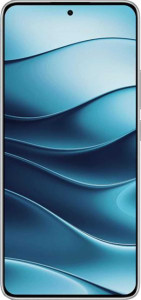
Xiaomi Redmi Note 14 5G (Global)
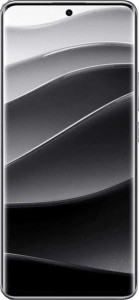
Xiaomi Redmi Note 14 Pro 5G (Global)

Xiaomi Redmi Note 14 5G (Global) Xiaomi Redmi Note 14 Pro 5G (Global)

Overview

Welcome to our in-depth comparison of the Xiaomi Redmi Note 14 5G (Global) and the Xiaomi Redmi Note 14 Pro 5G (Global). Both phones share the same familiar Redmi DNA — identical weight, screen size, battery capacity, and Android 14 — yet they diverge sharply when it comes to display quality, chipset performance, camera resolution, and water resistance. Read on to discover which model best fits your needs and budget.

Common Features

  • Both phones weigh 190 g.
  • Neither phone has a rugged build.
  • Neither phone can be folded.
  • Both phones feature a 6.67″ OLED/AMOLED display.
  • Both phones support a 120Hz refresh rate.
  • Both phones feature damage-resistant glass.
  • Both phones support HDR10 and HDR10+.
  • Both phones have an Always-On Display.
  • Both phones share a 5000000:1 contrast ratio.
  • Both phones come with 12GB of RAM and up to 512GB of internal storage.
  • Both phones support 64-bit processing and use big.LITTLE technology.
  • Both phones run Android 14.
  • Both phones have a 5110 mAh battery with 45W fast charging and come with a charger.
  • Neither phone supports wireless charging.
  • Both phones have stereo speakers and support LDAC.
  • Both phones support 5G, NFC, dual SIM, USB Type-C (USB 2.0), and have a fingerprint scanner.
  • Both phones have a 20MP front camera.
  • Both phones feature optical image stabilization on the main camera.
  • Both phones have a single LED flash.
  • Both phones have location, camera, and microphone privacy options, as well as theme customization and app tracking blocking.

Main Differences

  • Water resistance is rated IP64 (water resistant) on Xiaomi Redmi Note 14 5G (Global) and IP68 (waterproof) on Xiaomi Redmi Note 14 Pro 5G (Global).
  • Thickness is 8 mm on Xiaomi Redmi Note 14 5G (Global) and 8.4 mm on Xiaomi Redmi Note 14 Pro 5G (Global).
  • Width is 75.7 mm on Xiaomi Redmi Note 14 5G (Global) and 74.4 mm on Xiaomi Redmi Note 14 Pro 5G (Global).
  • Resolution is 1080 x 2400 px on Xiaomi Redmi Note 14 5G (Global) and 1220 x 2712 px on Xiaomi Redmi Note 14 Pro 5G (Global).
  • Pixel density is 395 ppi on Xiaomi Redmi Note 14 5G (Global) and 446 ppi on Xiaomi Redmi Note 14 Pro 5G (Global).
  • Touch sampling rate is 240Hz on Xiaomi Redmi Note 14 5G (Global) and 2560Hz on Xiaomi Redmi Note 14 Pro 5G (Global).
  • The display is protected by Gorilla Glass 5 on Xiaomi Redmi Note 14 5G (Global) and Gorilla Glass Victus 2 on Xiaomi Redmi Note 14 Pro 5G (Global).
  • Dolby Vision support is present on Xiaomi Redmi Note 14 Pro 5G (Global) but not available on Xiaomi Redmi Note 14 5G (Global).
  • The chipset is MediaTek Dimensity 7025 on Xiaomi Redmi Note 14 5G (Global) and MediaTek Dimensity 7300 on Xiaomi Redmi Note 14 Pro 5G (Global).
  • AnTuTu benchmark score is 470000 on Xiaomi Redmi Note 14 5G (Global) and 720000 on Xiaomi Redmi Note 14 Pro 5G (Global).
  • Geekbench 6 multi-core score is 2291 on Xiaomi Redmi Note 14 5G (Global) and 6487 on Xiaomi Redmi Note 14 Pro 5G (Global).
  • Semiconductor size is 6 nm on Xiaomi Redmi Note 14 5G (Global) and 4 nm on Xiaomi Redmi Note 14 Pro 5G (Global).
  • Main camera resolution is 108 & 8 & 2 MP on Xiaomi Redmi Note 14 5G (Global) and 200 & 8 & 2 MP on Xiaomi Redmi Note 14 Pro 5G (Global).
  • Main camera video recording is up to 1080p at 30 fps on Xiaomi Redmi Note 14 5G (Global) and up to 2160p at 30 fps on Xiaomi Redmi Note 14 Pro 5G (Global).
  • A 3.5 mm audio jack is present on Xiaomi Redmi Note 14 5G (Global) but absent on Xiaomi Redmi Note 14 Pro 5G (Global).
  • FM radio is available on Xiaomi Redmi Note 14 5G (Global) but not on Xiaomi Redmi Note 14 Pro 5G (Global).
  • aptX support is present on Xiaomi Redmi Note 14 Pro 5G (Global) but not available on Xiaomi Redmi Note 14 5G (Global).
  • Wi-Fi 6 (802.11ax) support is present on Xiaomi Redmi Note 14 Pro 5G (Global) but not available on Xiaomi Redmi Note 14 5G (Global).
  • External memory slot support is present on Xiaomi Redmi Note 14 5G (Global) but absent on Xiaomi Redmi Note 14 Pro 5G (Global).
  • A curved display is featured on Xiaomi Redmi Note 14 Pro 5G (Global) but not on Xiaomi Redmi Note 14 5G (Global).
Specs Comparison
Xiaomi Redmi Note 14 5G (Global)

Xiaomi Redmi Note 14 5G (Global)

Xiaomi Redmi Note 14 Pro 5G (Global)

Xiaomi Redmi Note 14 Pro 5G (Global)

Design:
water resistance Water resistant Waterproof
weight 190 g 190 g
thickness 8 mm 8.4 mm
width 75.7 mm 74.4 mm
height 162.4 mm 162.3 mm
volume 98.34944 cm³ 101.431008 cm³
Ingress Protection (IP) rating IP64 IP68
has a rugged build
can be folded

Both phones share the same 190 g weight and nearly identical footprints, making them virtually indistinguishable in hand from a size perspective. The Redmi Note 14 5G is marginally slimmer at 8 mm versus 8.4 mm for the Pro, and fractionally wider, but these are differences you would never notice in daily use. Neither device is foldable or ruggedized, so both target the same mainstream consumer form factor.

The most meaningful design differentiator is the water resistance rating. The standard Note 14 5G carries an IP64 rating, which means it can handle dust and splashing water from any direction — sufficient for rain or accidental spills. The Pro steps up to IP68, certifying it for full submersion in up to 1.5 meters of fresh water for 30 minutes. In practice, this is a significant real-world advantage: the Pro can survive a drop in a sink or pool, while the standard model cannot.

Overall, the Redmi Note 14 Pro 5G holds a clear edge in this group purely on the strength of its IP68 certification. The physical dimensions and weight are essentially a tie, so for users who prioritize durability and peace of mind around water, the Pro is the obvious choice.

Display:
Display type OLED/AMOLED OLED/AMOLED
screen size 6.67" 6.67"
pixel density 395 ppi 446 ppi
resolution 1080 x 2400 px 1220 x 2712 px
refresh rate 120Hz 120Hz
touch sampling rate 240Hz 2560Hz
has branded damage-resistant glass
Gorilla Glass version Gorilla Glass 5 Gorilla Glass Victus 2
supports HDR10
supports HDR10+
Always-On Display
supports Dolby Vision
contrast ratio 5000000:1 5000000:1
Has a secondary screen
has a touch screen

On paper, both phones share a solid display foundation: identical 6.67″ OLED panels with a 120Hz refresh rate, HDR10+ support, Always-On Display, and a matching 5,000,000:1 contrast ratio. For everyday viewing — scrolling, streaming, browsing — these shared traits ensure both screens look vivid and responsive.

The gaps emerge in the finer details, and they are meaningful. The Pro's 1220 x 2712 resolution translates to 446 ppi, versus 395 ppi on the standard model's 1080 x 2400 panel. That 51 ppi difference is perceptible when reading small text or viewing fine detail up close. More striking is the touch sampling rate: the Pro's 2560Hz dwarfs the standard model's 240Hz, which is a significant advantage for gaming, where faster touch detection directly reduces input latency. The Pro also adds Dolby Vision support, unlocking richer, dynamically tone-mapped HDR on compatible streaming content, and upgrades the glass to Gorilla Glass Victus 2 — a notably tougher generation than Gorilla Glass 5 when it comes to drop resistance.

The Redmi Note 14 Pro 5G takes a clear win here. Casual users will appreciate the sharper screen; gamers will notice the touch sampling rate advantage immediately; and the stronger glass adds a layer of durability that complements its IP68 rating. The standard Note 14 5G's display is by no means weak, but the Pro outclasses it on nearly every differentiating spec in this group.

Performance:
internal storage 512GB 512GB
RAM 12GB 12GB
AnTuTu benchmark score 470000 720000
Chipset (SoC) name MediaTek Dimensity 7025 MediaTek Dimensity 7300
GPU name IMG BXM-8-256 Mali G615 MC2
CPU speed 2 x 2.5 & 6 x 2 GHz 4 x 2.5 & 4 x 2 GHz
Geekbench 6 result (multi) 2291 6487
Geekbench 6 result (single) 884 2051
GPU clock speed 900 MHz 1047 MHz
Has integrated LTE
RAM speed 2750 MHz 6400 MHz
semiconductor size 6 nm 4 nm
Supports 64-bit
DirectX version DirectX 12 DirectX 12
Has integrated graphics
Uses big.LITTLE technology
Uses HMP
maximum memory amount 16GB 16GB
DDR memory version 5 5

The storage and RAM configurations look identical at a glance — both offer 12GB of RAM and 512GB of internal storage — but the silicon underneath tells a very different story. The standard Note 14 5G runs on the Dimensity 7025, a 6 nm chip, while the Pro is powered by the Dimensity 7300, built on a more advanced 4 nm process. That manufacturing difference matters: smaller nodes generally deliver higher performance per watt, meaning the Pro can do more while generating less heat and consuming less power.

The benchmark numbers make the gap impossible to ignore. The Pro's AnTuTu score of 720,000 is roughly 53% higher than the standard model's 470,000. Even more striking are the Geekbench 6 results: the Pro scores 2051 in single-core and 6487 in multi-core, compared to just 884 and 2291 on the standard Note 14 5G — more than double in both categories. The Pro's RAM also runs at 6400 MHz versus 2750 MHz, meaning data moves between the processor and memory significantly faster, which benefits app launch times and multitasking responsiveness in ways that raw clock speed alone does not capture.

This is the most decisive gap across the comparison so far. The Redmi Note 14 Pro 5G is not just incrementally faster — it operates in a meaningfully higher performance tier. For users who push their phones with gaming, heavy multitasking, or demanding apps, the Pro is the clear choice. The standard Note 14 5G handles everyday tasks adequately, but its chip will show its limits sooner under sustained load.

Cameras:
megapixels (main camera) 108 & 8 & 2 MP 200 & 8 & 2 MP
wide aperture (main camera) 1.7 & 2.2 & 2.4f 1.7 & 2.2 & 2.4f
Has a dual-lens (or multi-lens) main camera
megapixels (front camera) 20MP 20MP
has built-in optical image stabilization
video recording (main camera) 1080 x 30 fps 2160 x 30 fps
Has a dual-tone LED flash
number of flash LEDs 1 1
has a BSI sensor
has a CMOS sensor
has continuous autofocus when recording movies
Has phase-detection autofocus for photos
supports slow-motion video recording
has a built-in HDR mode
has manual exposure
has a flash
optical zoom 0x 0x
has manual ISO
has a serial shot mode
has manual focus
has a front camera
Has laser autofocus
Shoots 360° panorama
has manual white balance
shoots raw
has touch autofocus
has manual shutter speed
can create panoramas in-camera
wide aperture (front camera) 2.2f 2.2f
Has timelapse function
Has a front-facing LED flash
has a dual-lens (or multi-lens) front camera
supports HDR10 recording
supports Dolby Vision recording
has a front-facing camera under the display
Has a RGB LED flash
has 3D photo/video recording capabilities

The camera systems share a common structure — a triple rear setup with OIS, phase-detection autofocus, and identical apertures across all three lenses — but the main sensor tells the most important part of the story. The standard Note 14 5G uses a 108MP primary shooter, while the Pro steps up to a 200MP sensor. More megapixels allow for greater detail retention when cropping, and on a well-tuned sensor, can also enable more aggressive pixel-binning for improved low-light output. The ultrawide and depth lenses are spec-identical on both phones, so the differentiation lives entirely in that primary shooter.

Video capability is where the second meaningful gap appears. The Note 14 5G tops out at 1080p at 30fps, which is functional but limiting for anyone who wants to preserve footage for editing or future-proofing. The Pro records at 4K (2160p) at 30fps — a significant upgrade that captures four times the pixel information, giving far more flexibility in post-production and producing noticeably sharper results on large screens. The front camera, manual controls, and feature set are otherwise identical across both devices.

The Redmi Note 14 Pro 5G holds a clear advantage in this group. The jump from 108MP to 200MP and from 1080p to 4K video recording are both tangible, real-world improvements rather than spec-sheet padding, particularly for users who care about photography detail or content creation. For casual shooters, the standard Note 14 5G is adequate, but the Pro is the stronger camera phone by a meaningful margin.

Operating system:
Android version Android 14 Android 14
has clipboard warnings
has location privacy options
has camera/microphone privacy options
has Mail Privacy Protection
has theme customization
can block app tracking
blocks cross-site tracking
has on-device machine learning
has notification permissions
has media picker
Can play games while they download
has dark mode
has Wi-Fi password sharing
has battery health check
has an extra dim mode
has focus modes
has dynamic theming
can offload apps
Has customizable notifications
has Live Text
has full-page screenshots
supports split screen
gets direct OS updates
has PiP
Can be used as a PC
Has sharing intents
has a child lock
Supports widgets
Is free and open source
Has offline voice recognition
has voice commands
Tracks the current position of a mobile device
is a multi-user system
has Quick Start

This is a straightforward category: the software experience on both devices is identical across every single spec provided. Both run Android 14 and share the same feature set — from privacy controls like camera and microphone permissions and app tracking blocks, to usability features like split-screen, Picture-in-Picture, dynamic theming, and offline voice recognition. Neither receives direct OS updates, and neither supports features like Wi-Fi password sharing or focus modes.

When two products in the same lineup share the same Android version and an identical software feature matrix, the operating system becomes a non-factor in the buying decision. Whatever experience you get on one, you get on the other — the same privacy tools, the same customization options, the same day-to-day interface.

This group is a complete tie. No advantage exists for either phone based on the provided data. Users choosing between the Redmi Note 14 5G and the Note 14 Pro 5G should look entirely to the hardware differences — display, performance, cameras, and design — to make their decision, as the software will not differentiate their experience in any meaningful way.

Battery:
battery power 5110 mAh 5110 mAh
has wireless charging
Supports fast charging
charging speed 45W 45W
comes with a charger
has a removable battery
has a battery level indicator
has a rechargeable battery

Battery is another category where the two devices are spec-for-spec identical. Both carry a 5110 mAh cell, support 45W wired fast charging, and come bundled with a charger in the box. Neither offers wireless charging, and neither has a removable battery — standard practice at this price tier.

A 5110 mAh capacity is a healthy size for a smartphone of this class, comfortably supporting full-day use for most users. The 45W charging speed is a practical middle ground — fast enough to top up meaningfully in 30 minutes, without venturing into the higher wattages seen on more premium devices. It is worth noting, however, that the Pro's more power-efficient 4 nm chipset — established in the Performance group — could translate to better real-world battery endurance despite the identical capacity figure, though that inference goes beyond what the battery specs alone can confirm.

Strictly on the data provided here, this is a complete tie. Every battery specification is shared between the Redmi Note 14 5G and the Note 14 Pro 5G, so neither phone holds an advantage in this group. Charging speed, capacity, and included accessories are uniform across both models.

Audio:
has a socket for a 3.5 mm audio jack
has stereo speakers
has aptX
has LDAC
has aptX HD
has aptX Adaptive
has aptX Lossless
Has a radio

Audio is a rare category where the trade-offs cut in different directions depending on the user. The standard Note 14 5G retains a 3.5mm headphone jack and an FM radio — two features the Pro omits entirely. For users with wired headphones or those in areas where streaming is limited, that headphone jack is a genuine practical advantage, not just a legacy comfort. The FM radio adds further utility in specific use cases such as travel or regions with limited data coverage.

The Pro counters with aptX support alongside the shared LDAC codec. LDAC delivers high-resolution audio over Bluetooth at up to 990kbps, and aptX provides low-latency wireless audio — a combination that makes the Pro the stronger pairing for modern wireless headphones and earbuds. Both phones feature stereo speakers, so speaker-based listening is an equal experience on either device.

This group has no clean winner — it is a genuine trade-off. The Redmi Note 14 5G suits users who rely on wired audio or want FM radio functionality, while the Redmi Note 14 Pro 5G is the better fit for those invested in the wireless audio ecosystem. Neither phone dominates outright; the right choice here depends entirely on how a user listens to audio.

Connectivity & Features:
release date January 2025 January 2025
has 5G support
Wi-Fi version Wi-Fi 4 (802.11n), Wi-Fi 5 (802.11ac) Wi-Fi 4 (802.11n), Wi-Fi 6 (802.11ax), Wi-Fi 5 (802.11ac)
SIM cards 2 SIM 2 SIM
Bluetooth version 5.3 5.4
has an external memory slot
Has USB Type-C
USB version 2 2
has NFC
download speed 2770 MBits/s 3270 MBits/s
Has a fingerprint scanner
has emergency SOS via satellite
has crash detection
is DLNA-certified
has a gyroscope
supports ANT+
Has a heart rate monitor
has GPS
has a compass
supports Wi-Fi
Has an infrared sensor
has an accelerometer
has a cellular module
Has a barometer
has an HDMI output
Uses 3D facial recognition
Has an iris scanner
Stylus included
supports Galileo
Has motion tracking
Has optical tracking
Has a built-in projector

Most of the connectivity foundation is shared: both phones support 5G, NFC, dual SIM, USB Type-C, GPS, an infrared sensor, and a fingerprint scanner. These shared features cover the essentials that most users care about day-to-day, and neither phone has a meaningful gap here. Where the differences emerge, however, they follow the now-familiar pattern of the Pro pulling ahead on the technical specifications.

The Pro adds Wi-Fi 6 (802.11ax) to the standard Wi-Fi 4/5 support found on both devices, which translates to faster throughput, lower latency, and better performance in congested network environments — a tangible benefit for users with Wi-Fi 6 routers at home. Its Bluetooth 5.4 is a minor but real step up from the standard model's 5.3, and its peak download speed of 3270 Mbit/s edges out the Note 14 5G's 2770 Mbit/s. The one area where the standard model wins outright is the inclusion of a microSD card slot — a feature the Pro drops entirely. For users who rely on expandable storage to supplement fixed internal storage, this is a meaningful omission.

Taken as a whole, the Redmi Note 14 Pro 5G holds the edge in wireless connectivity, but the standard Note 14 5G counters with expandable storage — making this another trade-off category rather than a clean sweep. Users who prioritize network performance lean Pro; those who want storage flexibility without relying solely on the built-in 512GB will appreciate what the standard model offers.

Miscellaneous:
has a video light
Has sapphire glass display
Has a curved display
Has an e-paper display

With only four specs in this group, the comparison is narrow but not entirely without substance. Both phones share a video light and lack sapphire glass — neither point differentiates them. The sole distinguishing feature is that the Redmi Note 14 Pro 5G has a curved display, while the standard Note 14 5G uses a flat panel.

A curved display is a design preference with real-world implications in both directions. Aesthetically, curved edges lend a more premium, sleek appearance and can make swiping in from the sides feel more natural. The trade-off is that curved screens are generally more vulnerable to edge cracks on impact and can make fitting a screen protector more difficult. Users who prioritize a refined look will appreciate the curve; those who prioritize repairability or screen protection may prefer the flat alternative.

The Redmi Note 14 Pro 5G holds a marginal edge here for users who value the premium aesthetic of a curved display, but this is fundamentally a matter of personal preference rather than a functional advantage. Neither phone can claim an objective win in this category — the flat display of the standard Note 14 5G is equally valid depending on what the user prioritizes.

Comparison Summary & Verdict

After a thorough look at the specs, a clear pattern emerges. The Xiaomi Redmi Note 14 Pro 5G (Global) is the stronger all-round performer: it brings a sharper 1220 x 2712 px display with Gorilla Glass Victus 2, a more powerful Dimensity 7300 chipset with a dramatically higher AnTuTu score of 720000, a 200MP main camera capable of 4K video, full IP68 waterproofing, Wi-Fi 6, and a curved screen. The Xiaomi Redmi Note 14 5G (Global), on the other hand, holds its own for users who value a 3.5mm headphone jack, FM radio, expandable storage via a microSD slot, and a slightly more compact width — all at a lower price point. If you want a capable everyday smartphone without premium frills, the Note 14 5G delivers solid value. But if top-tier display clarity, serious processing power, and a flagship-grade camera matter most, the Note 14 Pro 5G is the clear step up.

Xiaomi Redmi Note 14 5G (Global)
Buy Xiaomi Redmi Note 14 5G (Global) if...

Buy the Xiaomi Redmi Note 14 5G (Global) if you want a more affordable Redmi experience that still includes a 3.5mm headphone jack, FM radio, and expandable storage via a microSD card slot.

Xiaomi Redmi Note 14 Pro 5G (Global)
Buy Xiaomi Redmi Note 14 Pro 5G (Global) if...

Buy the Xiaomi Redmi Note 14 Pro 5G (Global) if you prioritize a sharper display with Gorilla Glass Victus 2, significantly faster performance, a 200MP camera with 4K video, IP68 waterproofing, and Wi-Fi 6 support.