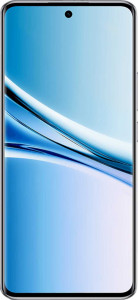
Xiaomi Redmi Note 14 5G (Global)
Xiaomi Redmi Note 15 5G

Xiaomi Redmi Note 14 5G (Global) Xiaomi Redmi Note 15 5G

Overview

Welcome to our in-depth comparison of the Xiaomi Redmi Note 14 5G (Global) and the Xiaomi Redmi Note 15 5G. Both mid-range contenders share a strong foundation — OLED displays, 120Hz refresh rates, and 45W fast charging — yet they diverge in meaningful ways across performance, camera capability, battery capacity, and overall design. Whether you prioritize raw storage, imaging versatility, or a longer-lasting battery, this comparison will help you decide which device best fits your needs.

Common Features

  • Neither product has a rugged build.
  • Neither product can be folded.
  • Both products feature an OLED/AMOLED display.
  • Both products have a 120Hz refresh rate.
  • Both products have a 240Hz touch sampling rate.
  • Both products feature branded damage-resistant glass.
  • Both products support Always-On Display.
  • Neither product supports Dolby Vision.
  • Neither product has a secondary screen.
  • Both products have a touch screen.
  • Both products come with 12GB of RAM.
  • Both products have integrated LTE.
  • Both products support 64-bit processing.
  • Both products run on DirectX 12.
  • Both products use big.LITTLE technology.
  • Neither product has a BSI sensor on the main camera.
  • Both products have a CMOS sensor.
  • Both products support continuous autofocus when recording movies.
  • Both products support phase-detection autofocus for photos.
  • Both products support slow-motion video recording.
  • Both products have clipboard warnings.
  • Both products include location privacy options.
  • Both products include camera and microphone privacy options.
  • Neither product has Mail Privacy Protection.
  • Both products support theme customization.
  • Both products can block app tracking.
  • Neither product blocks cross-site tracking.
  • Both products feature on-device machine learning.
  • Neither product supports wireless charging.
  • Both products support fast charging at 45W.
  • Neither product has a removable battery.
  • Both products have a battery level indicator.
  • Both products have a rechargeable battery.
  • Both products have stereo speakers.
  • Neither product supports aptX.
  • Both products support LDAC.
  • Neither product supports aptX HD, aptX Adaptive, or aptX Lossless.
  • Both products support 5G.
  • Both products support Wi-Fi 4 (802.11n) and Wi-Fi 5 (802.11ac).
  • Both products accommodate 2 SIM cards.
  • Both products have an external memory slot.
  • Both products feature USB Type-C with USB version 2.
  • Both products have NFC.
  • Both products have a fingerprint scanner.
  • Both products have a video light.
  • Neither product has a sapphire glass display.
  • Neither product has an e-paper display.
  • Both products have a dual-lens or multi-lens main camera.
  • Neither product has a dual-tone LED flash.
  • Both products have a single LED flash.

Main Differences

  • Water resistance is present on Xiaomi Redmi Note 14 5G (Global) but not available on Xiaomi Redmi Note 15 5G.
  • Weight is 190 g on Xiaomi Redmi Note 14 5G (Global) and 178 g on Xiaomi Redmi Note 15 5G.
  • Thickness is 8 mm on Xiaomi Redmi Note 14 5G (Global) and 7.4 mm on Xiaomi Redmi Note 15 5G.
  • Width is 75.7 mm on Xiaomi Redmi Note 14 5G (Global) and 75.4 mm on Xiaomi Redmi Note 15 5G.
  • Height is 162.4 mm on Xiaomi Redmi Note 14 5G (Global) and 165 mm on Xiaomi Redmi Note 15 5G.
  • Volume is 98.35 cm³ on Xiaomi Redmi Note 14 5G (Global) and 92.06 cm³ on Xiaomi Redmi Note 15 5G.
  • IP rating is IP64 on Xiaomi Redmi Note 14 5G (Global) and IP68 on Xiaomi Redmi Note 15 5G.
  • Screen size is 6.67″ on Xiaomi Redmi Note 14 5G (Global) and 6.77″ on Xiaomi Redmi Note 15 5G.
  • Pixel density is 395 ppi on Xiaomi Redmi Note 14 5G (Global) and 388 ppi on Xiaomi Redmi Note 15 5G.
  • Resolution is 1080 x 2400 px on Xiaomi Redmi Note 14 5G (Global) and 1080 x 2392 px on Xiaomi Redmi Note 15 5G.
  • HDR10 support is present on Xiaomi Redmi Note 14 5G (Global) but not available on Xiaomi Redmi Note 15 5G.
  • HDR10+ support is present on Xiaomi Redmi Note 14 5G (Global) but not available on Xiaomi Redmi Note 15 5G.
  • Contrast ratio is 5,000,000:1 on Xiaomi Redmi Note 14 5G (Global) and 8,000,000:1 on Xiaomi Redmi Note 15 5G.
  • Internal storage is 512GB on Xiaomi Redmi Note 14 5G (Global) and 256GB on Xiaomi Redmi Note 15 5G.
  • Chipset is MediaTek Dimensity 7025 on Xiaomi Redmi Note 14 5G (Global) and Qualcomm Snapdragon 6 Gen 3 on Xiaomi Redmi Note 15 5G.
  • GPU is IMG BXM-8-256 on Xiaomi Redmi Note 14 5G (Global) and Adreno 710 on Xiaomi Redmi Note 15 5G.
  • CPU speed is 2 x 2.5 & 6 x 2 GHz on Xiaomi Redmi Note 14 5G (Global) and 4 x 2.4 & 4 x 1.8 GHz on Xiaomi Redmi Note 15 5G.
  • GPU clock speed is 900 MHz on Xiaomi Redmi Note 14 5G (Global) and 800 MHz on Xiaomi Redmi Note 15 5G.
  • Semiconductor size is 6 nm on Xiaomi Redmi Note 14 5G (Global) and 4 nm on Xiaomi Redmi Note 15 5G.
  • Maximum memory bandwidth is 51.2 GB/s on Xiaomi Redmi Note 14 5G (Global) and 25.6 GB/s on Xiaomi Redmi Note 15 5G.
  • Memory channels number 4 on Xiaomi Redmi Note 14 5G (Global) and 2 on Xiaomi Redmi Note 15 5G.
  • Maximum supported memory amount is 16GB on Xiaomi Redmi Note 14 5G (Global) and 12GB on Xiaomi Redmi Note 15 5G.
  • Main camera resolution is 108 & 8 & 2 MP on Xiaomi Redmi Note 14 5G (Global) and 50 & 2 MP on Xiaomi Redmi Note 15 5G.
  • Front camera resolution is 20MP on Xiaomi Redmi Note 14 5G (Global) and 8MP on Xiaomi Redmi Note 15 5G.
  • Optical image stabilization is present on Xiaomi Redmi Note 14 5G (Global) but not available on Xiaomi Redmi Note 15 5G.
  • Main camera video recording is 1080 x 30 fps on Xiaomi Redmi Note 14 5G (Global) and 2160 x 30 fps on Xiaomi Redmi Note 15 5G.
  • Android version is Android 14 on Xiaomi Redmi Note 14 5G (Global) and Android 15 on Xiaomi Redmi Note 15 5G.
  • App offloading is not supported on Xiaomi Redmi Note 14 5G (Global) but is available on Xiaomi Redmi Note 15 5G.
  • Battery capacity is 5110 mAh on Xiaomi Redmi Note 14 5G (Global) and 5800 mAh on Xiaomi Redmi Note 15 5G.
  • A 3.5 mm audio jack is present on Xiaomi Redmi Note 14 5G (Global) but not available on Xiaomi Redmi Note 15 5G.
  • Bluetooth version is 5.3 on Xiaomi Redmi Note 14 5G (Global) and 5.1 on Xiaomi Redmi Note 15 5G.
  • Download speed is 2770 Mbit/s on Xiaomi Redmi Note 14 5G (Global) and 2900 Mbit/s on Xiaomi Redmi Note 15 5G.
  • A curved display is not present on Xiaomi Redmi Note 14 5G (Global) but is featured on Xiaomi Redmi Note 15 5G.
Specs Comparison
Xiaomi Redmi Note 14 5G (Global)

Xiaomi Redmi Note 14 5G (Global)

Xiaomi Redmi Note 15 5G

Xiaomi Redmi Note 15 5G

Design:
water resistance Water resistant None
weight 190 g 178 g
thickness 8 mm 7.4 mm
width 75.7 mm 75.4 mm
height 162.4 mm 165 mm
volume 98.34944 cm³ 92.0634 cm³
Ingress Protection (IP) rating IP64 IP68
has a rugged build
can be folded

In terms of form factor, the Redmi Note 15 5G has a clear ergonomic edge. It is notably lighter at 178 g versus 190 g for the Note 14 5G, and slimmer at 7.4 mm compared to 8 mm. Despite being marginally taller (165 mm vs 162.4 mm), its overall volume is meaningfully smaller — 92.06 cm³ against 98.35 cm³ — which translates into a more compact, pocketable device that feels less bulky during extended one-handed use. The width difference is negligible at less than 0.3 mm.

On water protection, the picture is nuanced. The Note 14 5G carries an IP64 rating, meaning it is fully dust-tight and can handle water splashes from any direction. The Note 15 5G, however, is rated IP68, a higher standard that implies a greater level of ingress protection — notably a stronger second digit (8 vs 4). From a spec standpoint alone, the Note 15 5G holds the higher official rating in this category.

Neither device offers a rugged build or a foldable form factor, so both target the same mainstream, everyday-carry audience. Overall, the Redmi Note 15 5G has the design advantage: it is lighter, slimmer, more compact in volume, and carries a higher IP rating, making it the better pick for users who prioritize a sleek, modern profile and stronger water-resistance credentials.

Display:
Display type OLED/AMOLED OLED/AMOLED
screen size 6.67" 6.77"
pixel density 395 ppi 388 ppi
resolution 1080 x 2400 px 1080 x 2392 px
refresh rate 120Hz 120Hz
touch sampling rate 240Hz 240Hz
has branded damage-resistant glass
supports HDR10
supports HDR10+
Always-On Display
supports Dolby Vision
contrast ratio 5000000:1 8000000:1
Has a secondary screen
has a touch screen

Both phones share the same OLED/AMOLED panel technology, 120Hz refresh rate, and 240Hz touch sampling rate, so day-to-day scrolling and responsiveness will feel virtually identical. The Note 15 5G gets a marginally larger 6.77″ screen versus 6.67″ on the Note 14 5G, though the Note 14 5G slightly edges it out on pixel density — 395 ppi versus 388 ppi — a difference that is essentially imperceptible to the human eye at normal viewing distances.

The most significant split lies in HDR and contrast. The Redmi Note 14 5G supports both HDR10 and HDR10+, which matter for streaming services like Netflix and Prime Video that serve HDR-graded content — users will see richer highlight detail and more accurate color tone mapping. The Note 15 5G supports neither. On the flip side, the Note 15 5G claims a notably higher contrast ratio of 8,000,000:1 versus 5,000,000:1, which on paper means deeper blacks and punchier visuals — though in practice, both figures are far beyond what the human eye can meaningfully distinguish at typical brightness levels.

For content consumers who regularly stream HDR video, the Redmi Note 14 5G holds a clear and practical advantage. The Note 15 5G's higher contrast ratio is a spec-sheet win that is unlikely to translate into a visible real-world difference. Both panels share branded damage-resistant glass and Always-On Display support, so those features are not a deciding factor.

Performance:
internal storage 512GB 256GB
RAM 12GB 12GB
Chipset (SoC) name MediaTek Dimensity 7025 Qualcomm Snapdragon 6 Gen 3
GPU name IMG BXM-8-256 Adreno 710
CPU speed 2 x 2.5 & 6 x 2 GHz 4 x 2.4 & 4 x 1.8 GHz
GPU clock speed 900 MHz 800 MHz
Has integrated LTE
RAM speed 2750 MHz 2750 MHz
semiconductor size 6 nm 4 nm
Supports 64-bit
DirectX version DirectX 12 DirectX 12
Has integrated graphics
Uses big.LITTLE technology
Has NX bit
Uses HMP
maximum memory bandwidth 51.2 GB/s 25.6 GB/s
OpenCL version 2 2
memory channels 4 2
maximum memory amount 16GB 12GB
DDR memory version 5 5

The chipset matchup here is genuinely split. The Redmi Note 15 5G runs on a Qualcomm Snapdragon 6 Gen 3 built on a 4nm process, while the Redmi Note 14 5G (Global) uses a MediaTek Dimensity 7025 on 6nm. A smaller fabrication node generally means better power efficiency and thermal management, which can translate to sustained performance under load and improved battery endurance — giving the Note 15 5G a meaningful architectural edge in day-to-day efficiency.

Where the Note 14 5G punches back hard is in the memory subsystem. It features 4 memory channels versus just 2 on the Note 15 5G, resulting in double the maximum memory bandwidth — 51.2 GB/s compared to 25.6 GB/s. Higher bandwidth benefits tasks that are data-intensive, such as gaming, multitasking, and video processing, as the CPU and GPU can feed on data faster. It also supports up to 16GB of RAM versus a cap of 12GB on the Note 15 5G, and ships with 512GB of internal storage in this configuration compared to 256GB — a significant practical advantage for users who store large media libraries or avoid cloud storage.

Weighing it all, this group has no clean winner — it depends on priorities. The Note 15 5G offers a more modern, efficient chip that should run cooler and leaner. The Note 14 5G counters with a dramatically superior memory pipeline and twice the base storage. Users who game heavily or multitask aggressively may find the Note 14 5G's memory bandwidth advantage more impactful, while those who value efficiency and thermal performance lean toward the Note 15 5G's 4nm platform.

Cameras:
megapixels (main camera) 108 & 8 & 2 MP 50 & 2 MP
Has a dual-lens (or multi-lens) main camera
megapixels (front camera) 20MP 8MP
has built-in optical image stabilization
video recording (main camera) 1080 x 30 fps 2160 x 30 fps
Has a dual-tone LED flash
number of flash LEDs 1 1
has a BSI sensor
has a CMOS sensor
has continuous autofocus when recording movies
Has phase-detection autofocus for photos
supports slow-motion video recording
has a built-in HDR mode
has manual exposure
has a flash
optical zoom 0x 0x
has manual ISO
has a serial shot mode
has manual focus
has a front camera
Has laser autofocus
Shoots 360° panorama
has manual white balance
shoots raw
has touch autofocus
has manual shutter speed
can create panoramas in-camera
Has timelapse function
Has a front-facing LED flash
has a dual-lens (or multi-lens) front camera
supports HDR10 recording
supports Dolby Vision recording
has a front-facing camera under the display
Has a RGB LED flash
has 3D photo/video recording capabilities

The camera systems on these two phones pull in opposite directions, each making meaningful trade-offs. The Redmi Note 14 5G (Global) leads with a 108MP primary sensor backed by an 8MP ultra-wide and a 2MP depth unit, plus built-in optical image stabilization (OIS) — a hardware feature that physically compensates for hand shake, meaningfully improving sharpness in low light and during handheld video. The Note 15 5G drops to a 50MP main sensor paired only with a 2MP depth camera, and crucially, it lacks OIS entirely. For still photography in challenging conditions, the Note 14 5G has a tangible structural advantage.

Video recording flips the script entirely. The Redmi Note 15 5G supports 4K (2160p) at 30fps, while the Note 14 5G is capped at 1080p at 30fps — a full resolution tier behind. For users who shoot video and want the extra detail and cropping flexibility that 4K provides, this is a significant gap in the Note 14 5G's favor. The irony is that the Note 15 5G shoots higher-resolution video but without OIS, which can make that 4K footage shakier without software correction.

Selfie performance also splits clearly: the Note 14 5G packs a 20MP front camera versus just 8MP on the Note 15 5G, which matters for those who prioritize portrait detail or video calls. Overall, there is no single winner — the Note 14 5G suits photographers who value resolution, OIS, and selfie quality, while the Note 15 5G is the better pick for video-first users who want 4K capability above all else.

Operating system:
Android version Android 14 Android 15
has clipboard warnings
has location privacy options
has camera/microphone privacy options
has Mail Privacy Protection
has theme customization
can block app tracking
blocks cross-site tracking
has on-device machine learning
has notification permissions
has media picker
Can play games while they download
has dark mode
has Wi-Fi password sharing
has battery health check
has an extra dim mode
has focus modes
has dynamic theming
can offload apps
Has customizable notifications
has Live Text
has full-page screenshots
supports split screen
gets direct OS updates
has PiP
Can be used as a PC
Has sharing intents
has a child lock
Supports widgets
Is free and open source
Has offline voice recognition
has voice commands
Tracks the current position of a mobile device
is a multi-user system
has Quick Start

Across the operating system feature set, these two phones are remarkably close — the overwhelming majority of capabilities, from privacy controls and dynamic theming to split-screen, Picture-in-Picture, and on-device machine learning, are identical on both devices. The practical software experience out of the box will feel nearly indistinguishable for most users.

Two differences stand out. First, the Redmi Note 15 5G ships with Android 15 versus Android 14 on the Note 14 5G (Global). A newer Android version means access to the latest platform security patches, privacy refinements, and system-level improvements at launch — a meaningful head start in software currency, even if neither device receives direct OS updates according to the provided data. Second, the Note 15 5G supports app offloading, which allows rarely used apps to be temporarily removed while preserving their data, freeing up storage without a full uninstall. Given the Note 15 5G's smaller base storage of 256GB, this feature has real practical utility.

The Redmi Note 15 5G holds a modest but clear edge in this category — a newer OS version and app offloading support are both tangible advantages, even if the broader software feature parity means day-to-day usage differences will be minimal.

Battery:
battery power 5110 mAh 5800 mAh
has wireless charging
Supports fast charging
charging speed 45W 45W
has a removable battery
has a battery level indicator
has a rechargeable battery

Battery is one of the cleaner-cut categories in this comparison. The Redmi Note 15 5G packs a 5800 mAh cell versus 5110 mAh on the Redmi Note 14 5G (Global) — a difference of 690 mAh, or roughly 13% more capacity. Combined with the Note 15 5G's more power-efficient 4nm chipset (noted in the performance group), that larger reservoir is likely to translate into meaningfully longer screen-on time between charges, particularly under sustained use.

Where it matters less: both phones charge at an identical 45W, so refill times will be comparable. Neither supports wireless charging, and both use non-removable batteries — so those variables cancel out entirely.

The Redmi Note 15 5G has a straightforward advantage here. A larger battery at the same charging speed means more endurance without any trade-off in how quickly you can top up. For users who prioritize going longer between charges, the Note 15 5G is the clear pick in this category.

Audio:
has a socket for a 3.5 mm audio jack
has stereo speakers
has aptX
has LDAC
has aptX HD
has aptX Adaptive
has aptX Lossless

Audio is a short but pointed comparison. Both phones deliver stereo speakers and LDAC support — Sony's high-quality wireless audio codec that enables near-lossless Bluetooth streaming at up to 990 kbps, a genuine perk for wireless headphone users on both devices. Neither supports aptX variants, so that distinction is moot.

The sole but significant differentiator is the 3.5mm headphone jack, which the Redmi Note 14 5G (Global) retains and the Redmi Note 15 5G omits entirely. For users with wired headphones or those who listen while charging, the jack's absence on the Note 15 5G is a real-world inconvenience — it forces a reliance on Bluetooth or a USB-C adapter, neither of which is as seamless as a direct wired connection.

The Redmi Note 14 5G (Global) has the clear edge here. Shared stereo speakers and LDAC keep the two phones level on wireless audio quality, but the headphone jack adds flexibility the Note 15 5G simply cannot match. It is a straightforward win for anyone who regularly uses wired audio.

Connectivity & Features:
release date January 2025 August 2025
has 5G support
Wi-Fi version Wi-Fi 4 (802.11n), Wi-Fi 5 (802.11ac) Wi-Fi 4 (802.11n), Wi-Fi 5 (802.11ac)
SIM cards 2 SIM 2 SIM
Bluetooth version 5.3 5.1
has an external memory slot
Has USB Type-C
USB version 2 2
has NFC
download speed 2770 MBits/s 2900 MBits/s
Has a fingerprint scanner
has emergency SOS via satellite
has crash detection
is DLNA-certified
has a gyroscope
supports ANT+
Has a heart rate monitor
has GPS
has a compass
supports Wi-Fi
Has an infrared sensor
has an accelerometer
has a cellular module
Has a barometer
has an HDMI output
Uses 3D facial recognition
Has an iris scanner
Stylus included
supports Galileo
Has motion tracking
Has optical tracking
Has a built-in projector

Connectivity parity is the dominant theme here — both phones share 5G, dual SIM, NFC, Wi-Fi 5, USB Type-C, expandable storage, infrared sensor, and an identical sensor suite including gyroscope, GPS, compass, and accelerometer. For the vast majority of users, the day-to-day connected experience will be functionally identical.

Two differences are worth noting. The Redmi Note 14 5G (Global) runs Bluetooth 5.3 versus 5.1 on the Note 15 5G — a newer version that brings incremental improvements in connection stability, lower latency, and energy efficiency, which can matter for users who heavily rely on wireless peripherals or audio devices. On the cellular side, the Note 15 5G edges ahead with a marginally higher rated download speed of 2900 Mbps versus 2770 Mbps, though in real-world conditions network availability and signal quality will have far more impact than this ~5% spec difference.

This category is effectively a near-tie, with each phone holding one minor advantage over the other. The Note 14 5G's Bluetooth 5.3 is the more practically relevant differentiator for everyday use, but neither gap is large enough to meaningfully influence a purchasing decision on its own.

Miscellaneous:
has a video light
Has sapphire glass display
Has a curved display
Has an e-paper display

The Xiaomi Redmi Note 14 5G and Xiaomi Redmi Note 15 5G both feature a video light, which can be useful for low-light photography or video recording. However, neither device comes with sapphire glass, a curved display, or an e-paper display. The Note 15 5G stands out slightly in this group, as it is equipped with a curved display, while the Note 14 5G does not have this feature.

In summary, both phones share some key features, such as the video light and the lack of sapphire glass or an e-paper display. The main difference is the curved display, which is exclusive to the Note 15 5G.

Comparison Summary & Verdict

After reviewing all specifications, both phones carve out distinct identities. The Xiaomi Redmi Note 14 5G (Global) stands out with its triple-camera setup led by a 108MP sensor, optical image stabilization, a 3.5mm audio jack, more internal storage at 512GB, and a higher Bluetooth version — making it an excellent pick for multimedia enthusiasts and users who value versatile photography. The Xiaomi Redmi Note 15 5G, on the other hand, answers with a superior 5800 mAh battery, a more modern 4nm Snapdragon chipset, an IP68 water resistance rating, 4K video recording, Android 15, and a curved OLED display — appealing strongly to users who prioritize longevity, durability, and a more future-proof software experience. Neither phone is a clear-cut winner; your ideal choice depends entirely on what matters most to you.

Xiaomi Redmi Note 14 5G (Global)
Buy Xiaomi Redmi Note 14 5G (Global) if...

Buy the Xiaomi Redmi Note 14 5G (Global) if you want a versatile triple-camera system with optical image stabilization, a 3.5mm headphone jack, and 512GB of internal storage at a mid-range price.

Xiaomi Redmi Note 15 5G
Buy Xiaomi Redmi Note 15 5G if...

Buy the Xiaomi Redmi Note 15 5G if you prioritize a larger 5800 mAh battery, IP68 water resistance, 4K video recording, and a more modern chipset built on a 4nm process.