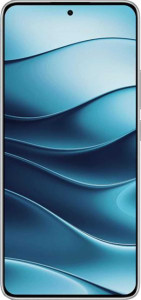
Xiaomi Redmi Note 14 5G (Global)
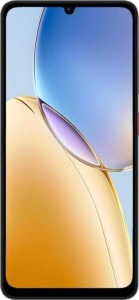
ZTE Blade A56

Xiaomi Redmi Note 14 5G (Global) ZTE Blade A56

Overview

Welcome to our in-depth comparison of the Xiaomi Redmi Note 14 5G (Global) and the ZTE Blade A56, two mid-range Android smartphones that share a surprising amount of common ground while diverging sharply in key areas. Both devices offer dual-camera systems, fast charging, NFC, and expandable storage, but they take very different approaches when it comes to display quality, processing power, and connectivity features. Read on as we break down every specification to help you decide which one truly fits your needs.

Common Features

  • Neither product has a rugged build.
  • Neither product can be folded.
  • Both products have branded damage-resistant glass.
  • Neither product supports Dolby Vision.
  • Neither product has a secondary screen.
  • Both products have a touch screen.
  • Both products have integrated LTE.
  • Both products support 64-bit processing.
  • Both products support DirectX 12.
  • Both products have integrated graphics.
  • Both products use big.LITTLE technology.
  • Both products use HMP.
  • Both products support OpenCL version 2.
  • Both products have a dual-lens or multi-lens main camera.
  • Both products record video at 1080p 30fps on the main camera.
  • Neither product has a dual-tone LED flash.
  • Both products have a single LED flash.
  • Neither product has a BSI sensor.
  • Both products have a CMOS sensor.
  • Both products support continuous autofocus when recording movies.
  • Both products support slow-motion video recording.
  • Both products have clipboard warnings.
  • Both products have location privacy options.
  • Both products have camera and microphone privacy options.
  • Neither product has Mail Privacy Protection.
  • Both products support theme customization.
  • Both products can block app tracking.
  • Neither product blocks cross-site tracking.
  • Both products have on-device machine learning.
  • Neither product supports wireless charging.
  • Both products support fast charging.
  • Neither product has a removable battery.
  • Both products have a battery level indicator.
  • Both products have a rechargeable battery.
  • Both products have a 3.5mm audio jack.
  • Neither product supports aptX, aptX HD, aptX Adaptive, or aptX Lossless.
  • Both products have a built-in radio.
  • Both products have an external memory slot.
  • Both products have USB Type-C with USB version 2.
  • Both products have NFC.
  • Both products have a fingerprint scanner.
  • Neither product has emergency SOS via satellite.
  • Neither product has crash detection.
  • Neither product is DLNA-certified.
  • Both products have a video light.
  • Neither product has a sapphire glass display.
  • Neither product has a curved display.
  • Neither product has an e-paper display.

Main Differences

  • Water resistance is present on Xiaomi Redmi Note 14 5G (Global) but not available on ZTE Blade A56.
  • Weight is 190g on Xiaomi Redmi Note 14 5G (Global) and 193g on ZTE Blade A56.
  • Thickness is 8mm on Xiaomi Redmi Note 14 5G (Global) and 8.3mm on ZTE Blade A56.
  • Width is 75.7mm on Xiaomi Redmi Note 14 5G (Global) and 77.4mm on ZTE Blade A56.
  • Height is 162.4mm on Xiaomi Redmi Note 14 5G (Global) and 167.6mm on ZTE Blade A56.
  • Volume is 98.35 cm³ on Xiaomi Redmi Note 14 5G (Global) and 107.67 cm³ on ZTE Blade A56.
  • Display type is OLED/AMOLED on Xiaomi Redmi Note 14 5G (Global) and LCD IPS on ZTE Blade A56.
  • Screen size is 6.67″ on Xiaomi Redmi Note 14 5G (Global) and 6.75″ on ZTE Blade A56.
  • Pixel density is 395 ppi on Xiaomi Redmi Note 14 5G (Global) and 260 ppi on ZTE Blade A56.
  • Resolution is 1080x2400px on Xiaomi Redmi Note 14 5G (Global) and 720x1600px on ZTE Blade A56.
  • Refresh rate is 120Hz on Xiaomi Redmi Note 14 5G (Global) and 90Hz on ZTE Blade A56.
  • HDR10 support is present on Xiaomi Redmi Note 14 5G (Global) but not available on ZTE Blade A56.
  • HDR10+ support is present on Xiaomi Redmi Note 14 5G (Global) but not available on ZTE Blade A56.
  • Always-On Display is available on Xiaomi Redmi Note 14 5G (Global) but not on ZTE Blade A56.
  • Internal storage is 512GB on Xiaomi Redmi Note 14 5G (Global) and 128GB on ZTE Blade A56.
  • RAM is 12GB on Xiaomi Redmi Note 14 5G (Global) and 4GB on ZTE Blade A56.
  • Chipset is MediaTek Dimensity 7025 on Xiaomi Redmi Note 14 5G (Global) and Unisoc T7200 on ZTE Blade A56.
  • GPU is IMG BXM-8-256 on Xiaomi Redmi Note 14 5G (Global) and Mali G57 MP1 on ZTE Blade A56.
  • CPU speed is 2x2.5GHz and 6x2GHz on Xiaomi Redmi Note 14 5G (Global) and 2x1.6GHz and 6x1.6GHz on ZTE Blade A56.
  • Geekbench 6 multi-core score is 2291 on Xiaomi Redmi Note 14 5G (Global) and 1391 on ZTE Blade A56.
  • Geekbench 6 single-core score is 884 on Xiaomi Redmi Note 14 5G (Global) and 371 on ZTE Blade A56.
  • GPU clock speed is 900MHz on Xiaomi Redmi Note 14 5G (Global) and 650MHz on ZTE Blade A56.
  • RAM speed is 2750MHz on Xiaomi Redmi Note 14 5G (Global) and 1600MHz on ZTE Blade A56.
  • Semiconductor size is 6nm on Xiaomi Redmi Note 14 5G (Global) and 12nm on ZTE Blade A56.
  • Main camera resolution is 108, 8, and 2MP on Xiaomi Redmi Note 14 5G (Global) and 13MP on ZTE Blade A56.
  • Front camera resolution is 20MP on Xiaomi Redmi Note 14 5G (Global) and 8MP on ZTE Blade A56.
  • Optical image stabilization is present on Xiaomi Redmi Note 14 5G (Global) but not available on ZTE Blade A56.
  • Android version is Android 14 on Xiaomi Redmi Note 14 5G (Global) and Android 15 on ZTE Blade A56.
  • App offloading is supported on ZTE Blade A56 but not available on Xiaomi Redmi Note 14 5G (Global).
  • Battery capacity is 5110mAh on Xiaomi Redmi Note 14 5G (Global) and 5000mAh on ZTE Blade A56.
  • Charging speed is 45W on Xiaomi Redmi Note 14 5G (Global) and 10W on ZTE Blade A56.
  • Stereo speakers are present on Xiaomi Redmi Note 14 5G (Global) but not available on ZTE Blade A56.
  • LDAC support is present on Xiaomi Redmi Note 14 5G (Global) but not available on ZTE Blade A56.
  • 5G support is available on Xiaomi Redmi Note 14 5G (Global) but not on ZTE Blade A56.
  • Wi-Fi version supports Wi-Fi 4 and Wi-Fi 5 on Xiaomi Redmi Note 14 5G (Global) and only Wi-Fi 4 on ZTE Blade A56.
  • SIM card support is dual SIM on Xiaomi Redmi Note 14 5G (Global) and single SIM on ZTE Blade A56.
  • Bluetooth version is 5.3 on Xiaomi Redmi Note 14 5G (Global) and 5.2 on ZTE Blade A56.
  • Download speed is 2770 Mbits/s on Xiaomi Redmi Note 14 5G (Global) and 300 Mbits/s on ZTE Blade A56.
  • A gyroscope is present on Xiaomi Redmi Note 14 5G (Global) but not available on ZTE Blade A56.
  • A compass is present on Xiaomi Redmi Note 14 5G (Global) but not available on ZTE Blade A56.
  • An infrared sensor is present on Xiaomi Redmi Note 14 5G (Global) but not available on ZTE Blade A56.
Specs Comparison
Xiaomi Redmi Note 14 5G (Global)

Xiaomi Redmi Note 14 5G (Global)

ZTE Blade A56

ZTE Blade A56

Design:
water resistance Water resistant None
weight 190 g 193 g
thickness 8 mm 8.3 mm
width 75.7 mm 77.4 mm
height 162.4 mm 167.6 mm
volume 98.34944 cm³ 107.669592 cm³
has a rugged build
can be folded

In terms of physical footprint, the Xiaomi Redmi Note 14 5G is the more compact device across every dimension — shorter, narrower, and slimmer at 8 mm thick versus the ZTE Blade A56's 8.3 mm. The difference in volume is notably telling: the Redmi displaces roughly 98.3 cm³ compared to the Blade A56's 107.7 cm³, a gap of nearly 10%. While neither phone will feel dramatically different in a pocket at a glance, the Redmi's tighter chassis translates to a marginally easier one-handed grip and a slightly more premium, pocketable feel in daily use.

The weight gap is negligible — 190 g versus 193 g — so neither phone has a meaningful ergonomic edge on that front alone. Both share identical build philosophies: no rugged reinforcement and no folding form factor, placing them squarely in the standard candybar segment.

The single most decisive differentiator in this group is water resistance: the Redmi Note 14 5G offers it, while the ZTE Blade A56 offers none. Even a basic splash-resistance rating provides meaningful real-world protection against rain, spills, and sweaty hands — scenarios any daily-use phone will inevitably encounter. Combined with its more compact dimensions, the Redmi Note 14 5G holds a clear design advantage over the Blade A56 in this category.

Display:
Display type OLED/AMOLED LCD, IPS
screen size 6.67" 6.75"
pixel density 395 ppi 260 ppi
resolution 1080 x 2400 px 720 x 1600 px
refresh rate 120Hz 90Hz
has branded damage-resistant glass
supports HDR10
supports HDR10+
Always-On Display
supports Dolby Vision
Has a secondary screen
has a touch screen

The display gap between these two phones is substantial. The Redmi Note 14 5G uses an OLED/AMOLED panel, which delivers true blacks, vibrant contrast, and superior power efficiency for dark-themed content — while the Blade A56 relies on an LCD IPS screen, a technology that cannot match OLED's per-pixel light control. Compounding this, the Redmi's 395 ppi pixel density versus the Blade A56's 260 ppi means text and images appear meaningfully sharper on the Redmi — a difference clearly visible to the naked eye, particularly when reading small text or viewing detailed photos.

Motion clarity tells a similar story. The Redmi's 120Hz refresh rate makes scrolling and animations noticeably smoother than the Blade A56's 90Hz — a real-world difference users feel immediately when navigating the UI or playing games. The Redmi also supports HDR10+, enabling richer dynamic range when streaming compatible content, a feature the Blade A56 lacks entirely. The Always-On Display capability on the Redmi adds everyday convenience, letting users glance at notifications without waking the phone.

The one area where the two are evenly matched is damage-resistant glass — both include it, offering comparable scratch protection. But that single shared point does little to close the gap. Across panel technology, sharpness, refresh rate, and HDR support, the Redmi Note 14 5G holds a commanding display advantage over the Blade A56, making it the clear winner in this category.

Performance:
internal storage 512GB 128GB
RAM 12GB 4GB
Chipset (SoC) name MediaTek Dimensity 7025 Unisoc T7200
GPU name IMG BXM-8-256 Mali G57 MP1
CPU speed 2 x 2.5 & 6 x 2 GHz 2 x 1.6 & 6 x 1.6 GHz
Geekbench 6 result (multi) 2291 1391
Geekbench 6 result (single) 884 371
Geekbench 5 result (multi) 1890 1175
Geekbench 5 result (single) 690 313
GPU clock speed 900 MHz 650 MHz
Has integrated LTE
RAM speed 2750 MHz 1600 MHz
semiconductor size 6 nm 12 nm
Supports 64-bit
DirectX version DirectX 12 DirectX 12
Has integrated graphics
Uses big.LITTLE technology
Uses HMP
maximum memory bandwidth 51.2 GB/s 12.8 GB/s
OpenCL version 2 2
maximum memory amount 16GB 14GB
DDR memory version 5 4
shading units 18 64

The silicon foundation tells the story here. The Redmi Note 14 5G runs on the MediaTek Dimensity 7025, built on a modern 6 nm process, while the Blade A56 relies on the Unisoc T7200 at 12 nm. A smaller node means the Dimensity 7025 packs more transistors into less space, running cooler and more efficiently — a direct advantage in both sustained performance and battery longevity under load. The Redmi's CPU also clocks its performance cores at 2.5 GHz versus the Blade A56's uniform 1.6 GHz across all cores, leaving little ambiguity about raw processing headroom.

Benchmark results validate what the specs imply. The Redmi scores 884 single-core and 2291 multi-core on Geekbench 6, compared to the Blade A56's 371 and 1391 respectively. The single-core gap is particularly telling for everyday responsiveness — app launches, UI interactions, and web browsing all depend heavily on single-threaded speed. Beyond the CPU, the Redmi pairs its chip with 12 GB of DDR5 RAM running at 2750 MHz and up to 512 GB of internal storage, against the Blade A56's 4 GB of DDR4 at 1600 MHz and just 128 GB. More RAM means more apps stay resident in memory, reducing reload times, while faster DDR5 improves data throughput throughout the system.

Memory bandwidth reinforces the gap further: the Redmi's 51.2 GB/s versus the Blade A56's 12.8 GB/s is a four-fold difference that benefits GPU-accelerated tasks, gaming, and image processing alike. Across every meaningful performance dimension — CPU speed, RAM capacity and speed, storage, benchmark scores, and chip efficiency — the Redmi Note 14 5G holds an overwhelming advantage over the Blade A56.

Cameras:
megapixels (main camera) 108 & 8 & 2 MP 13 MP
Has a dual-lens (or multi-lens) main camera
megapixels (front camera) 20MP 8MP
has built-in optical image stabilization
video recording (main camera) 1080 x 30 fps 1080 x 30 fps
Has a dual-tone LED flash
number of flash LEDs 1 1
has a BSI sensor
has a CMOS sensor
has continuous autofocus when recording movies
supports slow-motion video recording
has a built-in HDR mode
has manual exposure
has a flash
optical zoom 0x 0x
has manual ISO
has a serial shot mode
has manual focus
has a front camera
Has laser autofocus
Shoots 360° panorama
has manual white balance
shoots raw
has touch autofocus
has manual shutter speed
can create panoramas in-camera
Has a front-facing LED flash
has a dual-lens (or multi-lens) front camera
supports HDR10 recording
supports Dolby Vision recording
has a front-facing camera under the display
Has a RGB LED flash
has 3D photo/video recording capabilities

Sensor resolution is where these two phones diverge most sharply. The Redmi Note 14 5G leads with a 108 MP primary sensor backed by an 8 MP ultrawide and a 2 MP auxiliary lens, while the Blade A56 offers a 13 MP main shooter. Higher megapixel counts enable greater detail retention when cropping shots and provide more flexibility for digital zoom — the gap here is not marginal, it is generational. Equally important is the Redmi's optical image stabilization (OIS), which physically compensates for hand movement during capture. The Blade A56 lacks OIS entirely, meaning low-light shots and handheld video will be more susceptible to blur. On the front camera, the Redmi's 20 MP selfie sensor similarly outpaces the Blade A56's 8 MP, a difference that will be clearly visible in portrait and video call quality.

Where the two phones converge is in their feature sets surrounding the cameras. Both shoot video at 1080p at 30 fps as their maximum resolution, support slow-motion recording, offer HDR mode, and provide manual controls including ISO, exposure, focus, and white balance. Neither supports optical zoom, raw capture, or HDR10/Dolby Vision video recording. This parity in features means the Blade A56 is not missing core shooting modes — it simply executes them with less capable hardware.

Taken together, the Redmi Note 14 5G has a clear camera advantage: a dramatically higher-resolution main sensor, a multi-lens system, OIS for sharper low-light and motion shots, and a significantly better front camera. The Blade A56 covers the basics competently, but the Redmi outclasses it on every hardware metric that determines real-world image quality.

Operating system:
Android version Android 14 Android 15
has clipboard warnings
has location privacy options
has camera/microphone privacy options
has Mail Privacy Protection
has theme customization
can block app tracking
blocks cross-site tracking
has on-device machine learning
has notification permissions
has media picker
Can play games while they download
has dark mode
has Wi-Fi password sharing
has battery health check
has an extra dim mode
has focus modes
has dynamic theming
can offload apps
Has customizable notifications
has Live Text
has full-page screenshots
supports split screen
gets direct OS updates
has PiP
Can be used as a PC
Has sharing intents
has a child lock
Supports widgets
Is free and open source
Has offline voice recognition
has voice commands
Tracks the current position of a mobile device
is a multi-user system
has Quick Start

For this spec group, the two phones are remarkably close — but not identical. The most notable difference is the Android version: the ZTE Blade A56 ships with Android 15 while the Redmi Note 14 5G launches on Android 14. A newer Android version carries incremental improvements to privacy controls, performance tuning, and system-level polish. Neither device receives direct OS updates according to the data, so the version each ships with matters more than it otherwise would — the Blade A56 starts one generation ahead on that front.

The only feature-level difference is app offloading: the Blade A56 supports it, the Redmi does not. Offloading allows infrequently used apps to be temporarily removed to free storage while preserving their data, a minor but occasionally useful tool for managing limited space. Beyond these two points, the software feature sets are effectively mirror images — both offer dynamic theming, split-screen multitasking, picture-in-picture, on-device machine learning, granular privacy controls, and a full suite of productivity and accessibility tools.

On balance, the ZTE Blade A56 holds a slim OS advantage, arriving on a newer Android version and supporting app offloading. These are not transformative differences in day-to-day use, but for users who prioritize starting with the most current software foundation, the Blade A56 has a measurable, if modest, edge in this category.

Battery:
battery power 5110 mAh 5000 mAh
has wireless charging
Supports fast charging
charging speed 45W 10W
has a removable battery
has a battery level indicator
has a rechargeable battery

Battery capacity is nearly identical between these two phones — 5110 mAh on the Redmi Note 14 5G versus 5000 mAh on the Blade A56. A 110 mAh difference is statistically negligible and will not produce any perceptible difference in screen-on time. Both are large-cell devices that should comfortably cover a full day of mixed use for most people.

Where the comparison tips decisively is charging speed. The Redmi supports 45W fast charging, while the Blade A56 caps at 10W — a 4.5x difference. In practical terms, a 45W charger can replenish a ~5000 mAh battery from near-empty to a usable level in well under an hour, while 10W charging will take considerably longer, often exceeding two hours for a full charge. For anyone with a busy schedule or inconsistent access to a charger, this gap has real daily consequences.

Both phones share the same structural limitations — no wireless charging and a non-removable battery — so neither offers an advantage there. Overall, the Redmi Note 14 5G holds a clear battery category advantage: comparable capacity paired with dramatically faster wired charging makes it the more practical choice for users who value quick top-ups and flexibility throughout the day.

Audio:
has a socket for a 3.5 mm audio jack
has stereo speakers
has aptX
has LDAC
has aptX HD
has aptX Adaptive
has aptX Lossless
Has a radio

Both phones share a welcome baseline that is increasingly rare in modern smartphones: a 3.5 mm headphone jack and a built-in FM radio. Users who rely on wired headphones or listen to over-the-air broadcasts without consuming mobile data will find both devices equally accommodating on these fronts.

The differences, though fewer, are meaningful. The Redmi Note 14 5G features stereo speakers, while the Blade A56 has a single speaker. For media consumption — videos, music playback, gaming, or speakerphone calls — stereo output creates a noticeably wider and more immersive soundstage compared to mono. Additionally, the Redmi supports LDAC, Sony's high-resolution Bluetooth audio codec, which allows compatible wireless headphones to receive significantly more audio data per connection than standard Bluetooth — resulting in closer-to-lossless wireless playback quality. The Blade A56 supports none of the enhanced Bluetooth audio codecs listed.

Neither phone supports aptX variants, keeping their Bluetooth audio ceiling relatively modest on paper, but the Redmi's LDAC support is still a genuine advantage for users with compatible premium wireless headphones. Combined with stereo speakers, the Redmi Note 14 5G takes a clear lead in audio, offering a richer experience both for speaker listening and high-quality wireless audio output.

Connectivity & Features:
release date January 2025 June 2025
has 5G support
Wi-Fi version Wi-Fi 4 (802.11n), Wi-Fi 5 (802.11ac) Wi-Fi 4 (802.11n)
SIM cards 2 SIM 1 SIM
Bluetooth version 5.3 5.2
has an external memory slot
Has USB Type-C
USB version 2 2
has NFC
download speed 2770 MBits/s 300 MBits/s
Has a fingerprint scanner
has emergency SOS via satellite
has crash detection
is DLNA-certified
has a gyroscope
supports ANT+
Has a heart rate monitor
has GPS
has a compass
supports Wi-Fi
Has an infrared sensor
has an accelerometer
has a cellular module
Has a barometer
has an HDMI output
Uses 3D facial recognition
Has an iris scanner
Stylus included
supports Galileo
Has motion tracking
Has optical tracking
Has a built-in projector

Cellular connectivity is perhaps the starkest dividing line in this group. The Redmi Note 14 5G supports 5G with a maximum download speed of 2770 Mbps, while the Blade A56 is a 4G-only device capped at 300 Mbps. For users in areas with 5G coverage, this is not just a future-proofing consideration — it translates directly to faster streaming, quicker downloads, and more reliable performance in congested networks today. The Redmi also supports two SIM cards simultaneously, whereas the Blade A56 accommodates only one, a practical limitation for users who carry work and personal numbers or travel internationally.

Wi-Fi tells a similar story. The Redmi includes Wi-Fi 5 (802.11ac) support alongside Wi-Fi 4, enabling faster and more stable connections on modern dual-band routers. The Blade A56 tops out at Wi-Fi 4 (802.11n), an older standard that offers lower throughput and is more susceptible to interference. On the sensor side, the Redmi adds a gyroscope, a compass, and an infrared sensor — the gyroscope enables more accurate motion-based gaming and AR applications, the compass improves navigation, and the infrared blaster lets the phone function as a universal remote control. The Blade A56 lacks all three.

Shared ground includes NFC, USB Type-C, expandable storage, a fingerprint scanner, GPS with Galileo support, and Bluetooth — though the Redmi's Bluetooth 5.3 edges ahead of the Blade A56's 5.2 with marginal improvements in connection stability. Across nearly every connectivity and feature dimension, the Redmi Note 14 5G holds a commanding advantage, offering faster wireless standards, dual-SIM flexibility, and a richer sensor suite.
Miscellaneous:
has a video light
Has sapphire glass display
Has a curved display
Has an e-paper display

The Miscellaneous spec group offers no differentiation between these two phones. Both include a video light, and neither features sapphire glass, a curved display, or an e-paper panel — placing them squarely in the same category of conventional flat-screen smartphones with standard glass protection.

This is a complete tie: every data point in this group is identical across the Redmi Note 14 5G and the Blade A56. Neither phone gains any advantage here, and buyers should look to the other specification groups to inform their decision.

Comparison Summary & Verdict

After a thorough side-by-side analysis, these two phones serve distinctly different audiences. The Xiaomi Redmi Note 14 5G (Global) stands out as the more capable all-rounder, boasting a sharper OLED display at 395 ppi, a significantly faster MediaTek Dimensity 7025 chip, 12 GB of RAM, 45W fast charging, 5G connectivity, optical image stabilization, stereo speakers, and a richer sensor suite including a gyroscope, compass, and infrared emitter. The ZTE Blade A56, on the other hand, runs the newer Android 15, keeps a slightly larger screen, and comes in at a more accessible price point, making it a practical choice for light users on a tight budget. If raw performance, display fidelity, and future-proof connectivity are your priorities, the Xiaomi is the clear pick; if simplicity and affordability matter most, the ZTE holds its own.

Xiaomi Redmi Note 14 5G (Global)
Buy Xiaomi Redmi Note 14 5G (Global) if...

Buy the Xiaomi Redmi Note 14 5G (Global) if you want a high-quality OLED display, superior performance, 5G connectivity, and fast 45W charging. It is the better choice for power users who also value features like OIS, stereo speakers, and a richer sensor set.

ZTE Blade A56
Buy ZTE Blade A56 if...

Buy the ZTE Blade A56 if you are a light user seeking an affordable, no-frills smartphone with a large screen and the latest Android 15 out of the box.