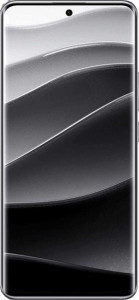
Xiaomi Redmi Note 14 Pro 4G (Global)
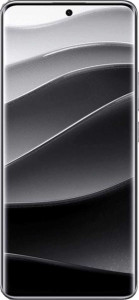
Xiaomi Redmi Note 14 Pro Plus 5G (Global)

Xiaomi Redmi Note 14 Pro 4G (Global) Xiaomi Redmi Note 14 Pro Plus 5G (Global)

Overview

Welcome to our in-depth spec comparison between the Xiaomi Redmi Note 14 Pro 4G (Global) and the Xiaomi Redmi Note 14 Pro Plus 5G (Global). While both phones share the same OLED display size, Android 14 software, and 200 MP main camera setup, they diverge significantly in areas like chipset performance, water resistance, charging speed, and connectivity. Read on to discover which of these two Redmi Note 14 Pro variants best suits your needs.

Common Features

  • Neither product has a rugged build.
  • Neither product can be folded.
  • Both products feature an OLED/AMOLED display.
  • Both products have a 6.67″ screen size.
  • Both products support a 120Hz refresh rate.
  • Both products use Gorilla Glass Victus 2 for damage-resistant glass protection.
  • Both products support HDR10.
  • Both products support HDR10+.
  • Both products have an Always-On Display.
  • Both products come with 512GB internal storage.
  • Both products come with 12GB RAM.
  • Both products have integrated LTE.
  • Both products use big.LITTLE CPU technology with 8 threads.
  • The main camera on both products captures 200 & 8 & 2 MP with apertures of 1.7, 2.2, and 2.4f.
  • Both products support 4K video recording at 30 fps.
  • Both products have a CMOS sensor.
  • Both products run Android 14.
  • Both products include location privacy options.
  • Both products include camera and microphone privacy options.
  • Both products support fast charging and come with a charger in the box.
  • Neither product has a removable battery.
  • Both products have an ultra power-saving mode.
  • Both products have stereo speakers.
  • Both products support aptX and LDAC audio codecs.
  • Neither product has aptX HD, aptX Adaptive, or aptX Lossless support.
  • Neither product has a built-in radio.
  • Both products have 2 microphones.
  • Both products support Wi-Fi 4, Wi-Fi 5, and Wi-Fi 6.
  • Both products have dual SIM card slots.
  • Both products do not have an external memory slot.
  • Both products have USB Type-C with USB version 2.
  • Both products have NFC.
  • Both products have a fingerprint scanner.
  • Neither product supports emergency SOS via satellite.
  • Both products have a video light.
  • Neither product has a sapphire glass display.
  • Both products have a curved display.
  • Neither product has an e-paper display.
  • Neither product supports wireless charging.

Main Differences

  • Water resistance is rated as water resistant (IP64) on Xiaomi Redmi Note 14 Pro 4G (Global) and fully waterproof (IP68) on Xiaomi Redmi Note 14 Pro Plus 5G (Global).
  • Weight is 180 g on Xiaomi Redmi Note 14 Pro 4G (Global) and 205 g on Xiaomi Redmi Note 14 Pro Plus 5G (Global).
  • Thickness is 8.2 mm on Xiaomi Redmi Note 14 Pro 4G (Global) and 8.8 mm on Xiaomi Redmi Note 14 Pro Plus 5G (Global).
  • Pixel density is 395 ppi on Xiaomi Redmi Note 14 Pro 4G (Global) and 446 ppi on Xiaomi Redmi Note 14 Pro Plus 5G (Global).
  • Resolution is 1080 x 2400 px on Xiaomi Redmi Note 14 Pro 4G (Global) and 1220 x 2712 px on Xiaomi Redmi Note 14 Pro Plus 5G (Global).
  • Typical brightness is 1800 nits on Xiaomi Redmi Note 14 Pro 4G (Global) and 3000 nits on Xiaomi Redmi Note 14 Pro Plus 5G (Global).
  • The chipset is MediaTek Helio G100 on Xiaomi Redmi Note 14 Pro 4G (Global) and Qualcomm Snapdragon 7s Gen 3 on Xiaomi Redmi Note 14 Pro Plus 5G (Global).
  • The AnTuTu benchmark score is 420,000 on Xiaomi Redmi Note 14 Pro 4G (Global) and 736,300 on Xiaomi Redmi Note 14 Pro Plus 5G (Global).
  • The GPU is Mali G57 on Xiaomi Redmi Note 14 Pro 4G (Global) and Adreno 710 on Xiaomi Redmi Note 14 Pro Plus 5G (Global).
  • Semiconductor size is 6 nm on Xiaomi Redmi Note 14 Pro 4G (Global) and 4 nm on Xiaomi Redmi Note 14 Pro Plus 5G (Global).
  • Maximum memory bandwidth is 17.1 GB/s on Xiaomi Redmi Note 14 Pro 4G (Global) and 25.6 GB/s on Xiaomi Redmi Note 14 Pro Plus 5G (Global).
  • Maximum supported RAM is 12GB on Xiaomi Redmi Note 14 Pro 4G (Global) and 16GB on Xiaomi Redmi Note 14 Pro Plus 5G (Global).
  • DirectX support is version 11 on Xiaomi Redmi Note 14 Pro 4G (Global) and version 12 on Xiaomi Redmi Note 14 Pro Plus 5G (Global).
  • Front camera resolution is 32 MP on Xiaomi Redmi Note 14 Pro 4G (Global) and 20 MP on Xiaomi Redmi Note 14 Pro Plus 5G (Global).
  • Optical image stabilization is not available on Xiaomi Redmi Note 14 Pro 4G (Global) but is present on Xiaomi Redmi Note 14 Pro Plus 5G (Global).
  • Optical zoom is 0x on Xiaomi Redmi Note 14 Pro 4G (Global) and 4x on Xiaomi Redmi Note 14 Pro Plus 5G (Global).
  • 360° panorama shooting is not available on Xiaomi Redmi Note 14 Pro 4G (Global) but is supported on Xiaomi Redmi Note 14 Pro Plus 5G (Global).
  • Battery capacity is 5500 mAh on Xiaomi Redmi Note 14 Pro 4G (Global) and 5110 mAh on Xiaomi Redmi Note 14 Pro Plus 5G (Global).
  • Charging speed is 45W on Xiaomi Redmi Note 14 Pro 4G (Global) and 120W on Xiaomi Redmi Note 14 Pro Plus 5G (Global).
  • A 3.5 mm audio jack is present on Xiaomi Redmi Note 14 Pro 4G (Global) but not available on Xiaomi Redmi Note 14 Pro Plus 5G (Global).
  • 5G support is not available on Xiaomi Redmi Note 14 Pro 4G (Global) but is present on Xiaomi Redmi Note 14 Pro Plus 5G (Global).
  • Bluetooth version is 5.3 on Xiaomi Redmi Note 14 Pro 4G (Global) and 5.4 on Xiaomi Redmi Note 14 Pro Plus 5G (Global).
  • Maximum download speed is 650 Mbit/s on Xiaomi Redmi Note 14 Pro 4G (Global) and 2900 Mbit/s on Xiaomi Redmi Note 14 Pro Plus 5G (Global).
Specs Comparison
Xiaomi Redmi Note 14 Pro 4G (Global)

Xiaomi Redmi Note 14 Pro 4G (Global)

Xiaomi Redmi Note 14 Pro Plus 5G (Global)

Xiaomi Redmi Note 14 Pro Plus 5G (Global)

Design:
water resistance Water resistant Waterproof
weight 180 g 205 g
thickness 8.2 mm 8.8 mm
width 74.9 mm 74.7 mm
height 162.2 mm 162.5 mm
volume 99.619996 cm³ 106.821 cm³
Ingress Protection (IP) rating IP64 IP68
has a rugged build
can be folded

Both phones share nearly identical footprints — the same 74.7–74.9 mm width and virtually the same 162 mm+ height — so in-hand feel and pocket presence are essentially equivalent in terms of form factor. The meaningful physical differences emerge in thickness and mass: the Redmi Note 14 Pro 4G comes in at 8.2 mm and 180 g, while the Redmi Note 14 Pro Plus 5G is noticeably thicker at 8.8 mm and heavier at 205 g. That 25 g gap is perceptible in daily use — the 4G variant will feel meaningfully lighter during extended one-handed use or prolonged calls.

The most significant differentiator in this group is water protection. The Pro 4G carries an IP64 rating, meaning it can handle splashes and dust but is not submersion-rated. The Pro Plus 5G steps up to IP68, which certifies it against full submersion in water — a substantially more robust guarantee for accidental drops in sinks, puddles, or rain. This is a real-world protection gap, not a marginal spec difference.

Neither device has a rugged build or foldable form factor. Overall, the Redmi Note 14 Pro Plus 5G has a clear edge in durability thanks to its IP68 rating, but buyers who prioritize a lighter, slimmer device will find the 4G model more comfortable to carry daily. The choice in this group essentially comes down to build resilience versus handling comfort.

Display:
Display type OLED/AMOLED OLED/AMOLED
screen size 6.67" 6.67"
pixel density 395 ppi 446 ppi
resolution 1080 x 2400 px 1220 x 2712 px
refresh rate 120Hz 120Hz
brightness (typical) 1800 nits 3000 nits
has branded damage-resistant glass
Gorilla Glass version Gorilla Glass Victus 2 Gorilla Glass Victus 2
supports HDR10
supports HDR10+
Always-On Display
supports Dolby Vision
contrast ratio 5000000:1 5000000:1
Has a secondary screen
has a touch screen

On the surface, these two displays look nearly identical — same 6.67″ OLED/AMOLED panel, same 120Hz refresh rate, same Gorilla Glass Victus 2 protection, and a matching feature set covering HDR10+, Dolby Vision, Always-On Display, and a 5,000,000:1 contrast ratio. For everyday use, both screens will deliver the deep blacks and vivid colors that OLED technology is known for.

The divergence comes in resolution and brightness — two specs that genuinely matter in practice. The Redmi Note 14 Pro Plus 5G outputs at 1220 x 2712 px with a pixel density of 446 ppi, compared to the 4G model's 1080 x 2400 px at 395 ppi. That 51 ppi gap means crisper text, finer image detail, and a noticeably sharper experience when reading or viewing high-resolution content up close. The brightness difference is even more striking: the Pro Plus 5G peaks at 3000 nits versus 1800 nits on the 4G variant — a 67% increase that translates directly to far better outdoor legibility under direct sunlight.

The Redmi Note 14 Pro Plus 5G holds a clear display advantage. While the 4G model's screen is by no means poor, the Pro Plus 5G's higher resolution and substantially greater peak brightness make it the stronger choice for anyone who prioritizes display quality — particularly for outdoor use or media consumption.

Performance:
internal storage 512GB 512GB
RAM 12GB 12GB
AnTuTu benchmark score 420000 736300
Chipset (SoC) name MediaTek Helio G100 Qualcomm Snapdragon 7s Gen 3
GPU name Mali G57 Adreno 710
CPU speed 2 x 2.2 & 6 x 2 GHz 1 x 2.5 & 3 x 2.4 & 4 x 1.8 GHz
GPU clock speed 1000 MHz 1050 MHz
Has integrated LTE
RAM speed 4266 MHz 3200 MHz
semiconductor size 6 nm 4 nm
Supports 64-bit
DirectX version DirectX 11 DirectX 12
Has integrated graphics
OpenGL ES version 3.2 3.2
Uses big.LITTLE technology
CPU threads 8 threads 8 threads
Uses HMP
Has TrustZone
maximum memory bandwidth 17.1 GB/s 25.6 GB/s
OpenCL version 2 2
maximum memory amount 12GB 16GB
Thermal Design Power (TDP) 5W 5W
DDR memory version 4 4

The chipset gap between these two devices is substantial. The Redmi Note 14 Pro 4G runs on the MediaTek Helio G100, a 6 nm chip with an AnTuTu score of roughly 420,000, while the Pro Plus 5G uses the Qualcomm Snapdragon 7s Gen 3 built on a more advanced 4 nm process, scoring approximately 736,300 — nearly 75% higher. In real-world terms, that difference is felt in app launch speeds, multitasking fluidity, and sustained performance under load. The smaller fabrication node also tends to deliver better energy efficiency, meaning the Pro Plus 5G gets more computational output per watt despite sharing the same 5W TDP.

Graphics and memory bandwidth tell a similar story. The Pro Plus 5G's Adreno 710 GPU supports DirectX 12 and benefits from a memory bandwidth of 25.6 GB/s, compared to the 4G model's Mali G57 at 17.1 GB/s with DirectX 11. The bandwidth advantage means faster data throughput between the CPU, GPU, and RAM — relevant for gaming, image processing, and any task that moves large amounts of data quickly. The Pro Plus 5G also supports a higher maximum RAM configuration of 16 GB versus 12 GB on the 4G model, giving it more headroom for future-proofing.

The Redmi Note 14 Pro Plus 5G wins this category decisively. Both phones ship with matched base storage and RAM in their listed configurations, but the Pro Plus 5G's newer, more efficient chipset, higher benchmark performance, greater memory bandwidth, and DirectX 12 support collectively place it in a meaningfully higher performance tier for demanding workloads and gaming.

Cameras:
megapixels (main camera) 200 & 8 & 2 MP 200 & 8 & 2 MP
wide aperture (main camera) 1.7 & 2.2 & 2.4f 1.7 & 2.2 & 2.4f
Has a dual-lens (or multi-lens) main camera
megapixels (front camera) 32MP 20MP
has built-in optical image stabilization
video recording (main camera) 2160 x 30 fps 2160 x 30 fps
Has a dual-tone LED flash
number of flash LEDs 1 1
has a BSI sensor
has a CMOS sensor
has continuous autofocus when recording movies
Has phase-detection autofocus for photos
supports slow-motion video recording
has a built-in HDR mode
has manual exposure
has a flash
optical zoom 0x 4x
has manual ISO
has a serial shot mode
has manual focus
has a front camera
Has laser autofocus
Shoots 360° panorama
has manual white balance
shoots raw
has touch autofocus
has manual shutter speed
can create panoramas in-camera
wide aperture (front camera) 2.2f 2.2f
Has timelapse function
Has a front-facing LED flash
has a dual-lens (or multi-lens) front camera
supports HDR10 recording
supports Dolby Vision recording
has a front-facing camera under the display
Has a RGB LED flash
has 3D photo/video recording capabilities

At first glance, the rear camera systems look identical — both phones feature the same 200 MP + 8 MP + 2 MP triple-lens array with matching apertures across all three lenses and the same 4K at 30fps video ceiling. But two specs break the tie decisively. The Redmi Note 14 Pro Plus 5G includes optical image stabilization (OIS), which the 4G model lacks entirely. OIS is one of the most impactful camera features in real use — it physically compensates for hand tremor during photos and video, resulting in sharper low-light shots and noticeably smoother footage without any software trade-offs.

The zoom capability gap is equally significant. The Pro Plus 5G offers 4x optical zoom, while the 4G variant provides no optical zoom at all. Optical zoom preserves full image quality when closing in on distant subjects, whereas digital zoom — the only option on the 4G model — degrades sharpness. For anyone who regularly photographs subjects at a distance, this is a meaningful real-world difference. The Pro Plus 5G also adds 360° panorama support, a minor but notable extra absent on the 4G model.

The one area where the 4G model holds an advantage is the selfie camera, at 32 MP versus the Pro Plus 5G's 20 MP front shooter — a consideration for users who prioritize high-resolution self-portraits. Overall, though, the Redmi Note 14 Pro Plus 5G wins this category, with OIS and optical zoom representing substantive photographic upgrades that outweigh the front camera resolution trade-off for most users.

Operating system:
Android version Android 14 Android 14
has clipboard warnings
has location privacy options
has camera/microphone privacy options
has Mail Privacy Protection
has theme customization
can block app tracking
blocks cross-site tracking
has on-device machine learning
has notification permissions
has media picker
Can play games while they download
has dark mode
has Wi-Fi password sharing
has battery health check
has an extra dim mode
has focus modes
has dynamic theming
can offload apps
Has customizable notifications
has Live Text
has full-page screenshots
supports split screen
gets direct OS updates
has PiP
Can be used as a PC
Has sharing intents
has a child lock
Supports widgets
Is free and open source
Has offline voice recognition
has voice commands
Tracks the current position of a mobile device
is a multi-user system
has Quick Start

This is one of the rare categories where no differentiation exists whatsoever. Both the Redmi Note 14 Pro 4G and the Redmi Note 14 Pro Plus 5G run Android 14 with an identical feature set across every single tracked spec — from privacy controls and dark mode to split-screen multitasking, Picture-in-Picture, widgets, and on-device machine learning. Notably, neither device receives direct OS updates, meaning both rely on Xiaomi's own update pipeline rather than getting patches straight from Google.

The shared software experience means users of either phone get the same privacy toolkit — including camera and microphone access controls, location permissions, and app tracking blocks — as well as the same productivity and usability features like Live Text, full-page screenshots, dynamic theming, and multi-user support. There are no software-exclusive features on either side that could influence a purchase decision.

This category is a complete tie. The operating system offers zero basis for differentiation between these two devices, and buyers should weigh all other specification groups to make their decision.

Battery:
battery power 5500 mAh 5110 mAh
has wireless charging
Supports fast charging
charging speed 45W 120W
comes with a charger
has a removable battery
Has an ultra power-saving mode
has a battery level indicator
has a rechargeable battery

Battery is a category defined by a genuine trade-off between these two devices. The Redmi Note 14 Pro 4G packs a larger 5500 mAh cell, giving it a raw capacity advantage of nearly 400 mAh over the Pro Plus 5G's 5110 mAh. All else being equal, that extra capacity translates to modestly longer usage between charges — a meaningful edge for heavy users who cannot plug in frequently.

Charging speed, however, swings strongly in the other direction. The Redmi Note 14 Pro Plus 5G supports 120W fast charging, a dramatically faster rate than the 4G model's 45W. In practical terms, 120W charging can replenish a battery from near-empty to full in a fraction of the time that 45W requires — making top-ups during short breaks genuinely viable rather than just a partial charge. Both phones come bundled with a charger and support an ultra power-saving mode, so those variables do not differentiate them.

Neither device supports wireless charging, so the decision here comes down to usage philosophy. The 4G model suits users who prefer maximizing time between charges and charge less frequently, while the Pro Plus 5G is the better fit for users who charge opportunistically and value speed over raw endurance. On balance, the Pro Plus 5G's 120W charging is the more impactful real-world advantage for most modern usage patterns, though the capacity edge of the 4G model is a legitimate counter-argument for specific use cases.

Audio:
has a socket for a 3.5 mm audio jack
has stereo speakers
has aptX
has LDAC
has aptX HD
has aptX Adaptive
has aptX Lossless
Has a radio
number of microphones 2 2

Across most of the audio spec sheet, these two phones are identical — both offer stereo speakers, dual microphones, and the same Bluetooth audio codec support including aptX and LDAC. LDAC in particular is worth noting as it enables high-resolution wireless audio transmission to compatible headphones, a feature that benefits audiophiles using premium Bluetooth gear. Neither phone supports aptX HD, aptX Adaptive, or aptX Lossless, so the wireless audio ceiling is the same on both.

The single but consequential differentiator is the 3.5 mm headphone jack. The Redmi Note 14 Pro 4G retains it; the Redmi Note 14 Pro Plus 5G does not. For users with wired headphones, an in-flight audio adapter, or any legacy audio accessories, the absence of a jack on the Pro Plus 5G means relying on a USB-C adapter or going fully wireless — adding friction and a potential point of failure.

The 4G model holds a clear advantage in this category for anyone who values wired audio connectivity. Users already committed to wireless-only listening will find both phones equivalent, but the 3.5 mm jack is a feature omission on the Pro Plus 5G that cannot be replicated through software or settings.

Connectivity & Features:
release date January 2025 January 2025
has 5G support
Wi-Fi version Wi-Fi 4 (802.11n), Wi-Fi 6 (802.11ax), Wi-Fi 5 (802.11ac) Wi-Fi 4 (802.11n), Wi-Fi 6 (802.11ax), Wi-Fi 5 (802.11ac)
SIM cards 2 SIM 2 SIM
Bluetooth version 5.3 5.4
has an external memory slot
Has USB Type-C
USB version 2 2
has NFC
download speed 650 MBits/s 2900 MBits/s
Has a fingerprint scanner
has emergency SOS via satellite
has crash detection
is DLNA-certified
has a gyroscope
supports ANT+
Has a heart rate monitor
has GPS
has a compass
supports Wi-Fi
Has an infrared sensor
has an accelerometer
has a cellular module
Has a barometer
has an HDMI output
Uses 3D facial recognition
Has an iris scanner
Stylus included
supports Galileo
Has motion tracking
Has optical tracking
Has a built-in projector

The headline difference in this category is cellular connectivity: the Redmi Note 14 Pro Plus 5G supports 5G, while the 4G model is capped at LTE with a maximum download speed of 650 Mbits/s. The Pro Plus 5G's 5G capability, paired with a peak download speed of 2900 Mbits/s, represents a generational leap in mobile data throughput — relevant not just today but increasingly so as 5G infrastructure continues to expand. For users in well-covered areas who stream, work remotely, or transfer large files over cellular, that difference is tangible.

Beyond cellular, the two phones are remarkably well-matched. Both share the same Wi-Fi 6 support, dual SIM, USB Type-C (USB 2.0), NFC, fingerprint scanner, GPS with Galileo, infrared sensor, gyroscope, and accelerometer. The Pro Plus 5G edges ahead with Bluetooth 5.4 versus 5.3 on the 4G model — a minor but forward-looking improvement that can offer marginally better connection stability and efficiency with compatible devices. Neither phone includes expandable storage, a barometer, or any satellite SOS features.

The Redmi Note 14 Pro Plus 5G wins this category, primarily on the strength of its 5G support and significantly higher cellular download speeds. The Bluetooth version advantage is a secondary bonus. For users in regions with limited or no 5G coverage, however, the practical gap narrows considerably, and the rest of the connectivity feature set is functionally identical between the two devices.
Miscellaneous:
has a video light
Has sapphire glass display
Has a curved display
Has an e-paper display

The miscellaneous spec group offers no basis for differentiation whatsoever. Both the Redmi Note 14 Pro 4G and the Redmi Note 14 Pro Plus 5G share a curved display design and a video light, while neither features sapphire glass nor an e-paper display. Every tracked attribute in this group is identical across the two devices.

This is a complete tie. Buyers should look to the other specification groups — particularly performance, cameras, design, and connectivity — to inform their decision, as this category contributes nothing to distinguish one phone from the other.

Comparison Summary & Verdict

After a thorough comparison, both devices offer a strong foundation with identical display sizes, camera hardware, and software experience, but their differences define two distinct user profiles. The Xiaomi Redmi Note 14 Pro 4G (Global) appeals to users who value a lighter body, a larger 5500 mAh battery, a 3.5 mm headphone jack, and a higher-resolution 32 MP selfie camera. The Xiaomi Redmi Note 14 Pro Plus 5G (Global), on the other hand, is the clear choice for power users who demand superior performance via the Snapdragon 7s Gen 3 chipset, full IP68 waterproofing, a far brighter 3000-nit display, blazing 120W fast charging, 5G connectivity, and optical zoom. Your decision ultimately comes down to budget-conscious everyday use versus a feature-packed flagship-leaning experience.

Xiaomi Redmi Note 14 Pro 4G (Global)
Buy Xiaomi Redmi Note 14 Pro 4G (Global) if...

Buy the Xiaomi Redmi Note 14 Pro 4G (Global) if you prefer a lighter phone with a larger battery, a 3.5 mm headphone jack, and a higher-resolution front camera for selfies.

Xiaomi Redmi Note 14 Pro Plus 5G (Global)
Buy Xiaomi Redmi Note 14 Pro Plus 5G (Global) if...

Buy the Xiaomi Redmi Note 14 Pro Plus 5G (Global) if you need faster performance, 5G connectivity, full IP68 waterproofing, 4x optical zoom, and significantly faster 120W charging.