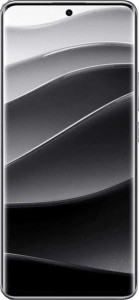
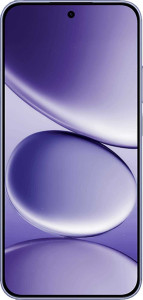
Both phones share the same core display technology — OLED/AMOLED panels with a 120Hz refresh rate, identical HDR10, HDR10+, Dolby Vision, and Always-On Display support, plus branded damage-resistant glass. At this level of parity, the differences come down to subtler but meaningful distinctions. The Note 15 Pro offers a larger 6.83″ screen versus the Note 14 Pro's 6.67″, which translates to more comfortable media consumption and easier reading of dense content — though it also contributes to the larger physical footprint noted in the design comparison. Pixel density is virtually identical at 446 ppi vs 443 ppi, meaning sharpness is indistinguishable in real-world use.
The Note 15 Pro's contrast ratio of 8,000,000:1 edges out the Note 14 Pro's already-impressive 5,000,000:1 — a gap that, while not dramatic in everyday viewing, can produce marginally deeper blacks and more vivid shadow detail in HDR content. The resolution difference (1220 x 2712 px vs 1220 x 2772 px) merely reflects the taller screen and has no perceptible impact on clarity.
The sharpest contrast between these two displays is the touch sampling rate: the Note 14 Pro's 2560Hz is an order of magnitude higher than the Note 15 Pro's 240Hz. In practice, a higher touch sampling rate reduces input latency and improves precision, particularly during fast-paced gaming or rapid scrolling. For general use the difference is imperceptible, but competitive mobile gamers will notice. Overall, the two screens are closely matched — the Note 15 Pro has a slight edge in screen size and contrast, while the Note 14 Pro counters with a significantly more responsive touch layer, making the choice dependent on the user's priorities.