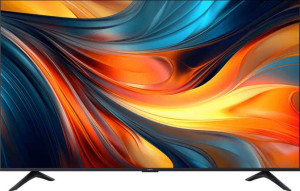
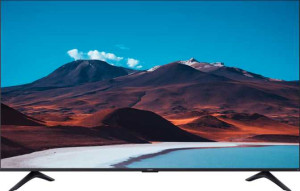
At first glance, one data point in the provided specs warrants careful attention: the Xiaomi TV A 2026 32″ lists its display resolution category as 4K (UHD), yet the actual pixel count for both TVs is identical — 1366 x 768 px — yielding the same 49 ppi pixel density. In practice, this means both sets deliver the same HD-class sharpness on screen, and neither can render true 4K or even 1080p content at native resolution. Users should not expect any difference in image detail or text clarity between the two models based on the resolution specs alone.
Where the two models genuinely diverge is panel technology. The Xiaomi TV F 2026 32″ features a QLED layer on top of its LED-backlit LCD panel, while the A 2026 uses a conventional LED-backlit LCD. QLED's quantum dot filter is designed to expand color volume and peak brightness, which — given that both TVs share identical specs for color depth (8-bit, 1670 million colors) and HDR support (HDR10 and HLG, no HDR10+ or Dolby Vision) — suggests the F 2026 has a structural advantage in color vibrancy and brightness headroom, even if those gains are not directly quantified in the provided data. All other panel characteristics — 60Hz refresh rate, 178° viewing angles on both axes, anti-reflection coating, and ambient light sensor — are completely equal.
The F 2026 32″ holds the display edge in this comparison, strictly due to its QLED panel technology, which positions it above the standard LED-backlit LCD of the A 2026. For a 32-inch screen at this resolution, the real-world QLED benefit may be modest, but it is the only meaningful hardware differentiator in this group. Everything else — sharpness, motion handling, HDR tier, and ergonomic panel features — is a tie.