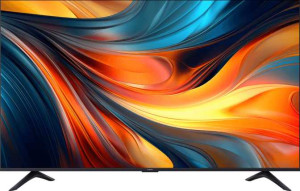
Xiaomi TV A 2026 43"
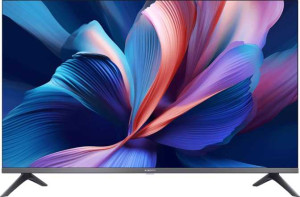
Xiaomi TV A Pro 2026 43"

Xiaomi TV A 2026 43" Xiaomi TV A Pro 2026 43"

Overview

When choosing between the Xiaomi TV A 2026 43″ and the Xiaomi TV A Pro 2026 43″, the decision comes down to a surprisingly focused set of distinctions. Both 43-inch sets share an identical foundation in resolution, connectivity, audio, and design — yet their display technologies and HDR capabilities tell a different story. This comparison breaks down exactly where these two TVs align and where they diverge, so you can make the most informed choice for your living room.

Common Features

  • Both TVs have a 43″ screen size.
  • Both TVs offer 4K (UHD) display resolution at 3840 x 2160 px.
  • Both TVs have a pixel density of 102 ppi.
  • Both TVs display 1070 million colors with a 10-bit bit depth.
  • Both TVs have a 60Hz refresh rate.
  • HDR10 support is available on both products.
  • Both TVs use LED-backlit LCD panel technology as a base.
  • Both TVs have 3 HDMI 2.1 ports.
  • Both TVs have 1 USB port and 1 RJ45 port.
  • Both TVs support Wi-Fi 4 (802.11n) and Wi-Fi 5 (802.11ac).
  • Both TVs have Bluetooth 5.
  • Both TVs deliver 2 x 10W audio output power with stereo speakers.
  • Dolby Audio support is available on both products.
  • Dolby Atmos support is not available on either product.
  • SRS TheaterSound HD is not available on either product.
  • Neither TV includes a subwoofer.
  • Both TVs share the same physical dimensions: 957 mm wide, 563 mm tall, and 72 mm thick.
  • Both TVs weigh 6000 g.
  • Both TVs support VESA mounting.
  • Chromecast built-in, AirPlay, and Google Assistant compatibility are available on both products.
  • Alexa and Siri/Apple HomeKit support are not available on either product.
  • Neither TV includes a rechargeable remote control.
  • Both TVs support remote smartphone control.

Main Differences

  • The display type is LED-backlit LCD on Xiaomi TV A 2026 43″, while the Xiaomi TV A Pro 2026 43″ adds QLED technology on top of LED-backlit LCD.
  • HDR10+ support is present on Xiaomi TV A Pro 2026 43″ but not available on Xiaomi TV A 2026 43″.
Specs Comparison
Xiaomi TV A 2026 43"

Xiaomi TV A 2026 43"

Xiaomi TV A Pro 2026 43"

Xiaomi TV A Pro 2026 43"

Display:
display resolution 4K (UHD) 4K (UHD)
Display type LED-backlit, LCD QLED, LED-backlit, LCD
screen size 43" 43"
resolution 3840 x 2160 px 3840 x 2160 px
pixel density 102 ppi 102 ppi
display colors 1070 million 1070 million
bit depth 10-bit 10-bit
refresh rate 60Hz 60Hz
supports HDR10
supports HDR10+
supports Dolby Vision
supports HLG
has anti-reflection coating
has an ambient light sensor
maximum horizontal viewing angle 178º 178º
maximum vertical viewing angle 178º 178º

Both the Xiaomi TV A 2026 43″ and the Xiaomi TV A Pro 2026 43″ share a strong display foundation: identical 4K UHD resolution (3840 x 2160 px), a 102 ppi pixel density, 10-bit color depth supporting 1.07 billion colors, a 60Hz refresh rate, and wide 178° viewing angles in both directions. Anti-reflection coating and an ambient light sensor are present on both, which helps in variable lighting environments.

The single but meaningful differentiator lies in the panel technology and HDR support. The TV A Pro uses a QLED panel on top of the standard LED-backlit LCD, which typically delivers higher brightness and more saturated colors — particularly beneficial for HDR content. On the HDR front, the Pro adds support for HDR10+, a dynamic metadata format that adjusts tone-mapping scene by scene, resulting in more precise highlight and shadow rendering compared to the static HDR10 standard that both TVs support. Neither model supports Dolby Vision; both support HLG, which is relevant for broadcast HDR content.

The TV A Pro holds a clear edge in display quality strictly based on the provided specs. The QLED panel and HDR10+ support together make it the stronger choice for viewers who prioritize image vibrancy and HDR accuracy, while the standard TV A remains competitive for users who primarily watch SDR or basic HDR10 content and do not need the upgraded panel technology.

Connectivity:
Has Bluetooth
HDMI version HDMI 2.1 HDMI 2.1
HDMI ports 3 3
supports Wi-Fi
Wi-Fi version Wi-Fi 4 (802.11n), Wi-Fi 5 (802.11ac) Wi-Fi 4 (802.11n), Wi-Fi 5 (802.11ac)
Bluetooth version 5 5
USB ports 1 1
RJ45 ports 1 1
supports Miracast
has a socket for a 3.5 mm audio jack
has an external memory slot
has a VGA connector
DVB standards DVB-T, DVB-T2, DVB-C, DVB-S, DVB-S2 DVB-T, DVB-T2, DVB-C, DVB-S, DVB-S2
has a DVI connector

Connectivity is one area where these two TVs are in complete lockstep. Every spec — from the HDMI 2.1 ports (three of them) to Bluetooth 5, Wi-Fi 5 support, a single USB port, and an RJ45 ethernet jack — is identical across both models. HDMI 2.1 is a genuine strength here, as it supports the bandwidth needed for 4K content and future-proofs connections with newer source devices.

Wireless connectivity tops out at Wi-Fi 5 (802.11ac) on both, which is more than adequate for 4K streaming but falls short of the faster and less congested Wi-Fi 6 standard increasingly common in mid-range devices. The shared DVB-T2, DVB-C, DVB-S2 tuner suite covers terrestrial, cable, and satellite reception broadly, making both TVs versatile for antenna and dish setups. Miracast support adds wireless screen mirroring without any extra hardware.

This is a clean tie — the connectivity specs are a pixel-perfect match. Neither the TV A nor the TV A Pro offers any advantage in this category, so the choice between them should rest entirely on other specification groups.

Audio:
audio output power 2 x 10W 2 x 10W
supports Digital Out
has SRS TheaterSound HD
has stereo speakers
has Dolby Atmos
has Dolby Audio
supports Dolby Virtual
has a subwoofer
has DTS:X
HDMI ARC / eARC HDMI ARC, HDMI eARC HDMI ARC, HDMI eARC

Audio is another category where the two TVs are indistinguishable on paper. Both deliver 2 x 10W of stereo output — a modest but standard figure for built-in TV speakers at this screen size, sufficient for everyday viewing though unlikely to impress in larger rooms. Neither model includes a subwoofer or Dolby Atmos, which caps the ceiling of the built-in audio experience.

Where both TVs do well is in format compatibility. Support for Dolby Audio and DTS:X covers the most common audio tracks found on streaming platforms and physical media. Crucially, both include HDMI eARC alongside standard ARC, which is the more important spec for anyone planning to connect a soundbar or AV receiver — eARC supports lossless and object-based audio passthrough that ARC cannot handle, making it a practical upgrade path for the built-in speakers' limitations.

No differentiation exists between the TV A and the TV A Pro in this group — every audio spec is a match. As with connectivity, the audio category should not factor into the buying decision between these two models.

Design:
width 957 mm 957 mm
weight 6000 g 6000 g
thickness 72 mm 72 mm
height 563 mm 563 mm
volume 38792.952 cm³ 38792.952 cm³
Supports VESA mount
maximum operating temperature 40 °C 40 °C
lowest potential operating temperature 0 °C 0 °C

Physically, the Xiaomi TV A 2026 43″ and the TV A Pro 2026 43″ are identical twins. Dimensions of 957 x 563 x 72 mm and a weight of exactly 6000 g mean installation, wall mounting, and furniture placement decisions will be the same regardless of which model you choose. Both support VESA mounting, which is the standard for wall brackets and arm mounts — a practical must-have for flexible room setups.

The shared operating temperature range of 0 °C to 40 °C is typical for indoor consumer electronics and signals no special tolerance for extreme environments. This is a non-issue for standard living room use but worth noting if placement near heat sources or in unconventional spaces is a consideration.

Design is a complete tie. Since every physical and environmental spec is mirrored across both models, this category offers no basis for differentiation — the decision remains, as with connectivity and audio, entirely in the hands of other specification groups.

Features:
release date August 2025 April 2025
has Chromecast built-in
has AirPlay
has built-in smart TV
compatible with Google Assistant
works with Alexa
works with Siri/Apple HomeKit
supports a remote smartphone
has a rechargeable remote control
supports USB recording
operating power consumption 75W 75W
standby power consumption 0.5W 0.5W
has a search browser
has a sleep timer
has a child lock
warranty period 1 years 1 years
has voice commands

Feature-wise, the two TVs operate from the same playbook. Both run a built-in smart TV platform with Google Assistant voice control, Chromecast built-in, and AirPlay support — a combination that covers the vast majority of casting and voice ecosystem needs for Android and Apple device users alike. Notably, neither model supports Alexa or Apple HomeKit, which may matter to users deeply embedded in those ecosystems.

On the practical side, USB recording is a genuinely useful inclusion, allowing live broadcast content to be recorded directly to an external drive without a separate recorder. Power consumption is identical at 75W operating and 0.5W on standby — efficient figures that keep running costs low. Both carry a 1-year warranty, setting the same ownership risk baseline.

Once again, this group is a dead tie. Every feature present on the TV A is present on the TV A Pro and vice versa, with no exceptions. The absence of a rechargeable remote on both is a minor shared omission, but it does not differentiate them. Buyers weighing features alone will find no reason to prefer one model over the other here.

Comparison Summary & Verdict

After examining every specification, it is clear that the Xiaomi TV A 2026 43″ and the Xiaomi TV A Pro 2026 43″ are near-identical siblings separated by two meaningful upgrades. Both deliver 4K UHD resolution at 60Hz, identical audio output, the same physical dimensions, and an equally rich connectivity suite including three HDMI 2.1 ports and dual-band Wi-Fi. The Pro model, however, steps ahead with a QLED panel for enhanced color volume and brightness, and adds HDR10+ support for dynamic scene-by-scene tone mapping. If you are satisfied with solid 4K picture quality and want to maximize value, the Xiaomi TV A 2026 43″ is a well-rounded choice. But if you watch a lot of HDR-mastered content and want richer, more vibrant colors from a premium panel technology, the Xiaomi TV A Pro 2026 43″ is the clear step up.

Xiaomi TV A 2026 43
Buy Xiaomi TV A 2026 43" if...

Buy the Xiaomi TV A 2026 43″ if you want a capable 4K TV with all the essential features and connectivity at a more accessible price point, and standard HDR10 meets your viewing needs.

Xiaomi TV A Pro 2026 43
Buy Xiaomi TV A Pro 2026 43" if...

Buy the Xiaomi TV A Pro 2026 43″ if you want a superior QLED panel with richer color performance and HDR10+ support for a more immersive, dynamic picture with compatible content.