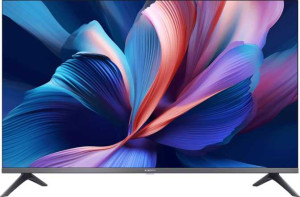
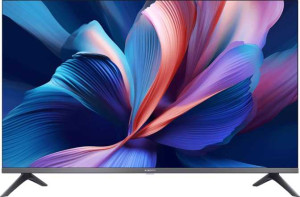
The most consequential difference between these two sets lies in resolution and pixel density. The 32″ model delivers 720p (1366 x 768 px) at just 49 ppi, while the 43″ model steps up to 4K (3840 x 2160 px) at 102 ppi — more than double the pixel density. In practice, this means the 43″ produces a significantly sharper image with finer detail, especially noticeable in text, fine textures, and high-resolution content. At typical TV viewing distances, the 32″'s HD resolution may appear soft or pixelated on its panel, whereas the 43″'s 4K output remains crisp even at closer ranges.
Bit depth is another meaningful gap: the 32″ uses an 8-bit panel, while the 43″ uses a 10-bit panel. A 10-bit display can represent exponentially more tonal gradations, which translates to smoother color transitions and reduced banding, especially in gradients like skies or shadows. Interestingly, the provided data lists the 32″ with 1,670 million display colors versus the 43″'s 1,070 million — this apparent paradox likely reflects panel-level differences in color mapping or dithering techniques, but the 10-bit advantage of the 43″ still represents a more native and accurate color reproduction pipeline. Both panels share the same QLED, LED-backlit LCD technology, 60 Hz refresh rate, and identical HDR support: HDR10, HDR10+, and HLG are present on both, while neither supports Dolby Vision.
Shared features — 178° horizontal and vertical viewing angles, anti-reflection coating, and an ambient light sensor — mean neither model has an ergonomic edge over the other. Overall, the 43″ model holds a clear display advantage: its 4K resolution, higher pixel density, and 10-bit depth make it the stronger choice for users who prioritize image fidelity. The 32″ is more suited to smaller rooms or secondary placements where viewing distance and screen real estate are the primary constraints.