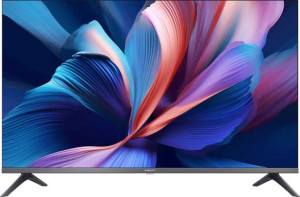
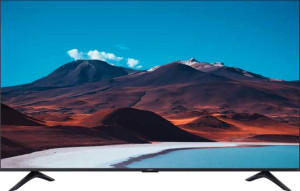
In terms of panel fundamentals, the Xiaomi TV A Pro 2026 65″ and the Xiaomi TV F 2026 65″ are virtually identical: both use a QLED, LED-backlit LCD panel at 65″, outputting a 3840 x 2160 resolution at 68 ppi, with a 10-bit color pipeline capable of rendering 1.07 billion colors. Both cap out at a 60Hz refresh rate, meaning neither has an edge for motion smoothness — a relevant consideration for fast-paced content. Viewing angles of 178° on both axes, an anti-reflection coating, and an ambient light sensor are shared across both models, so room placement flexibility and automatic brightness adaptation are equally covered.
The only differentiator in this group is HDR format support. Both TVs handle HDR10 and HLG, and neither supports Dolby Vision. However, the A Pro additionally supports HDR10+, which is the dynamic metadata upgrade to standard HDR10. In practice, HDR10+ allows the TV to apply scene-by-scene — or even frame-by-frame — brightness and contrast instructions from compatible content, rather than relying on a single static tone-mapping profile for the entire runtime. This results in more accurate highlight and shadow rendering on supported titles from platforms like Amazon Prime Video.
Overall, the A Pro holds a narrow but real advantage in this group solely due to its HDR10+ support. For users who frequently watch HDR10+-encoded content, this translates to a measurably better picture on that material. For viewers whose libraries are dominated by SDR, HLG broadcast, or standard HDR10 content, the two displays will perform identically in everyday use.