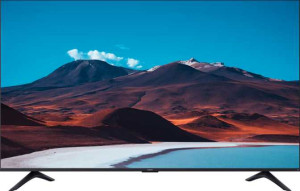
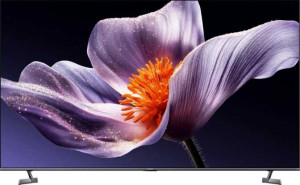
Both the Xiaomi TV F 2026 55″ and the Xiaomi TV S Pro Mini LED 2026 55″ share the same foundational display credentials: 4K (3840 x 2160) resolution at 80 ppi, a 10-bit panel capable of rendering 1.07 billion colors, identical 178° horizontal and vertical viewing angles, anti-reflection coating, and an ambient light sensor. For everyday viewing, these shared traits mean both televisions deliver a comparable baseline picture quality in terms of sharpness and color volume.
The meaningful separation emerges in three areas. First, the S Pro Mini LED adds a Mini-LED backlight layer to its QLED panel, enabling far more precise local dimming zones compared to the conventional LED backlighting on the F 2026 — this translates to deeper blacks, brighter highlights, and noticeably better contrast in dark or mixed scenes. Second, the refresh rate gap is significant: the F 2026 is capped at 60Hz, while the S Pro Mini LED reaches 144Hz, which makes a tangible difference for fast-motion content and gaming smoothness. Third, HDR coverage diverges sharply — the F 2026 is limited to HDR10 and HLG, while the S Pro Mini LED additionally supports HDR10+ and Dolby Vision, meaning it can decode the dynamic metadata that streaming services like Netflix and Prime Video use for scene-by-scene brightness optimization.
Based strictly on the provided display specs, the Xiaomi TV S Pro Mini LED 2026 55″ holds a clear and multi-dimensional advantage. Its Mini-LED backlighting, higher refresh rate, and broader HDR format compatibility combine to offer a substantially more capable display — particularly for cinephiles, gamers, and anyone consuming HDR content from major streaming platforms. The F 2026 remains competent for casual 4K viewing, but it cannot match the S Pro Mini LED's picture precision or motion performance.