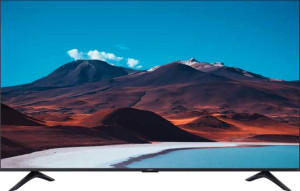
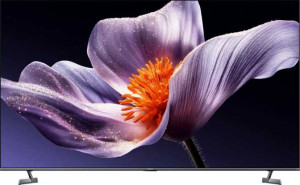
Both the Xiaomi TV F 2026 65″ and the Xiaomi TV S Pro Mini LED 2026 75″ share the same core resolution of 4K (3840 x 2160 px), 10-bit color depth, and 1.07 billion displayable colors, making them evenly matched on raw image detail. The notable size difference does, however, flip pixel density: the smaller F 2026 delivers 68 ppi versus the S Pro's 59 ppi, meaning the F 2026 produces a marginally sharper image per inch — though at typical living-room viewing distances this difference is rarely perceptible.
The most meaningful display differentiators lie in backlighting technology and motion handling. The S Pro adds a Mini-LED layer to its QLED panel, enabling far more precise local dimming zones than the F 2026's conventional LED backlight. In practice, this translates to deeper blacks, brighter highlights, and significantly reduced blooming around bright objects on dark backgrounds — a real advantage for HDR content. Speaking of HDR, the S Pro supports Dolby Vision and HDR10+ in addition to the HDR10 and HLG formats both TVs share. Since Dolby Vision and HDR10+ carry dynamic, scene-by-scene metadata, they extract noticeably better contrast and color from compatible streaming content compared to the static-metadata HDR10 that is the F 2026's ceiling.
On motion performance, the gap is equally stark: the S Pro's 144Hz native refresh rate versus the F 2026's 60Hz is a decisive edge for sports, gaming, and fast-paced action content, where smoother frame rendering and lower input lag matter. Shared features — anti-reflection coating, ambient light sensor, and identical 178° viewing angles — keep both TVs competitive on fundamentals. Overall, the S Pro Mini LED 2026 holds a clear and substantial display advantage, driven by its Mini-LED backlight, broader HDR ecosystem support, and high-refresh-rate panel; the F 2026 65″ is a capable but more entry-level display proposition.