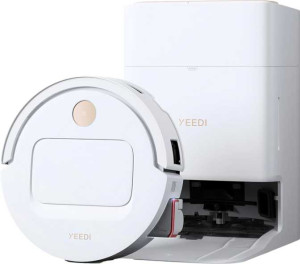
Yeedi M14 Plus
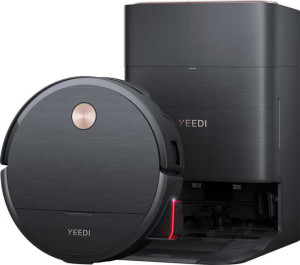
Yeedi S16 Plus

Yeedi M14 Plus Yeedi S16 Plus

Overview

Welcome to our in-depth specification comparison between the Yeedi M14 Plus and the Yeedi S16 Plus — two capable robot vacuum-mop combos from Yeedi's lineup. While both share a strong foundation of shared features, the key battlegrounds in this comparison revolve around suction power vs. battery capacity and how each model balances cleaning performance with runtime efficiency. Read on to discover which model aligns best with your home cleaning needs.

Common Features

  • Both products include a HEPA filter.
  • Both products include an allergy filter.
  • Both products are compatible with Google Assistant.
  • Both products work with Alexa.
  • Both products produce 65 dB of audible noise.
  • Both products weigh 4100 g.
  • Both products have a thickness of 353 mm.
  • Both products come with a 1-year warranty.
  • Both products support mapping.
  • Both products support no-go zones.
  • Both products support remote smartphone control.
  • Both products include an obstacle sensor.
  • Both products support problem area cleaning.
  • Both products are self-emptying.
  • Both products include carpet detection.
  • Both products are designed to avoid getting stuck.
  • Both products have a dustbin capacity of 0.3 l.
  • Neither product has a built-in display.
  • Neither product uses twin side brushes.
  • Both products include washable filters.
  • Neither product automatically adjusts its height.
  • Both products indicate when the dustbin is full.
  • Neither product uses bags.
  • Both products clean all floor types.
  • Both products offer 4 cleaning modes.
  • Both products are capable of mopping.
  • Both products include a dirt sensor.
  • Both products feature UV light.
  • Both products have a removable battery.
  • Both products include an auto-off function.

Main Differences

  • Width is 351.5 mm on the Yeedi M14 Plus and 352 mm on the Yeedi S16 Plus.
  • Height is 98 mm on the Yeedi M14 Plus and 99 mm on the Yeedi S16 Plus.
  • Volume is 12159.791 cm³ on the Yeedi M14 Plus and 12301.344 cm³ on the Yeedi S16 Plus.
  • Estimated empty time is 75 days on the Yeedi M14 Plus and 90 days on the Yeedi S16 Plus.
  • Docking station size is 77571 cm³ on the Yeedi M14 Plus and 81796 cm³ on the Yeedi S16 Plus.
  • Suction power is 18000 Pa on the Yeedi M14 Plus and 16600 Pa on the Yeedi S16 Plus.
  • Battery power is 5200 mAh on the Yeedi M14 Plus and 6400 mAh on the Yeedi S16 Plus.
  • Runtime is 241 min on the Yeedi M14 Plus and 252 min on the Yeedi S16 Plus.
  • Charge time is 4.5 hours on the Yeedi M14 Plus and 3 hours on the Yeedi S16 Plus.
  • Operating power consumption is 60W on the Yeedi M14 Plus and 100W on the Yeedi S16 Plus.
Specs Comparison
Yeedi M14 Plus

Yeedi M14 Plus

Yeedi S16 Plus

Yeedi S16 Plus

General info:
has HEPA filter
audible noise 65 dB 65 dB
has an allergy filter
compatible with Google Assistant
works with Alexa
release date March 2025 April 2025
weight 4100 g 4100 g
width 351.5 mm 352 mm
height 98 mm 99 mm
thickness 353 mm 353 mm
volume 12159.791 cm³ 12301.344 cm³
warranty period 1 years 1 years
estimated empty time 75 days 90 days
docking station size 77571 cm³ 81796 cm³

At a high level, the Yeedi M14 Plus and Yeedi S16 Plus are strikingly similar machines. Both share an identical 65 dB noise level, the same 4100 g weight, identical HEPA and allergy filtration, and full voice assistant compatibility with both Google Assistant and Alexa. For everyday ownership, these shared traits mean the two robots will feel and sound virtually indistinguishable during operation.

The most meaningful real-world difference in this group is the estimated empty time: the M14 Plus empties its dustbin every 75 days, while the S16 Plus stretches that interval to 90 days. That extra two weeks of hands-free maintenance is a genuine quality-of-life advantage for users who prioritize a set-and-forget experience. Tied to this, the S16 Plus ships with a slightly larger docking station (81,796 cm³ vs. 77,571 cm³), which directly explains the bigger dust capacity — more station volume accommodates a larger collection bag.

On physical dimensions, the two robots are nearly identical, with less than 1 mm separating them in width and height — a difference that has no practical significance. Overall, the S16 Plus holds a clear edge in this group solely due to its longer dust-emptying interval, making it the better pick for users who want to interact with their robot as infrequently as possible.

Features:
has mapping
supports no-go zones
supports a remote smartphone
has an obstacle sensor
has problem area cleaning
is self-emptying
has carpet detection
doesn't get stuck
supports virtual barriers
has route mapping
Has voice prompts
auto docking
has anti-fall sensor
can be scheduled
has a remote control
has water level adjustment
supports Wi-Fi
Wi-Fi version Wi-Fi 4 (802.11n) Wi-Fi 4 (802.11n)
has mop cleaning
has mop raising
has mop drying

Across every single feature in this group, the Yeedi M14 Plus and Yeedi S16 Plus are a perfect match. Both robots offer the full suite of premium autonomous cleaning capabilities: mapping with no-go zones, obstacle and anti-fall sensing, problem area cleaning, and scheduled operation. Neither supports virtual barriers or a physical remote control, so users of both models rely entirely on the companion app for advanced configuration.

On the mopping side, both machines check every relevant box — mop cleaning, mop raising (critical for avoiding carpet soaking), and mop drying back at the dock. The inclusion of mop drying in particular is a feature that separates mid-to-high-end robots from budget alternatives, as it prevents mildew buildup on the mop pad between cleaning sessions. Water level adjustment is also shared, giving users granular control over wet-floor intensity on both units. Connectivity is equally matched at Wi-Fi 4 (802.11n) on both sides.

This group is a complete tie. There is no feature-based reason to choose one over the other — every capability present on the M14 Plus is identically present on the S16 Plus, and neither robot holds any exclusive advantage here.

Design:
dustbin capacity 0.3 l 0.3 l
Has a display
has twin side brushes
has included washable filters
automatically adjusts its height
Indicates when full
uses bags

From a design standpoint, the Yeedi M14 Plus and Yeedi S16 Plus are built to an identical specification. Both carry a 0.3 l onboard dustbin — a modest capacity that is typical for self-emptying robots, since the bin is intended to be a temporary holding point rather than a long-term reservoir. The real storage burden falls on the docking station, which was already shown to differ slightly between the two models in the general specs.

Both robots forgo a display and rely on indicator-based feedback instead, including a fullness alert to signal when the onboard bin needs attention. The shared use of washable filters rather than disposable ones is a meaningful long-term cost saving, as users avoid recurring filter replacement expenses. Neither model uses bags, which keeps ongoing consumable costs low, and neither features twin side brushes or automatic height adjustment.

This group is a complete tie. Every design attribute is identical across both products, and no element here provides either robot with a meaningful advantage over the other.

Cleaning power:
suction power 18000 Pa 16600 Pa
cleans all floor types
cleaning modes 4 4
mops
has a dirt sensor
has UV light

Suction power is where these two robots finally diverge in a meaningful way. The Yeedi M14 Plus delivers 18,000 Pa of suction, compared to 16,600 Pa on the S16 Plus — a difference of roughly 8%. In practical terms, higher Pascal ratings translate to stronger pickup of fine debris, pet hair embedded in carpet, and particles lodged in floor crevices. While both figures sit comfortably in the high-performance tier, the M14 Plus has a measurable edge for homes with heavy-shedding pets or thick-pile carpets.

Everything else in this group is evenly matched. Both robots cover all floor types, offer the same 4 cleaning modes, include a dirt sensor for automatic intensity adjustment in heavily soiled areas, and feature UV light for surface sanitization — a hygiene addition that goes beyond basic vacuuming. The mopping capability is present on both as well, consistent with what was established in the features group.

The M14 Plus holds a clear edge in cleaning power strictly on the basis of its higher suction rating. For most average households with hard floors or low-pile rugs, the gap may go unnoticed in day-to-day use — but users dealing with persistent debris or deeper carpet pile will find the M14 Plus the more capable performer of the two.

Power:
battery power 5200 mAh 6400 mAh
runtime 241 min 252 min
charge time 4.5 hours 3 hours
operating power consumption 60W 100W
has a removable battery
has auto-off

The battery specifications here tell an interesting and nuanced story. The Yeedi S16 Plus packs a significantly larger 6,400 mAh battery versus the 5,200 mAh on the M14 Plus — a 23% capacity advantage — yet the real-world runtime gap is surprisingly narrow: 252 minutes versus 241 minutes, a difference of just 11 minutes. The explanation lies in power consumption: the S16 Plus draws 100W during operation compared to the M14 Plus's much leaner 60W. The larger battery on the S16 Plus is essentially compensating for its own higher energy appetite rather than delivering proportionally longer cleaning sessions.

Where the S16 Plus genuinely pulls ahead is charge time. Despite carrying a bigger battery, it fully recharges in 3 hours — one and a half hours faster than the M14 Plus's 4.5-hour cycle. This implies a more powerful charging circuit in the S16 Plus's dock, and for users who run multiple cleaning sessions per day or who need the robot back in action quickly, that faster turnaround is a real convenience win. Both models share a removable battery and auto-off functionality, keeping maintenance and safety options equal.

The verdict here depends on priorities. The M14 Plus is the more energy-efficient machine, stretching a smaller battery to nearly the same runtime — a factor worth considering for electricity-conscious users. But the S16 Plus holds the overall power group edge thanks to its substantially faster recharge time, which has a more tangible daily impact than the modest 11-minute runtime lead.

Comparison Summary & Verdict

After examining every specification, both the Yeedi M14 Plus and the Yeedi S16 Plus prove to be highly capable robotic cleaners with an identical feature set at their core — including self-emptying, mopping, UV light, dirt sensing, and full smart-home integration. The differences, however, are meaningful. The Yeedi M14 Plus leads on suction power at 18000 Pa and charges more slowly at 4.5 hours, while consuming a modest 60W — making it a strong pick for users who prioritize raw cleaning force and lower energy usage. The Yeedi S16 Plus counters with a larger 6400 mAh battery, a faster 3-hour charge time, and a longer 90-day estimated empty interval, making it the better fit for larger homes or users who value extended autonomy. If deep-cleaning power is your top concern, lean toward the M14 Plus. If convenience, longer runtime, and reduced maintenance frequency matter more, the S16 Plus is the smarter long-term investment.

Yeedi M14 Plus
Buy Yeedi M14 Plus if...

Buy the Yeedi M14 Plus if you want maximum suction power at 18000 Pa and lower operating energy consumption, and you do not mind a longer 4.5-hour charge time.

Yeedi S16 Plus
Buy Yeedi S16 Plus if...

Buy the Yeedi S16 Plus if you prioritize a larger battery, longer runtime, faster 3-hour charging, and a more generous 90-day bin-empty interval for reduced maintenance.