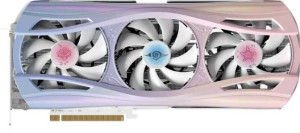
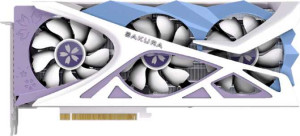
Yeston Sakura Atlantis GeForce RTX 5080
Yeston Sakura GeForce RTX 5080

Yeston Sakura Atlantis GeForce RTX 5080 Yeston Sakura GeForce RTX 5080

Overview

Welcome to this detailed specification comparison between the Yeston Sakura Atlantis GeForce RTX 5080 and the Yeston Sakura GeForce RTX 5080. Both cards are built on the powerful Blackwell architecture and share an impressive set of features, yet there are subtle physical distinctions worth examining. In this comparison, we put both GPUs side by side to explore their dimensions and the extensive list of specs they have in common, helping you decide which one fits your setup best.

Common Features

  • Both products have a GPU clock speed of 2295 MHz.
  • Both products have a GPU turbo speed of 2700 MHz.
  • Both products deliver a pixel rate of 302.4 GPixel/s.
  • Both products offer a floating-point performance of 58.06 TFLOPS.
  • Both products have a texture rate of 907.2 GTexels/s.
  • Both products have a GPU memory speed of 1875 MHz.
  • Both products feature 10752 shading units.
  • Both products include 336 texture mapping units (TMUs).
  • Both products have an effective memory speed of 30000 MHz.
  • Both products provide a maximum memory bandwidth of 960 GB/s.
  • Both products are equipped with 16GB of VRAM.
  • Both products use GDDR7 memory.
  • Both products feature a 256-bit memory bus width.
  • ECC memory support is available on both products.
  • Both products support DirectX 12 Ultimate.
  • Both products support OpenGL version 4.6.
  • Both products support OpenCL version 3.
  • Multi-display technology is supported on both products.
  • Ray tracing is supported on both products.
  • 3D support is available on both products.
  • DLSS support is available on both products.
  • XeSS (XMX) support is not available on either product.
  • Both products include an HDMI output.
  • Both products have 1 HDMI port.
  • Both products use HDMI version 2.1b.
  • Both products feature 3 DisplayPort outputs.
  • Neither product includes a USB-C port.
  • Neither product includes a DVI output.
  • Neither product includes a mini DisplayPort output.
  • Both products are based on the Blackwell GPU architecture.
  • Both products have a Thermal Design Power (TDP) of 360W.
  • Both products use PCIe version 5.
  • Both products are manufactured using a 5 nm semiconductor process.
  • Both products contain 45600 million transistors.
  • Air-water cooling is not available on either product.

Main Differences

  • Width is 343 mm on the Yeston Sakura Atlantis GeForce RTX 5080 and 345 mm on the Yeston Sakura GeForce RTX 5080.
  • Height is 153 mm on the Yeston Sakura Atlantis GeForce RTX 5080 and 154 mm on the Yeston Sakura GeForce RTX 5080.
Specs Comparison
Yeston Sakura Atlantis GeForce RTX 5080

Yeston Sakura Atlantis GeForce RTX 5080

Yeston Sakura GeForce RTX 5080

Yeston Sakura GeForce RTX 5080

Performance:
GPU clock speed 2295 MHz 2295 MHz
GPU turbo 2700 MHz 2700 MHz
pixel rate 302.4 GPixel/s 302.4 GPixel/s
floating-point performance 58.06 TFLOPS 58.06 TFLOPS
texture rate 907.2 GTexels/s 907.2 GTexels/s
GPU memory speed 1875 MHz 1875 MHz
shading units 10752 10752
texture mapping units (TMUs) 336 336
render output units (ROPs) 112 112
Has Double Precision Floating Point (DPFP)

In terms of raw performance, the Yeston Sakura Atlantis RTX 5080 and the Yeston Sakura RTX 5080 are completely identical across every measurable metric. Both cards share the same 2295 MHz base clock and 2700 MHz boost clock, the same 10,752 shading units, 336 TMUs, and 112 ROPs, and both deliver 58.06 TFLOPS of floating-point performance alongside a 907.2 GTexels/s texture fill rate and 302.4 GPixel/s pixel rate. Memory is clocked at 1875 MHz on both cards as well.

What do these numbers mean in practice? The 2700 MHz turbo clock places both cards at the high end of the RTX 5080 stack, translating to strong rasterization throughput for 4K gaming and demanding creative workloads. The 58.06 TFLOPS figure is particularly relevant for AI-accelerated tasks and ray tracing, while the high TMU count supports sharp, high-resolution texture rendering with minimal bottlenecking. Both cards also support Double Precision Floating Point, which matters for scientific or professional compute applications, though it is a less critical feature for gaming.

This is a clear tie in the Performance category. There is no differentiator whatsoever between the two variants on any spec provided. Any distinction between these two products must come from other specification groups such as cooling, design, or connectivity — not from GPU performance.

Memory:
effective memory speed 30000 MHz 30000 MHz
maximum memory bandwidth 960 GB/s 960 GB/s
VRAM 16GB 16GB
GDDR version GDDR7 GDDR7
memory bus width 256-bit 256-bit
Supports ECC memory

The memory configuration on both cards is a mirror image: 16GB of GDDR7 across a 256-bit bus, with an effective speed of 30,000 MHz yielding 960 GB/s of bandwidth. GDDR7 is a meaningful generational leap over GDDR6X, bringing higher data rates at improved power efficiency, and 960 GB/s of peak bandwidth is substantial enough to keep the GPU fed even in the most texture- and resolution-heavy scenarios.

The 256-bit bus width is a practical choice at this VRAM capacity — paired with GDDR7 speeds, it avoids the bandwidth starvation that narrower buses can cause in high-resolution workloads. The 16GB frame buffer is well-suited for 4K gaming with high-resolution texture packs and holds up reasonably well for lighter professional tasks. ECC memory support on both cards is a noteworthy inclusion, adding error-correction capability that reduces data corruption risk in compute and workstation contexts — a feature typically associated with professional-grade hardware.

As with the Performance group, this is an unambiguous tie. Every memory specification is identical between the Sakura Atlantis and the Sakura RTX 5080. Neither card holds any memory advantage over the other, and buyers should look to other specification groups to find meaningful differences between the two variants.

Features:
DirectX version DirectX 12 Ultimate DirectX 12 Ultimate
OpenGL version 4.6 4.6
OpenCL version 3 3
Supports multi-display technology
supports ray tracing
Supports 3D
supports DLSS
has XeSS (XMX)
AMD SAM / Intel Resizable BAR Intel Resizable BAR Intel Resizable BAR
has LHR
has RGB lighting
supported displays 4 4

Feature parity continues across both cards. The most consequential shared capabilities are DirectX 12 Ultimate support and ray tracing, which together unlock the full suite of modern rendering techniques — hardware-accelerated ray tracing, mesh shaders, and variable-rate shading — without compromise on either variant. DLSS support is equally important for real-world gaming, enabling AI-driven upscaling that can dramatically recover frame rates in ray-traced or high-resolution workloads.

Both cards support up to 4 simultaneous displays and include multi-display technology, making them viable for productivity-focused multi-monitor setups alongside gaming use. Intel Resizable BAR is present on both, allowing the CPU to access the full VRAM pool at once rather than in smaller chunks — a feature that can yield modest but measurable performance gains in supported titles. Neither card carries LHR restrictions, meaning full compute throughput is available without limitation. RGB lighting is also confirmed on both.

Once again, this group yields a definitive tie. The Sakura Atlantis and the Sakura RTX 5080 share an identical feature set with no omissions or additions on either side. Shoppers differentiating between these two models will need to look beyond software and API capabilities entirely.

Ports:
has an HDMI output
HDMI ports 1 1
HDMI version HDMI 2.1b HDMI 2.1b
DisplayPort outputs 3 3
USB-C ports 0 0
DVI outputs 0 0
mini DisplayPort outputs 0 0

Both cards offer the same output configuration: 3 DisplayPort and 1 HDMI 2.1b port, totaling four display outputs — which aligns with the four-display limit noted in the Features group. The DisplayPort outputs are the workhorses of a multi-monitor setup, ideal for high-refresh-rate gaming panels, while the single HDMI 2.1b port covers connection to modern TVs and projectors. HDMI 2.1b specifically supports high bandwidth for 4K high-refresh or 8K content delivery.

Notably, neither card includes a USB-C output, which rules out direct connection to USB-C or Thunderbolt monitors without an adapter. The absence of legacy DVI and mini DisplayPort outputs is expected at this tier and has no practical downside for modern display ecosystems.

The Ports group is another tie — the Sakura Atlantis and the Sakura RTX 5080 are physically interchangeable in terms of display connectivity. No advantage exists on either side, and users with identical display setups will have the exact same experience regardless of which variant they choose.

General info:
GPU architecture Blackwell Blackwell
release date January 2025 January 2025
Thermal Design Power (TDP) 360W 360W
PCI Express (PCIe) version 5 5
semiconductor size 5 nm 5 nm
number of transistors 45600 million 45600 million
Has air-water cooling
width 343 mm 345 mm
height 153 mm 154 mm

Sharing the same Blackwell architecture built on a 5nm process with 45.6 billion transistors, both cards represent the same generation of silicon. The 5nm node is significant here — it enables higher transistor density and better power efficiency relative to older processes, which matters given the 360W TDP both cards carry. That power envelope demands a capable PSU and adequate case airflow, and neither variant offsets this with liquid cooling, as both rely exclusively on air cooling solutions.

PCIe 5.0 support on both cards is forward-looking — while current workloads rarely saturate even PCIe 4.0 bandwidth, the interface headroom ensures these cards remain compatible with next-generation platform builds without becoming a bottleneck. The shared TDP also means buyers face identical power supply and thermal management requirements whichever variant they choose.

The only measurable difference in this group is physical size: the Sakura Atlantis measures 343 × 153 mm versus the Sakura's 345 × 154 mm. This 2mm discrepancy in both dimensions is negligible in practical terms and is unlikely to affect case compatibility in any real-world scenario. Overall, this group is effectively a tie, with the marginal size difference carrying no meaningful advantage for either card.

Comparison Summary & Verdict

After a thorough review, it is clear that the Yeston Sakura Atlantis GeForce RTX 5080 and the Yeston Sakura GeForce RTX 5080 are remarkably similar cards. Both deliver identical 58.06 TFLOPS of floating-point performance, a 360W TDP, 16GB of GDDR7 memory with 960 GB/s bandwidth, and full support for ray tracing and DLSS. The only measurable distinctions are physical: the Atlantis model is marginally more compact at 343 x 153 mm, while the standard model measures 345 x 154 mm. If your PC case has very tight clearance, the Atlantis edition offers a slight advantage, while the standard edition suits buyers where those extra millimeters pose no concern.

Yeston Sakura Atlantis GeForce RTX 5080
Buy Yeston Sakura Atlantis GeForce RTX 5080 if...

Buy the Yeston Sakura Atlantis GeForce RTX 5080 if you have a compact PC case where every millimeter counts, as it is marginally smaller at 343 x 153 mm compared to its sibling.

Yeston Sakura GeForce RTX 5080
Buy Yeston Sakura GeForce RTX 5080 if...

Buy the Yeston Sakura GeForce RTX 5080 if case space is not a concern and you are comfortable with its slightly larger 345 x 154 mm footprint, enjoying the same powerful performance at potentially a different price point.