Zotac Gaming GeForce RTX 5070 Solid
Zotac Gaming GeForce RTX 5070 Solid OC

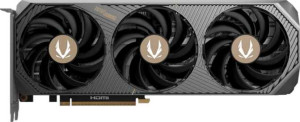
Zotac Gaming GeForce RTX 5070 Solid Zotac Gaming GeForce RTX 5070 Solid OC

Overview

Welcome to our detailed spec comparison between the Zotac Gaming GeForce RTX 5070 Solid and the Zotac Gaming GeForce RTX 5070 Solid OC. Both cards are built on the Blackwell architecture with identical memory configurations and feature sets, yet they diverge in key clock speed and throughput metrics. Read on to discover which card best matches your needs across performance, efficiency, and value.

Common Features

  • Both cards share a base GPU clock speed of 2325 MHz.
  • Both cards have a GPU memory speed of 1750 MHz.
  • Both cards feature 6144 shading units.
  • Both cards include 192 texture mapping units (TMUs).
  • Both cards have 80 render output units (ROPs).
  • Double Precision Floating Point (DPFP) is supported on both cards.
  • Both cards have an effective memory speed of 28000 MHz.
  • Both cards offer a maximum memory bandwidth of 672 GB/s.
  • Both cards are equipped with 12GB of VRAM.
  • Both cards use GDDR7 memory.
  • Both cards have a 192-bit memory bus width.
  • ECC memory is supported on both cards.
  • Both cards support DirectX 12 Ultimate.
  • Both cards support OpenGL version 4.6.
  • Both cards support OpenCL version 3.
  • Multi-display technology is supported on both cards.
  • Ray tracing is supported on both cards.
  • 3D output is supported on both cards.
  • DLSS is supported on both cards.
  • XeSS (XMX) is not available on either card.
  • Both cards have one HDMI 2.1b port and three DisplayPort outputs.
  • Neither card includes USB-C or DVI outputs.
  • Both cards are built on the Blackwell GPU architecture.
  • Both cards have a Thermal Design Power (TDP) of 250W.
  • Both cards use PCIe version 5.
  • Both cards are manufactured on a 5 nm process.
  • Both cards contain 31,100 million transistors.
  • Air-water cooling is not available on either card.
  • Both cards share dimensions of 304.4 mm width and 115.8 mm height.

Main Differences

  • GPU turbo clock speed is 2512 MHz on Zotac Gaming GeForce RTX 5070 Solid and 2542 MHz on Zotac Gaming GeForce RTX 5070 Solid OC.
  • Pixel rate is 201 GPixel/s on Zotac Gaming GeForce RTX 5070 Solid and 203.4 GPixel/s on Zotac Gaming GeForce RTX 5070 Solid OC.
  • Floating-point performance is 30.87 TFLOPS on Zotac Gaming GeForce RTX 5070 Solid and 31.24 TFLOPS on Zotac Gaming GeForce RTX 5070 Solid OC.
  • Texture rate is 482.3 GTexels/s on Zotac Gaming GeForce RTX 5070 Solid and 488.1 GTexels/s on Zotac Gaming GeForce RTX 5070 Solid OC.
Specs Comparison
Zotac Gaming GeForce RTX 5070 Solid

Zotac Gaming GeForce RTX 5070 Solid

Zotac Gaming GeForce RTX 5070 Solid OC

Zotac Gaming GeForce RTX 5070 Solid OC

Performance:
GPU clock speed 2325 MHz 2325 MHz
GPU turbo 2512 MHz 2542 MHz
pixel rate 201 GPixel/s 203.4 GPixel/s
floating-point performance 30.87 TFLOPS 31.24 TFLOPS
texture rate 482.3 GTexels/s 488.1 GTexels/s
GPU memory speed 1750 MHz 1750 MHz
shading units 6144 6144
texture mapping units (TMUs) 192 192
render output units (ROPs) 80 80
Has Double Precision Floating Point (DPFP)

At the core, both the Zotac Gaming GeForce RTX 5070 Solid and the RTX 5070 Solid OC share identical foundational hardware: 6144 shading units, 192 TMUs, 80 ROPs, and a base GPU clock of 2325 MHz. This means they draw from the same silicon, and any difference in performance comes entirely from factory tuning rather than hardware configuration. Both also support Double Precision Floating Point, which is relevant for compute-oriented workloads alongside gaming.

The only differentiator in this group is the boost clock: the Solid tops out at 2512 MHz, while the Solid OC is factory-tuned to reach 2542 MHz — a gap of just 30 MHz, or roughly 1.2%. That modest frequency advantage flows through every derived metric: the OC variant edges ahead with 31.24 TFLOPS of floating-point performance versus 30.87 TFLOPS, a 488.1 GTexels/s texture rate versus 482.3, and a pixel rate of 203.4 GPixel/s versus 201. In practice, these differences are unlikely to be perceptible in real-world gaming frame rates, as they fall well within benchmark noise thresholds.

The Solid OC holds a marginal but clear performance edge on paper by virtue of its higher factory boost clock. For users prioritizing maximum out-of-box throughput without manual overclocking, it is the stronger choice. However, given that both cards share the same architecture and memory subsystem — including identical 1750 MHz memory speed — the standard Solid remains virtually its equal in day-to-day use, and the real-world gap will be imperceptible without benchmarking tools.
Memory:
effective memory speed 28000 MHz 28000 MHz
maximum memory bandwidth 672 GB/s 672 GB/s
VRAM 12GB 12GB
GDDR version GDDR7 GDDR7
memory bus width 192-bit 192-bit
Supports ECC memory

When it comes to memory, the Zotac Gaming GeForce RTX 5070 Solid and the Solid OC are carbon copies of one another. Both feature 12GB of GDDR7 VRAM on a 192-bit bus, running at an effective speed of 28000 MHz and delivering a maximum bandwidth of 672 GB/s. There is not a single figure in this category that separates them.

The specifications themselves tell a strong story for the RTX 5070 class as a whole. GDDR7 is the latest generation of graphics memory, and the combination of its high transfer rates with a 192-bit bus yields that 672 GB/s bandwidth figure — a meaningful step up from what GDDR6X on comparable previous-generation cards could achieve. In practice, higher memory bandwidth reduces the likelihood of the GPU stalling while waiting on data, which matters most in memory-intensive scenarios like high-resolution texture streaming, ray tracing, and AI-accelerated workloads. ECC memory support is also present on both, adding a layer of data integrity useful in professional or compute contexts.

This group is a clear tie. Choosing between the Solid and Solid OC on memory grounds is impossible — every relevant spec is identical, so the decision must rest entirely on other factors such as performance clocks or price.

Features:
DirectX version DirectX 12 Ultimate DirectX 12 Ultimate
OpenGL version 4.6 4.6
OpenCL version 3 3
Supports multi-display technology
supports ray tracing
Supports 3D
supports DLSS
has XeSS (XMX)
AMD SAM / Intel Resizable BAR Intel Resizable BAR Intel Resizable BAR
has LHR
has RGB lighting
supported displays 4 4

Feature parity between the Zotac Gaming GeForce RTX 5070 Solid and the Solid OC is total — every single entry in this group is identical. Both cards support DirectX 12 Ultimate, which is the current gold standard for gaming APIs, enabling advanced rendering features like hardware-accelerated ray tracing and variable rate shading across all compliant titles. Ray tracing and DLSS support are also confirmed on both, meaning users get access to NVIDIA's full suite of image quality and upscaling technology regardless of which variant they choose.

On the practical side, both cards support up to 4 simultaneous displays via multi-display technology, which makes either a capable choice for productivity-heavy or multi-monitor gaming setups. Intel Resizable BAR support allows the CPU to access the full VRAM pool at once rather than in smaller chunks, a feature that can yield modest frame rate improvements in supported games. The absence of LHR (Lite Hash Rate) on both is also worth noting for users who care about compute flexibility. RGB lighting is present on both as well, though its aesthetic impact obviously depends on the specific cooler implementation.

This group is a definitive tie. There is no feature available on one card that is absent on the other, so software capabilities, API support, and connectivity offer no basis for differentiation here. Buyers should look to performance clocks or pricing to make their final call.

Ports:
has an HDMI output
HDMI ports 1 1
HDMI version HDMI 2.1b HDMI 2.1b
DisplayPort outputs 3 3
USB-C ports 0 0
DVI outputs 0 0
mini DisplayPort outputs 0 0

Both the Zotac Gaming GeForce RTX 5070 Solid and the Solid OC ship with an identical output configuration: 3 DisplayPort outputs and 1 HDMI 2.1b port, totaling four display connections — which aligns with the four supported displays noted in the Features group. Neither card includes USB-C, DVI, or mini DisplayPort outputs.

The port selection itself is well-suited to modern use cases. HDMI 2.1b supports up to 4K at high refresh rates and 8K output, making it compatible with the latest TVs and high-end monitors without requiring adapters. The three DisplayPort outputs give multi-monitor users plenty of flexibility, and DisplayPort is generally the preferred connection for high-refresh-rate PC gaming monitors. The absence of USB-C is worth noting for users who rely on that connector for display output or VR headsets, though it is not uncommon at this product tier.

Unsurprisingly, this is another tie. The port layout is completely mirrored across both variants, so connectivity plays no role in differentiating the Solid from the Solid OC.

General info:
GPU architecture Blackwell Blackwell
release date March 2025 March 2025
Thermal Design Power (TDP) 250W 250W
PCI Express (PCIe) version 5 5
semiconductor size 5 nm 5 nm
number of transistors 31100 million 31100 million
Has air-water cooling
width 304.4 mm 304.4 mm
height 115.8 mm 115.8 mm

Underneath both the Zotac Gaming GeForce RTX 5070 Solid and the Solid OC lies the same silicon story: the Blackwell architecture built on a 5nm process with 31.1 billion transistors. These are not trivial numbers — the density enabled by 5nm manufacturing is a key reason Blackwell can pack this level of compute capability into a card with a 250W TDP, a power envelope that is manageable for most mid-to-high-end systems without exotic power delivery.

Both cards connect via PCIe 5.0, the latest interface standard, which doubles the available bandwidth over PCIe 4.0. In practice, current GPUs rarely saturate even PCIe 4.0, but PCIe 5.0 compatibility ensures these cards are forward-compatible with newer platforms. Physically, the two variants share the same footprint — 304.4 mm in length and 115.8 mm in height — so case compatibility considerations are identical for both. Neither card offers liquid cooling, relying entirely on air cooling solutions.

Once again, this group is a complete tie. From architecture and process node to physical dimensions and thermal design, the Solid and Solid OC are indistinguishable here. The choice between them continues to hinge solely on the factory boost clock difference identified in the Performance group.

Comparison Summary & Verdict

After examining every specification, it is clear that the Zotac Gaming GeForce RTX 5070 Solid and the Zotac Gaming GeForce RTX 5070 Solid OC are nearly identical cards sharing the same 12GB GDDR7 memory, 250W TDP, Blackwell architecture, and a full suite of features including ray tracing and DLSS. The only meaningful distinctions lie in the GPU turbo clock (2512 MHz vs 2542 MHz), floating-point performance (30.87 vs 31.24 TFLOPS), pixel rate (201 vs 203.4 GPixel/s), and texture rate (482.3 vs 488.1 GTexels/s). The OC variant delivers a modest but measurable performance edge. Budget-conscious buyers who do not need every last frame will find the standard Solid a sensible choice, while enthusiasts seeking the highest out-of-the-box throughput without manual overclocking should lean toward the Solid OC.

Zotac Gaming GeForce RTX 5070 Solid
Buy Zotac Gaming GeForce RTX 5070 Solid if...

Buy the Zotac Gaming GeForce RTX 5070 Solid if you want the same core architecture, memory, and feature set at the base performance tier and do not require the extra clock headroom of the OC model.

Zotac Gaming GeForce RTX 5070 Solid OC
Buy Zotac Gaming GeForce RTX 5070 Solid OC if...

Buy the Zotac Gaming GeForce RTX 5070 Solid OC if you want the highest out-of-the-box boost clock, pixel rate, texture rate, and floating-point performance without manually overclocking.