Zotac Gaming GeForce RTX 5070 Ti Solid Core
Zotac Gaming GeForce RTX 5070 Ti Solid SFF OC

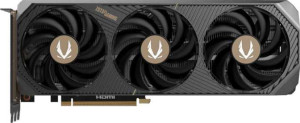
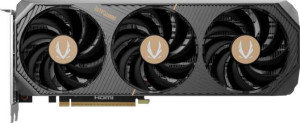
Zotac Gaming GeForce RTX 5070 Ti Solid Core Zotac Gaming GeForce RTX 5070 Ti Solid SFF OC

Overview

Welcome to our in-depth specification comparison between the Zotac Gaming GeForce RTX 5070 Ti Solid Core and the Zotac Gaming GeForce RTX 5070 Ti Solid SFF OC. Both cards share the same Blackwell architecture and 16GB GDDR7 memory, yet they differ in key areas such as GPU turbo clock speed and overall compute throughput. Read on to see how these two cards stack up across performance, memory, features, and physical dimensions.

Common Features

  • Both cards share a base GPU clock speed of 2295 MHz.
  • Both cards have a GPU memory speed of 1750 MHz.
  • Both cards feature 8960 shading units.
  • Both cards include 280 texture mapping units (TMUs).
  • Both cards have 96 render output units (ROPs).
  • Double Precision Floating Point (DPFP) is supported on both cards.
  • Both cards have an effective memory speed of 28000 MHz.
  • Both cards offer a maximum memory bandwidth of 896 GB/s.
  • Both cards are equipped with 16GB of VRAM.
  • Both cards use GDDR7 memory.
  • Both cards feature a 256-bit memory bus width.
  • ECC memory is supported on both cards.
  • Both cards support DirectX 12 Ultimate.
  • Both cards support OpenGL version 4.6.
  • Both cards support OpenCL version 3.
  • Multi-display technology is supported on both cards.
  • Ray tracing is supported on both cards.
  • 3D support is available on both cards.
  • DLSS is supported on both cards.
  • XeSS (XMX) is not available on either card.
  • Both cards include one HDMI 2.1b output.
  • Both cards feature three DisplayPort outputs.
  • Neither card includes USB-C ports, DVI outputs, or mini DisplayPort outputs.
  • Both cards are built on the Blackwell GPU architecture.
  • Both cards have a Thermal Design Power (TDP) of 300W.
  • Both cards use PCIe version 5.
  • Both cards are manufactured on a 5 nm process node.
  • Both cards contain 45,600 million transistors.
  • Air-water cooling is not available on either card.
  • Both cards share a height of 115.8 mm.

Main Differences

  • GPU turbo clock speed is 2452 MHz on the Zotac Gaming GeForce RTX 5070 Ti Solid Core and 2482 MHz on the Zotac Gaming GeForce RTX 5070 Ti Solid SFF OC.
  • Pixel rate is 235.4 GPixel/s on the Zotac Gaming GeForce RTX 5070 Ti Solid Core and 238.3 GPixel/s on the Zotac Gaming GeForce RTX 5070 Ti Solid SFF OC.
  • Floating-point performance is 43.94 TFLOPS on the Zotac Gaming GeForce RTX 5070 Ti Solid Core and 44.48 TFLOPS on the Zotac Gaming GeForce RTX 5070 Ti Solid SFF OC.
  • Texture rate is 686.6 GTexels/s on the Zotac Gaming GeForce RTX 5070 Ti Solid Core and 695 GTexels/s on the Zotac Gaming GeForce RTX 5070 Ti Solid SFF OC.
  • Card width is 303.5 mm on the Zotac Gaming GeForce RTX 5070 Ti Solid Core and 304.4 mm on the Zotac Gaming GeForce RTX 5070 Ti Solid SFF OC.
Specs Comparison
Zotac Gaming GeForce RTX 5070 Ti Solid Core

Zotac Gaming GeForce RTX 5070 Ti Solid Core

Zotac Gaming GeForce RTX 5070 Ti Solid SFF OC

Zotac Gaming GeForce RTX 5070 Ti Solid SFF OC

Performance:
GPU clock speed 2295 MHz 2295 MHz
GPU turbo 2452 MHz 2482 MHz
pixel rate 235.4 GPixel/s 238.3 GPixel/s
floating-point performance 43.94 TFLOPS 44.48 TFLOPS
texture rate 686.6 GTexels/s 695 GTexels/s
GPU memory speed 1750 MHz 1750 MHz
shading units 8960 8960
texture mapping units (TMUs) 280 280
render output units (ROPs) 96 96
Has Double Precision Floating Point (DPFP)

Both the Solid Core and the Solid SFF OC are built on the same fundamental GPU silicon — identical 8960 shading units, 280 TMUs, 96 ROPs, and a base clock of 2295 MHz — so their theoretical compute ceiling starts from the exact same foundation. Memory bandwidth is also a non-factor here, with both running at 1750 MHz GPU memory speed. The real divergence emerges exclusively at boost frequencies.

The Solid SFF OC edges ahead with a higher GPU turbo of 2482 MHz versus 2452 MHz on the Solid Core — a 30 MHz advantage that cascades into measurable, if modest, leads across every derived throughput metric. Its floating-point throughput of 44.48 TFLOPS beats the Solid Core's 43.94 TFLOPS, and its texture rate of 695 GTexels/s versus 686.6 GTexels/s translates to slightly sharper performance in texture-heavy workloads. In practice, these differences represent roughly a 1.2–1.3% performance gap — real, but unlikely to be perceptible in most gaming or creative scenarios without benchmarking.

What makes the Solid SFF OC's numbers genuinely noteworthy is the context: achieving a higher boost clock in a small form factor design typically requires more aggressive thermal engineering to compensate for constrained airflow. On raw performance figures alone, the Solid SFF OC holds a slight but clear edge in this group. For users prioritizing peak throughput and the margin matters, the SFF OC wins — though the Solid Core is essentially its equal in any real-world, non-synthetic workload.
Memory:
effective memory speed 28000 MHz 28000 MHz
maximum memory bandwidth 896 GB/s 896 GB/s
VRAM 16GB 16GB
GDDR version GDDR7 GDDR7
memory bus width 256-bit 256-bit
Supports ECC memory

Memory is the one arena where these two cards are genuinely, completely indistinguishable. Both carry 16GB of GDDR7 across a 256-bit bus, delivering a maximum bandwidth of 896 GB/s at an effective speed of 28000 MHz — every single figure is a mirror image.

Those numbers deserve some context. GDDR7 is a meaningful generational leap over GDDR6X, and 896 GB/s of bandwidth sits comfortably in high-end GPU territory, enabling smooth handling of large textures, high-resolution frame buffers, and memory-intensive workloads like AI inference or creative rendering. The 16GB capacity is also a practical differentiator in today's landscape — enough headroom for 4K gaming with high-res texture packs and serious professional tasks without hitting VRAM walls. ECC memory support on both cards adds a layer of reliability relevant to prosumer and workstation use cases, where data integrity matters.

With no differentiating data point anywhere in this spec group, the memory comparison is an unambiguous dead tie. Whichever card a buyer chooses, they are getting the exact same memory subsystem — and a very capable one at that.

Features:
DirectX version DirectX 12 Ultimate DirectX 12 Ultimate
OpenGL version 4.6 4.6
OpenCL version 3 3
Supports multi-display technology
supports ray tracing
Supports 3D
supports DLSS
has XeSS (XMX)
AMD SAM / Intel Resizable BAR Intel Resizable BAR Intel Resizable BAR
has LHR
has RGB lighting
supported displays 4 4

Feature parity is total here — the Solid Core and Solid SFF OC share an identical software and API capability set without a single point of divergence. Both support DirectX 12 Ultimate, which unlocks the full suite of modern rendering features including hardware-accelerated ray tracing, mesh shaders, and variable rate shading. Paired with DLSS support, this means both cards can leverage NVIDIA's AI-driven upscaling to recover performance headroom in demanding titles — particularly relevant when ray tracing is enabled and raw frame rates dip.

The ability to drive up to 4 simultaneous displays gives both cards solid credentials for multi-monitor productivity or gaming setups. Intel Resizable BAR support is also present on both, which allows the CPU to access the full GPU frame buffer at once rather than in smaller chunks — a modest but real performance uplift in supported titles. RGB lighting on each card is a minor aesthetic note, though worth flagging for builders with themed rigs. Notably, neither card carries LHR restrictions, meaning full GPU compute throughput is available unconditionally.

There is simply no differentiator to call out in this group. Every feature available on one is equally available on the other, making this a complete tie by the data. A buyer's decision between the two cards will need to rest entirely on other factors — form factor, thermals, or price.

Ports:
has an HDMI output
HDMI ports 1 1
HDMI version HDMI 2.1b HDMI 2.1b
DisplayPort outputs 3 3
USB-C ports 0 0
DVI outputs 0 0
mini DisplayPort outputs 0 0

Port selection is another area where the Solid Core and Solid SFF OC offer a perfectly matched configuration: one HDMI 2.1b output and three DisplayPort outputs, totaling four display connections — consistent with the four-display limit noted in the Features group. No USB-C, DVI, or mini DisplayPort outputs are present on either card.

HDMI 2.1b is the more capable iteration of the HDMI 2.1 standard, supporting higher bandwidth for resolutions up to 10K and refresh rates up to 144Hz at 4K — relevant for users connecting to high-end TVs or monitors over HDMI. The three DisplayPort outputs give multi-monitor desktop users plenty of flexibility, and DisplayPort generally remains the preferred connection for high-refresh gaming monitors at 4K and above. The absence of USB-C is worth noting for anyone hoping to connect a VR headset or a USB-C display without an adapter, though it is not uncommon at this tier.

With no differences anywhere in this spec group, the verdict is a straightforward tie. Both cards deliver the same connectivity options, and neither imposes any limitation the other avoids.

General info:
GPU architecture Blackwell Blackwell
release date February 2025 March 2025
Thermal Design Power (TDP) 300W 300W
PCI Express (PCIe) version 5 5
semiconductor size 5 nm 5 nm
number of transistors 45600 million 45600 million
Has air-water cooling
width 303.5 mm 304.4 mm
height 115.8 mm 115.8 mm

At their core, these two cards are cut from the same cloth. Both are built on NVIDIA's Blackwell architecture using a 5nm process node with 45.6 billion transistors, and both carry an identical 300W TDP — meaning power delivery requirements and expected thermal output are equivalent across the two designs. PCIe 5.0 support on both ensures neither will face any interface bottleneck on a modern platform, now or in the near future.

The only measurable divergence in this group is physical: the Solid Core measures 303.5mm in width versus the Solid SFF OC's 304.4mm — a difference of less than 1mm. In any practical sense, this is not a real-world differentiator; both cards will fit or not fit in any given case based on the same clearance requirements. The ″SFF″ designation in the Solid SFF OC's name might suggest a more compact card, but the width data provided here does not reflect a meaningful size reduction.

Across all substantive specs in this group — architecture, process node, power envelope, and interface generation — the two cards are effectively identical. This is a tie, and the near-negligible width difference should carry no weight in a purchase decision.

Comparison Summary & Verdict

After a thorough side-by-side analysis, both cards prove to be remarkably similar in their foundations: identical 16GB GDDR7 memory, the same 300W TDP, and a shared feature set including ray tracing and DLSS support. Where they diverge is in peak performance headroom. The Zotac Gaming GeForce RTX 5070 Ti Solid SFF OC edges ahead with a higher GPU turbo of 2482 MHz, a superior floating-point performance of 44.48 TFLOPS, and a faster texture rate of 695 GTexels/s, making it the stronger choice for users who demand every last drop of GPU performance. The Zotac Gaming GeForce RTX 5070 Ti Solid Core, while marginally behind on peak clocks, remains an excellent option for those who value a slightly more conservative and stable out-of-box configuration without sacrificing any features or connectivity.

Zotac Gaming GeForce RTX 5070 Ti Solid Core
Buy Zotac Gaming GeForce RTX 5070 Ti Solid Core if...

Buy the Zotac Gaming GeForce RTX 5070 Ti Solid Core if you prefer a stable, non-overclocked GPU configuration and do not need the marginal performance boost of the SFF OC variant.

Zotac Gaming GeForce RTX 5070 Ti Solid SFF OC
Buy Zotac Gaming GeForce RTX 5070 Ti Solid SFF OC if...

Buy the Zotac Gaming GeForce RTX 5070 Ti Solid SFF OC if you want the highest possible out-of-box GPU turbo clock, pixel rate, and floating-point performance from this card family.