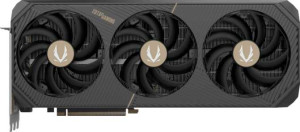
Zotac Gaming GeForce RTX 5070 Ti Solid OC
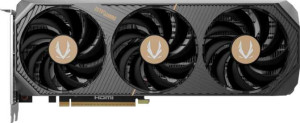
Zotac Gaming GeForce RTX 5070 Ti Solid SFF

Zotac Gaming GeForce RTX 5070 Ti Solid OC Zotac Gaming GeForce RTX 5070 Ti Solid SFF

Overview

When choosing between the Zotac Gaming GeForce RTX 5070 Ti Solid OC and the Zotac Gaming GeForce RTX 5070 Ti Solid SFF, buyers are faced with two cards built on the same Blackwell foundation yet targeting different priorities. Both share identical memory configurations, feature sets, and port layouts, making the key battlegrounds peak clock speeds, raw computational throughput, and physical dimensions. Read on to see how these two cards stack up across every specification.

Common Features

  • Both products share the same base GPU clock speed of 2295 MHz.
  • Both products have a GPU memory speed of 1750 MHz.
  • Both products feature 8960 shading units.
  • Both products include 280 texture mapping units (TMUs).
  • Both products have 96 render output units (ROPs).
  • Double Precision Floating Point (DPFP) is supported on both products.
  • Both products have an effective memory speed of 28000 MHz.
  • Both products offer a maximum memory bandwidth of 896 GB/s.
  • Both products are equipped with 16GB of VRAM.
  • Both products use GDDR7 memory.
  • Both products feature a 256-bit memory bus width.
  • ECC memory is supported on both products.
  • Both products support DirectX 12 Ultimate.
  • Both products support OpenGL version 4.6.
  • Both products support OpenCL version 3.
  • Multi-display technology is supported on both products.
  • Ray tracing is supported on both products.
  • 3D support is available on both products.
  • DLSS is supported on both products.
  • XeSS (XMX) support is not available on either product.
  • Both products have one HDMI 2.1b output.
  • Both products include three DisplayPort outputs.
  • Neither product features a USB-C port.
  • Neither product features a DVI output.
  • Neither product features a mini DisplayPort output.
  • Both products are built on the Blackwell GPU architecture.
  • Both products have a Thermal Design Power (TDP) of 300W.
  • Both products use PCIe version 5.
  • Both products are manufactured on a 5 nm semiconductor process.
  • Both products contain 45600 million transistors.
  • Air-water cooling is not present on either product.

Main Differences

  • GPU turbo clock speed is 2482 MHz on Zotac Gaming GeForce RTX 5070 Ti Solid OC and 2452 MHz on Zotac Gaming GeForce RTX 5070 Ti Solid SFF.
  • Pixel rate is 238.3 GPixel/s on Zotac Gaming GeForce RTX 5070 Ti Solid OC and 235.4 GPixel/s on Zotac Gaming GeForce RTX 5070 Ti Solid SFF.
  • Floating-point performance is 44.48 TFLOPS on Zotac Gaming GeForce RTX 5070 Ti Solid OC and 43.94 TFLOPS on Zotac Gaming GeForce RTX 5070 Ti Solid SFF.
  • Texture rate is 695 GTexels/s on Zotac Gaming GeForce RTX 5070 Ti Solid OC and 686.6 GTexels/s on Zotac Gaming GeForce RTX 5070 Ti Solid SFF.
  • Width is 329.7 mm on Zotac Gaming GeForce RTX 5070 Ti Solid OC and 304.4 mm on Zotac Gaming GeForce RTX 5070 Ti Solid SFF.
  • Height is 137.8 mm on Zotac Gaming GeForce RTX 5070 Ti Solid OC and 115.8 mm on Zotac Gaming GeForce RTX 5070 Ti Solid SFF.
Specs Comparison
Zotac Gaming GeForce RTX 5070 Ti Solid OC

Zotac Gaming GeForce RTX 5070 Ti Solid OC

Zotac Gaming GeForce RTX 5070 Ti Solid SFF

Zotac Gaming GeForce RTX 5070 Ti Solid SFF

Performance:
GPU clock speed 2295 MHz 2295 MHz
GPU turbo 2482 MHz 2452 MHz
pixel rate 238.3 GPixel/s 235.4 GPixel/s
floating-point performance 44.48 TFLOPS 43.94 TFLOPS
texture rate 695 GTexels/s 686.6 GTexels/s
GPU memory speed 1750 MHz 1750 MHz
shading units 8960 8960
texture mapping units (TMUs) 280 280
render output units (ROPs) 96 96
Has Double Precision Floating Point (DPFP)

At their foundation, the Solid OC and Solid SFF share an identical architecture: the same 8960 shading units, 280 TMUs, 96 ROPs, and a matching base clock of 2295 MHz with memory running at 1750 MHz. This means both cards draw from exactly the same computational DNA, and for most workloads that don't push the GPU to its absolute ceiling, the experience will be virtually indistinguishable.

The only meaningful divergence lies in the GPU turbo clock: the Solid OC boosts to 2482 MHz versus 2452 MHz on the Solid SFF — a 30 MHz gap. That difference cascades directly into every derived throughput metric: the OC edges ahead with 44.48 TFLOPS of floating-point performance versus 43.94 TFLOPS, a pixel rate of 238.3 vs. 235.4 GPixel/s, and a texture rate of 695 vs. 686.6 GTexels/s. In real-world terms, a ~1.2% performance delta is essentially imperceptible in gaming frame rates or rendering times — it falls well within run-to-run variance.

The Solid OC holds a technical edge in this group, but it is marginal by any practical measure. The higher turbo clock is the direct result of a factory overclock, which typically comes at the cost of a larger cooler and higher power draw — trade-offs the compact Solid SFF deliberately avoids. If raw peak throughput is the sole criterion, the OC wins narrowly; but the performance gap is too small to be a decisive factor on its own.

Memory:
effective memory speed 28000 MHz 28000 MHz
maximum memory bandwidth 896 GB/s 896 GB/s
VRAM 16GB 16GB
GDDR version GDDR7 GDDR7
memory bus width 256-bit 256-bit
Supports ECC memory

Memory is the one area where these two cards are in complete lockstep. Both carry 16GB of GDDR7 across a 256-bit bus, delivering a peak bandwidth of 896 GB/s — a figure made possible by GDDR7's high effective clock of 28000 MHz. That bandwidth headroom is substantial: it ensures neither card becomes memory-bottlenecked even in demanding scenarios like 4K textures, ray tracing, or GPU-accelerated creative workloads.

The 256-bit bus width paired with GDDR7 is a particularly important combination. Compared to previous-generation GDDR6X implementations at the same bus width, GDDR7 delivers meaningfully higher throughput per pin — so the 896 GB/s figure here represents a genuine architectural leap, not just a spec sheet number. For AI inference tasks or large asset streaming, that bandwidth translates directly into smoother, more consistent performance.

Both cards also support ECC memory, which is primarily relevant for professional and compute workloads where data integrity is critical. This group is a complete tie — every single memory specification is identical, so memory performance offers no basis for choosing one card over the other.

Features:
DirectX version DirectX 12 Ultimate DirectX 12 Ultimate
OpenGL version 4.6 4.6
OpenCL version 3 3
Supports multi-display technology
supports ray tracing
Supports 3D
supports DLSS
has XeSS (XMX)
AMD SAM / Intel Resizable BAR Intel Resizable BAR Intel Resizable BAR
has LHR
has RGB lighting
supported displays 4 4

Feature parity continues to be the defining story between these two cards. Both support DirectX 12 Ultimate — the current gold standard for gaming APIs — along with ray tracing and DLSS, meaning users get access to hardware-accelerated ray tracing and AI-driven upscaling on either card without compromise. These are not minor checkboxes; DLSS in particular is a significant practical advantage in demanding titles, allowing higher effective resolutions with a much lighter GPU load.

Support for up to 4 simultaneous displays and multi-display technology makes both cards equally capable for productivity-heavy or sim-racing setups. Intel Resizable BAR support is also shared, enabling the CPU to access the full GPU frame buffer at once — a feature that provides modest but real performance gains in compatible titles. Neither card carries LHR restrictions, which is relevant context for compute-adjacent users.

There is no differentiator to be found here — every feature flag is identical across the Solid OC and Solid SFF. This is a complete tie, and feature set alone gives buyers no reason to prefer one over the other.

Ports:
has an HDMI output
HDMI ports 1 1
HDMI version HDMI 2.1b HDMI 2.1b
DisplayPort outputs 3 3
USB-C ports 0 0
DVI outputs 0 0
mini DisplayPort outputs 0 0

Connectivity is identical across both cards: each offers 3 DisplayPort outputs and 1 HDMI 2.1b port, totaling four display outputs — consistent with the four-display limit noted in their feature specs. HDMI 2.1b is the key detail here, as it supports up to 10K resolution, high frame rates at 4K, and Variable Refresh Rate — making it fully capable of driving the latest high-end displays and TVs without any adapter or quality compromise.

The three DisplayPort outputs give users flexible multi-monitor configurations, whether for a triple-screen gaming setup or a mixed productivity and gaming arrangement. The absence of USB-C or mini DisplayPort outputs is worth noting for users with specialized display requirements, though neither card is at a disadvantage relative to the other on this front.

This group is another complete tie — the port layout is a mirror image between the Solid OC and Solid SFF, so display connectivity should play no part in the buying decision.

General info:
GPU architecture Blackwell Blackwell
release date February 2025 March 2025
Thermal Design Power (TDP) 300W 300W
PCI Express (PCIe) version 5 5
semiconductor size 5 nm 5 nm
number of transistors 45600 million 45600 million
Has air-water cooling
width 329.7 mm 304.4 mm
height 137.8 mm 115.8 mm

Underneath their different form factors, the Solid OC and Solid SFF are built on the exact same silicon: Nvidia's Blackwell architecture, fabricated on a 5 nm process with 45.6 billion transistors, running over a PCIe 5.0 interface with a 300W TDP. The shared power envelope is a particularly important detail — it confirms that the SFF's smaller footprint does not come with a reduced power budget, meaning its cooler has to dissipate the same thermal load in a tighter package.

The real story in this group is physical size. The Solid OC measures 329.7 × 137.8 mm, while the Solid SFF comes in noticeably smaller at 304.4 × 115.8 mm — a reduction of roughly 25 mm in length and 22 mm in height. That difference is meaningful: the SFF is purpose-built for compact or small form factor cases where a full-length triple-fan card simply will not fit, opening up build options that the OC cannot accommodate.

For buyers with standard mid- or full-tower cases, this distinction is irrelevant. But for anyone building in a constrained chassis, the Solid SFF holds a clear and practical advantage in this group. The trade-off — managing the same 300W within a smaller cooler — is a thermal engineering challenge, though that impact is better assessed through cooling-specific data rather than the specs provided here.

Comparison Summary & Verdict

After a thorough comparison, both cards deliver the same core experience: identical 16GB GDDR7 memory, a 300W TDP, full DirectX 12 Ultimate and ray tracing support, and the same base clock of 2295 MHz. The distinction lies in the details. The Zotac Gaming GeForce RTX 5070 Ti Solid OC edges ahead with a higher GPU turbo of 2482 MHz, a floating-point performance of 44.48 TFLOPS, and a texture rate of 695 GTexels/s, making it the stronger pick for users who want every last frame. The Zotac Gaming GeForce RTX 5070 Ti Solid SFF, measuring just 304.4 mm wide and 115.8 mm tall, is the clear choice for compact or small-form-factor builds where physical size is a hard constraint. Choose based on your chassis, not just your ambition.

Zotac Gaming GeForce RTX 5070 Ti Solid OC
Buy Zotac Gaming GeForce RTX 5070 Ti Solid OC if...

Buy the Zotac Gaming GeForce RTX 5070 Ti Solid OC if you want the highest possible GPU turbo clock, floating-point performance, and texture rate and have a standard-size case to accommodate its larger dimensions.

Zotac Gaming GeForce RTX 5070 Ti Solid SFF
Buy Zotac Gaming GeForce RTX 5070 Ti Solid SFF if...

Buy the Zotac Gaming GeForce RTX 5070 Ti Solid SFF if you are building in a compact or small-form-factor case, as its significantly smaller width of 304.4 mm and height of 115.8 mm make it the only viable choice for tighter builds.