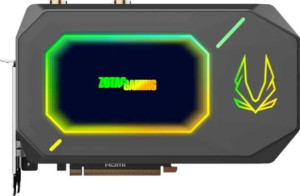
Zotac Gaming GeForce RTX 5090 ArcticStorm AIO
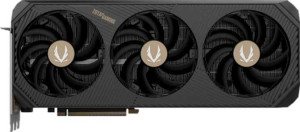
Zotac Gaming GeForce RTX 5090 Solid

Zotac Gaming GeForce RTX 5090 ArcticStorm AIO Zotac Gaming GeForce RTX 5090 Solid

Overview

Choosing between the Zotac Gaming GeForce RTX 5090 ArcticStorm AIO and the Zotac Gaming GeForce RTX 5090 Solid is not straightforward, as both cards are rooted in the same Blackwell architecture and share identical memory and feature configurations. The real battlegrounds emerge when examining GPU turbo clock speeds, raw compute throughput, cooling solutions, and physical dimensions, all of which can meaningfully influence the right choice for your specific build.

Common Features

  • Both products have a base GPU clock speed of 2017 MHz.
  • Both products have a GPU memory speed of 1750 MHz.
  • Both products have 21760 shading units.
  • Both products have 680 texture mapping units (TMUs).
  • Both products have 176 render output units (ROPs).
  • Double Precision Floating Point (DPFP) is supported on both products.
  • Both products have an effective memory speed of 28000 MHz.
  • Both products offer a maximum memory bandwidth of 1790 GB/s.
  • Both products feature 32GB of VRAM.
  • Both products use GDDR7 memory.
  • Both products have a 512-bit memory bus width.
  • ECC memory is supported on both products.
  • Both products support DirectX 12 Ultimate.
  • Both products support OpenGL version 4.6.
  • Both products support OpenCL version 3.
  • Multi-display technology is supported on both products.
  • Ray tracing is supported on both products.
  • 3D support is available on both products.
  • DLSS is supported on both products.
  • XeSS (XMX) is not available on either product.
  • Both products include one HDMI 2.1b output port.
  • Both products have three DisplayPort outputs.
  • Neither product has USB-C, DVI, or mini DisplayPort outputs.
  • Both products are based on the Blackwell GPU architecture.
  • Both products have a Thermal Design Power (TDP) of 575W.
  • Both products use PCIe version 5.
  • Both products are manufactured on a 5 nm semiconductor process.
  • Both products contain 92200 million transistors.

Main Differences

  • GPU turbo clock speed is 2437 MHz on Zotac Gaming GeForce RTX 5090 ArcticStorm AIO and 2407 MHz on Zotac Gaming GeForce RTX 5090 Solid.
  • Pixel rate is 428.9 GPixel/s on Zotac Gaming GeForce RTX 5090 ArcticStorm AIO and 423.6 GPixel/s on Zotac Gaming GeForce RTX 5090 Solid.
  • Floating-point performance is 106.1 TFLOPS on Zotac Gaming GeForce RTX 5090 ArcticStorm AIO and 104.8 TFLOPS on Zotac Gaming GeForce RTX 5090 Solid.
  • Texture rate is 1657.2 GTexels/s on Zotac Gaming GeForce RTX 5090 ArcticStorm AIO and 1637 GTexels/s on Zotac Gaming GeForce RTX 5090 Solid.
  • Air-water cooling is present on Zotac Gaming GeForce RTX 5090 ArcticStorm AIO but not available on Zotac Gaming GeForce RTX 5090 Solid.
  • Width is 251.6 mm on Zotac Gaming GeForce RTX 5090 ArcticStorm AIO and 329.7 mm on Zotac Gaming GeForce RTX 5090 Solid.
  • Height is 160.1 mm on Zotac Gaming GeForce RTX 5090 ArcticStorm AIO and 137.8 mm on Zotac Gaming GeForce RTX 5090 Solid.
Specs Comparison
Zotac Gaming GeForce RTX 5090 ArcticStorm AIO

Zotac Gaming GeForce RTX 5090 ArcticStorm AIO

Zotac Gaming GeForce RTX 5090 Solid

Zotac Gaming GeForce RTX 5090 Solid

Performance:
GPU clock speed 2017 MHz 2017 MHz
GPU turbo 2437 MHz 2407 MHz
pixel rate 428.9 GPixel/s 423.6 GPixel/s
floating-point performance 106.1 TFLOPS 104.8 TFLOPS
texture rate 1657.2 GTexels/s 1637 GTexels/s
GPU memory speed 1750 MHz 1750 MHz
shading units 21760 21760
texture mapping units (TMUs) 680 680
render output units (ROPs) 176 176
Has Double Precision Floating Point (DPFP)

Both the ArcticStorm AIO and the Solid share an identical foundation: the same base GPU clock of 2017 MHz, the same 21,760 shading units, 680 TMUs, 176 ROPs, and identical memory speeds of 1750 MHz. This means the two cards are built on exactly the same silicon configuration, and under light or thermally unconstrained workloads, they will behave identically.

The only performance differentiator emerges at the boost clock. The ArcticStorm AIO reaches a GPU turbo of 2437 MHz versus the Solid's 2407 MHz — a 30 MHz advantage that cascades into slightly higher derived metrics: 106.1 TFLOPS of floating-point throughput versus 104.8 TFLOPS, and a texture rate of 1657.2 GTexels/s against 1637 GTexels/s. In practice, this ~1.2% uplift is unlikely to produce frame-rate differences a user can perceive in isolation, but it does reflect a real, sustained capability difference.

The key insight is why that boost clock gap exists: the ArcticStorm's integrated all-in-one liquid cooler keeps the GPU cooler under sustained load, allowing it to hold higher clock states longer before thermal throttling intervenes. The Solid, relying on air cooling, reaches a slightly lower peak. On raw numbers alone, the ArcticStorm AIO holds a narrow but consistent performance edge across every throughput metric in this group, and that edge is likely to widen further in extended, thermally demanding workloads.

Memory:
effective memory speed 28000 MHz 28000 MHz
maximum memory bandwidth 1790 GB/s 1790 GB/s
VRAM 32GB 32GB
GDDR version GDDR7 GDDR7
memory bus width 512-bit 512-bit
Supports ECC memory

The memory specifications of the Zotac Gaming GeForce RTX 5090 ArcticStorm AIO and the Zotac Gaming GeForce RTX 5090 Solid are identical across all categories. Both products feature an effective memory speed of 28000 MHz, maximum memory bandwidth of 1790 GB/s, and 32GB of VRAM. Additionally, both use the GDDR7 memory type and have a 512-bit memory bus width. Both models also support ECC memory (Error Correcting Code).

With these identical memory specifications, there is no distinction between the two products in terms of memory performance or configuration.

Features:
DirectX version DirectX 12 Ultimate DirectX 12 Ultimate
OpenGL version 4.6 4.6
OpenCL version 3 3
Supports multi-display technology
supports ray tracing
Supports 3D
supports DLSS
has XeSS (XMX)
AMD SAM / Intel Resizable BAR Intel Resizable BAR Intel Resizable BAR
has LHR
has RGB lighting
supported displays 4 4

The features of the Zotac Gaming GeForce RTX 5090 ArcticStorm AIO and the Zotac Gaming GeForce RTX 5090 Solid are virtually identical. Both products support DirectX 12 Ultimate, OpenGL 4.6, and OpenCL 3. They are both capable of multi-display technology, ray tracing, and 3D, while also supporting DLSS. Neither product has XeSS (XMX) support, and both have Intel Resizable BAR (AMD SAM is not mentioned for either).

Both the ArcticStorm AIO and the Solid models do not feature LHR (Lite Hash Rate) and come with RGB lighting. Additionally, both support up to 4 displays, ensuring a similar level of visual and connectivity support.

With all features matching, there are no differences between these two models in terms of supported technologies and capabilities.

Ports:
has an HDMI output
HDMI ports 1 1
HDMI version HDMI 2.1b HDMI 2.1b
DisplayPort outputs 3 3
USB-C ports 0 0
DVI outputs 0 0
mini DisplayPort outputs 0 0

The port configurations for the Zotac Gaming GeForce RTX 5090 ArcticStorm AIO and the Zotac Gaming GeForce RTX 5090 Solid are identical. Both products feature one HDMI output, with an HDMI version of 2.1b. They each have three DisplayPort outputs, zero USB-C ports, zero DVI outputs, and zero mini DisplayPort outputs.

With matching port layouts, there is no distinction in terms of connectivity between these two models.

General info:
GPU architecture Blackwell Blackwell
release date July 2025 January 2025
Thermal Design Power (TDP) 575W 575W
PCI Express (PCIe) version 5 5
semiconductor size 5 nm 5 nm
number of transistors 92200 million 92200 million
Has air-water cooling
width 251.6 mm 329.7 mm
height 160.1 mm 137.8 mm

The general specifications of the Zotac Gaming GeForce RTX 5090 ArcticStorm AIO and the Zotac Gaming GeForce RTX 5090 Solid are very similar, with a few differences. Both products feature the same GPU architecture (Blackwell), thermal design power (TDP) of 575W, PCI Express (PCIe) version 5, a semiconductor size of 5 nm, and 92,200 million transistors.

However, the ArcticStorm AIO has air-water cooling, while the Solid model does not include this feature. In terms of size, the ArcticStorm AIO is 251.6 mm wide and 160.1 mm high, while the Solid is larger, measuring 329.7 mm in width and 137.8 mm in height.

Despite these differences in cooling and dimensions, the core technical specifications for both products align closely.

Comparison Summary & Verdict

Both the Zotac Gaming GeForce RTX 5090 ArcticStorm AIO and the Zotac Gaming GeForce RTX 5090 Solid are grounded in the same Blackwell architecture, deliver identical 32GB GDDR7 memory at 1790 GB/s bandwidth, share a 575W TDP, and offer the same ports and software feature support. Where they diverge is meaningful: the ArcticStorm AIO achieves a higher GPU turbo of 2437 MHz alongside 106.1 TFLOPS of floating-point performance and includes an integrated air-water cooling system, making it the stronger choice for enthusiasts who prioritize peak sustained clocks and advanced thermal management within a narrower 251.6 mm card width. The Zotac Gaming GeForce RTX 5090 Solid delivers a slightly lower boost clock of 2407 MHz and 104.8 TFLOPS without liquid cooling, measuring 329.7 mm wide and a lower 137.8 mm tall, which may better accommodate traditional air-cooled chassis layouts.

Zotac Gaming GeForce RTX 5090 ArcticStorm AIO
Buy Zotac Gaming GeForce RTX 5090 ArcticStorm AIO if...

Choose the Zotac Gaming GeForce RTX 5090 ArcticStorm AIO if you want the highest boost clocks, superior floating-point performance, and an integrated air-water cooling system in a narrower 251.6 mm-wide card.

Zotac Gaming GeForce RTX 5090 Solid
Buy Zotac Gaming GeForce RTX 5090 Solid if...

Choose the Zotac Gaming GeForce RTX 5090 Solid if you prefer a conventional air-cooled setup and need a lower-profile card at 137.8 mm tall to fit your chassis.