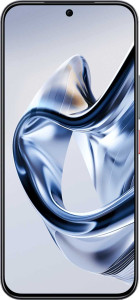
ZTE Nubia Air
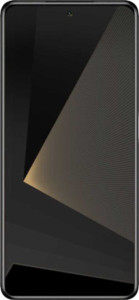
ZTE Nubia Neo 3 GT

ZTE Nubia Air ZTE Nubia Neo 3 GT

Overview

When choosing between the ZTE Nubia Air and the ZTE Nubia Neo 3 GT, buyers will find two Android 15 smartphones that share a solid OLED foundation yet diverge sharply in areas that matter most to everyday users. From battery capacity and charging speed to display sharpness and raw processing power, each device takes a different approach to delivering value. Read on as we break down every key specification to help you decide which one truly fits your needs.

Common Features

  • Both phones feature an OLED/AMOLED display with a 120Hz refresh rate.
  • Always-On Display is supported on both devices.
  • HDR10 support is not available on either product.
  • HDR10+ support is not available on either product.
  • Dolby Vision support is not available on either product.
  • Neither phone has a secondary screen.
  • Both devices have a touchscreen display.
  • Both phones offer 256GB of internal storage.
  • Both devices use a Unisoc chipset built on a 6nm semiconductor process.
  • RAM speed is 2133 MHz on both phones.
  • Both phones support 64-bit processing and use big.LITTLE technology.
  • Both CPUs have 8 threads.
  • The main camera on both phones is 50 & 2 MP with a dual-lens setup.
  • Optical image stabilization is not available on either device.
  • Main camera video recording is limited to 1080p at 30fps on both phones.
  • Both phones run Android 15 and support theme customization.
  • App tracking blocking is available on both devices.
  • Cross-site tracking blocking is not available on either phone.
  • Neither phone supports wireless charging, but both support fast charging.
  • Both devices have a non-removable rechargeable battery with a battery level indicator.
  • A 3.5mm audio jack is not present on either phone.
  • Bluetooth aptX, LDAC, aptX HD, aptX Adaptive, aptX Lossless, and FM radio are absent on both devices.
  • Both phones support 5G, dual SIM, NFC, USB Type-C, and have a fingerprint scanner.
  • Neither phone has an external memory slot.
  • Emergency SOS via satellite and crash detection are not available on either device.
  • Neither phone has a rugged build or a foldable form factor.
  • Neither phone has a curved, e-paper, or sapphire glass display.
  • Both phones include a video light.

Main Differences

  • Screen size is 6.78″ on the ZTE Nubia Air and 6.8″ on the ZTE Nubia Neo 3 GT.
  • Pixel density is 440 ppi on the ZTE Nubia Air and 386 ppi on the ZTE Nubia Neo 3 GT.
  • Resolution is 1224 x 2720 px on the ZTE Nubia Air and 1080 x 2392 px on the ZTE Nubia Neo 3 GT.
  • Damage-resistant glass is present on the ZTE Nubia Air but not available on the ZTE Nubia Neo 3 GT.
  • RAM is 8GB on the ZTE Nubia Air and 12GB on the ZTE Nubia Neo 3 GT.
  • The chipset is the Unisoc T8300 on the ZTE Nubia Air and the Unisoc T9100 on the ZTE Nubia Neo 3 GT.
  • The GPU is the Mali-G57 MP2 on the ZTE Nubia Air and the Mali G57 MP4 on the ZTE Nubia Neo 3 GT.
  • CPU speed is 2 x 2.2 & 6 x 2 GHz on the ZTE Nubia Air and 1 x 2.7 & 3 x 2.3 & 4 x 2.1 GHz on the ZTE Nubia Neo 3 GT.
  • Front camera resolution is 20MP on the ZTE Nubia Air and 16MP on the ZTE Nubia Neo 3 GT.
  • Battery capacity is 5000 mAh on the ZTE Nubia Air and 6000 mAh on the ZTE Nubia Neo 3 GT.
  • Charging speed is 33W on the ZTE Nubia Air and 80W on the ZTE Nubia Neo 3 GT.
  • Stereo speakers are not present on the ZTE Nubia Air but are available on the ZTE Nubia Neo 3 GT.
  • Wi-Fi support goes up to Wi-Fi 5 (802.11ac) on the ZTE Nubia Air, while the ZTE Nubia Neo 3 GT also adds Wi-Fi 6 (802.11ax).
  • Bluetooth version is 5.4 on the ZTE Nubia Air and 5.2 on the ZTE Nubia Neo 3 GT.
Specs Comparison
ZTE Nubia Air

ZTE Nubia Air

ZTE Nubia Neo 3 GT

ZTE Nubia Neo 3 GT

Design:
has a rugged build
can be folded

In terms of design fundamentals, the ZTE Nubia Air and the ZTE Nubia Neo 3 GT are essentially identical on paper. Neither device features a rugged build, meaning neither is engineered for drops, dust, or water exposure beyond typical consumer-grade expectations. Similarly, neither supports a foldable form factor, placing both firmly in the conventional candy-bar smartphone category.

With no differentiating design specs between the two, this group results in a complete tie. Users prioritizing durability or a premium foldable experience will need to look elsewhere in either lineup, as both products share the same baseline design profile.

Display:
Display type OLED/AMOLED OLED/AMOLED
screen size 6.78" 6.8"
pixel density 440 ppi 386 ppi
resolution 1224 x 2720 px 1080 x 2392 px
refresh rate 120Hz 120Hz
has branded damage-resistant glass
supports HDR10
supports HDR10+
Always-On Display
supports Dolby Vision
Has a secondary screen
has a touch screen

Both phones sport an OLED/AMOLED panel at nearly identical screen sizes (6.78″ vs 6.8″) and share a 120Hz refresh rate along with an Always-On Display — so for everyday fluidity and panel technology, they are on equal footing. The meaningful split, however, comes down to sharpness and glass protection.

The ZTE Nubia Air drives a 1224 x 2720 resolution at 440 ppi, compared to the Neo 3 GT's 1080 x 2392 at 386 ppi. That 54 ppi gap is perceptible: fine text, detailed imagery, and UI elements will appear noticeably crisper on the Nubia Air, particularly for users who read a lot or watch high-resolution content up close. Additionally, the Nubia Air ships with branded damage-resistant glass — a protection layer the Neo 3 GT lacks entirely — which adds meaningful real-world durability against scratches and accidental drops.

The Nubia Air holds a clear edge in this category. Its sharper display and added screen protection make it the stronger choice for users who prioritize visual fidelity and long-term durability, while the Neo 3 GT offers nothing in this group to offset those gaps.

Performance:
internal storage 256GB 256GB
RAM 8GB 12GB
Chipset (SoC) name Unisoc T8300 Unisoc T9100
GPU name Mali-G57 MP2 Mali G57 MP4
CPU speed 2 x 2.2 & 6 x 2 GHz 1 x 2.7 & 3 x 2.3 & 4 x 2.1 GHz
Has integrated LTE
RAM speed 2133 MHz 2133 MHz
semiconductor size 6 nm 6 nm
Supports 64-bit
Has integrated graphics
Uses big.LITTLE technology
CPU threads 8 threads 8 threads
Has TrustZone

Storage is a non-issue here — both devices offer 256GB of internal storage and are built on the same 6nm manufacturing process. The similarities largely end there, though. Under the hood, the ZTE Nubia Neo 3 GT runs the Unisoc T9100, a meaningfully more capable chip than the Unisoc T8300 found in the Nubia Air. The T9100's CPU configuration — featuring a high-performance core clocked at 2.7 GHz alongside three mid-cores at 2.3 GHz — gives it a higher peak and a stronger sustained-performance profile compared to the T8300's top speed of 2.2 GHz.

The GPU gap reinforces this advantage. The Neo 3 GT's Mali G57 MP4 doubles the shader core count of the Nubia Air's Mali-G57 MP2, which translates directly to better graphics throughput — smoother frame rates in demanding games and faster rendering in GPU-accelerated tasks. Paired with 12GB of RAM versus the Air's 8GB, the Neo 3 GT also handles aggressive multitasking more comfortably, keeping more apps alive in the background without reloading.

The Neo 3 GT takes a decisive edge in performance. Across CPU peak speed, GPU core count, and RAM capacity, it outclasses the Nubia Air in every dimension that matters for demanding workloads — making it the stronger pick for users who game, multitask heavily, or simply want more headroom from their device.

Cameras:
megapixels (main camera) 50 & 2 MP 50 & 2 MP
Has a dual-lens (or multi-lens) main camera
megapixels (front camera) 20MP 16MP
has built-in optical image stabilization
video recording (main camera) 1080 x 30 fps 1080 x 30 fps
Has a dual-tone LED flash
number of flash LEDs 1 1
has a BSI sensor
has a CMOS sensor
has continuous autofocus when recording movies
Has phase-detection autofocus for photos
supports slow-motion video recording
has a built-in HDR mode
has manual exposure
has a flash
optical zoom 0x 0x
has manual ISO
has a serial shot mode
has manual focus
has a front camera
Has laser autofocus
Shoots 360° panorama
has manual white balance
shoots raw
has touch autofocus
has manual shutter speed
can create panoramas in-camera
Has timelapse function
Has a front-facing LED flash
has a dual-lens (or multi-lens) front camera
supports HDR10 recording
supports Dolby Vision recording
has a front-facing camera under the display
Has a RGB LED flash
has 3D photo/video recording capabilities

The camera systems on these two devices are remarkably similar. Both feature a 50 MP + 2 MP dual rear camera, cap video recording at 1080p 30fps, and share the same feature set — phase-detection autofocus, continuous autofocus during recording, slow-motion, HDR mode, panorama, timelapse, and a solid range of manual controls. Neither offers optical image stabilization or optical zoom, which limits their versatility in low-light or distant shooting scenarios equally.

The only measurable difference is the selfie camera: the ZTE Nubia Air edges ahead with a 20MP front sensor versus the Neo 3 GT's 16MP. In practice, that gap can yield slightly more detailed self-portraits and marginally better cropping flexibility, though real-world selfie quality depends heavily on sensor size and processing — neither of which is specified here.

This category is effectively a near-tie, with a narrow edge to the Nubia Air solely on front camera resolution. Users who prioritize selfies may appreciate that small advantage, but for rear camera performance and video capabilities, both phones are identical on paper.

Operating system:
Android version Android 15 Android 15
has clipboard warnings
has location privacy options
has camera/microphone privacy options
has Mail Privacy Protection
has theme customization
can block app tracking
blocks cross-site tracking
has on-device machine learning
has notification permissions
has media picker
Can play games while they download
has dark mode
has Wi-Fi password sharing
has battery health check
has an extra dim mode
has focus modes
has dynamic theming
can offload apps
Has customizable notifications
has Live Text
has full-page screenshots
supports split screen
gets direct OS updates
has PiP
Can be used as a PC
Has sharing intents
has a child lock
Supports widgets
Is free and open source
Has offline voice recognition
has voice commands
Tracks the current position of a mobile device
is a multi-user system
has Quick Start

When it comes to software, these two devices are completely interchangeable on paper. Both ship with Android 15 and carry an identical feature set across the board — from privacy controls like camera/microphone permissions and app tracking blockers, to usability perks like split-screen, Picture-in-Picture, dynamic theming, and offline voice recognition. Neither receives direct OS updates, and neither supports Wi-Fi password sharing or focus modes.

This is a complete tie with no differentiating factor between the two. A buyer choosing between the Nubia Air and the Neo 3 GT will have an identical software experience on day one, and the same update outlook going forward. The OS category adds nothing to tip the decision either way.

Battery:
battery power 5000 mAh 6000 mAh
has wireless charging
Supports fast charging
charging speed 33W 80W
has a removable battery
has a battery level indicator
has a rechargeable battery

Battery is one of the clearest differentiators in this comparison. The ZTE Nubia Neo 3 GT packs a 6000 mAh cell versus the Nubia Air's 5000 mAh — a 20% larger reserve that, all else being equal, translates to meaningfully more screen-on time before reaching for a charger. For heavy users or those who travel without easy access to an outlet, that extra capacity is a tangible daily advantage.

The charging speed gap is even more striking. The Neo 3 GT supports 80W fast charging compared to the Nubia Air's 33W — meaning the Neo 3 GT can replenish its larger battery significantly faster in absolute terms. Users who rely on quick top-ups during short breaks will feel this difference acutely. Neither device offers wireless charging, so both require a wired connection regardless.

The Neo 3 GT wins this category decisively. It holds more charge and refills faster — a combination that makes it the stronger choice for anyone who places battery endurance and charging convenience high on their priority list.

Audio:
has a socket for a 3.5 mm audio jack
has stereo speakers
has aptX
has LDAC
has aptX HD
has aptX Adaptive
has aptX Lossless
Has a radio

Audio hardware is sparse on both devices, but one distinction stands out. The ZTE Nubia Neo 3 GT features stereo speakers, while the Nubia Air makes do with a mono setup. For media consumption — streaming video, gaming, or casual music playback — stereo speakers create a noticeably wider, more immersive soundstage. Mono output, by contrast, collapses everything to a single channel, which sounds noticeably flat when watching content or playing games that mix directional audio.

Everything else in this category is a wash. Neither phone includes a 3.5mm headphone jack, so wired audio requires an adapter or USB-C earphones. Neither supports high-resolution Bluetooth codecs like aptX or LDAC, limiting wireless audio quality to standard levels on both. There is no FM radio on either device.

The Neo 3 GT takes a clear edge here on the strength of its stereo speakers alone — a feature that has a real, everyday impact for anyone who regularly consumes media through their phone's built-in speakers.

Connectivity & Features:
release date September 2025 March 2025
has 5G support
Wi-Fi version Wi-Fi 4 (802.11n), Wi-Fi 5 (802.11ac) Wi-Fi 4 (802.11n), Wi-Fi 5 (802.11ac), Wi-Fi 6 (802.11ax)
SIM cards 2 SIM 2 SIM
Bluetooth version 5.4 5.2
has an external memory slot
Has USB Type-C
has NFC
Has a fingerprint scanner
has emergency SOS via satellite
has crash detection
is DLNA-certified
has a gyroscope
supports ANT+
Has a heart rate monitor
has GPS
has a compass
supports Wi-Fi
Has an infrared sensor
has an accelerometer
has a cellular module
Has a barometer
has an HDMI output
Uses 3D facial recognition
Has an iris scanner
Stylus included
supports Galileo
Has motion tracking
Has optical tracking
Has a built-in projector

Across the bulk of connectivity features — 5G, dual SIM, NFC, USB Type-C, fingerprint scanner, GPS, gyroscope, and accelerometer — these two phones are identical. For most users, the day-to-day connectivity experience will feel indistinguishable. The interesting story lies in the two specs where they actually diverge.

The ZTE Nubia Neo 3 GT adds Wi-Fi 6 (802.11ax) to its wireless stack, a standard the Nubia Air lacks. Wi-Fi 6 delivers higher throughput, lower latency, and better performance in congested environments — a meaningful upgrade for users on modern routers in busy homes or offices. The Nubia Air counters with Bluetooth 5.4 versus the Neo 3 GT's 5.2, a newer version that brings improvements to connection reliability and energy efficiency, though the practical gap between these two versions is modest for typical wireless audio and peripheral use.

This category results in a slight but real edge for the Neo 3 GT. The addition of Wi-Fi 6 is the more impactful upgrade of the two differentiators — faster and more stable wireless networking benefits a wider range of everyday tasks — while the Nubia Air's Bluetooth 5.4 advantage is real but unlikely to be felt in most usage scenarios.

Miscellaneous:
has a video light
Has sapphire glass display
Has a curved display
Has an e-paper display

The miscellaneous spec group offers no differentiation whatsoever between these two devices. Both include a video light, and neither features sapphire glass, a curved display, or an e-paper panel — the full set of specs here lands identically for the ZTE Nubia Air and the ZTE Nubia Neo 3 GT.

This is a complete tie. Nothing in this category influences the buying decision in either direction, and users can set these specs aside entirely when weighing one device against the other.

Comparison Summary & Verdict

After a thorough side-by-side review, both phones prove to be capable mid-range contenders, but they cater to different priorities. The ZTE Nubia Air stands out with its sharper 440 ppi display, damage-resistant glass, a higher-resolution 20MP front camera, and Bluetooth 5.4 — making it the stronger pick for users who value screen clarity and selfie quality. The ZTE Nubia Neo 3 GT, on the other hand, pulls ahead with a 6000 mAh battery, blazing 80W fast charging, 12GB of RAM, a more powerful Unisoc T9100 chipset, stereo speakers, and Wi-Fi 6 support — a combination that suits power users and media enthusiasts who demand longer endurance and a richer multimedia experience.

ZTE Nubia Air
Buy ZTE Nubia Air if...

Buy the ZTE Nubia Air if you prioritize a sharper, higher-resolution display with damage-resistant glass and a better front camera for selfies.

ZTE Nubia Neo 3 GT
Buy ZTE Nubia Neo 3 GT if...

Buy the ZTE Nubia Neo 3 GT if you want longer battery life, significantly faster 80W charging, more RAM, a stronger chipset, stereo speakers, and Wi-Fi 6 support.