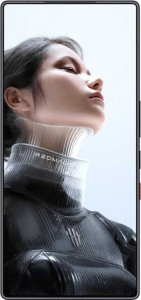
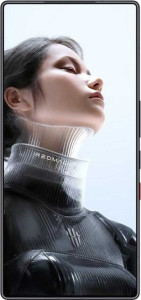
ZTE Nubia Red Magic 11 Pro
ZTE Nubia Red Magic 11 Pro (China)

ZTE Nubia Red Magic 11 Pro ZTE Nubia Red Magic 11 Pro (China)

Overview

Welcome to our in-depth comparison of the ZTE Nubia Red Magic 11 Pro and the ZTE Nubia Red Magic 11 Pro (China). These two gaming-focused flagships share a striking amount of DNA, from their Snapdragon 8 Elite Gen 5 chipset to their 6.85″ 144Hz OLED displays, yet key distinctions set them apart. In this head-to-head, we examine the storage and memory configurations, battery capacity, and display protection to help you decide which variant best suits your needs.

Common Features

  • Both phones are water resistant with an IPX8 rating up to 1.5 m depth.
  • Both devices weigh 230 g and measure 8.9 mm in thickness.
  • Both phones feature a 6.85″ OLED/AMOLED display with a 431 ppi pixel density and 1216 x 2688 px resolution.
  • Both devices support a 144Hz refresh rate.
  • HDR10 support is not available on either product.
  • HDR10+ support is not available on either product.
  • Always-On Display is available on both devices.
  • Both phones are powered by the Qualcomm Snapdragon 8 Elite Gen 5 chipset with an Adreno 830 GPU.
  • Both devices share the same CPU speed of 2 x 4.6 & 6 x 3.62 GHz.
  • Both phones achieve a Geekbench 6 multi-core score of 10059 and a single-core score of 3234.
  • Both devices feature a triple rear camera system with 50 & 50 & 2 MP sensors and optical image stabilization.
  • Both phones support 4K video recording at 30 fps.
  • Both devices run Android 16 and support theme customization and app tracking blocking.
  • Both phones support wireless charging and fast charging at 80W.
  • A removable battery is not available on either device.
  • Both devices include a 3.5 mm audio jack and stereo speakers.
  • Both phones support 5G, Wi-Fi 7, Bluetooth 5.4, NFC, and USB Type-C 3.2.
  • Both devices support dual SIM and do not have an external memory slot.
  • A curved display is not featured on either device.
  • Both phones include a video light.

Main Differences

  • Internal storage is 1024GB on ZTE Nubia Red Magic 11 Pro and 512GB on ZTE Nubia Red Magic 11 Pro (China).
  • RAM is 24GB on ZTE Nubia Red Magic 11 Pro and 16GB on ZTE Nubia Red Magic 11 Pro (China).
  • Battery capacity is 7500 mAh on ZTE Nubia Red Magic 11 Pro and 8000 mAh on ZTE Nubia Red Magic 11 Pro (China).
  • Branded damage-resistant glass is present on ZTE Nubia Red Magic 11 Pro but not available on ZTE Nubia Red Magic 11 Pro (China).
Specs Comparison
ZTE Nubia Red Magic 11 Pro

ZTE Nubia Red Magic 11 Pro

ZTE Nubia Red Magic 11 Pro (China)

ZTE Nubia Red Magic 11 Pro (China)

Design:
water resistance Water resistant Water resistant
weight 230 g 230 g
thickness 8.9 mm 8.9 mm
width 76.5 mm 76.5 mm
height 163.8 mm 163.8 mm
volume 111.52323 cm³ 111.52323 cm³
Ingress Protection (IP) rating IPX8 IPX8
waterproof depth rating 1.5 m 1.5 m
has a rugged build
can be folded

When comparing the design specs of the ZTE Nubia Red Magic 11 Pro and the Red Magic 11 Pro (China), the two devices are completely identical across every measured dimension. Both share the same 163.8 × 76.5 × 8.9 mm footprint, the same 230 g weight, and an identical volume of 111.52 cm³. In practical terms, anyone picking up either device would find no perceptible difference in hand feel, pocketability, or overall bulk.

On the durability front, both models carry an IPX8 rating, meaning they can withstand submersion in water up to 1.5 meters deep. This is a meaningful protection level for everyday accidents — drops in the sink or rain exposure — though neither device is marketed as rugged or foldable, which aligns with their premium gaming phone positioning rather than an outdoor or form-factor-innovation focus.

This group is a clear tie: there is not a single design spec that differentiates the global variant from the China variant. Buyers choosing between these two models on design grounds alone have no basis for preference — the decision should rest entirely on other spec groups such as connectivity, software, or regional availability.

Display:
Display type OLED/AMOLED OLED/AMOLED
screen size 6.85" 6.85"
pixel density 431 ppi 431 ppi
resolution 1216 x 2688 px 1216 x 2688 px
refresh rate 144Hz 144Hz
has branded damage-resistant glass
supports HDR10
supports HDR10+
Always-On Display
supports Dolby Vision
Has a secondary screen
has a touch screen

Both the ZTE Nubia Red Magic 11 Pro and the Red Magic 11 Pro (China) pack the same 6.85-inch OLED/AMOLED panel running at 144Hz with a sharp 431 ppi pixel density. The high refresh rate is particularly relevant here given the gaming-focused nature of these devices — smoother frame rendering translates directly to a more responsive experience in fast-paced titles. The Always-On Display feature is present on both, adding a layer of daily convenience without meaningful battery trade-offs typical of OLED panels.

The sole differentiator in this group is branded damage-resistant glass, which the global Red Magic 11 Pro carries and the China variant does not. In real-world use, this matters: certified scratch- and impact-resistant glass provides a measurable layer of protection against everyday wear — keys in a pocket, accidental drops onto hard surfaces — that untreated glass simply cannot match. It is a quiet but genuine long-term durability advantage.

The global Red Magic 11 Pro holds a narrow but clear edge in this group solely due to its branded protective glass. For users who prioritize screen longevity and play without a screen protector, this distinction is worth factoring into the decision. Everything else — panel technology, resolution, refresh rate, and HDR support — is identical between the two.

Performance:
internal storage 1024GB 512GB
RAM 24GB 16GB
Chipset (SoC) name Qualcomm Snapdragon 8 Elite Gen 5 Qualcomm Snapdragon 8 Elite Gen 5
GPU name Adreno 830 Adreno 830
CPU speed 2 x 4.6 & 6 x 3.62 GHz 2 x 4.6 & 6 x 3.62 GHz
Geekbench 6 result (multi) 10059 10059
Geekbench 6 result (single) 3234 3234
GPU clock speed 1200 MHz 1200 MHz
Has integrated LTE
RAM speed 5300 MHz 5300 MHz
semiconductor size 3 nm 3 nm
Supports 64-bit
DirectX version DirectX 12 DirectX 12
Has integrated graphics
OpenGL version 3.2 3.2
OpenGL ES version 3.2 3.2
Uses big.LITTLE technology
CPU threads 8 threads 8 threads
Uses HMP
Has TrustZone
maximum memory bandwidth 85.1 GB/s 85.1 GB/s
OpenCL version 3 3
memory channels 2 2
L2 cache 12 MB 12 MB
Supports ECC memory
L1 cache 192 KB 192 KB
maximum memory amount 24GB 24GB
uses multithreading
Thermal Design Power (TDP) 8.2W 8.2W
DDR memory version 5 5
shading units 1536 1536
supported displays 2 2
L3 cache 8 MB 8 MB

At the core, both devices are powered by the same Qualcomm Snapdragon 8 Elite Gen 5 on a 3 nm process, paired with the Adreno 830 GPU running at 1200 MHz. The benchmark results reflect this parity exactly — identical Geekbench 6 single-core (3234) and multi-core (10059) scores confirm there is no silicon-level difference between the two variants. For gaming and sustained workloads, both will deliver the same raw throughput, thermal envelope, and graphics pipeline capability.

The meaningful separation comes down to memory and storage configuration. The global Red Magic 11 Pro ships with 24 GB of RAM and 1024 GB of internal storage, while the China variant offers 16 GB of RAM and 512 GB of storage. In a gaming context, more RAM reduces the frequency of background app eviction and allows more game assets to stay loaded in memory — a tangible advantage in open-world titles or when multitasking alongside streaming or voice chat. The doubled storage is equally practical for users who accumulate large game libraries, recorded footage, or media locally.

The global Red Magic 11 Pro holds a clear advantage in this group. The underlying processor performance is identical, but the significantly higher RAM and storage capacity give it more headroom for demanding use cases and longer-term storage needs — both highly relevant considerations for a device positioned as a flagship gaming phone.

Cameras:
megapixels (main camera) 50 & 50 & 2 MP 50 & 50 & 2 MP
wide aperture (main camera) 1.9 & 2.2 & 2.4f 1.9 & 2.2 & 2.4f
Has a dual-lens (or multi-lens) main camera
megapixels (front camera) 16MP 16MP
has built-in optical image stabilization
video recording (main camera) 4320 x 30 fps 4320 x 30 fps
Has a dual-tone LED flash
number of flash LEDs 1 1
has a BSI sensor
has a CMOS sensor
has continuous autofocus when recording movies
Has phase-detection autofocus for photos
supports slow-motion video recording
has a built-in HDR mode
has manual exposure
has a flash
optical zoom 0x 0x
has manual ISO
has a serial shot mode
has manual focus
has a front camera
Has laser autofocus
Shoots 360° panorama
has manual white balance
has touch autofocus
has manual shutter speed
can create panoramas in-camera
wide aperture (front camera) 2f 2f
Has timelapse function
Has a front-facing LED flash
has a dual-lens (or multi-lens) front camera
supports HDR10 recording
supports Dolby Vision recording
has a front-facing camera under the display
Has a RGB LED flash
has 3D photo/video recording capabilities

The camera systems on the ZTE Nubia Red Magic 11 Pro and the Red Magic 11 Pro (China) are spec-for-spec identical. Both feature a triple-lens rear setup led by a 50 MP primary shooter with an f/1.9 aperture, complemented by a secondary 50 MP lens and a 2 MP auxiliary sensor. Optical image stabilization is present on both, which meaningfully reduces motion blur in handheld shots and helps stabilize video capture — especially relevant at the maximum supported resolution of 4K at 30 fps (4320p).

Manual controls — including ISO, exposure, focus, and white balance — are available on both variants, giving photography enthusiasts meaningful creative control beyond auto mode. Phase-detection autofocus ensures snappy and accurate focus acquisition for stills, while continuous autofocus during video recording keeps subjects sharp without manual intervention. The 16 MP front camera rounds out the package identically on both devices.

This is a complete tie — there is not a single camera-related spec that distinguishes the two variants. Buyers for whom imaging capability is a deciding factor will find no grounds for preference here and should base their choice on differentiators identified in other spec groups.

Operating system:
Android version Android 16 Android 16
has clipboard warnings
has location privacy options
has camera/microphone privacy options
has Mail Privacy Protection
has theme customization
can block app tracking
blocks cross-site tracking
has on-device machine learning
has notification permissions
has media picker
Can play games while they download
has dark mode
has Wi-Fi password sharing
has battery health check
has an extra dim mode
has focus modes
has dynamic theming
can offload apps
Has customizable notifications
has Live Text
has full-page screenshots
supports split screen
gets direct OS updates
has PiP
Can be used as a PC
Has sharing intents
has a child lock
Supports widgets
Is free and open source
Has offline voice recognition
has voice commands
Tracks the current position of a mobile device
is a multi-user system
has Quick Start

Running Android 16 out of the box, both the ZTE Nubia Red Magic 11 Pro and the Red Magic 11 Pro (China) sit on the same software foundation with an identical feature set across every data point provided. The privacy toolkit — covering location controls, camera and microphone permissions, app tracking blocks, and clipboard warnings — is fully matched on both devices, offering users a solid degree of transparency and control over how apps interact with their data.

On the usability side, shared highlights include dynamic theming, split-screen multitasking, Picture-in-Picture, on-device machine learning, and offline voice recognition. Notably, neither variant receives direct OS updates from Google, meaning software upgrades are routed through ZTE/Nubia first — a consideration for users who prioritize timely security patches. This applies equally to both models, so it is a shared characteristic rather than a differentiator.

The verdict here is an unambiguous tie: every OS feature and privacy capability is identical across both variants. Software experience will not be a factor in choosing between these two devices.

Battery:
battery power 7500 mAh 8000 mAh
has wireless charging
Supports fast charging
charging speed 80W 80W
has reverse wireless charging
has a removable battery
has a battery level indicator
has a rechargeable battery

Battery capacity is where these two variants finally diverge in a meaningful way. The Red Magic 11 Pro (China) houses an 8000 mAh cell, while the global Red Magic 11 Pro comes in at 7500 mAh — a 500 mAh difference that, on a device designed for sustained gaming sessions, translates to a tangible extension in screen-on time before needing to reach for a charger. For a flagship gaming phone where prolonged high-load usage is the norm, that extra headroom is a practical advantage rather than a marginal one.

Charging infrastructure is identical on both: 80W fast charging and wireless charging are present across the board, meaning the speed at which each device replenishes is the same. The China variant simply starts from a larger reservoir. Reverse wireless charging is absent on both, which is consistent with the gaming-phone segment where power output is prioritized inward rather than shared outward.

The Red Magic 11 Pro (China) takes a clear edge in this group. With a larger battery and no trade-offs in charging speed or features, it offers more endurance under the same conditions — a straightforward win for users who prioritize extended play sessions without interruption.

Audio:
has a socket for a 3.5 mm audio jack
has stereo speakers
has aptX
has aptX HD
has aptX Adaptive
has aptX Lossless
Has a radio

Audio hardware is evenly matched across both variants. The ZTE Nubia Red Magic 11 Pro and the Red Magic 11 Pro (China) both include a 3.5 mm headphone jack — a feature increasingly rare in flagship smartphones and particularly welcome on a gaming device where low-latency wired audio matters. Both also feature stereo speakers, which provide a wider, more immersive soundstage compared to mono setups and make a noticeable difference during gaming and media consumption without headphones.

Neither variant supports any tier of the aptX codec family — including aptX, aptX HD, aptX Adaptive, or aptX Lossless — meaning wireless audio quality is capped at standard Bluetooth codec performance. For users who rely heavily on high-fidelity wireless headphones, this is worth noting, though the presence of the headphone jack does offer an alternative path to lossless wired audio.

This group is a tie in every respect. Both devices offer the same audio output options, the same codec limitations, and the same speaker configuration. Audio capability plays no role in differentiating these two variants.

Connectivity & Features:
release date November 2025 October 2025
has 5G support
Wi-Fi version Wi-Fi 4 (802.11n), Wi-Fi 6E (802.11ax), Wi-Fi 6 (802.11ax), Wi-Fi 5 (802.11ac), Wi-Fi 7 (802.11be) Wi-Fi 4 (802.11n), Wi-Fi 6E (802.11ax), Wi-Fi 6 (802.11ax), Wi-Fi 5 (802.11ac), Wi-Fi 7 (802.11be)
SIM cards 2 SIM 2 SIM
Bluetooth version 5.4 5.4
has an external memory slot
Has USB Type-C
USB version 3.2 3.2
has NFC
download speed 10000 MBits/s 10000 MBits/s
upload speed 3500 MBits/s 3500 MBits/s
Has a fingerprint scanner
has emergency SOS via satellite
has crash detection
is DLNA-certified
has a gyroscope
supports ANT+
Has a heart rate monitor
has GPS
has a compass
supports Wi-Fi
Has an infrared sensor
has an accelerometer
has a cellular module
Has a barometer
has an HDMI output
Uses 3D facial recognition
Has an iris scanner
Stylus included
supports Galileo
Has motion tracking
Has optical tracking
Has a built-in projector

Connectivity credentials are identical on both the ZTE Nubia Red Magic 11 Pro and the Red Magic 11 Pro (China), and they are impressively stacked. Both support Wi-Fi 7 (802.11be) — the latest standard offering lower latency and higher throughput than Wi-Fi 6E — alongside Bluetooth 5.4 and 5G, with peak download speeds rated at 10,000 Mbits/s. For online gaming, this combination means both devices are well-positioned to take full advantage of fast home networks and low-latency wireless connections.

The sensor and feature suite is equally matched: both carry NFC for contactless payments, an infrared sensor for device control, a gyroscope and accelerometer for motion-sensitive gaming inputs, GPS with Galileo support for accurate positioning, and a USB 3.2 Type-C port for fast data transfer. The dual-SIM configuration adds flexibility for users managing personal and work lines or traveling internationally.

Every connectivity and feature data point in this group is shared between the two variants — making this a complete tie. Neither device holds any advantage here, and connectivity should not factor into a decision between these two models.

Miscellaneous:
has a video light
Has sapphire glass display
Has a curved display
Has an e-paper display

The miscellaneous feature set for both the ZTE Nubia Red Magic 11 Pro and the Red Magic 11 Pro (China) is minimal but consistent. Both include a video light — a functional addition for content creators shooting in low-light conditions — and neither features a curved display, sapphire glass, or an e-paper panel. The flat display choice aligns with gaming-phone conventions, where edge-to-edge touch accuracy is prioritized over aesthetic curvature.

The absence of sapphire glass is worth a brief note: while sapphire offers superior scratch resistance compared to standard or even branded damage-resistant glass, it is rarely seen outside ultra-premium or specialized devices due to cost and brittleness trade-offs. Its omission here is unsurprising and consistent with the segment both devices occupy.

With no differences across any data point in this group, the result is a straightforward tie. These miscellaneous specs add no distinguishing dimension to the comparison between the two variants.

Comparison Summary & Verdict

Both variants of the ZTE Nubia Red Magic 11 Pro deliver an exceptional gaming experience anchored by the Snapdragon 8 Elite Gen 5, a vibrant 144Hz OLED display, IPX8 water resistance, and 80W fast wireless charging. However, the differences are meaningful. The global ZTE Nubia Red Magic 11 Pro pulls ahead with 24GB of RAM and 1TB of internal storage, plus the added peace of mind of branded damage-resistant glass — making it the stronger choice for power users who demand maximum performance and durability. The ZTE Nubia Red Magic 11 Pro (China), on the other hand, counters with a larger 8000 mAh battery, offering extended playtime for those who prioritize longevity between charges. Neither phone is a clear-cut winner; it ultimately comes down to whether raw horsepower or endurance matters more to you.

ZTE Nubia Red Magic 11 Pro
Buy ZTE Nubia Red Magic 11 Pro if...

Buy the ZTE Nubia Red Magic 11 Pro if you want maximum RAM and storage headroom with 24GB of RAM and 1TB of internal storage, along with the added protection of damage-resistant glass.

ZTE Nubia Red Magic 11 Pro (China)
Buy ZTE Nubia Red Magic 11 Pro (China) if...

Buy the ZTE Nubia Red Magic 11 Pro (China) if longer battery life is your top priority, as its 8000 mAh cell outpaces the global model for extended gaming sessions.