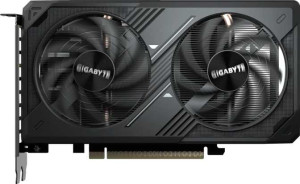
Acer Nitro Arc B570 OC specifications and in-depth review

Acer Nitro Arc B570 OC

Manufacturer: Acer

The Acer Nitro Arc B570 OC is a desktop graphics card drawing on Intel's Arc GPU architecture, manufactured at 6 nm and housing 21.7 billion transistors within a compact 268 × 113 mm frame. With a 2690 MHz boost clock and a base operating frequency of 1700 MHz, it targets users who need consistent throughput across demanding rendering and gaming workloads, all within a 150W TDP envelope.

On the memory side, the card carries 10GB of GDDR6 VRAM running across a 160-bit bus at an effective 19,000 MHz, translating to up to 380 GB/s of bandwidth. Its 2,304 shading units, 144 TMUs, and 80 ROPs contribute to a pixel rate of 215.2 GPixel/s and a texture rate of 387.4 GTexels/s, while floating-point throughput reaches 12.4 TFLOPS. Feature support includes DirectX 12 Ultimate, OpenGL 4.6, OpenCL 3, ray tracing, XeSS upscaling, and ECC memory, with display output handled through one HDMI 2.1 port and three DisplayPort connectors for a maximum of four simultaneous displays.

Pros
  • Supports up to four simultaneous displays through one HDMI 2.1 and three DisplayPort outputs
  • ECC memory support adds a layer of data integrity for workloads where memory errors are a concern
  • XeSS upscaling via XMX units provides an upscaling option without relying on DLSS
  • Ray tracing is supported, enabling hardware-accelerated lighting effects in compatible applications
  • The 160-bit memory bus delivers up to 380 GB/s of bandwidth, facilitating fast data throughput for the 10GB GDDR6 frame buffer
  • DirectX 12 Ultimate, OpenGL 4.6, and OpenCL 3 support ensures broad API compatibility across graphics and compute workloads
Cons
  • DLSS is not supported, limiting upscaling options to XeSS for users who prefer or require DLSS
  • No USB-C, DVI, or mini DisplayPort outputs, which may restrict connectivity in certain multi-monitor or legacy display setups
  • The 160-bit memory bus is narrower than wider-bus alternatives in the same card category, which can constrain bandwidth scaling
  • No RGB lighting for users who factor aesthetics into their build
  • Liquid cooling is not supported; the card relies solely on air cooling, which may affect thermal headroom under sustained loads
Who is this for?

This card suits users who need multi-display workstation setups, given its support for up to four simultaneous outputs via HDMI 2.1 and DisplayPort. The inclusion of ECC memory and broad API support — DirectX 12 Ultimate, OpenGL 4.6, and OpenCL 3 — makes it a reasonable fit for content creators and compute-oriented users who run graphics pipelines or general-purpose GPU workloads. Those who rely on XeSS-based upscaling rather than DLSS will find the XMX hardware support practical, and the 10GB GDDR6 frame buffer with 380 GB/s bandwidth accommodates texture-heavy and memory-bandwidth-sensitive tasks at moderate workload scales.

Who is this NOT for?

Users with a strong dependency on DLSS upscaling will find this card unsuitable, as that feature is not supported. The 160-bit memory bus, while functional, may prove limiting for those running extremely bandwidth-demanding workloads that benefit from wider bus configurations. Additionally, users who require USB-C or legacy DVI display connectivity will need to look elsewhere, as neither port type is available on this card. Those prioritizing sustained heavy loads in thermally constrained environments may also find the air-only cooling solution restrictive.

Performance:

GPU clock speed 1700 MHz
GPU turbo 2690 MHz
pixel rate 215.2 GPixel/s
floating-point performance 12.4 TFLOPS
texture rate 387.4 GTexels/s
GPU memory speed 2400 MHz
shading units 2304
texture mapping units (TMUs) 144
render output units (ROPs) 80

The Acer Nitro Arc B570 OC operates at a base GPU clock of 1700 MHz, climbing to 2690 MHz under boost conditions, while GPU memory runs at 2400 MHz. Its 2,304 shading units work alongside 144 texture mapping units and 80 render output units, producing a texture rate of 387.4 GTexels/s and a pixel rate of 215.2 GPixel/s. Together, these figures contribute to a floating-point throughput of 12.4 TFLOPS, reflecting the card's overall compute capacity across graphics and general-purpose workloads.

Memory:

effective memory speed 19000 MHz
maximum memory bandwidth 380 GB/s
VRAM 10GB
GDDR version GDDR6
memory bus width 160-bit
Supports ECC memory

The card is equipped with 10GB of GDDR6 VRAM running across a 160-bit memory bus, reaching an effective speed of 19,000 MHz and delivering up to 380 GB/s of memory bandwidth. This configuration supports ECC memory, which enables error detection and correction to help maintain data integrity during operation.

Features:

DirectX version DirectX 12 Ultimate
OpenGL version 4.6
OpenCL version 3
Supports multi-display technology
supports ray tracing
Supports 3D
supports DLSS
has XeSS (XMX)
has LHR
has RGB lighting
supported displays 4

The Acer Nitro Arc B570 OC supports DirectX 12 Ultimate, OpenGL 4.6, and OpenCL 3, covering a broad range of graphics and compute APIs. Ray tracing and stereoscopic 3D are both supported, as is XeSS upscaling via XMX, while DLSS is not available on this card. Multi-display output is supported across up to four simultaneous displays. The card does not include RGB lighting or LHR (Lite Hash Rate) restrictions.

Ports:

has an HDMI output
HDMI ports 1
HDMI version HDMI 2.1
DisplayPort outputs 3
USB-C ports 0
DVI outputs 0
mini DisplayPort outputs 0

The card's output configuration consists of one HDMI 2.1 port and three DisplayPort outputs, providing a total of four display connections. There are no USB-C, DVI, or mini DisplayPort outputs present on this card.

General info:

GPU architecture Generation 12.7
Thermal Design Power (TDP) 150W
PCI Express (PCIe) version 4
semiconductor size 6 nm
number of transistors 21700 million
Has air-water cooling
width 268 mm
height 113 mm

The Acer Nitro Arc B570 OC is built on a Generation 12.7 GPU architecture, fabricated using a 6 nm process node and integrating 21,700 million transistors. It connects via PCIe 4 and carries a Thermal Design Power rating of 150W. The card measures 268 mm in width and 113 mm in height, and it relies on air cooling rather than a liquid-cooling solution.
Final Verdict

The Acer Nitro Arc B570 OC positions itself as a capable graphics card for users who prioritize broad API compatibility, multi-display flexibility, and compute-oriented features within a contained 150W power envelope. Its 10GB GDDR6 frame buffer with ECC memory support and hardware-accelerated ray tracing make it a practical choice for workloads that demand data integrity and modern rendering capabilities. While certain connectivity and upscaling limitations narrow its appeal for some user profiles, the card's Generation 12.7 architecture and well-rounded feature set — including DirectX 12 Ultimate, XeSS upscaling, and four-display output support — give it a defined and legitimate place for users whose workflows align with its strengths.

Popular Comparisons

Acer Nitro Arc B570 OC
VS
PNY GeForce RTX 5050 Single Fan
Acer Nitro Arc B570 OC
VS
Gigabyte GeForce RTX 5050 WindForce OC