Acer Nitro V 16 (2024) 16" AMD Ryzen 7 8845HS 3.8GHz / Nvidia GeForce RTX 4060 Laptop / 16GB RAM / 1TB SSD specifications and in-depth review

Acer Nitro V 16 (2024) 16" AMD Ryzen 7 8845HS 3.8GHz / Nvidia GeForce RTX 4060 Laptop / 16GB RAM / 1TB SSD

Manufacturer: HP

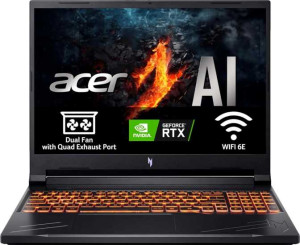
The Acer Nitro V 16 (2024) is a 16-inch gaming laptop powered by AMD's Ryzen 7 8845HS processor and an Nvidia GeForce RTX 4060 Laptop GPU. Built for gaming use with a straightforward feature set, it runs a 1920x1080 IPS display at 165Hz with a typical brightness of 500 nits, backed by a backlit keyboard and stereo speakers. The chassis measures 529mm wide and 70mm thick, weighing in at 2,500g, and carries a 1-year warranty.

The Ryzen 7 8845HS operates at 3.8GHz across 8 cores and 16 threads with a turbo speed of 5.1GHz, built on a 5nm process with a 115W TDP. The RTX 4060 Laptop GPU features 8GB of GDDR6 VRAM on a 128-bit memory bus, delivering 14.56 TFLOPS of floating-point performance and support for ray tracing, DLSS, and DirectX 12 Ultimate. The system ships with 16GB of DDR5 RAM at 5600MHz across two upgradeable slots, with a maximum supported capacity of 256GB, and a 1TB NVMe SSD using PCIe 4.0. Connectivity includes two USB 3.2 Gen 1 Type-A ports, one HDMI output, and Wi-Fi 6E with Bluetooth, while the 57Wh battery is rated for up to 7 hours of use.

Pros
  • The two user-accessible RAM slots support up to 256GB maximum, giving this laptop strong long-term upgrade potential
  • Ray tracing and DLSS support expand the GPU's rendering capability for compatible titles without relying solely on raw performance
  • A 500 nits typical brightness on the 16-inch IPS panel provides solid visibility for indoor gaming use
  • The 165Hz refresh rate keeps motion fluid during fast-paced gameplay on the 1080p display
  • Wi-Fi 6E support ensures the laptop is ready for the fastest available wireless networking standards
Cons
  • At 2,500g and 70mm thick, the chassis is notably bulky and heavy for regular portability
  • There is no USB Type-C port of any kind, which limits compatibility with modern accessories and docks
  • The 57Wh battery is modest for a 16-inch gaming laptop, and sleep-and-charge is not supported
  • Only a single microphone is included, which may be limiting for voice calls or recordings
  • The 1-year warranty period is shorter than what some competing gaming laptops offer in the same segment
  • No external memory card slot is available, restricting quick media transfers without additional adapters
Who is this for?

The Acer Nitro V 16 (2024) is a solid fit for desktop-replacement gamers who keep their setup stationary and prioritize screen size and GPU capability over portability. The 16-inch 165Hz IPS display at 500 nits handles fast-paced gaming well in indoor environments, and the RTX 4060 with DLSS and ray tracing support gives it enough headroom for visually demanding titles at 1080p. Users who plan to expand memory over time will also appreciate the two accessible RAM slots with support for up to 256GB, making this a machine that can grow with more intensive workloads without requiring a full replacement.

Who is this NOT for?

Users who frequently work on the go will find the 2,500g weight and 70mm chassis thickness impractical for daily commuting or travel. The complete absence of USB Type-C ports makes it a poor fit for anyone relying on modern docks, displays, or accessories that depend on that standard. Those who need reliable wired network connectivity will also run into issues, as there is no RJ45 Ethernet port, and the 57Wh battery without sleep-and-charge support means extended use away from a power outlet will be limited.

Design:

Type Gaming
weight 2500 g
Uses a fanless design
Has a backlit keyboard
warranty period 1 years
volume 14812 cm³
width 529 mm
height 400 mm
thickness 70 mm
is weather-sealed (splashproof)

This is a gaming laptop with a weight of 2,500g and a chassis measuring 529mm wide, 400mm deep, and 70mm thick, giving it a total volume of 14,812 cm³. Active cooling is in use as the design is not fanless, and the unit is not weather-sealed against splashing. A backlit keyboard is included as standard. The laptop comes with a 1-year warranty.

Display:

screen size 16"
resolution 1920 x 1080 px
pixel density 137 ppi
Display type IPS
has a touch screen
brightness (typical) 500 nits
refresh rate 165Hz
has anti-reflection coating
supported displays 4

The laptop uses a 16-inch IPS panel running at a resolution of 1920x1080 pixels with a pixel density of 137 ppi. It operates at a 165Hz refresh rate and reaches a typical brightness of 500 nits, making it reasonably well-lit for indoor gaming use. Anti-reflection coating is not present, and the screen does not support touch input. The system is capable of driving up to 4 displays simultaneously.

Performance:

RAM 16GB
RAM speed 5600 MHz
Uses flash storage
internal storage 1024GB
CPU speed 8 x 3.8 GHz
CPU threads 16 threads
VRAM 8GB
floating-point performance 14.56 TFLOPS
GDDR version GDDR6
texture rate 227.52 GTexels/s
pixel rate 113.76 GPixel/s
Is an NVMe SSD
DirectX version DirectX 12 Ultimate
GPU clock speed 1545 MHz
uses multithreading
maximum memory amount 256GB
DDR memory version 5
turbo clock speed 5.1GHz
GPU turbo 2370 MHz
memory slots 2
PCI Express (PCIe) version 4
semiconductor size 5 nm
has XeSS (XMX)
Supports 64-bit

The CPU runs at 3.8GHz across 8 cores and 16 threads with a turbo frequency of 5.1GHz, built on a 5nm process and supporting multithreading and 64-bit operation. System memory consists of 16GB of DDR5 RAM at 5600MHz across two user-accessible slots, with the platform supporting up to 256GB maximum. Storage is provided by a 1TB NVMe SSD on PCIe 4.0. The GPU operates at a base clock of 1545MHz boosting to 2370MHz, with 8GB of GDDR6 VRAM delivering 14.56 TFLOPS of floating-point performance, a texture rate of 227.52 GTexels/s, and a pixel rate of 113.76 GPixel/s. DirectX 12 Ultimate is supported, while XeSS is not available on this configuration.

Benchmarks:

Geekbench 6 result (multi) 11009
Geekbench 6 result (single) 2331
PassMark (G3D) result 17710
PassMark result 28497
PassMark result (single) 3738

In Geekbench 6, the system achieves a multi-core score of 11,009 and a single-core score of 2,331, reflecting the CPU's overall throughput across parallel and single-threaded tasks. The overall PassMark score sits at 28,497 with a single-core result of 3,738. GPU performance is measured at a PassMark G3D score of 17,710.

Connectivity:

USB 3.2 Gen 2 ports (USB-C) 0
USB 3.2 Gen 2 ports (USB-A) 0
USB 4 20Gbps ports 0
USB 4 40Gbps ports 0
Thunderbolt 4 ports 0
USB 3.2 Gen 1 ports (USB-C) 0
USB 3.2 Gen 1 ports (USB-A) 2
Thunderbolt 3 ports 0
has an HDMI output
Has USB Type-C
supports Wi-Fi
Wi-Fi version Wi-Fi 6E (802.11ax), Wi-Fi 6 (802.11ax), Wi-Fi 5 (802.11ac), Wi-Fi 4 (802.11n)
has an external memory slot
RJ45 ports 0
HDMI ports 1
DisplayPort outputs 0
has AirPlay
mini DisplayPort outputs 0
has a VGA connector

Wired connectivity is limited to two USB 3.2 Gen 1 Type-A ports and a single HDMI output, with no USB Type-C, Thunderbolt, DisplayPort, VGA, or RJ45 Ethernet ports available. There is no external memory card slot on this model. Wireless options include Wi-Fi 6E support covering 802.11ax, ac, and n standards, and AirPlay is also supported.

Battery:

Battery life 7 hours
battery size 57 Wh
Has sleep-and-charge USB ports
Has a MagSafe power adapter

The laptop is fitted with a 57Wh battery with a rated battery life of 7 hours. Sleep-and-charge functionality is not available on the USB ports, and a MagSafe power adapter is not supported or included.

Features:

has stereo speakers
has a socket for a 3.5 mm audio jack
supports ray tracing
supports DLSS
has Dolby Atmos
Stylus included
Has a fingerprint scanner
number of microphones 1
Uses 3D facial recognition
has voice commands
has a front camera
Has S/PDIF Out port
has a gyroscope
has GPS
has an accelerometer
has a compass
Has an optical disc drive

The laptop includes stereo speakers, a 3.5mm headset jack, a single microphone, and a front camera for basic audio and video needs, though Dolby Atmos and S/PDIF output are not supported. Ray tracing and DLSS are both available, extending the GPU's capability for more demanding visual rendering and frame rate upscaling in compatible titles. Biometric security features such as a fingerprint scanner and facial recognition are absent, as are voice commands and a stylus. Motion and location sensors including a gyroscope, accelerometer, compass, and GPS are not present, and there is no optical disc drive.

Miscellaneous:

clock multiplier 38
PassMark (DirectCompute) result 6787
number of transistors 18900 million
has LHR
Thermal Design Power (TDP) 115W
Supports 3D
Supports multi-display technology
OpenCL version 3
OpenGL version 4.6
Supports ECC memory
memory bus width 128-bit
effective memory speed 16000 MHz
maximum memory bandwidth 256 GB/s
render output units (ROPs) 48
texture mapping units (TMUs) 96
shading units 3072
Has Double Precision Floating Point (DPFP)
GPU memory speed 2000 MHz
GPU architecture Ada Lovelace
PassMark result (overclocked) 29732
GPU name Radeon 780M
Type Laptop
Uses big.LITTLE technology
Has an unlocked multiplier
instruction sets MMX, F16C, FMA3, AES, AVX, AVX2, SSE 4.1, SSE 4.2
Has NX bit
L3 core 2 MB/core
L3 cache 16 MB
L2 core 1 MB/core
L2 cache 8 MB
L1 cache 512 KB
GPU execution units 12
Has integrated graphics
memory channels 2
RAM speed (max) 7500 MHz
CPU temperature 100 °C

The GPU is built on the Ada Lovelace architecture and features 3,072 shading units, 96 texture mapping units, and 48 render output units, operating across a 128-bit memory bus with a GPU memory speed of 2000MHz and an effective memory speed of 16,000MHz, yielding up to 256 GB/s of bandwidth. The integrated graphics unit is the Radeon 780M with 12 execution units, and the system supports multi-display output, stereoscopic 3D, OpenCL 3, and OpenGL 4.6. A PassMark DirectCompute result of 6,787 and an overclocked PassMark result of 29,732 are also recorded. On the CPU side, the processor carries a 115W TDP, a locked clock multiplier of 38, and a maximum temperature rating of 100°C, with a cache layout of 512 KB L1, 8 MB L2 at 1 MB per core, and 16 MB L3 at 2 MB per core. Supported instruction sets include MMX, F16C, FMA3, AES, AVX, AVX2, SSE 4.1, and SSE 4.2, with ECC memory support, double precision floating point, and NX bit also present. The multiplier is locked, big.LITTLE technology is not in use, and maximum RAM speed is rated at 7,500MHz across two memory channels.
Final Verdict

The Acer Nitro V 16 (2024) is a gaming laptop built with a clear focus on stationary desktop-replacement use, where its 16-inch 165Hz display, RTX 4060 GPU with ray tracing and DLSS, and two upgradeable RAM slots supporting up to 256GB can be genuinely appreciated without the constraints of portability. Its hardware foundation is capable for 1080p gaming and leaves room for memory expansion down the line, which gives it a degree of longevity that single-slot configurations cannot offer. That said, its bulk, limited port selection, and the absence of USB Type-C mean it suits a specific kind of user — one who games primarily at a desk and values upgrade headroom over versatility. For that audience, the Nitro V 16 (2024) delivers a functional and expandable setup; for anyone needing a more flexible or travel-friendly machine, its physical and connectivity limitations will be felt.

Popular Comparisons

Acer Nitro V 16 (2024) 16" AMD Ryzen 7 8845HS 3.8GHz / Nvidia GeForce RTX 4060 Laptop / 16GB RAM / 1TB SSD
VS
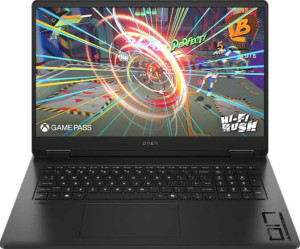
HP Omen 17 (2024) 17.3"