AMD Epyc 4344P specifications and in-depth review

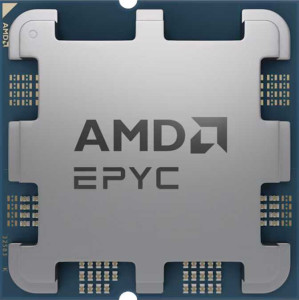
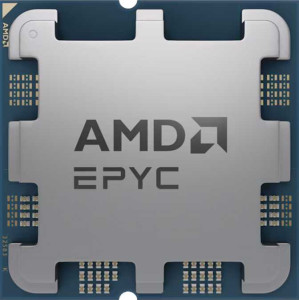
AMD Epyc 4344P

Manufacturer: AMD

The AMD Epyc 4344P is an eight-core server-class processor aimed at the enterprise segment, where efficiency and reliability tend to matter as much as raw throughput. Running at a base clock of 3.8GHz across all cores, it can reach a turbo frequency of 5.3GHz, which is notably high for a chip in this category. With a thermal envelope of just 65W, it balances compute density with power consumption in a way that suits space- and energy-conscious deployments.

Built on a 5nm manufacturing process, the Epyc 4344P supports DDR5 memory at speeds up to 5200MHz across two channels, delivering a maximum memory bandwidth of 83.2GB/s. The cache hierarchy consists of 512KB of L1, 8MB of L2 spread at 1MB per core, and 32MB of L3 at 4MB per core. ECC memory support adds a layer of data integrity suited to server workloads, while PCIe 5 connectivity keeps the platform current for high-speed I/O. The chip also carries a broad instruction set including AVX2, AES, and FMA3, with a PassMark multi-core score of 33,690 reflecting its overall throughput capability.

Pros
  • ECC memory support makes it suited for workloads where data integrity cannot be compromised
  • A turbo clock speed of 5.3GHz allows the processor to handle demanding single-threaded tasks at a high frequency
  • The 65W TDP keeps power draw low for an eight-core server processor, which is practical for density-focused deployments
  • PCIe 5 support ensures compatibility with the latest high-bandwidth expansion devices
  • A wide instruction set including AVX2, AES, and FMA3 covers a broad range of compute-intensive and security-sensitive workloads
  • DDR5 support with a maximum bandwidth of 83.2 GB/s provides a fast and modern memory subsystem
Cons
  • No integrated graphics means a discrete GPU or remote management solution is required for display output
  • Dual-channel memory configuration limits memory scalability compared to platforms with more channels
  • The clock multiplier is locked, offering no headroom for manual frequency tuning
  • With only 8 cores and 16 threads, the processor may be insufficient for highly parallel enterprise workloads that demand more concurrency
Who is this for?

The Epyc 4344P is well-matched to server and workstation environments where data integrity and reliability are critical, thanks to its ECC memory support and broad instruction set coverage. Its 65W TDP makes it a practical fit for compact or power-constrained rack deployments where thermal management is a concern. The combination of DDR5 memory, PCIe 5 connectivity, and hardware AES acceleration also makes it a reasonable choice for security-sensitive or bandwidth-dependent workloads such as encrypted data processing, storage servers, or network-facing applications.

Who is this NOT for?

This processor is not a good match for environments that require high thread counts for massively parallel workloads, as its eight cores and sixteen threads may become a bottleneck in tasks such as large-scale rendering, simulation, or high-concurrency virtualization. The absence of integrated graphics makes it unsuitable for any deployment where local display output is needed without a discrete GPU. Additionally, the locked clock multiplier means it offers nothing for users seeking manual overclocking headroom, making it a poor fit for any tuning-oriented or experimental use cases.

General info:

Thermal Design Power (TDP) 65W
semiconductor size 5 nm
PCI Express (PCIe) version 5
Supports 64-bit
Has integrated graphics

The AMD Epyc 4344P is built on a 5nm manufacturing process and operates within a 65W thermal design power envelope, keeping energy draw relatively contained for a processor in this class. It supports the 64-bit instruction set and connects to the platform via PCIe 5, enabling high-bandwidth communication with compatible expansion devices. Integrated graphics are not included, so a discrete graphics solution is required for any display output.

Performance:

CPU speed 8 x 3.8 GHz
CPU threads 16 threads
turbo clock speed 5.3GHz
L3 cache 32 MB
L1 cache 512 KB
L2 cache 8 MB
L2 core 1 MB/core
clock multiplier 38
Has an unlocked multiplier
L3 core 4 MB/core

The Epyc 4344P runs eight cores at a base frequency of 3.8GHz each, with 16 threads available for concurrent workloads, and can reach a turbo clock speed of 5.3GHz when conditions allow. The clock multiplier is set at 38 and cannot be adjusted, as the processor does not feature an unlocked multiplier. Cache is arranged across three levels: 512KB of L1 in total, 8MB of L2 at 1MB per core, and 32MB of L3 cache distributed at 4MB per core, providing a substantial pool of fast-access memory to help sustain throughput across demanding workloads.

Memory:

Supports ECC memory
maximum memory bandwidth 83.2 GB/s
DDR memory version 5
RAM speed (max) 5200 MHz
memory channels 2

The Epyc 4344P uses a DDR5 memory interface across two channels, supporting RAM speeds of up to 5200MHz and delivering a maximum memory bandwidth of 83.2 GB/s. The dual-channel configuration keeps the platform straightforward while still providing adequate throughput for server-oriented tasks. Notably, the processor supports ECC memory, which allows the system to detect and correct certain classes of memory errors — a standard requirement in environments where data integrity is a priority.

Features:

instruction sets MMX, F16C, FMA3, AES, AVX, AVX2, SSE 4.1, SSE 4.2
Has NX bit

The Epyc 4344P supports a broad range of instruction sets, including AVX2, AES, and FMA3, alongside MMX, F16C, AVX, SSE 4.1, and SSE 4.2, covering vectorized computation, hardware-accelerated encryption, and fused multiply-add operations within a single platform. The processor also includes the NX bit, a hardware-level security feature that helps prevent certain types of malicious code execution by marking memory regions as non-executable.

Benchmarks:

PassMark result 33690
PassMark result (single) 3560
PassMark result (overclocked) 34291

In PassMark testing, the Epyc 4344P achieves a multi-core score of 33,690, reflecting its overall throughput across parallel workloads. The single-core result of 3,560 gives a sense of per-thread performance, while the overclocked PassMark score of 34,291 shows only a modest gain over the stock result, suggesting the processor is already running close to its performance ceiling under standard conditions.
Final Verdict

The AMD Epyc 4344P is a focused enterprise processor that prioritizes efficiency and reliability over raw core count. Its combination of DDR5 support, ECC memory compatibility, and PCIe 5 connectivity positions it well for server environments where platform modernity and data integrity matter, while the 65W thermal envelope makes it a sensible option where power and thermal budgets are tight. It is not designed for users who need extensive parallelism or display output without additional hardware, but within its intended scope — compact, reliability-focused server and workstation deployments — it covers the essentials without unnecessary excess. For organizations looking to deploy a disciplined, energy-conscious enterprise CPU with a modern feature set, the Epyc 4344P represents a technically coherent choice.

Popular Comparisons

AMD Epyc 4344P
AMD Epyc 4344P
VS
Intel Xeon E-2468
Intel Xeon E-2468
AMD Epyc 4344P
AMD Epyc 4344P
VS
AMD Epyc 4464P
AMD Epyc 4464P
AMD Epyc 4344P
AMD Epyc 4344P
VS
AMD Epyc 7203P
AMD Epyc 7203P