AMD Epyc 4465P specifications and in-depth review

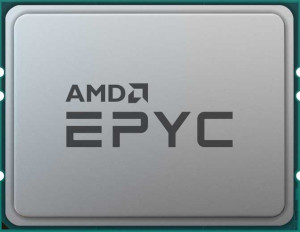
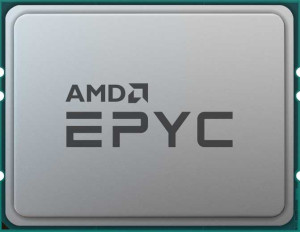
AMD Epyc 4465P

Manufacturer: AMD

The AMD Epyc 4465P is a 12-core enterprise processor designed for server and workstation environments where reliability and sustained performance matter. With a base clock of 3.4GHz across all cores and a turbo frequency reaching 5.4GHz, the chip balances steady throughput with the headroom to handle demanding workloads. Its unlocked multiplier adds a degree of tuning flexibility that is relatively uncommon in the enterprise segment, while a 65W TDP keeps thermal demands modest for its class.

Manufactured on a 4nm process node, the Epyc 4465P supports DDR5 memory at speeds up to 5600MHz across two channels, with a maximum addressable capacity of 192GB and a peak bandwidth of 89.6GB/s. ECC memory support is included, which is a standard requirement in professional deployments. The cache hierarchy consists of 960KB of L1, 12MB of L2, and a substantial 64MB of L3 cache, translating to 5.33MB of L3 per core. The processor also supports PCIe 5.0, 24 threads via multithreading, and a broad instruction set that includes AVX2, FMA3, AES, and SSE 4.2, among others. PassMark scores of 50,492 in multi-threaded and 4,611 in single-threaded testing are on record for this chip.

Pros
  • The unlocked clock multiplier gives system builders the ability to adjust frequency settings at the firmware level, which is uncommon for a processor in this segment
  • ECC memory support makes it suitable for workloads where data integrity over extended operation is a firm requirement
  • A 64MB L3 cache provides threads with substantial fast-access memory, helping reduce latency on data-heavy tasks
  • PCIe 5.0 support allows the platform to accommodate modern high-bandwidth expansion cards without bottlenecking the interface
  • The 65W TDP keeps power draw and heat output relatively contained for a 12-core enterprise processor
  • DDR5 support with speeds up to 5600MHz and a peak bandwidth of 89.6 GB/s enables fast memory throughput for demanding workloads
Cons
  • With only two memory channels, configurations requiring higher memory parallelism may find the bandwidth ceiling limiting compared to multi-channel platforms
  • No integrated graphics means a discrete GPU or external adapter is always required, adding complexity and cost to headless or display-connected deployments
  • A maximum memory capacity of 192GB may be restrictive for memory-intensive enterprise workloads that typically benefit from larger addressable RAM pools
  • The dual-channel memory architecture limits scalability for applications that scale directly with memory bandwidth
Who is this for?

This processor is a solid fit for enterprise server and workstation deployments that demand reliable continuous operation, particularly where ECC memory support is a baseline requirement. Its combination of 24 threads, a large 64MB L3 cache, and DDR5 memory bandwidth makes it well-suited for data-intensive parallel workloads such as virtualization, database hosting, and multi-threaded server applications. The unlocked multiplier and PCIe 5.0 interface also make it a practical choice for technically proficient users running compute-focused rack or tower builds where modern expansion hardware needs a capable, low-TDP host processor.

Who is this NOT for?

Users who require large-scale memory configurations beyond 192GB will find this processor limiting, as the dual-channel DDR5 architecture and maximum supported capacity may fall short for memory-intensive enterprise applications that scale with available RAM. The absence of integrated graphics makes it a poor fit for deployments that need built-in display output, such as entry-level workstations or systems where adding a discrete GPU is impractical. Additionally, environments that depend on high memory parallelism across many channels — common in data analytics or in-memory computing platforms — may find the two-channel configuration a structural constraint that limits sustained throughput under heavy concurrent access patterns.

General info:

Thermal Design Power (TDP) 65W
semiconductor size 4 nm
PCI Express (PCIe) version 5
Supports 64-bit
Has integrated graphics

The AMD Epyc 4465P is built on a 4nm semiconductor process and carries a Thermal Design Power rating of 65W, reflecting a relatively contained power envelope for an enterprise-class processor. It fully supports 64-bit computing and includes PCIe 5.0 connectivity, enabling compatibility with modern high-bandwidth expansion hardware. The chip does not include integrated graphics, so a discrete GPU or external display adapter is required in any deployment that needs visual output.

Performance:

CPU speed 12 x 3.4 GHz
CPU threads 24 threads
turbo clock speed 5.4GHz
L3 cache 64 MB
L1 cache 960 KB
L2 cache 12 MB
L2 core 1 MB/core
clock multiplier 34
Has an unlocked multiplier
L3 core 5.33 MB/core

The Epyc 4465P runs 12 cores at a base frequency of 3.4GHz each, with a turbo clock speed of 5.4GHz available for more demanding tasks, and the processor exposes 24 threads in total. Its clock multiplier sits at 34 and the multiplier is unlocked, providing tuning flexibility at the firmware level. The cache layout spans 960KB of L1 and 12MB of L2 across the chip — equal to 1MB of L2 per core — topped by a 64MB L3 cache that works out to approximately 5.33MB per core, giving threads relatively generous fast-access storage to reduce latency on data-intensive operations.

Memory:

Supports ECC memory
maximum memory bandwidth 89.6 GB/s
DDR memory version 5
RAM speed (max) 5600 MHz
maximum memory amount 192GB
memory channels 2

The Epyc 4465P uses a dual-channel DDR5 memory configuration, supporting speeds of up to 5600MHz and a maximum installed capacity of 192GB. Peak memory bandwidth reaches 89.6 GB/s, which reflects the throughput available across both channels at full speed. ECC memory is supported, making the platform suitable for environments where data integrity under continuous operation is a practical requirement rather than an optional consideration.

Features:

uses multithreading
instruction sets MMX, F16C, FMA3, AES, AVX, AVX2, SSE 4.1, SSE 4.2
Has NX bit

The Epyc 4465P supports multithreading, allowing each physical core to handle two threads simultaneously for better utilization across parallel workloads. The processor includes the NX bit, a hardware-level feature that helps prevent certain classes of malicious code execution by marking memory regions as non-executable. Its instruction set support covers a broad range of extensions — MMX, F16C, FMA3, AES, AVX, AVX2, SSE 4.1, and SSE 4.2 — enabling acceleration for tasks ranging from floating-point arithmetic and vector operations to hardware-assisted encryption.

Benchmarks:

PassMark result 50492
PassMark result (single) 4611

In PassMark testing, the Epyc 4465P recorded a multi-threaded score of 50,492, reflecting its throughput across all cores and threads under a sustained parallel workload. The single-threaded result of 4,611 indicates the per-core processing capability available for tasks that rely on sequential execution rather than parallelism. Together, these two figures give a practical reference point for gauging how the processor handles both highly parallel and single-core-dependent workloads.
Final Verdict

The AMD Epyc 4465P presents a well-rounded profile for enterprise use cases where efficiency, data integrity, and modern platform support are the primary considerations. Its 64MB L3 cache paired with DDR5 memory at up to 5600MHz gives the processor a strong foundation for sustained multi-threaded workloads, while ECC memory support and PCIe 5.0 compatibility reinforce its credentials as a server-grade platform. The 65W TDP and unlocked multiplier round out a specification set that favors flexibility without excessive power demands. Where it falls short — notably in memory channel count, maximum capacity, and the absence of integrated graphics — those trade-offs are characteristic of its market tier rather than fundamental design flaws. For organizations building compact enterprise systems or high-efficiency workstations that prioritize reliability and modern connectivity over raw scalability, the Epyc 4465P is a technically coherent and well-specified choice.

Popular Comparisons

AMD Epyc 4465P
AMD Epyc 4465P
VS
AMD Epyc 4545P
AMD Epyc 4545P