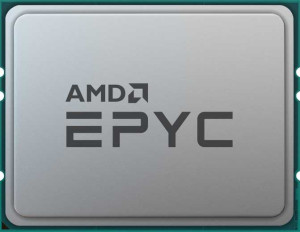
AMD Epyc 9565 specifications and in-depth review

AMD Epyc 9565

Manufacturer: AMD

The AMD Epyc 9565 is a high-core-count processor designed for demanding server and data center workloads. Built on a 4nm semiconductor process, it packs 72 cores and 144 threads into a single socket, with a base clock of 3.15 GHz across all cores and a turbo frequency reaching up to 4.3 GHz. The chip does not include integrated graphics, keeping its design focused entirely on compute throughput.

On the memory side, the Epyc 9565 supports DDR5 at up to 6000 MHz across 12 memory channels, with a maximum memory bandwidth of 576 GB/s and support for up to 9000GB of ECC RAM — a configuration suited for memory-intensive enterprise applications. The processor carries a substantial cache hierarchy, including 384MB of L3 cache and 72MB of L2 cache, paired with PCIe 5.0 connectivity. It supports a broad set of instruction sets including AVX2, AES, and FMA3, and achieves a multi-threaded PassMark score of 135221 alongside a single-threaded result of 3696. The TDP is rated at 400W, reflecting the thermal demands of its core count and sustained performance targets.

Pros
  • Supports up to 9000 GB of ECC DDR5 memory across 12 channels, making it well-suited for memory-intensive enterprise workloads
  • 384 MB of L3 cache distributed across 72 cores reduces memory latency for data-heavy parallel tasks
  • PCIe 5.0 support enables high-bandwidth connectivity for compatible storage and networking hardware
  • 144 threads allow a large number of concurrent workloads to run without resource contention
  • Broad instruction set coverage including AES, AVX2, and FMA3 supports hardware-accelerated encryption and vectorized computation natively
  • Maximum memory bandwidth of 576 GB/s accommodates throughput-sensitive server applications
Cons
  • 400W TDP places significant demands on server cooling infrastructure and power delivery
  • No integrated graphics means additional hardware is required for any display output or GPU-dependent tasks
  • The clock multiplier is locked, offering no flexibility for frequency adjustments
  • Single-threaded PassMark score of 3696 indicates limited per-core performance for workloads that cannot be parallelized
Who is this for?

The Epyc 9565 is well-matched to large-scale server and data center deployments where workloads benefit from massive parallelism. Its 72 cores and 144 threads make it a strong fit for highly parallel compute tasks such as virtualization, containerized environments, and cloud infrastructure, where many simultaneous workloads compete for resources. The support for up to 9000 GB of ECC DDR5 memory across 12 channels suits memory-intensive applications like in-memory databases, large-scale analytics, and scientific computing. PCIe 5.0 connectivity also makes it appropriate for deployments that rely on high-bandwidth storage or networking hardware.

Who is this NOT for?

This processor is poorly suited for use cases that depend on strong single-threaded performance, as its single-core PassMark score of 3696 reflects the trade-off made in favor of core count. Tasks such as certain legacy enterprise applications or workloads that cannot be parallelized effectively will not benefit from its architecture. Its 400W TDP also makes it impractical for environments with limited power delivery or cooling capacity, ruling out compact or thermally constrained deployments. Additionally, the absence of integrated graphics means it is entirely unsuitable for any scenario requiring on-processor display output without supplementary hardware.

General info:

Thermal Design Power (TDP) 400W
semiconductor size 4 nm
PCI Express (PCIe) version 5
Supports 64-bit
Has integrated graphics

The AMD Epyc 9565 is built on a 4nm semiconductor process and carries a Thermal Design Power rating of 400W, reflecting the sustained power demands of its multi-core design. It supports the PCIe 5.0 interface standard, enabling high-bandwidth connectivity for compatible expansion hardware. The processor is fully 64-bit capable and does not include integrated graphics, positioning it as a dedicated compute solution without any on-die display output.

Performance:

CPU speed 72 x 3.15 GHz
CPU threads 144 threads
turbo clock speed 4.3GHz
L3 cache 384 MB
L1 cache 5760 KB
L2 cache 72 MB
L2 core 1 MB/core
clock multiplier 31.5
Has an unlocked multiplier
L3 core 5.33 MB/core

The Epyc 9565 operates across 72 cores at a base clock of 3.15 GHz, delivering a combined CPU speed of 72 x 3.15 GHz, with a turbo clock of 4.3 GHz available under boosted conditions. It exposes 144 threads in total and uses a fixed clock multiplier of 31.5, with no unlocked multiplier option. The cache hierarchy spans 5760 KB of L1, 72 MB of L2 at 1 MB per core, and a substantial 384 MB of L3 cache — amounting to approximately 5.33 MB of L3 per core — providing considerable on-die storage for frequently accessed data across its many cores.

Memory:

Supports ECC memory
maximum memory bandwidth 576 GB/s
DDR memory version 5
RAM speed (max) 6000 MHz
maximum memory amount 9000GB
memory channels 12

The Epyc 9565 uses DDR5 memory and supports speeds of up to 6000 MHz across 12 memory channels, enabling a maximum memory bandwidth of 576 GB/s. It can address up to 9000 GB of total system memory and includes support for ECC, allowing the processor to detect and correct certain classes of memory errors — a standard requirement in server and enterprise environments.

Features:

uses multithreading
instruction sets MMX, F16C, FMA3, AES, AVX, AVX2, SSE 4.1, SSE 4.2
Has NX bit

The Epyc 9565 supports multithreading, allowing each physical core to handle multiple threads simultaneously. It includes the NX bit for hardware-level memory protection against certain types of malicious code execution. The processor also covers a broad range of instruction sets — MMX, F16C, FMA3, AES, AVX, AVX2, SSE 4.1, and SSE 4.2 — enabling support for workloads that rely on vectorized math, hardware-accelerated encryption, and floating-point operations.

Benchmarks:

PassMark result 135221
PassMark result (single) 3696

In PassMark testing, the Epyc 9565 achieves a multi-threaded score of 135221, reflecting the cumulative throughput of its 72 cores under parallel workloads. Its single-threaded PassMark result stands at 3696, representing the per-core performance available for tasks that do not scale across multiple threads.

Final Verdict

The AMD Epyc 9565 is a processor built with one clear purpose: to handle the demands of large-scale enterprise and data center environments. Its 72-core, 144-thread configuration, combined with 384 MB of L3 cache and 576 GB/s of memory bandwidth across 12 DDR5 channels, makes it a capable platform for workloads that scale horizontally — virtualization, in-memory computing, and parallel data processing among them. It does come with meaningful operational requirements, particularly its 400W thermal envelope and the absence of integrated graphics, which narrow its practical deployment scenarios. For organizations building or expanding server infrastructure where throughput, memory capacity, and I/O bandwidth are the primary concerns, the Epyc 9565 presents a well-specified option that addresses those needs directly and without compromise.

Popular Comparisons

AMD Epyc 9565
AMD Epyc 9565
VS
Intel Xeon Platinum 8570
AMD Epyc 9565
AMD Epyc 9565
VS
AMD Epyc 9575F
AMD Epyc 9575F