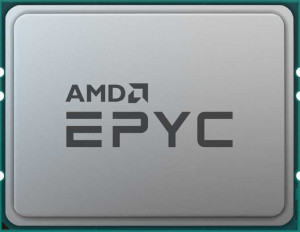
AMD Epyc 9575F specifications and in-depth review

AMD Epyc 9575F

Manufacturer: AMD

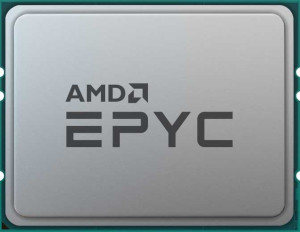
The AMD Epyc 9575F is a server-class processor designed for demanding enterprise workloads, sitting within AMD's EPYC lineup of data center CPUs. Running 64 cores across 128 threads, it operates at a base frequency of 3.3 GHz per core and can reach a turbo clock of 5 GHz, making it suited for highly threaded environments where sustained throughput matters. It is manufactured using a 4 nm process node and does not include integrated graphics, reflecting its orientation toward compute-intensive server deployments.

On the memory side, the Epyc 9575F supports DDR5 RAM at up to 6000 MHz across 12 memory channels, with a maximum addressable memory capacity of 9000 GB and a peak bandwidth of 576 GB/s. ECC memory support is included, as expected for enterprise-grade hardware. The processor carries a substantial cache hierarchy — 5120 KB of L1, 64 MB of L2 at 1 MB per core, and 256 MB of L3 at 4 MB per core — and connects via PCIe 5.0. It supports a range of instruction set extensions including AVX2, FMA3, AES, and SSE 4.2, alongside multithreading. Its PassMark score of 150,282 reflects strong multi-core performance, while the single-core result stands at 4,244. The TDP is rated at 400W.

Pros
  • 128 threads across 64 cores enables handling of highly parallel server workloads without bottlenecking on thread availability
  • 256 MB of L3 cache distributed at 4 MB per core reduces memory latency for data-intensive operations
  • Support for up to 9000 GB of DDR5 memory across 12 channels makes it suitable for workloads requiring massive in-memory datasets
  • ECC memory support adds a layer of reliability by detecting and correcting single-bit memory errors, which matters in continuous server operation
  • PCIe 5.0 support allows connection of the latest generation of high-bandwidth storage and networking peripherals
  • NX bit support provides a hardware-level safeguard against certain memory-based code execution vulnerabilities
Cons
  • A 400W TDP places significant demands on server cooling infrastructure and power delivery systems
  • The locked clock multiplier removes any possibility of adjusting operating frequencies to suit specific workload profiles
  • No integrated graphics means a discrete GPU or remote management solution is required even for basic system access or diagnostics
  • Single-core PassMark score of 4,244 indicates moderate per-core performance, which may limit throughput in workloads that do not scale across many threads
Who is this for?

This processor is well-matched for large-scale enterprise and data center environments where workloads demand both massive thread counts and large memory capacity. Its 12-channel DDR5 memory architecture supporting up to 9000 GB makes it a strong fit for in-memory databases, virtualization hosts running dozens of concurrent virtual machines, and high-performance computing tasks that require sustained parallel throughput. Organizations running ECC-dependent workloads — such as financial transaction processing, scientific simulations, or mission-critical applications — will benefit from the built-in error-correcting memory support, while the PCIe 5.0 interface accommodates high-bandwidth NVMe storage and networking cards used in modern server infrastructure.

Who is this NOT for?

This processor is not a practical choice for environments where per-core performance is the primary bottleneck, as its single-core PassMark score of 4,244 reflects moderate single-threaded capability that would limit responsiveness in workloads that do not scale across many cores. It is equally unsuitable for deployments with constrained power or thermal budgets, since the 400W TDP demands robust cooling solutions and high-capacity power delivery that typical small-scale or edge server setups cannot accommodate. Additionally, the absence of integrated graphics and the locked clock multiplier make it a poor fit for environments requiring flexible frequency tuning or any form of local display output without additional hardware.

General info:

Thermal Design Power (TDP) 400W
semiconductor size 4 nm
PCI Express (PCIe) version 5
Supports 64-bit
Has integrated graphics

The AMD Epyc 9575F carries a Thermal Design Power (TDP) of 400W, reflecting its positioning as a high-core-count server processor with substantial power requirements. It is built on a 4 nm semiconductor process and connects to the system via PCIe 5.0, supporting the latest generation of high-bandwidth peripheral and storage interfaces. The processor fully supports 64-bit computing, while integrated graphics are not included, which is consistent with its role as a dedicated server CPU where discrete or no graphics hardware is the norm.

Performance:

CPU speed 64 x 3.3 GHz
CPU threads 128 threads
turbo clock speed 5GHz
L3 cache 256 MB
L1 cache 5120 KB
L2 cache 64 MB
L2 core 1 MB/core
clock multiplier 33
Has an unlocked multiplier
L3 core 4 MB/core

The processor runs 64 cores at a base frequency of 3.3 GHz each, totaling 128 threads through multithreading support, with a turbo clock speed reaching up to 5 GHz. The clock multiplier is set at 33 and the multiplier is locked, meaning no manual frequency adjustments are available. Cache is arranged across three levels: 5120 KB of L1, 64 MB of L2 at 1 MB per core, and a 256 MB L3 cache distributed at 4 MB per core — providing a substantial amount of fast on-die memory to support its high thread count and data-intensive workloads.

Memory:

Supports ECC memory
maximum memory bandwidth 576 GB/s
DDR memory version 5
RAM speed (max) 6000 MHz
maximum memory amount 9000GB
memory channels 12

The AMD Epyc 9575F uses DDR5 memory and supports speeds of up to 6000 MHz across 12 memory channels, enabling a maximum memory bandwidth of 576 GB/s. It can address up to 9000 GB of total system memory, making it well-suited for memory-intensive server environments. ECC memory support is included, which allows the processor to detect and correct single-bit memory errors — an important reliability feature for enterprise and data center deployments.

Features:

uses multithreading
instruction sets MMX, F16C, FMA3, AES, AVX, AVX2, SSE 4.1, SSE 4.2
Has NX bit

The processor supports multithreading, allowing each physical core to handle two threads simultaneously for improved throughput in parallel workloads. It includes the NX bit, a hardware-level security feature that helps prevent certain classes of malicious code execution by marking memory regions as non-executable. On the instruction set side, it supports a broad range of extensions — including AVX2, FMA3, and AES — alongside MMX, F16C, AVX, SSE 4.1, and SSE 4.2, covering vectorized math, floating-point operations, and hardware-accelerated encryption.

Benchmarks:

PassMark result 150282
PassMark result (single) 4244

In PassMark benchmarking, the AMD Epyc 9575F achieves a multi-core score of 150,282, reflecting its capacity to sustain high throughput across its full thread count. The single-core PassMark result stands at 4,244, indicating the per-core performance level the processor delivers in lightly threaded or single-threaded workloads.
Final Verdict

The AMD Epyc 9575F is a processor built with a clear and focused purpose: delivering sustained throughput at scale within enterprise data center environments. Its combination of 64 cores, 128 threads, and a 256 MB L3 cache backed by 12-channel DDR5 memory support positions it as a capable foundation for virtualization, in-memory computing, and parallel workloads that demand both thread density and memory headroom. The 400W TDP and locked multiplier mean it operates within a fixed operational envelope that requires proper infrastructure investment, and its single-core performance is secondary to its multi-threaded strengths. For organizations deploying it in the right context — large-scale server racks with adequate power and cooling — the Epyc 9575F represents a well-specified option that addresses the core demands of modern enterprise computing without compromise.

Popular Comparisons

AMD Epyc 9575F
AMD Epyc 9575F
VS
AMD Epyc 9565
AMD Epyc 9565
AMD Epyc 9575F
AMD Epyc 9575F
VS
AMD Epyc 9475F
AMD Epyc 9475F
AMD Epyc 9575F
AMD Epyc 9575F
VS
AMD Epyc 9535
AMD Epyc 9535
AMD Epyc 9575F
AMD Epyc 9575F
VS
Intel Xeon 6730P
Intel Xeon 6730P
AMD Epyc 9575F
AMD Epyc 9575F
VS
AMD Epyc 9684X
AMD Epyc 9684X
AMD Epyc 9575F
AMD Epyc 9575F
VS
Intel Xeon 6767P
Intel Xeon 6767P
AMD Epyc 9575F
AMD Epyc 9575F
VS
Intel Xeon Platinum 8558P
AMD Epyc 9575F
AMD Epyc 9575F
VS
AMD Epyc 9755
AMD Epyc 9755