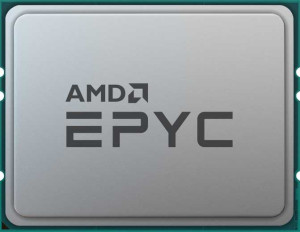
AMD Epyc 9645 specifications and in-depth review

AMD Epyc 9645

Manufacturer: AMD

The AMD Epyc 9645 is a server-class processor designed for demanding enterprise workloads, offering 96 physical cores operating at a base clock of 2.3 GHz with a turbo frequency reaching 3.7 GHz. Built on a 3 nm semiconductor process, it supports 64-bit computing and delivers 192 threads through multithreading, making it suited for highly parallel tasks across large-scale infrastructure deployments.

On the memory side, the Epyc 9645 supports DDR5 across 12 memory channels, with a maximum bandwidth of 576 GB/s, RAM speeds up to 6000 MHz, and support for up to 9000 GB of ECC memory — a configuration aligned with multi-socket server environments. The processor includes 7680 KB of L1 cache, 96 MB of L2 cache at 1 MB per core, and a substantial 256 MB L3 cache. It connects via PCIe 5.0 with a bus transfer rate of 32 GT/s and supports instruction sets including AVX2, FMA3, AES, and SSE 4.2, among others.

Pros
  • Supports ECC memory, which allows the processor to detect and correct memory errors — a critical reliability requirement in enterprise server environments
  • 12 memory channels combined with a maximum bandwidth of 576 GB/s provide substantial throughput for workloads that place heavy demands on memory access
  • A 256 MB L3 cache across 96 cores offers a large on-chip data pool, reducing the frequency of slower main memory accesses during parallel tasks
  • DDR5 support with speeds up to 6000 MHz and a capacity ceiling of 9000 GB accommodates large in-memory datasets common in enterprise deployments
  • PCIe 5.0 connectivity with a 32 GT/s bus transfer rate supports high-speed peripheral and storage communication at the interface level
  • Multithreading support across 96 cores yields 192 threads, enabling fine-grained parallelism across many concurrent server processes
Cons
  • A 320W TDP places significant thermal and power demands on server infrastructure, requiring robust cooling and power delivery systems
  • The locked clock multiplier removes any flexibility for frequency tuning, leaving no headroom for adjusting base clock behavior
  • No integrated graphics means every deployment requires a discrete graphics solution, adding a dependency even for basic display or remote management needs
  • At 3.7 GHz, the turbo clock speed is relatively modest for a processor in the enterprise CPU category, which may limit performance in workloads that depend on single-threaded execution speed
Who is this for?

This processor is well-matched to large-scale enterprise server environments that depend on sustained parallel throughput, such as cloud computing infrastructure, virtualization platforms, and data analytics workloads. With 96 cores and 192 threads, it handles high levels of concurrent processing without contention across workloads. The combination of 12 DDR5 memory channels, ECC support, and a 9000 GB memory ceiling makes it particularly fitting for in-memory databases and workloads that require both capacity and reliability. Environments that already have robust power delivery and thermal management infrastructure will be best positioned to accommodate its 320W TDP without operational complications.

Who is this NOT for?

This processor is a poor fit for any scenario where single-threaded performance is the primary bottleneck, as its turbo clock tops out at 3.7 GHz — a modest ceiling for workloads that cannot take advantage of wide parallelism. It is equally unsuitable for deployments with limited power or cooling resources, given that a 320W TDP demands substantial infrastructure investment to manage heat and energy consumption. Additionally, any use case requiring integrated display output or lightweight graphics capability will be hindered by the absence of integrated graphics, making it impractical in environments where a discrete GPU cannot be provisioned.

General info:

Thermal Design Power (TDP) 320W
semiconductor size 3 nm
PCI Express (PCIe) version 5
Supports 64-bit
Has integrated graphics

The AMD Epyc 9645 carries a Thermal Design Power (TDP) of 320W and is fabricated on a 3 nm semiconductor process, reflecting a compact manufacturing node for a processor in this class. It supports the PCIe 5.0 interface and is fully 64-bit compatible, while it does not include integrated graphics, meaning a discrete graphics solution is required in any deployment.

Performance:

CPU speed 96 x 2.3 GHz
CPU threads 192 threads
turbo clock speed 3.7GHz
L3 cache 256 MB
L1 cache 7680 KB
L2 cache 96 MB
L2 core 1 MB/core
clock multiplier 23
Has an unlocked multiplier
L3 core 2.67 MB/core

The Epyc 9645 runs 96 cores at a base clock of 2.3 GHz, supporting 192 threads in total, with a turbo clock speed that reaches 3.7 GHz under boosted conditions. Its cache hierarchy consists of 7680 KB of L1 cache, 96 MB of L2 cache distributed at 1 MB per core, and a 256 MB L3 cache at 2.67 MB per core — providing a substantial pool of fast on-chip memory across the entire processor. The clock multiplier is set to 23 and the multiplier is locked, meaning frequency adjustments through multiplier tuning are not available on this processor.

Memory:

Supports ECC memory
maximum memory bandwidth 576 GB/s
DDR memory version 5
RAM speed (max) 6000 MHz
maximum memory amount 9000GB
memory channels 12
bus transfer rate 32 GT/s

The Epyc 9645 supports DDR5 memory across 12 channels, with a maximum RAM speed of 6000 MHz and a peak memory bandwidth of 576 GB/s, enabling substantial data throughput for memory-intensive server workloads. It can address up to 9000 GB of total memory and supports ECC, which allows the processor to detect and correct memory errors — a standard requirement in enterprise environments. The bus transfer rate sits at 32 GT/s, governing the speed at which data moves across the memory interface.

Features:

uses multithreading
instruction sets MMX, F16C, FMA3, AES, AVX, AVX2, SSE 4.1, SSE 4.2
Has NX bit

The Epyc 9645 supports multithreading, allowing each physical core to handle multiple threads simultaneously. It includes the NX bit for hardware-level memory protection, helping to prevent certain classes of malicious code execution. The processor supports a broad range of instruction sets — MMX, F16C, FMA3, AES, AVX, AVX2, SSE 4.1, and SSE 4.2 — covering vectorized math operations, hardware-accelerated encryption, and extended multimedia and floating-point processing capabilities.

Benchmarks:

Final Verdict

The AMD Epyc 9645 is a processor built with a clear and singular purpose: to serve as a backbone for large-scale enterprise workloads that demand wide parallelism, deep memory capacity, and infrastructure-grade reliability. Its 96-core, 192-thread configuration paired with 12 DDR5 memory channels and ECC support represents a coherent set of specifications aimed squarely at virtualization, cloud, and data-intensive server environments. Deployments that cannot meet its thermal and power requirements, or those that depend on strong single-threaded throughput, will find it a poor match — but within the right infrastructure context, the Epyc 9645 delivers a well-rounded and technically consistent platform for demanding enterprise compute needs.

Popular Comparisons

AMD Epyc 9645
AMD Epyc 9645
VS
Intel Xeon Platinum 8568Y Plus
AMD Epyc 9645
AMD Epyc 9645
VS
AMD Epyc 9655
AMD Epyc 9655
AMD Epyc 9645
AMD Epyc 9645
VS
AMD Epyc 9825
AMD Epyc 9825