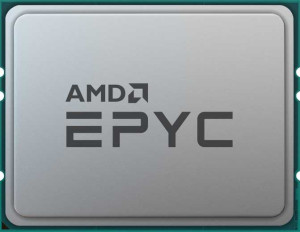
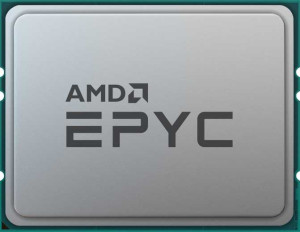
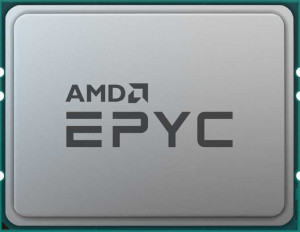
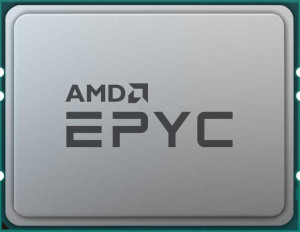
The AMD Epyc 9825 carries a Thermal Design Power (TDP) of 390W and is fabricated on a 3 nm semiconductor process, reflecting the dense integration required for a processor of this scale. It supports the 64-bit instruction architecture and connects to compatible platforms via PCIe 5.0, enabling high-bandwidth communication with supported devices. The processor does not include integrated graphics, which is consistent with its positioning as a dedicated compute-focused enterprise CPU.
The AMD Epyc 9825 runs 144 cores at a base frequency of 2.2 GHz, with a turbo clock speed reaching 3.7 GHz, and exposes 288 threads to the operating system for parallel workload handling. The clock multiplier is set at 22 and the multiplier is locked, meaning frequency adjustments outside of standard turbo behavior are not supported. Its cache structure is notably deep: 11520 KB of L1 cache and 144 MB of L2 cache at 1 MB per core provide fast, low-latency data access at the core level, while the 384 MB L3 cache — shared across the chip at approximately 2.67 MB per core — offers a substantial pool of higher-level cache to reduce memory latency under heavy workloads.
The AMD Epyc 9825 supports DDR5 memory at speeds of up to 6000 MHz across 12 memory channels, enabling a maximum memory bandwidth of 576 GB/s for throughput-intensive workloads. The processor can address up to 9000 GB of total system memory, providing substantial headroom for memory-heavy server applications. ECC memory is supported, which helps detect and correct single-bit memory errors to improve data integrity and system stability in production environments.
The AMD Epyc 9825 supports multithreading, allowing each physical core to handle multiple threads simultaneously for more efficient utilization under parallel workloads. It includes the NX bit, a hardware-level security feature that helps prevent certain classes of malicious code execution by marking memory regions as non-executable. The processor's instruction set support spans MMX, F16C, FMA3, AES, AVX, AVX2, SSE 4.1, and SSE 4.2, covering a broad range of operations from legacy multimedia instructions through to hardware-accelerated AES encryption and wide vectorized computation via AVX2.