AMD Ryzen 3 110 specifications and in-depth review

AMD Ryzen 3 110

Manufacturer: AMD

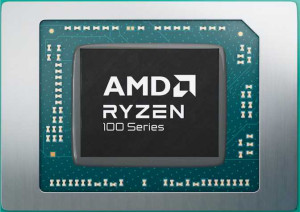
The AMD Ryzen 3 110 is a processor built to serve both laptop and desktop platforms, making it a versatile option within its segment. It operates on a 6 nm semiconductor process, which contributes to its relatively contained thermal envelope of 28W TDP. The chip supports 64-bit operation and connects to the rest of the system via PCIe 4.0, offering a reasonable degree of platform compatibility for its class.

On the performance side, the Ryzen 3 110 features four cores running at a base clock of 3 GHz, with a turbo frequency reaching 4.3 GHz across its 8 threads. Cache is organized across three levels — 512 KB of L1, 2 MB of L2, and 8 MB of L3. The integrated Radeon 660M graphics unit clocks up to 1800 MHz and supports up to four displays simultaneously, with compatibility for DirectX 12, OpenGL 4.6, and OpenCL 2.2. Memory support extends to DDR5 at 4800 MHz across two channels, with a maximum capacity of 64 GB and ECC support included.

Pros
  • Supports both laptop and desktop platforms, making it deployable across different system types
  • DDR5 memory support with dual-channel configuration and a maximum bandwidth of 76.8 GB/s enables fast data throughput
  • ECC memory support adds a layer of data integrity useful in error-sensitive environments
  • The integrated Radeon 660M can drive up to four displays simultaneously and supports DirectX 12, OpenGL 4.6, and OpenCL 2.2
  • A broad instruction set including AVX2, AES, FMA3, and F16C covers a wide range of computational workloads
  • NX bit support provides hardware-level protection against certain memory-based security exploits
Cons
  • The multiplier is locked, offering no headroom for manual clock speed adjustments
  • With only four cores and a base clock of 3 GHz, sustained multi-core workloads may hit throughput limits relatively quickly
  • A 28W TDP, while modest, leaves limited room for sustained peak performance in thermally constrained laptop enclosures
  • Does not use big.LITTLE heterogeneous core architecture, meaning all cores operate uniformly without efficiency-core assistance for background tasks
Who is this for?

This processor is a reasonable fit for users building compact or power-conscious systems that still need capable integrated graphics, thanks to its 28W TDP and Radeon 660M with support for up to four displays. Its DDR5 memory support with ECC capability makes it suitable for light professional or productivity-oriented workloads where data reliability matters. The combination of both laptop and desktop platform compatibility also makes it appealing for system integrators or developers targeting versatile, low-footprint deployments across different form factors.

Who is this NOT for?

Users who intend to run demanding multi-threaded workloads — such as video encoding, 3D rendering, or large-scale compilation tasks — will likely find four cores and a locked multiplier restrictive. The integrated Radeon 660M, while functional for general display output and compute tasks, is not suited for GPU-intensive applications such as modern gaming at high settings or professional graphics work. Similarly, users expecting overclocking flexibility or heterogeneous core scheduling for mixed performance and efficiency demands will find this chip's fixed architecture limiting.

General info:

Type Laptop, Desktop
Has integrated graphics
Thermal Design Power (TDP) 28W
semiconductor size 6 nm
CPU temperature 95 °C
PCI Express (PCIe) version 4
Supports 64-bit

The AMD Ryzen 3 110 is designed for use in both laptop and desktop systems, offering flexibility across form factors. It is built on a 6 nm semiconductor process and carries a Thermal Design Power of 28W, with a maximum operating temperature of 95 °C. The processor supports 64-bit operation and connects via PCIe 4.0, while also featuring integrated graphics, rounding out a general configuration suited to a range of deployment scenarios.

Performance:

CPU speed 4 x 3 GHz
CPU threads 8 threads
turbo clock speed 4.3GHz
Has an unlocked multiplier
L2 cache 2 MB
L3 cache 8 MB
L1 cache 512 KB
L2 core 0.5 MB/core
L3 core 2 MB/core
Uses big.LITTLE technology
clock multiplier 30

The processor runs four cores at a base speed of 3 GHz, with 8 threads in total and a turbo clock speed reaching 4.3 GHz, supported by a clock multiplier of 30. Cache is distributed across three levels: 512 KB of L1, 2 MB of L2 at 0.5 MB per core, and 8 MB of L3 at 2 MB per core. The chip does not feature an unlocked multiplier, nor does it employ big.LITTLE heterogeneous core architecture.

Benchmarks:

Integrated graphics:

GPU clock speed 1500 MHz
GPU name Radeon 660M
GPU turbo 1800 MHz
DirectX version DirectX 12
supported displays 4
OpenGL version 4.6
OpenCL version 2.2
texture mapping units (TMUs) 24
render output units (ROPs) 16
shading units 384

The integrated graphics solution is the Radeon 660M, clocked at 1500 MHz with a turbo frequency of 1800 MHz, and capable of driving up to four displays simultaneously. Its rendering pipeline consists of 384 shading units, 24 texture mapping units, and 16 render output units. API support covers DirectX 12, OpenGL 4.6, and OpenCL 2.2, providing a broad compatibility base for both general and compute-oriented workloads.

Memory:

RAM speed (max) 4800 MHz
maximum memory bandwidth 76.8 GB/s
DDR memory version 5
memory channels 2
maximum memory amount 64GB
Supports ECC memory

The processor supports DDR5 memory running at up to 4800 MHz across two channels, delivering a maximum memory bandwidth of 76.8 GB/s. It accommodates up to 64 GB of RAM in total, and notably includes support for ECC memory, which enables error-correcting functionality for greater data integrity in applicable configurations.

Features:

instruction sets MMX, F16C, FMA3, AES, AVX, AVX2, SSE 4.1, SSE 4.2
uses multithreading
Has NX bit

The processor supports a broad set of instruction sets including MMX, F16C, FMA3, AES, AVX, AVX2, SSE 4.1, and SSE 4.2, covering a range of general-purpose, floating-point, and encryption-related operations. It also features multithreading support, allowing multiple threads to run concurrently across its cores. Additionally, the chip includes an NX bit, which provides hardware-level memory protection to help guard against certain classes of malicious code execution.

Final Verdict

The AMD Ryzen 3 110 is a measured, well-rounded processor that occupies a practical space for users who need cross-platform flexibility without stepping into high-power territory. Its DDR5 support with ECC capability and the Radeon 660M integrated graphics give it a functional edge in productivity and light professional environments, while its 6 nm process and 28W thermal envelope keep it suitable for space- and power-constrained builds. That said, the locked multiplier and four-core configuration mean it is not built for users pushing compute-heavy workloads or seeking tuning headroom. For deployments where platform versatility, data reliability, and a capable integrated GPU matter more than raw throughput, the Ryzen 3 110 delivers a coherent and purposeful package.

Popular Comparisons

AMD Ryzen 3 110
AMD Ryzen 3 110
VS
Intel N150
Intel N150