AMD Ryzen 3 Pro 5355G specifications and in-depth review

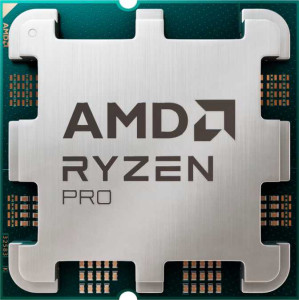
AMD Ryzen 3 Pro 5355G

Manufacturer: AMD

The AMD Ryzen 3 Pro 5355G is a desktop processor designed for the AM4 socket, built on a 7nm semiconductor process. It supports 64-bit computing and includes integrated graphics, making it a versatile option for systems that do not require a discrete GPU. With a thermal design power rating of 65W and a maximum CPU temperature of 95°C, it fits within a standard thermal envelope for desktop platforms.

The processor operates with 4 cores and 8 threads through multithreading support, running at a base clock speed of 4GHz and reaching up to 4.2GHz in turbo mode. Cache is arranged across three levels: 256KB of L1, 2MB of L2, and 8MB of L3. Memory support extends to DDR4 at up to 3200MHz across two channels. The integrated GPU reaches a turbo frequency of 1700MHz with 384 shading units, and PCIe 3.0 is available for expansion. Supported instruction sets include AVX2, AES, FMA3, and SSE 4.2, among others.

Pros
  • Supports multithreading, allowing 8 threads across 4 cores for handling parallel workloads more efficiently
  • Integrated graphics with a 1700MHz turbo frequency and 384 shading units removes the need for a separate graphics card in basic display setups
  • Built on a 7nm semiconductor process, which contributes to a relatively contained 65W TDP for a desktop chip
  • DDR4 dual-channel memory support with speeds up to 3200MHz provides reasonable memory bandwidth headroom
  • A wide range of supported instruction sets — including AVX2, AES, and FMA3 — broadens compatibility with software that relies on hardware-accelerated operations
  • NX bit support adds a hardware-level layer of protection against certain memory-based security exploits
Cons
  • No unlocked multiplier, limiting the ability to adjust clock speeds beyond factory settings
  • Turbo clock speed reaches only 4.2GHz, leaving minimal headroom above the 4GHz base across all four cores
  • L1 cache of 256KB and L2 cache of 2MB are modest figures that may constrain performance in cache-sensitive workloads
  • PCIe 3.0 rather than a newer version may limit available bandwidth for compatible expansion hardware
  • Does not use big.LITTLE technology, so there is no separation between efficiency and performance cores for varied workload optimization
Who is this for?

This processor is a practical fit for users building compact or office-oriented desktop systems where a discrete GPU is not required, thanks to its integrated graphics with a 1700MHz turbo frequency. The 65W TDP and AM4 socket compatibility make it well-suited for energy-conscious builds that prioritize a modest thermal footprint. Users running productivity software, business applications, or workloads that benefit from AES and AVX2 instruction set support will find the chip's feature set adequately aligned with those needs, and the dual-channel DDR4 memory support up to 3200MHz gives it enough memory bandwidth for everyday multitasking and light data processing tasks.

Who is this NOT for?

Users with demanding workloads such as video editing, 3D rendering, or compute-intensive tasks will likely find the 4-core configuration and limited turbo headroom of 4.2GHz insufficient for sustained heavy processing. Enthusiasts looking to fine-tune their system's clock behavior will be restricted by the locked multiplier, which removes the option to push frequencies beyond factory settings. Additionally, the integrated graphics, while functional, are not equipped to handle graphically demanding applications or gaming at meaningful settings, making this chip a poor fit for users who require strong GPU output without adding a dedicated graphics card.

General info:

Type Desktop
CPU socket AM4
Has integrated graphics
Thermal Design Power (TDP) 65W
semiconductor size 7 nm
CPU temperature 95 °C
PCI Express (PCIe) version 3
Supports 64-bit

The AMD Ryzen 3 Pro 5355G is a desktop processor built for the AM4 socket, manufactured on a 7nm semiconductor process. It carries a Thermal Design Power rating of 65W and a maximum operating temperature of 95°C, keeping it within standard desktop thermal boundaries. The chip includes integrated graphics and fully supports 64-bit computing. Connectivity is handled through PCIe 3.0, providing the interface needed for compatible expansion hardware.

Performance:

CPU speed 4 x 4 GHz
CPU threads 8 threads
turbo clock speed 4.2GHz
Has an unlocked multiplier
L2 cache 2 MB
L3 cache 8 MB
L1 cache 256 KB
L2 core 0.5 MB/core
L3 core 2 MB/core
Uses big.LITTLE technology
clock multiplier 40

The processor runs across 4 cores at a base speed of 4GHz each, with 8 threads available through multithreading support, and can reach a turbo clock speed of 4.2GHz when conditions allow. The clock multiplier is set at 40, and the chip does not feature an unlocked multiplier, meaning clock speed adjustments are restricted. Cache is distributed across three levels: 256KB of L1, 2MB of L2 at 0.5MB per core, and 8MB of L3 at 2MB per core, providing a layered memory hierarchy to support data-intensive workloads. The processor does not use big.LITTLE technology, so all cores operate under a uniform architecture.

Benchmarks:

Integrated graphics:

GPU turbo 1700 MHz
shading units 384

The integrated graphics solution reaches a GPU turbo frequency of 1700MHz and is backed by 384 shading units, which handle the parallel processing workloads associated with rendering and display output.

Memory:

RAM speed (max) 3200 MHz
DDR memory version 4
memory channels 2

The processor supports DDR4 memory at speeds of up to 3200MHz, operating across two memory channels to allow for dual-channel configurations that can improve memory bandwidth in compatible setups.

Features:

instruction sets MMX, F16C, FMA3, AES, AVX, AVX2, SSE 4.1, SSE 4.2
uses multithreading
Has NX bit

The processor includes a broad set of instruction sets — MMX, F16C, FMA3, AES, AVX, AVX2, SSE 4.1, and SSE 4.2 — covering a range of computational tasks from floating-point operations to hardware-accelerated encryption. Multithreading is supported, allowing the chip to handle more simultaneous threads than its physical core count alone would permit. The processor also features the NX bit, a hardware-level security mechanism that helps prevent certain classes of malicious code from executing in protected memory regions.
Final Verdict

The AMD Ryzen 3 Pro 5355G is a focused desktop processor that occupies a clear niche: systems that demand reasonable multithreaded capability, a contained thermal profile, and the convenience of integrated graphics without a discrete GPU. Its support for DDR4 dual-channel memory, a broad instruction set lineup, and hardware security through the NX bit round out a specification sheet that is well-matched to productivity-oriented and office desktop deployments. Where it falls short — primarily in raw compute headroom and graphics output for demanding workloads — reflects deliberate design boundaries rather than fundamental shortcomings. For users whose requirements align with what this chip genuinely offers, it represents a coherent and capable platform choice within the AM4 ecosystem.

Popular Comparisons

AMD Ryzen 3 Pro 5355G
VS
AMD Ryzen 7 Pro 5755G