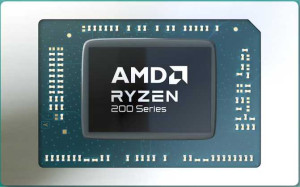
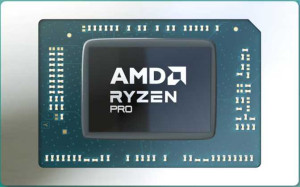
AMD Ryzen 5 220 specifications and in-depth review

AMD Ryzen 5 220

Manufacturer: AMD

The AMD Ryzen 5 220 is a versatile CPU suitable for both laptop and desktop setups. It supports integrated graphics and features a turbo clock speed of 4.9GHz for enhanced performance when needed.

With 12 threads and a thermal design power (TDP) of 28W, it delivers efficient multitasking capabilities. The CPU also supports up to 256GB of DDR5 RAM with a maximum speed of 7500 MHz, ensuring solid memory performance for demanding tasks.

Pros
  • Supports up to 256GB of DDR5 RAM, offering ample memory capacity for demanding tasks.
  • Includes integrated Radeon 740M graphics with a turbo speed of 2800 MHz, providing decent graphics performance for basic to moderate tasks.
  • Supports PCIe 4.0 for faster data transfer speeds.
  • Uses multithreading, allowing for better parallel processing and more efficient multitasking.
  • Built on a 4nm semiconductor, improving power efficiency and overall performance.
Cons
  • Does not support ECC memory, which could limit reliability in error-sensitive applications.
  • The CPU multiplier is locked, preventing overclocking for enhanced performance.
  • Maximum CPU temperature of 100°C could limit its thermal headroom under heavy load.
  • No support for more advanced features like hyper-threading, limiting certain high-end computational capabilities.
Who is this for?

The AMD Ryzen 5 220 is well-suited for users who need a balanced CPU for everyday computing tasks, such as light gaming, content creation, and multitasking. Its support for 12 threads and multithreading allows for smooth performance in office applications, web browsing, and media consumption. With integrated Radeon 740M graphics, it can handle light graphics tasks, making it a good option for users who don’t require high-end dedicated GPUs.

Who is this NOT for?

This CPU may not be ideal for power users or those with demanding computational needs, such as high-end gaming, professional video editing, or data-heavy applications. The lack of an unlocked multiplier limits overclocking potential, and its maximum CPU temperature of 100°C might restrict performance under sustained heavy loads. Additionally, it doesn’t support ECC memory, which could be a limitation for users working in fields that require high reliability and data integrity.

General info:

Type Laptop, Desktop
Has integrated graphics
release date January 2025
Thermal Design Power (TDP) 28W
semiconductor size 4 nm
CPU temperature 100 °C
PCI Express (PCIe) version 4
Supports 64-bit

The AMD Ryzen 5 220 CPU is designed for both laptop and desktop configurations, offering a thermal design power (TDP) of 28W for efficient energy usage. It includes integrated graphics and supports PCI Express 4.0 for faster data transfer. The CPU also supports 64-bit processing and is built using a 4 nm semiconductor size for improved performance and efficiency. The maximum operating temperature of the CPU reaches 100°C.

Performance:

CPU speed 2 x 3.7 & 4 x 3 GHz
CPU threads 12 threads
turbo clock speed 4.9GHz
Has an unlocked multiplier
L2 cache 6 MB
L3 cache 16 MB
Uses big.LITTLE technology
clock multiplier 32

The AMD Ryzen 5 220 offers impressive performance with 12 threads and a turbo clock speed of 4.9GHz, enabling high-speed processing for demanding tasks. It features a total clock speed of 2 x 3.7 & 4 x 3 GHz, delivering efficient multitasking. Additionally, the CPU is equipped with 6 MB of L2 cache and 16 MB of L3 cache for quick data access, while utilizing big.LITTLE technology for better power efficiency.

Benchmarks:

PassMark result 18272
PassMark result (single) 3600
PassMark result (overclocked) 20679

The AMD Ryzen 5 220 shows solid benchmark performance with a PassMark result of 18272. For single-threaded tasks, it achieves a PassMark score of 3600, while overclocking boosts the result to 20679, demonstrating enhanced processing power under higher loads.

Integrated graphics:

GPU clock speed 800 MHz
GPU name Radeon 740M
GPU turbo 2800 MHz
DirectX version DirectX 12
supported displays 4
OpenGL version 4.6
OpenCL version 2.1
texture mapping units (TMUs) 16
render output units (ROPs) 8
shading units 256

The AMD Ryzen 5 220 is equipped with integrated Radeon 740M graphics, offering a base GPU clock speed of 800 MHz and a turbo speed of 2800 MHz. It supports up to 4 displays and is compatible with DirectX 12, OpenGL 4.6, and OpenCL 2.1. With 256 shading units and 16 texture mapping units, it provides capable graphics performance for a variety of tasks.

Memory:

RAM speed (max) 7500 MHz
DDR memory version 5
memory channels 2
maximum memory amount 256GB
Supports ECC memory

The AMD Ryzen 5 220 supports high-performance memory with a maximum speed of 7500 MHz and utilizes DDR5 technology. It features two memory channels and can handle up to 256GB of RAM, offering ample capacity for demanding workloads. However, it does not support ECC memory.

Features:

instruction sets MMX, F16C, FMA3, AES, AVX, AVX2, SSE 4.1, SSE 4.2
uses multithreading
Has NX bit

The AMD Ryzen 5 220 offers a variety of advanced instruction sets, including MMX, AES, AVX, and SSE 4.2, to optimize performance for a range of tasks. It also supports multithreading for efficient parallel processing, and includes an NX bit for enhanced security by preventing the execution of malicious code.

Final Verdict

The AMD Ryzen 5 220 offers a solid balance of performance and efficiency, making it suitable for general computing, light gaming, and multitasking. Its 12 threads and support for integrated Radeon 740M graphics provide adequate power for most everyday tasks. However, it may fall short for more demanding applications due to its lack of overclocking support and the absence of ECC memory. Overall, it is a good choice for users seeking reliable performance in non-intensive environments.

Popular Comparisons

AMD Ryzen 5 220
AMD Ryzen 5 220
VS
AMD Ryzen 3 210
AMD Ryzen 3 210
AMD Ryzen 5 220
AMD Ryzen 5 220
VS
AMD Ryzen 5 Pro 230
AMD Ryzen 5 Pro 230
AMD Ryzen 5 220
AMD Ryzen 5 220
VS
AMD Ryzen 5 Pro 220
AMD Ryzen 5 Pro 220
AMD Ryzen 5 220
AMD Ryzen 5 220
VS
Intel Core 5 120U
Intel Core 5 120U
AMD Ryzen 5 220
AMD Ryzen 5 220
VS
AMD Ryzen AI 5 340
AMD Ryzen AI 5 340
AMD Ryzen 5 220
AMD Ryzen 5 220
VS
Intel Core Ultra 5 125U
AMD Ryzen 5 220
AMD Ryzen 5 220
VS
Intel Core Ultra 5 235
AMD Ryzen 5 220
AMD Ryzen 5 220
VS
AMD Ryzen 7 250
AMD Ryzen 7 250
AMD Ryzen 5 220
AMD Ryzen 5 220
VS
Intel Core 7 150U
Intel Core 7 150U
AMD Ryzen 5 220
AMD Ryzen 5 220
VS
Intel Core Ultra 5 236V
AMD Ryzen 5 220
AMD Ryzen 5 220
VS
AMD Ryzen 7 Pro 8840HS
AMD Ryzen 5 220
AMD Ryzen 5 220
VS
AMD Ryzen 5 7235HS
AMD Ryzen 5 7235HS
AMD Ryzen 5 220
AMD Ryzen 5 220
VS
AMD Ryzen 5 8640U
AMD Ryzen 5 8640U
AMD Ryzen 5 220
AMD Ryzen 5 220
VS
Intel Core Ultra 3 205
AMD Ryzen 5 220
AMD Ryzen 5 220
VS
AMD Ryzen 5 Pro 215
AMD Ryzen 5 Pro 215
AMD Ryzen 5 220
AMD Ryzen 5 220
VS
AMD Ryzen 5 5605G
AMD Ryzen 5 5605G
AMD Ryzen 5 220
AMD Ryzen 5 220
VS
Intel 300
Intel 300
AMD Ryzen 5 220
AMD Ryzen 5 220
VS
AMD Ryzen 5 8500G
AMD Ryzen 5 8500G
AMD Ryzen 5 220
AMD Ryzen 5 220
VS
Intel Core Ultra 5 235U
AMD Ryzen 5 220
AMD Ryzen 5 220
VS
Intel Core Ultra 5 225T
AMD Ryzen 5 220
AMD Ryzen 5 220
VS
AMD Ryzen 5 Pro 7535U