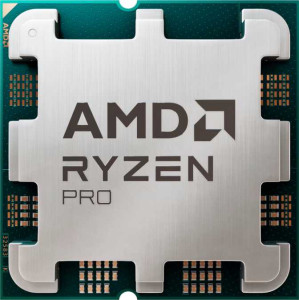
The AMD Ryzen 5 7400F is a desktop processor built for the AM5 socket, compatible with X670, B650, and X870 chipsets. It is fabricated on a 5 nm process node and integrates 6,570 million transistors, operating within a thermal design power of 65W and a maximum CPU temperature of 95 °C. The chip supports PCIe 5.0 and 64-bit computing, though it does not include integrated graphics, meaning a dedicated graphics card is necessary. The processor also carries a transistor count consistent with its manufacturing generation and fully supports 64-bit instruction execution.
The Ryzen 5 7400F runs six cores at a base clock of 3.7 GHz across all cores, supporting 12 threads in total, and can reach a turbo clock speed of 4.7 GHz with a clock multiplier of 37. The processor features an unlocked multiplier, allowing for manual frequency adjustments, and does not use big.LITTLE asymmetric core technology, meaning all cores share the same architecture. Cache is arranged across three levels: 384 KB of L1, 6 MB of L2 at 1 MB per core, and 32 MB of L3 cache at approximately 5.33 MB per core, providing a well-structured memory hierarchy to support the processor's 12-thread workload handling.
In standardized PassMark testing, the Ryzen 5 7400F achieves a multi-threaded score of 25,607, reflecting its capacity across all cores and threads, while its single-threaded score of 3,642 indicates per-core execution performance.
The Ryzen 5 7400F supports DDR5 memory across two channels, with a maximum rated speed of 5200 MHz and a total capacity ceiling of 128 GB. It also supports ECC memory, adding a layer of data integrity checking that can be useful in workloads where memory reliability is a priority.
The Ryzen 5 7400F supports multithreading, allowing each physical core to handle two threads simultaneously, and includes the NX bit for hardware-level protection against certain classes of malicious code execution. Its supported instruction sets span MMX, SSE 4.1, SSE 4.2, AES, AVX, AVX2, F16C, and FMA3, covering a broad range of data processing, encryption, and floating-point operations that software can take advantage of when optimized for these extensions.