AMD Ryzen 5 H 240 specifications and in-depth review

AMD Ryzen 5 H 240

Manufacturer: AMD

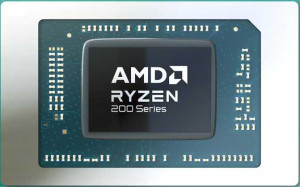
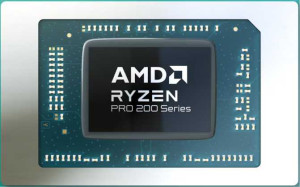
The AMD Ryzen 5 H 240 is a six-core processor designed for both laptop and desktop platforms, manufactured using a 4nm semiconductor process. It operates with 12 threads and supports a turbo clock speed of 5GHz, making it a capable option for multitasking workloads. The chip carries a thermal design power rating of 45W and reaches a maximum operating temperature of 100°C.

On the memory side, the Ryzen 5 H 240 supports DDR5 memory at speeds up to 7500MHz across two channels, with a maximum addressable capacity of 256GB. Its integrated Radeon 760M graphics include 512 shading units, 32 texture mapping units, and a GPU turbo frequency of 2600MHz, with support for DirectX 12 and OpenGL 4.6. The processor also includes 6MB of L2 cache and 16MB of L3 cache, connects via PCIe 4.0, and supports a broad set of instruction sets including AVX2, FMA3, and AES.

Pros
  • Supports both laptop and desktop platforms, offering flexibility across different system form factors
  • DDR5 memory compatibility with speeds up to 7500MHz and a maximum capacity of 256GB provides substantial memory headroom
  • The Radeon 760M integrated graphics can drive up to 4 displays simultaneously without a dedicated GPU
  • Turbo clock speed reaches 5GHz across 6 cores with 12 threads, enabling solid multitasking throughput
  • Built on a 4nm process node, which contributes to a relatively contained 45W TDP for a processor of this core configuration
  • Broad instruction set support including AVX2, FMA3, and AES covers a wide range of compute and security-oriented workloads
Cons
  • The multiplier is locked, removing any option for manual frequency tuning
  • Does not support ECC memory, limiting suitability for error-sensitive or mission-critical environments
  • Base GPU clock of 800MHz is modest, and the integrated graphics may struggle with demanding graphical workloads
  • big.LITTLE heterogeneous core architecture is absent, meaning there is no efficiency-core layer for background task management
Who is this for?

This processor is a practical fit for users building or purchasing systems that need to handle everyday multitasking and productivity workloads without relying on a discrete GPU, thanks to the Radeon 760M integrated graphics with support for up to four simultaneous displays. Its dual-platform compatibility makes it relevant for both compact laptop builds and desktop setups where a 45W TDP is workable. Users who need large memory configurations will also find the DDR5 support with up to 256GB capacity useful, particularly in content-aware or data-handling applications that benefit from high memory bandwidth.

Who is this NOT for?

Users looking to engage in graphics-intensive tasks such as gaming at higher settings, 3D rendering, or video production would find the integrated Radeon 760M insufficient for sustained demanding workloads, as it lacks the dedicated resources of a discrete GPU. The locked multiplier makes this processor a poor fit for enthusiasts interested in manual overclocking or frequency tuning. Additionally, the absence of ECC memory support means it is not appropriate for error-critical or high-reliability computing environments such as servers, workstations handling sensitive data, or professional applications where memory integrity is a strict requirement.

General info:

Type Laptop, Desktop
Has integrated graphics
Thermal Design Power (TDP) 45W
semiconductor size 4 nm
CPU temperature 100 °C
PCI Express (PCIe) version 4
Supports 64-bit

The AMD Ryzen 5 H 240 is designed for both laptop and desktop platforms and includes integrated graphics, giving it flexibility across different system configurations. Built on a 4nm semiconductor process, it operates within a 45W thermal design power envelope and supports a maximum CPU temperature of 100°C. The processor connects via PCIe 4.0 and fully supports 64-bit computing.

Performance:

CPU speed 6 x 4.3 GHz
CPU threads 12 threads
turbo clock speed 5GHz
Has an unlocked multiplier
L2 cache 6 MB
L3 cache 16 MB
L2 core 1 MB/core
L3 core 2.67 MB/core
Uses big.LITTLE technology
clock multiplier 43

The processor features 6 cores running at a base speed of 4.3GHz each, supported by 12 threads for handling concurrent workloads, and can reach a turbo clock speed of 5GHz under load with a clock multiplier of 43. Cache configuration includes 6MB of L2 cache at 1MB per core and 16MB of L3 cache at 2.67MB per core, providing reasonable data access headroom across cores. The chip does not have an unlocked multiplier and does not use big.LITTLE heterogeneous core architecture.

Benchmarks:

Integrated graphics:

GPU clock speed 800 MHz
GPU name Radeon 760M
GPU turbo 2600 MHz
DirectX version DirectX 12
supported displays 4
OpenGL version 4.6
OpenCL version 2.1
texture mapping units (TMUs) 32
render output units (ROPs) 16
shading units 512

The integrated graphics solution is the Radeon 760M, which runs at a base clock of 800MHz and can boost up to a GPU turbo of 2600MHz. It includes 512 shading units, 32 texture mapping units, and 16 render output units, and is capable of driving up to 4 displays simultaneously. API support covers DirectX 12, OpenGL 4.6, and OpenCL 2.1, offering a broad range of compatibility for general graphics and compute tasks.

Memory:

RAM speed (max) 7500 MHz
DDR memory version 5
memory channels 2
maximum memory amount 256GB
Supports ECC memory

The processor supports DDR5 memory across two channels, with a maximum RAM speed of 7500MHz and a total addressable capacity of up to 256GB. The dual-channel configuration allows for balanced memory bandwidth in supported setups. ECC memory is not supported by this processor.

Features:

instruction sets MMX, F16C, FMA3, AES, AVX, AVX2, SSE 4.1, SSE 4.2
uses multithreading
Has NX bit

The processor supports multithreading and includes the NX bit for hardware-level memory protection. Its instruction set support covers a broad range of extensions, including MMX, F16C, FMA3, AES, AVX, AVX2, SSE 4.1, and SSE 4.2, enabling compatibility with a wide variety of workloads that rely on vectorized and encrypted computation.
Final Verdict

The AMD Ryzen 5 H 240 is a well-rounded processor for users who need a versatile, dual-platform chip with a sensible thermal footprint and solid memory capabilities. Its DDR5 support with speeds up to 7500MHz and a 256GB capacity ceiling stands out as a particularly strong specification for a processor in this class, and the Radeon 760M integrated graphics adds genuine utility for multi-display productivity setups without requiring a discrete GPU. That said, the locked multiplier and lack of ECC support do draw a clear boundary around its intended audience — this is not a chip aimed at overclockers or reliability-critical workloads. Overall, the Ryzen 5 H 240 presents a coherent specification profile for mainstream productivity-oriented builds where platform flexibility, memory bandwidth, and integrated graphics capability matter most.

Popular Comparisons

AMD Ryzen 5 H 240
AMD Ryzen 5 H 240
VS
AMD Ryzen 3 Pro 210
AMD Ryzen 3 Pro 210
AMD Ryzen 5 H 240
AMD Ryzen 5 H 240
VS
Intel Core 5 210H
Intel Core 5 210H
AMD Ryzen 5 H 240
AMD Ryzen 5 H 240
VS
Intel Core 5 220H
Intel Core 5 220H
AMD Ryzen 5 H 240
AMD Ryzen 5 H 240
VS
Intel Core i7-14700K
AMD Ryzen 5 H 240
AMD Ryzen 5 H 240
VS
AMD Ryzen 7 8840HS
AMD Ryzen 7 8840HS
AMD Ryzen 5 H 240
AMD Ryzen 5 H 240
VS
AMD Ryzen 7 8845HS
AMD Ryzen 7 8845HS