AMD Ryzen 5 Pro 8500G specifications and in-depth review

AMD Ryzen 5 Pro 8500G

Manufacturer: AMD

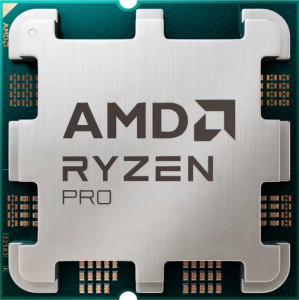
The AMD Ryzen 5 Pro 8500G is a desktop processor designed for the AM5 socket, combining a six-core, twelve-thread CPU with integrated Radeon 740M graphics in a single package. Built on a 4 nm process node, it operates at a base clock of 3.5 GHz across all six cores and reaches a turbo clock speed of 5 GHz. With a 65W TDP and ECC memory support, it is oriented toward business desktop deployments where reliability and manageability carry weight alongside processing capability.

The cache hierarchy consists of 384 KB of L1, 6 MB of L2 at 1 MB per core, and 16 MB of L3 cache, complemented by an unlocked multiplier for frequency adjustments. Memory support extends to DDR5 across two channels with a maximum capacity of 256 GB, including ECC. The integrated Radeon 740M GPU runs at 800 MHz base and boosts to 2800 MHz, featuring 256 shading units, 16 TMUs, and 8 ROPs, with support for DirectX 12, OpenGL 4.6, and OpenCL 2.1 across up to four displays. PCIe 4 connectivity, NX bit support, and a broad instruction set including AES, AVX2, and FMA3 round out the technical profile.

Pros
  • An unlocked multiplier allows clock frequency adjustments without being locked to factory settings
  • ECC memory support makes it suitable for workloads where data integrity is a priority
  • DDR5 support across two channels with a maximum capacity of 256 GB gives the platform significant memory headroom
  • The integrated Radeon 740M GPU can drive up to four displays simultaneously, useful for multi-monitor desktop setups
  • A broad instruction set including AES, AVX2, and FMA3 covers a wide range of compute-intensive and security-relevant workloads
  • 16 MB of L3 cache helps sustain throughput for data-heavy tasks without frequent memory fetches
Cons
  • With only 4 GPU execution units and 256 shading units, the integrated Radeon 740M is not suited for graphics-intensive or GPU-accelerated tasks
  • The 65W TDP requires adequate cooling solutions, as the chip is not designed for passively cooled or thermally constrained builds
  • OpenCL support is limited to version 2.1, which may be a constraint for software targeting newer compute API versions
Who is this for?

The Ryzen 5 Pro 8500G is well-suited to business desktop builds where a discrete GPU is unnecessary, thanks to the integrated Radeon 740M's ability to drive up to four displays simultaneously. ECC memory support and a broad instruction set including AES and AVX2 make it a practical choice for workstation deployments that require data integrity and compute reliability, such as office systems, light data processing, or secure local compute environments. The unlocked multiplier and DDR5 support with up to 256 GB of RAM also give system builders meaningful headroom for configuration.

Who is this NOT for?

Users who need strong graphics performance for GPU-accelerated workloads, 3D rendering, or gaming will find the integrated Radeon 740M's 4 execution units and 256 shading units inadequate for those demands. The chip is also a poor fit for passively cooled or thermally restricted builds, as its 65W TDP requires active cooling to operate within rated parameters. Additionally, developers or applications targeting OpenCL 3.0 or newer compute APIs may encounter compatibility limitations given the chip's OpenCL 2.1 ceiling.

General info:

Type Desktop
CPU socket AM5
Has integrated graphics
Thermal Design Power (TDP) 65W
semiconductor size 4 nm
CPU temperature 95 °C
PCI Express (PCIe) version 4
Supports 64-bit

The Ryzen 5 Pro 8500G is a desktop-class processor fitting the AM5 socket, built on a 4 nm semiconductor process with a 65W Thermal Design Power rating and a maximum operating temperature of 95 °C. It includes integrated graphics, supports 64-bit processing, and connects to the platform via PCIe 4.

Performance:

CPU speed 6 x 3.5 GHz
CPU threads 12 threads
turbo clock speed 5GHz
Has an unlocked multiplier
L2 cache 6 MB
L3 cache 16 MB
L1 cache 384 KB
L2 core 1 MB/core
L3 core 2.67 MB/core
Uses big.LITTLE technology
clock multiplier 35

The processor runs six cores at a base clock of 3.5 GHz across all cores, supporting 12 threads in total, and reaches a turbo clock speed of 5 GHz with a clock multiplier of 35. An unlocked multiplier provides additional flexibility for frequency tuning. The cache layout consists of 384 KB of L1, 6 MB of L2 at 1 MB per core, and 16 MB of L3 cache at 2.67 MB per core. The chip does not use big.LITTLE heterogeneous core architecture, meaning all cores operate under a uniform configuration.

Benchmarks:

PassMark result 22001
PassMark result (single) 3983

In PassMark testing, the processor achieves a multi-threaded score of 22,001 and a single-threaded score of 3,983, reflecting its throughput across both parallel and sequential workloads.

Integrated graphics:

GPU clock speed 800 MHz
GPU name Radeon 740M
GPU turbo 2800 MHz
GPU execution units 4
DirectX version DirectX 12
supported displays 4
OpenGL version 4.6
OpenCL version 2.1
texture mapping units (TMUs) 16
render output units (ROPs) 8
shading units 256

The integrated Radeon 740M GPU runs at a base clock of 800 MHz and boosts up to 2800 MHz, with 4 execution units backed by 256 shading units, 16 texture mapping units, and 8 render output units. It supports up to four displays simultaneously and is compatible with DirectX 12, OpenGL 4.6, and OpenCL 2.1, covering a broad range of compute and graphics API requirements for general desktop use.

Memory:

DDR memory version 5
memory channels 2
maximum memory amount 256GB
Supports ECC memory

The processor supports DDR5 memory across two channels, with a maximum capacity of 256 GB. ECC memory is also supported, making it a practical fit for workstation and business desktop builds where data integrity is a priority.

Features:

instruction sets MMX, F16C, FMA3, AES, AVX, AVX2, SSE 4.1, SSE 4.2
uses multithreading
Has NX bit

The processor supports multithreading and includes the NX bit for hardware-level memory protection. Its instruction set coverage spans MMX, AES, AVX, AVX2, FMA3, F16C, SSE 4.1, and SSE 4.2, providing a broad foundation for workloads that rely on vectorized computation, encryption acceleration, and floating-point operations.
Final Verdict

The AMD Ryzen 5 Pro 8500G occupies a well-defined position in the desktop CPU landscape, built around the AM5 platform with a focus on business and workstation use cases where reliability and versatility matter more than raw graphics throughput. Its combination of ECC memory support, DDR5 compatibility up to 256 GB, and an unlocked multiplier gives system builders a technically capable foundation for deployments that demand data integrity and configurability. The integrated Radeon 740M handles multi-display output competently for productivity environments, though users with demanding graphics or compute workloads will need to look beyond what the integrated solution can offer. For business desktop builds and light workstation configurations on the AM5 platform, the Ryzen 5 Pro 8500G delivers a coherent and professionally oriented feature set.

Popular Comparisons

AMD Ryzen 5 Pro 8500G
VS
AMD Ryzen 5 8500G
AMD Ryzen 5 8500G
AMD Ryzen 5 Pro 8500G
VS
AMD Ryzen 3 8300GE
AMD Ryzen 3 8300GE
AMD Ryzen 5 Pro 8500G
VS
AMD Ryzen 5 7430U
AMD Ryzen 5 7430U
AMD Ryzen 5 Pro 8500G
VS
AMD Ryzen 5 7400F
AMD Ryzen 5 7400F
AMD Ryzen 5 Pro 8500G
VS
AMD Ryzen 5 Pro 8500GE
AMD Ryzen 5 Pro 8500G
VS
Intel Core Ultra 5 225
AMD Ryzen 5 Pro 8500G
VS
Intel Core Ultra 5 235