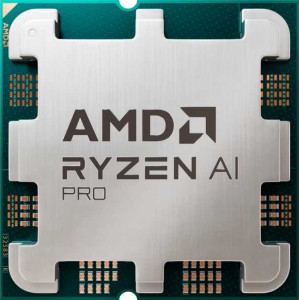
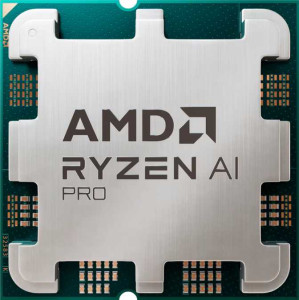
AMD Ryzen 5 Pro 8500GE specifications and in-depth review

AMD Ryzen 5 Pro 8500GE

Manufacturer: AMD

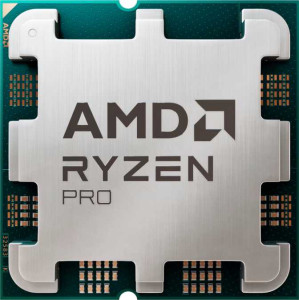
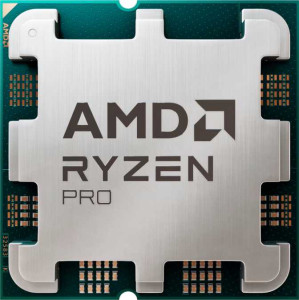
The AMD Ryzen 5 Pro 8500GE is a desktop processor designed for the AM5 platform, manufactured on a 4nm process node that allows it to operate within a 35W thermal envelope. It features six cores with twelve threads through multithreading support, a base clock of 3.4 GHz per core, and a turbo frequency reaching up to 5 GHz. The chip also includes an unlocked multiplier, giving system builders some flexibility in configuration.

On the graphics side, the integrated Radeon 740M runs at a base clock of 800 MHz and boosts up to 2800 MHz, with 256 shading units, 16 texture mapping units, and support for up to four displays simultaneously. Memory support extends to DDR5 across two channels with a maximum capacity of 256GB, and ECC memory is supported. The cache hierarchy includes 384KB of L1, 6MB of L2, and 16MB of L3 cache. The processor also supports a broad set of instruction sets including AVX2, AES, and FMA3, and achieves a PassMark score of 21,642 in multi-threaded testing.

Pros
  • Supports ECC memory, which adds a layer of data integrity useful in professional and reliability-sensitive desktop deployments
  • The integrated Radeon 740M can drive up to four displays simultaneously without requiring a discrete GPU
  • DDR5 support with dual-channel configuration and a maximum capacity of 256GB offers substantial memory bandwidth and headroom
  • An unlocked multiplier provides flexibility when adjusting the clock configuration
  • The 35W TDP keeps heat output relatively low for a six-core desktop processor, which can simplify thermal and cooling requirements
  • Broad instruction set support including AES, AVX2, and FMA3 covers a wide range of compute and security workloads
Cons
  • The integrated GPU operates at only 800 MHz base clock with just 4 execution units, limiting its suitability for graphically demanding tasks
  • A single-threaded PassMark score of 3,953 indicates modest per-core throughput for workloads that do not scale across multiple threads
  • The absence of big.LITTLE technology means the processor cannot dynamically shift tasks between efficiency and performance core types
  • PCIe 4.0 support, while capable, does not offer the bandwidth headroom of newer PCIe 5.0 platforms
Who is this for?

This processor is well-suited for professional desktop workloads that benefit from ECC memory support, such as workstations handling data-sensitive operations where memory reliability is a priority. Its ability to drive up to four displays simultaneously through the integrated Radeon 740M makes it a reasonable fit for multi-monitor office setups or light productivity environments that do not depend on a discrete GPU. The 35W TDP also makes it appropriate for compact or thermally constrained desktop builds where power efficiency and heat management are important considerations.

Who is this NOT for?

Users looking to run graphically demanding applications or games will find the integrated Radeon 740M with only 4 execution units insufficient for those workloads. The modest single-threaded PassMark score of 3,953 also makes this processor a poor fit for latency-sensitive or single-threaded tasks such as certain simulation, audio production, or legacy software workflows that rely heavily on per-core speed. Additionally, enthusiasts seeking a platform with PCIe 5.0 bandwidth for next-generation storage or GPU configurations will find the PCIe 4.0 support limiting in that context.

General info:

Type Desktop
CPU socket AM5
Has integrated graphics
Thermal Design Power (TDP) 35W
semiconductor size 4 nm
CPU temperature 95 °C
PCI Express (PCIe) version 4
Supports 64-bit

The AMD Ryzen 5 Pro 8500GE is a desktop processor built on the AM5 socket, fabricated using a 4nm semiconductor process that contributes to its low 35W Thermal Design Power rating. It includes integrated graphics and fully supports 64-bit computing, while the maximum rated CPU temperature sits at 95°C. The chip also supports PCIe 4.0, enabling compatibility with a range of modern expansion cards and storage devices.

Performance:

CPU speed 6 x 3.4 GHz
CPU threads 12 threads
turbo clock speed 5GHz
Has an unlocked multiplier
L2 cache 6 MB
L3 cache 16 MB
L1 cache 384 KB
L2 core 1 MB/core
L3 core 2.67 MB/core
Uses big.LITTLE technology
clock multiplier 34

The processor features six cores running at a base speed of 3.4 GHz each, with 12 threads supported through multithreading and a turbo clock speed that reaches up to 5 GHz. The clock multiplier is set at 34, and an unlocked multiplier is available for configuration flexibility. Cache is arranged across three levels: 384 KB of L1, 6 MB of L2 at 1 MB per core, and 16 MB of L3 at 2.67 MB per core. This chip does not use big.LITTLE heterogeneous core architecture, meaning all six cores operate under a uniform design.

Benchmarks:

PassMark result 21642
PassMark result (single) 3953

In PassMark testing, this processor achieves a multi-threaded score of 21,642, reflecting its overall throughput across all cores and threads. The single-threaded PassMark result stands at 3,953, indicating the per-core processing capability measured under that benchmark.

Integrated graphics:

GPU clock speed 800 MHz
GPU name Radeon 740M
GPU turbo 2800 MHz
GPU execution units 4
DirectX version DirectX 12
supported displays 4
OpenGL version 4.6
OpenCL version 2.1
texture mapping units (TMUs) 16
render output units (ROPs) 8
shading units 256

The integrated Radeon 740M GPU operates at a base clock of 800 MHz and can boost up to 2800 MHz, backed by 4 execution units, 256 shading units, 16 texture mapping units, and 8 render output units. It supports DirectX 12, OpenGL 4.6, and OpenCL 2.1, covering a broad range of graphics and compute workloads. The GPU is capable of driving up to 4 displays simultaneously, making it suited for multi-monitor setups without a discrete graphics card.

Memory:

DDR memory version 5
memory channels 2
maximum memory amount 256GB
Supports ECC memory

This processor supports DDR5 memory across two channels, allowing for dual-channel configurations. The maximum supported memory capacity reaches 256GB, providing ample headroom for memory-intensive workloads. Additionally, the chip supports ECC memory, which enables error detection and correction — a feature commonly valued in professional and reliability-sensitive environments.

Features:

instruction sets MMX, F16C, FMA3, AES, AVX, AVX2, SSE 4.1, SSE 4.2
uses multithreading
Has NX bit

This processor supports multithreading and includes the NX bit for hardware-level memory protection against certain types of malicious code execution. It is compatible with a broad set of instruction sets, including MMX, F16C, FMA3, AES, AVX, AVX2, SSE 4.1, and SSE 4.2, covering a wide range of compute, encryption, and floating-point operations.
Final Verdict

The AMD Ryzen 5 Pro 8500GE is a purposefully designed desktop processor that occupies a clear niche: energy-efficient professional computing within a compact thermal footprint. Its ECC memory support combined with DDR5 dual-channel capability makes it a credible choice for reliability-focused workstation builds, while the integrated Radeon 740M adds genuine multi-display utility without requiring additional hardware. That said, users with demanding single-threaded workloads or graphically intensive requirements will find its capabilities constrained. For those whose needs align with its design priorities — low power draw, data integrity, and quiet multi-monitor operation — the Ryzen 5 Pro 8500GE delivers a coherent and well-rounded specification set for professional desktop use.

Popular Comparisons

AMD Ryzen 5 Pro 8500GE
VS
AMD Ryzen 5 Pro 220
AMD Ryzen 5 Pro 220
AMD Ryzen 5 Pro 8500GE
VS
AMD Ryzen 5 Pro 8500G
AMD Ryzen 5 Pro 8500GE
VS
AMD Ryzen 5 8500G
AMD Ryzen 5 8500G
AMD Ryzen 5 Pro 8500GE
VS
AMD Ryzen 3 8300GE
AMD Ryzen 3 8300GE
AMD Ryzen 5 Pro 8500GE
VS
AMD Ryzen 7 Pro 5755GE
AMD Ryzen 5 Pro 8500GE
VS
Intel Core i5-14500T
AMD Ryzen 5 Pro 8500GE
VS
AMD Ryzen 7 8700G
AMD Ryzen 7 8700G
AMD Ryzen 5 Pro 8500GE
VS
Intel Core Ultra 5 235
AMD Ryzen 5 Pro 8500GE
VS
Intel Core i5-14400T
AMD Ryzen 5 Pro 8500GE
VS
AMD Ryzen 5 Pro 8600GE
AMD Ryzen 5 Pro 8500GE
VS
AMD Ryzen 7 H 250
AMD Ryzen 7 H 250
AMD Ryzen 5 Pro 8500GE
VS
Intel Core Ultra 5 235T
AMD Ryzen 5 Pro 8500GE
VS
AMD Ryzen 7 Pro 8700GE
AMD Ryzen 5 Pro 8500GE
VS
Intel Core Ultra 5 125U