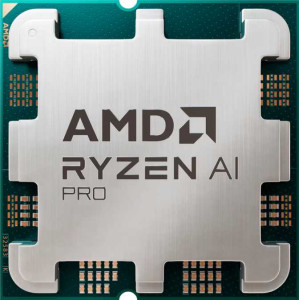
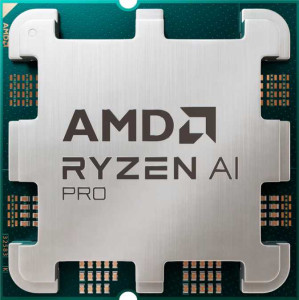
AMD Ryzen 7 8700G specifications and in-depth review

AMD Ryzen 7 8700G

Manufacturer: AMD

The AMD Ryzen 7 8700G is a desktop processor built on a 4nm process node, integrating eight cores running at a base frequency of 4.2GHz across the entire cluster — no hybrid core arrangement is used here. With an unlocked clock multiplier, the chip is open to manual frequency tuning, giving enthusiasts room to push performance beyond the factory 5.1GHz turbo ceiling. It fits the AM5 socket and is compatible with both X670 and B650 chipsets, with a 65W TDP and a maximum operating temperature of 95°C.

The integrated graphics solution is the Radeon 780M, which stands out with 768 shading units, 48 texture mapping units, 32 render output units, and a boost clock of 2900MHz — a notably more capable configuration than most integrated GPUs. It supports DirectX 12, OpenGL 4.6, and OpenCL 2.1, and can drive up to four displays simultaneously. On the memory side, the processor handles DDR5 at up to 5200MHz across two channels with a maximum capacity of 256GB, and ECC memory is supported. Cache resources include 512KB of L1, 8MB of L2, and 16MB of L3, with the chip connecting to the platform via PCIe 4.0.

Pros
  • The unlocked clock multiplier gives enthusiasts genuine flexibility to push frequencies beyond the 5.1GHz factory turbo ceiling
  • The Radeon 780M integrated graphics, with 768 shading units and a 2900MHz boost clock, is substantially more capable than typical integrated GPU solutions for a desktop processor
  • DDR5 memory support at up to 5200MHz with a 256GB maximum capacity provides a high memory ceiling for a 65W desktop chip
  • ECC memory support makes the processor viable for reliability-focused builds where data integrity is a requirement
  • All eight cores share a uniform 4.2GHz base clock without a hybrid arrangement, resulting in predictable and consistent per-core behavior across workloads
  • The 4nm process node allows 25 billion transistors to be packed into the chip while keeping the TDP at 65W
Cons
  • Chipset compatibility is limited to only two options — X670 and B650 — offering less platform flexibility than some alternatives
  • PCIe 4.0 rather than PCIe 5.0 means the platform cannot take full advantage of the latest generation of storage devices
  • The 16MB L3 cache total is relatively modest for an eight-core desktop processor, with only 2MB available per core
Who is this for?

The AMD Ryzen 7 8700G is well-suited to desktop users who want a capable system without a discrete GPU, thanks to the Radeon 780M integrated graphics with its 768 shading units and 2900MHz boost clock — enough to handle light gaming, media tasks, and multi-display productivity setups spanning up to four screens. The unlocked clock multiplier makes it a practical choice for enthusiast builders who want room to tune frequencies beyond factory settings without being locked into a fixed configuration. Users who need reliability alongside performance will also find value in the ECC memory support and 256GB DDR5 capacity ceiling, which together accommodate memory-intensive and integrity-critical workloads within a 65W thermal envelope.

Who is this NOT for?

Users who demand the fastest available storage connectivity may find the PCIe 4.0 interface a limiting factor, as it cannot fully utilize PCIe 5.0 devices. Those building systems that require broad motherboard options will also face constraints, since the processor is limited to only X670 and B650 chipsets, narrowing platform flexibility compared to sockets with wider chipset support. Additionally, workloads that benefit heavily from a large shared L3 cache — such as latency-sensitive server tasks or certain data-intensive applications — may find the 16MB L3 total limiting for an eight-core desktop chip running sustained parallel workloads.

General info:

Type Desktop
CPU socket AM5
chipset X670, B650
Has integrated graphics
Thermal Design Power (TDP) 65W
semiconductor size 4 nm
CPU temperature 95 °C
PCI Express (PCIe) version 4
number of transistors 25000 million
Supports 64-bit

This is a desktop processor built on a 4nm semiconductor process and housing 25 billion transistors, using the AM5 socket with compatibility limited to X670 and B650 chipsets. It includes integrated graphics, supports 64-bit computing, and connects to the platform via PCIe 4.0. The chip operates within a 65W TDP and has a maximum rated temperature of 95°C.

Performance:

CPU speed 8 x 4.2 GHz
CPU threads 16 threads
turbo clock speed 5.1GHz
Has an unlocked multiplier
L2 cache 8 MB
L3 cache 16 MB
L1 cache 512 KB
L2 core 1 MB/core
L3 core 2 MB/core
Uses big.LITTLE technology
clock multiplier 42

The processor runs eight homogeneous cores — no big.LITTLE arrangement is used — each clocked at 4.2GHz as the base frequency, yielding 16 threads in total. The unlocked clock multiplier, set at 42 from the factory, allows manual frequency adjustments beyond the 5.1GHz turbo ceiling for those who want to push the chip further. Cache is distributed as 512KB of L1, 1MB of L2 per core totaling 8MB, and 2MB of L3 per core totaling 16MB of L3 cache, providing a well-structured memory hierarchy across all eight cores.

Benchmarks:

PassMark result 31665
PassMark result (single) 3926
Cinebench R20 (multi) result 7061
Cinebench R20 (single) result 707
Geekbench 6 result (multi) 13606
Geekbench 6 result (single) 2649
PassMark result (overclocked) 32465

Across multi-threaded benchmarks, the processor records a PassMark score of 31,665, a Cinebench R20 multi-core result of 7,061, and a Geekbench 6 multi-core score of 13,606, painting a consistent picture of its parallel throughput. Single-core results come in at a PassMark of 3,926, a Cinebench R20 single of 707, and a Geekbench 6 single-core score of 2,649, reflecting solid per-core responsiveness. With the unlocked multiplier engaged, the overclocked PassMark result reaches 32,465, showing a modest but real gain over the stock configuration.

Integrated graphics:

GPU clock speed 800 MHz
GPU name Radeon 780M
GPU turbo 2900 MHz
GPU execution units 12
DirectX version DirectX 12
supported displays 4
OpenGL version 4.6
OpenCL version 2.1
texture mapping units (TMUs) 48
render output units (ROPs) 32
shading units 768

The integrated graphics solution is the AMD Radeon 780M, featuring 12 compute units that translate to 768 shading units, 48 texture mapping units, and 32 render output units — a well-equipped pipeline for an integrated GPU. It operates at a base clock of 800MHz and boosts up to 2900MHz, with support for up to four simultaneous displays. The GPU is compatible with DirectX 12, OpenGL 4.6, and OpenCL 2.1, covering both standard rendering workloads and general-purpose compute tasks handled entirely at the integrated level.

Memory:

RAM speed (max) 5200 MHz
DDR memory version 5
memory channels 2
maximum memory amount 256GB
Supports ECC memory

The processor supports DDR5 memory at speeds up to 5200MHz through a dual-channel configuration, offering a higher memory frequency ceiling than many desktop chips in this tier. It can address up to 256GB of RAM, providing substantial headroom for memory-heavy workloads. ECC memory is also supported, making error-correcting configurations a viable option for users who require data integrity in their builds.

Features:

instruction sets MMX, F16C, FMA3, AES, AVX, AVX2, SSE 4.1, SSE 4.2
uses multithreading
Has NX bit

The processor supports multithreading and includes the NX bit for hardware-enforced protection against certain memory exploitation techniques. Its instruction set coverage includes MMX, F16C, FMA3, AES, AVX, AVX2, SSE 4.1, and SSE 4.2, providing a broad foundation that spans legacy multimedia extensions through to hardware-accelerated AES encryption and 256-bit vector processing via AVX and AVX2, supporting a wide range of compute workloads without software-only fallbacks.
Final Verdict

The AMD Ryzen 7 8700G occupies a well-defined position as a desktop processor built for users who want meaningful integrated graphics capability alongside a tunable, multi-threaded core configuration — all within a 65W power budget. Its standout characteristic is the Radeon 780M integrated GPU, which brings a level of graphical capability that extends the processor's usefulness well beyond basic display output, making discrete graphics optional for a genuine range of workloads. The unlocked multiplier adds further appeal for builders who want headroom to tune their system, and ECC support with a 256GB DDR5 ceiling rounds out a specification set that covers both enthusiast and reliability-focused use cases. Platform flexibility is constrained by the two-chipset AM5 compatibility, and the PCIe 4.0 interface sets a ceiling on storage bandwidth, but neither limits the chip within its intended market. For users who want a capable, self-contained desktop processor with serious integrated graphics and tuning freedom, the Ryzen 7 8700G is a coherent and well-rounded choice.

Popular Comparisons

AMD Ryzen 7 8700G
AMD Ryzen 7 8700G
VS
AMD Ryzen 5 9600
AMD Ryzen 5 9600
AMD Ryzen 7 8700G
AMD Ryzen 7 8700G
VS
AMD Ryzen 5 7600X3D
AMD Ryzen 5 7600X3D
AMD Ryzen 7 8700G
AMD Ryzen 7 8700G
VS
AMD Ryzen 5 9600X
AMD Ryzen 5 9600X
AMD Ryzen 7 8700G
AMD Ryzen 7 8700G
VS
AMD Ryzen 5 Pro 8500GE
AMD Ryzen 7 8700G
AMD Ryzen 7 8700G
VS
AMD Ryzen 7 8700F
AMD Ryzen 7 8700F
AMD Ryzen 7 8700G
AMD Ryzen 7 8700G
VS
AMD Ryzen 5 8600G
AMD Ryzen 5 8600G
AMD Ryzen 7 8700G
AMD Ryzen 7 8700G
VS
AMD Ryzen 5 8500G
AMD Ryzen 5 8500G
AMD Ryzen 7 8700G
AMD Ryzen 7 8700G
VS
AMD Ryzen 5 Pro 8600G
AMD Ryzen 7 8700G
AMD Ryzen 7 8700G
VS
Intel Core Ultra 7 265
AMD Ryzen 7 8700G
AMD Ryzen 7 8700G
VS
Intel Core i9-14900
Intel Core i9-14900
AMD Ryzen 7 8700G
AMD Ryzen 7 8700G
VS
Intel Core i7-14700
Intel Core i7-14700
AMD Ryzen 7 8700G
AMD Ryzen 7 8700G
VS
Intel Core i7-14700K
AMD Ryzen 7 8700G
AMD Ryzen 7 8700G
VS
AMD Ryzen 9 7945HX3D
AMD Ryzen 7 8700G
AMD Ryzen 7 8700G
VS
AMD Ryzen 7 Pro 8700G
AMD Ryzen 7 8700G
AMD Ryzen 7 8700G
VS
AMD Ryzen AI Max Plus Pro 395
AMD Ryzen 7 8700G
AMD Ryzen 7 8700G
VS
AMD Ryzen AI 9 HX Pro 370
AMD Ryzen 7 8700G
AMD Ryzen 7 8700G
VS
AMD Ryzen 7 Pro 8845HS
AMD Ryzen 7 8700G
AMD Ryzen 7 8700G
VS
Intel Core Ultra 5 135UL
AMD Ryzen 7 8700G
AMD Ryzen 7 8700G
VS
Intel Core i5-14600
Intel Core i5-14600
AMD Ryzen 7 8700G
AMD Ryzen 7 8700G
VS
Intel Core i5-14600K